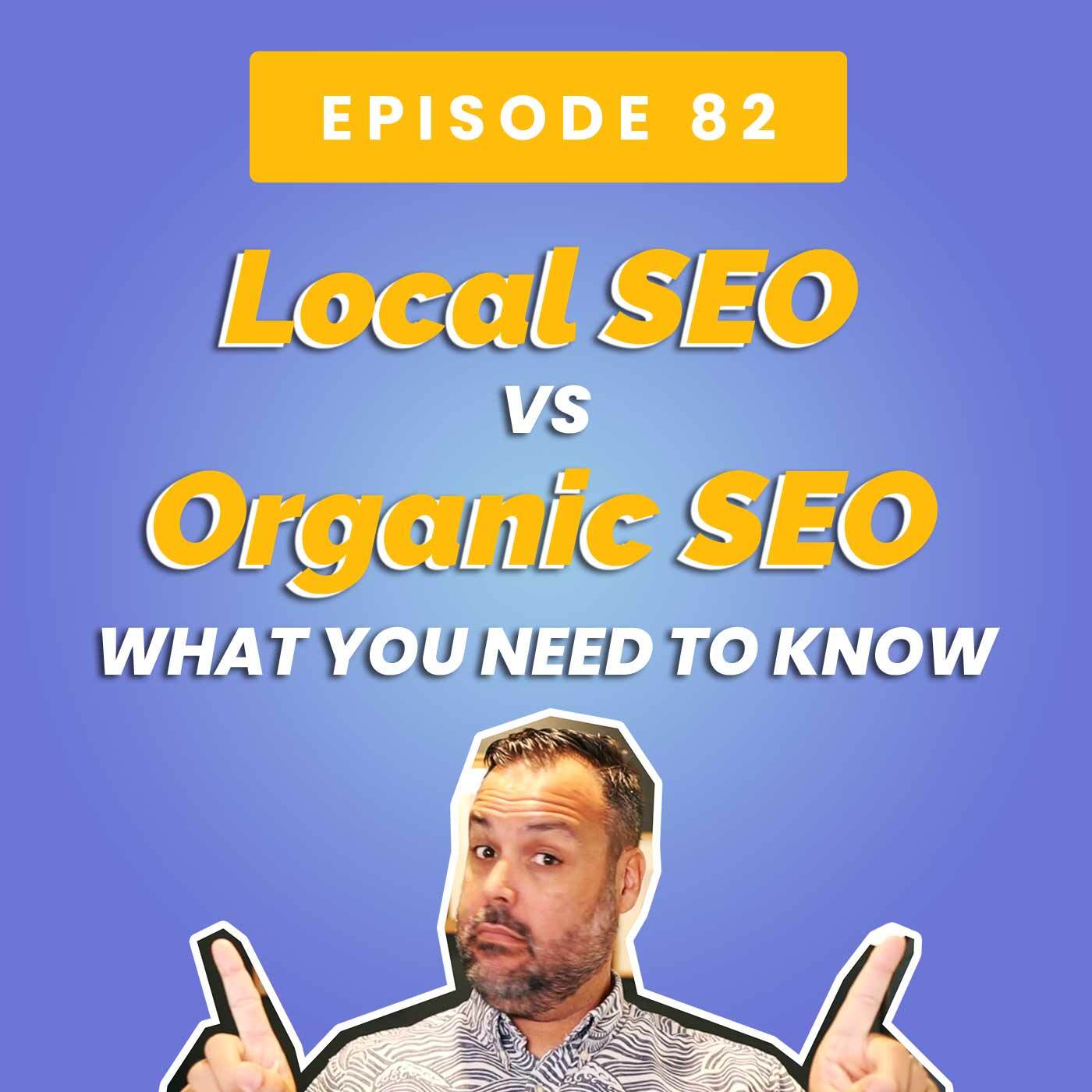
Speaker 0 00:00:00 One of the questions our team hears all the time is what's the difference between organic SEO and local SEO. See, knowing the difference between these two is vital and we'll break it all down. In this episode, we hope this conversation helps your church reach more people and grow. This is the reach right podcast. You're listening to the read-write podcast. The show dedicated to helping pastors and church leaders reach people the right way, hosted by me, Thomas Costello. And with me as always is my cohost Ian Hyatt. We're here to help your church see more visitors and grow.
Speaker 2 00:00:52 I'm ready to get
Speaker 0 00:00:57 Hey guys, welcome to the reach right. Podcast episode number 82. I am your host Thomas Costello. And with me as always is my cohost
Speaker 4 00:01:06 Ian Hyatt. What's up Thomas?
Speaker 0 00:01:08 Hey, not much man. Excited to have a conversation today about a topic that we, I think we get a lot of questions about it. Actually, this one, it was, it's asked so many times, uh, that some of our Google team here at right, they said, Hey guys, please do a podcast episode about this because I have to answer this question like twice a day, I'm answering this question here. So this is a request kind of an internal request, but it was by extension from an external request that they hear all the time. So they're going to talk about,
Speaker 4 00:01:39 And it out to, they're going to send it out to our clients. So we better not make this one too lengthy. So yeah.
Speaker 0 00:01:44 That's exactly. Yeah. So the topic today is local SEO versus organic SEO or just SEO. What's the difference? What do you need to know? Uh, SEO standing of course, for search engine optimization and there's two really distinct, um, skill sets or like disciplines when it comes to search engine optimization, there's traditional SEO or search engine optimization, and then there's a local SEO. Uh, and in today's episode, we want to talk about the differences, what you need to know, what churches should know about this, what they should focus on and how to do some of those things. So I think it should be a good conversation. Um, I don't know. Do you agree with that assessment? Do a lot of people kind of miss the difference with those two things in
Speaker 4 00:02:30 Lilly? Yeah, they do. They do. And, and, and a lot more, a lot more pastors and ministry leaders are seeking knowledge on this because they know now they're aware of the importance of it more than ever. Um, so yeah, it's good to, there is a differentiation between the two, so
Speaker 0 00:02:45 Yeah. Yeah. I think you're right. Like, well, let me just say this here too, is that I think that so many people and really the majority of people, they start their church search on a Google search there, they're looking for a church they're looking for spiritual answers. They don't even know. Maybe they don't, they just kind of maybe suspect that a church might be a good idea for them or getting connected to the Lord might be something important for them that so often starts with a Google search. And that's why it's so important that this is really the front door. This is the first experience. The first taste at anybody's ever going to have on your church in most cases is going to be through a search like this. And so, yeah, I'm glad to hear that in your experience, people are, you're hearing more and more awareness from people about it. Uh, and yeah, hopefully this will be a help to people to kind of understand a little bit more about the ins and outs and where they should be focusing. So why don't you start off by telling us, like, just so we kind of define some terms, why don't you start with the local SEO part of things? Yep. Why don't you tell us what that is? I'll hit, what regular SEO is or organic SEO, but you guys can tell us what local is first.
Speaker 4 00:03:52 Yeah. So what that is is when someone is doing a search, most of the time through Google, it could be through being or other search engine stupid, mostly through Google, uh, churches near me or where I'm at churches in Austin, Texas. So it's a very specific search done by someone who is in your local area. Um, so, and it's usually going to include those types of, of terms and what this is, is when someone does that type of search. It's how visible your church will come up in. What's called the Google map pack. Right. Um, so that is what most people have seen when they do searches for any sort of location. Uh, you know, that they're after, um, where there's a map and there's about three, sometimes four, usually only three now, uh, from what we're seeing, uh, organizations that show up. Um, so, and same thing. If someone's looking for restaurants near me, uh, what's going to show up, uh, near you that you can make a drive to as far as the restaurant. So churches near me, churches in, uh, you know, uh, Austin, Texas, wherever Honolulu, Y um, so that's, that's what it is, is how visible you are in that map pack in trying to come up in, um, in that top three, if you can, even though that people can click further to see other locations paths, right? The top three is a great thing to try to achieve with
Speaker 0 00:05:18 Yeah. Alessio. Yeah. So this is really what's key for any kind of brick and mortar place and churches. While we do have digital expressions, most of us still see ourselves primarily as a, we have a physical location where ministry takes place for most churches. People's first experience is going to be, uh, on a Sunday morning at a physical location. That's the way that things are. So now this could be totally obsolete in five years. I know that there's kind of a revolution that is starting, or maybe it's still to come, uh, that really, uh, sees that, uh, we are, we are, we have physical locations, but we're primarily digital expressions, but yeah, you're right. I think it's a, it's an attempt at getting into that Google map pack. And I want to be clear about something to what you're doing with, with local SEO is it really has very little, it has least to do with your actual website, because what it's trying, what gets into that ranking is not your church's website.
Speaker 0 00:06:17 It's getting your church's Google business profile into that map pack there. So your Google business profile, it has all kinds of informations like your service times or your hours that you're open, uh, your location, contact information, even though there will be a link to your website in there, there is a link. Absolutely there's. But we have found in our research that most people aren't clicking on that link because they're looking primarily and they capture enough about your church from your Google business profile, if you haven't set up properly. So you have usually photos of life happening at your church, or people caught in the act of doing the values of your church or doing ministry there at your church. You have those kinds of photos. You can even do like 3d tours of inside of your church building. Uh, this is something that's kind of a paid service that you can hire someone to come and do a very specific kind of things, but you know how you have Google street view, they actually have internal Google street view.
Speaker 0 00:07:11 So you can actually get this done for your church, where someone comes in and does like 360 cameras and does a walking tour of your church and puts it on your Google business profile that even helps your ranking further with some of those kinds of things. So that's what local SEO is about, is all about getting into that map pack. And that is really valuable because when people have a local intent, then they're going to see local results. And that's really what that, that matters for. And I think for churches, um, we'll talk more about why or where you should focus. This is going to be something that is really important, but let me go ahead and tackle the next one is what is, what is, uh, old school or organic SEO or some might call it on page SEO? What this is, is this is more focused on keywords, on your website and links from other people.
Speaker 0 00:08:02 Um, those two things are the big factors to make your website itself, rank higher. So it probably is helpful to maybe pause for a second and give people kind of an anatomy of a Google search. We did a whole podcast episode about what is a different, the different parts of a Google search when you do a search typically, and there's always some variation to this. Sometimes they show up, sometimes they don't, but at the top, usually you'll have ads. The first thing that shows up is it'll say that there are this many different searches or search results. And then you'll have somewhere between one and four ads at the top they're text-based ads. You can click on them. And that's that information below that you have what you were talking about in the local SEO category, which is the map pack. And so that's a map on the right, and then the T the three, I guess, in the chase of churches, the three most relevant churches, according to Google, uh, that people should know about if they search that term there.
Speaker 0 00:08:58 Now, the thing is, Google has no real way to figure out which one is most relevant. You know, other than the things that we put into it, they're so relevant to something that is in, you know, Google's a terrible judge of which church's best, right? They can't really figure that out as well as we can in most cases. So yeah, below the map pack, you have what's called organic results. And usually there's 10 per page of these. So you'll have 10 listings based on that key term that are the organic results. So already you're off of the screen, whether it's on a mobile device or on a desktop, you've already scrolled down a bit to get to these. So they're a little bit less visible, but they're the ones that Google takes a look at the content of your website and then links directly to your website to give people the information that they were searching for.
Speaker 0 00:09:46 So if someone types in churches in Austin, like we said earlier, you'll have ads for churches, you'll have the map pack, and then you'll have the church websites that seem to be the most relevant. So usually that's going to be like the directory from Yelp of the best churches that directory from church angel or some other directory listing service of churches. And then usually it'll be some of the churches that have the biggest websites, which oftentimes are the largest churches in your area. And they'll start to rank in below that there that have the most content and tie in with that church, that key term, the most. So that's what the organic search is there. So, um, maybe it would be helpful too, to kind of dig in. You'll go a little further into this. We'll talk about some of those key differences between those two also, unless you have anything to add to the organic part there.
Speaker 0 00:10:34 No, no, you covered it really well. That's good. Yeah. Why don't we get into the key differences there? Yeah, good. So I think there's three, I think really matter to, to our audience, which is primarily pastors and church leaders. But I think this, hopefully this is helpful to you, whether you're a plumber or a car mechanic, because I think the same principles apply. Uh, but, um, the, the key differences, I think, first of all, are one is going to be more focused on desktop and smartphone. The other is going to be more focused on smartphone, so a for a organic SEO, um, it's more, it really doesn't matter what device you're on. Um, it's, it's kind of, it's either way, but for local, it really is tailored for people that are on a smartphone, because in most cases they're looking for something that is local.
Speaker 0 00:11:22 A lot of times when you're looking for something local, you're doing it on your phone because you want an answer about it now. Uh, so it really is tailored to local searches a little bit more. So that's one thing. Um, I think beyond that, there's, there's probably one of the biggest ones is that it's research versus decisions. So people that do it are showing up in the organic search. A lot of times that's more research focused. So if someone types in something like, um, you know, what, uh, what the Bible say about the holy spirit, for instance, they're looking to kind of learn more about this topic and kind of gain knowledge on this area versus a local search will be more like of a decision they're ready to make a decision. They're not necessarily learning. They've already decided what they want in, in our case church, or be able to attend a church.
Speaker 0 00:12:14 And then they're trying to find a place that will fill that need or meet that need for them there. So there's kind of this research versus decisions, paradigm with them, right? And obviously the biggest difference in the two is that organic search is more tailored towards a national or even international audience, because what does the Bible say about the holy spirit? That is something that is just as valuable to someone who is in England as it is to someone who is with me in Hawaii on opposite sides of the globe. Right? So it doesn't really matter because that's the same information. Now, there still is some preference for local because people might want to see color spelled in the English way. If they're searching England versus how we say it here in Hawaii or in the United States, or there's still some local preference, but when it comes to a local search, um, this is something that, uh, it, the local SEO is really tailored to finding people that are right there in your backyard, looking for answers to something that's right there with them. So for churches, I think that's obviously really important, but then I hit that. Right. Are there any other differences or anything you could add?
Speaker 4 00:13:19 No. No. You covered that really well. It was funny. We also use the example, not just, uh, uh, as far as what does the Bible say about the holy spirit? We talked about if someone's doing a research for a baseball bat, which by the way, I did not too long ago because my son plays baseball. So what is the best baseball bat for, uh, a 10 year old, uh, you know, that's research phase where, you know, baseball bats, uh, you know, re uh, stores with baseball bats, you know, that's someone who's responsible have baseball stores, uh, or, uh, or athletic store equipment stores, whatever you want to say search for, then someone's in that decision-making, uh, modes as another just good example, but you covered it well, so, yeah.
Speaker 0 00:14:00 Yeah. So let me ask you this again. So, you know, we have, we have these two unique disciplines when it comes to search engine optimization, both are very valuable. You know, we, we do, we, we do, uh, we have our own philosophy here at retry, but for the average person in our audience, which again is mostly pastors, church leaders, maybe ministry leaders, those kinds of things, where should they be putting their attention? Where should they be spending most of their time?
Speaker 4 00:14:24 You know, I, I would say it's on local SEO. I mean, because let's just face it, you know, like you said, at the very beginning of our call, you know, even though churches are digital, now that they mostly have locations and their number one goal is to reach first-time visitors and as it should be, uh, to those locations or for someone to find them locally and be near them and connect with them. So I think that's, uh, while organic SEO, there's, there's value to that. You know, if you were to choose and rank which one it's quite simply, because people will be doing exactly what you said, they're going to be Googling churches near me, or churches in, uh, you know, Boston, Massachusetts, whatever. And you want to be found in ranked there so that they get to you quickly there. So yeah, I would say local.
Speaker 0 00:15:10 Yeah. I think if you were looking at investing in this area, I think I would do local first, if you were a tree, if you were just traditional, but a church, if you were a church that has like 95% of all churches out there, uh, there are some exceptions to this role we've met. We know that some of our audience has also where they, they lead ministries. And if your ministry is more teaching oriented or people in the research phase of their questions, then it makes more sense to focus on organic in those cases. But I couldn't agree more. I think that local SEO should be really one of the first, uh, I guess if you want to call it marketing or outreach strategies that any church should be pursuing, uh, it, it can be done. Totally. In-house you can do a few things like getting your Google business profile, getting that really dialed in and making sure it has the right kind of imagery, the right kind of wording and those things on there.
Speaker 0 00:16:03 Um, you know, some of the other key things that are involved with local SEO is getting onto other directories out there. So making sure you have profiles set up on Facebook and Twitter and Yelp and LinkedIn, and yeah, well, there's lots of other ones, right? That, so we know that this is something that we help churches with a lot of times here at reach, right? And we have dozens and dozens of obscure ones that you would never even think of that it probably helps your ranking to get into all of those and having a consistent profile, the same information across the board on all of them that all builds your rank a little bit there. So if you do need some help, we would love to talk with you on that. Um, you can fill out our form. We have one on our local
[email protected].
Speaker 0 00:16:50 Feel free to fill that out. We'd be happy to help you, or at least point you in the right direction on how you can get some answers in that area. But yeah, I think for most churches, this is one of the first things, when it comes to digital marketing, this is one of the first things that you should be doing there. So all that being said, we can't ignore the value of organic SEO. It does play a part in some of those rankings it's in Google is, is notoriously really kind of secret and hush hush about exactly how their algorithms work. And for good reason, if people were able to gain the system, we'd have all kinds of problems. You know, we've been in this industry Ian long enough to remember 15 years ago, anybody could game the system, you just kind of stuff, a bunch of keywords.
Speaker 0 00:17:32 And you just say churches in Austin, churches in Austin, churches in Austin, over and over again on your site. You're number one in Austin when people search for that. So, yeah, they're smarter than that. Now that doesn't work, please do not do that. And you'll get blacklisted and you won't wind up on any search engines if you do that now. So, but it is, they're kind of secretive about all of the things behind their inner workings of their algorithm, but we do see some evidence that what you do on your site for regular organic SEO does play a part in how you rank in your local SEO as well. So pay attention to that. Um, yeah, I think that there is also value to be had if you're creating content. That is something that reaches a much broader audience at my church that I pastored in Madison, Wisconsin.
Speaker 0 00:18:19 Um, we have, they still do have to this day, a post that I wrote, uh, it was called something to the effect of whatever you do. Don't share that post that says, share this. If you love Jesus, that was the name of it. And to this day, this, this post is getting dozens of hits. Every single day. I wrote this probably six or seven years ago at this point now. So it's still getting lots and lots of traffic and the message of it is still true. Don't share that post that says, share this if you love Jesus. But the point of all that is that we got all kinds of eyes on some of our content. And a lot of those people stayed around on the site. They got onto other pages of content. They listened to a message. They engage with our ministry. We had people that we were connecting with, and this is definitely a possibility you're creating. If you're a church you're creating sermon content probably every single week. Well, that actually is valuable to an audience in Florida, in Honolulu, in India, there's people all over the world that might have real value in hearing some of your sermon. So don't just neglect it. I think it's a really big opportunity, but if our primary goal with SEO is to help people take that step into the life of your church. Local is the first place you should focus. That's it?
Speaker 4 00:19:34 Good stuff, man. No, no. I think we've done it in short and sweet with this one. Hopefully it's a good resource for people and, uh, yeah, I've been very
Speaker 0 00:19:43 Awesome. If it has been helpful to you guys, it would mean so much to us. If you would rate, review, subscribe, leave a comment down below, let us know that it was helpful. Uh, that really helps us to get the word out there about this reach right podcast. Uh, and we just want to thank you guys so much for being a part of our reach, right family. We couldn't do this without you. Uh, thanks for being a part. We hope to catch you next week. See ya. Thanks for listening to the reach right podcast. We hope this episode will help you reach people the right way, looking for more resources for your church. Check us out
[email protected]. If this episode has been helpful to you, it would mean the world to us. If you would rate, review and subscribe on iTunes or wherever you get your podcasts. Thanks again for listening. And we'll see you next week.
Speaker 3 00:20:34 Yes, .