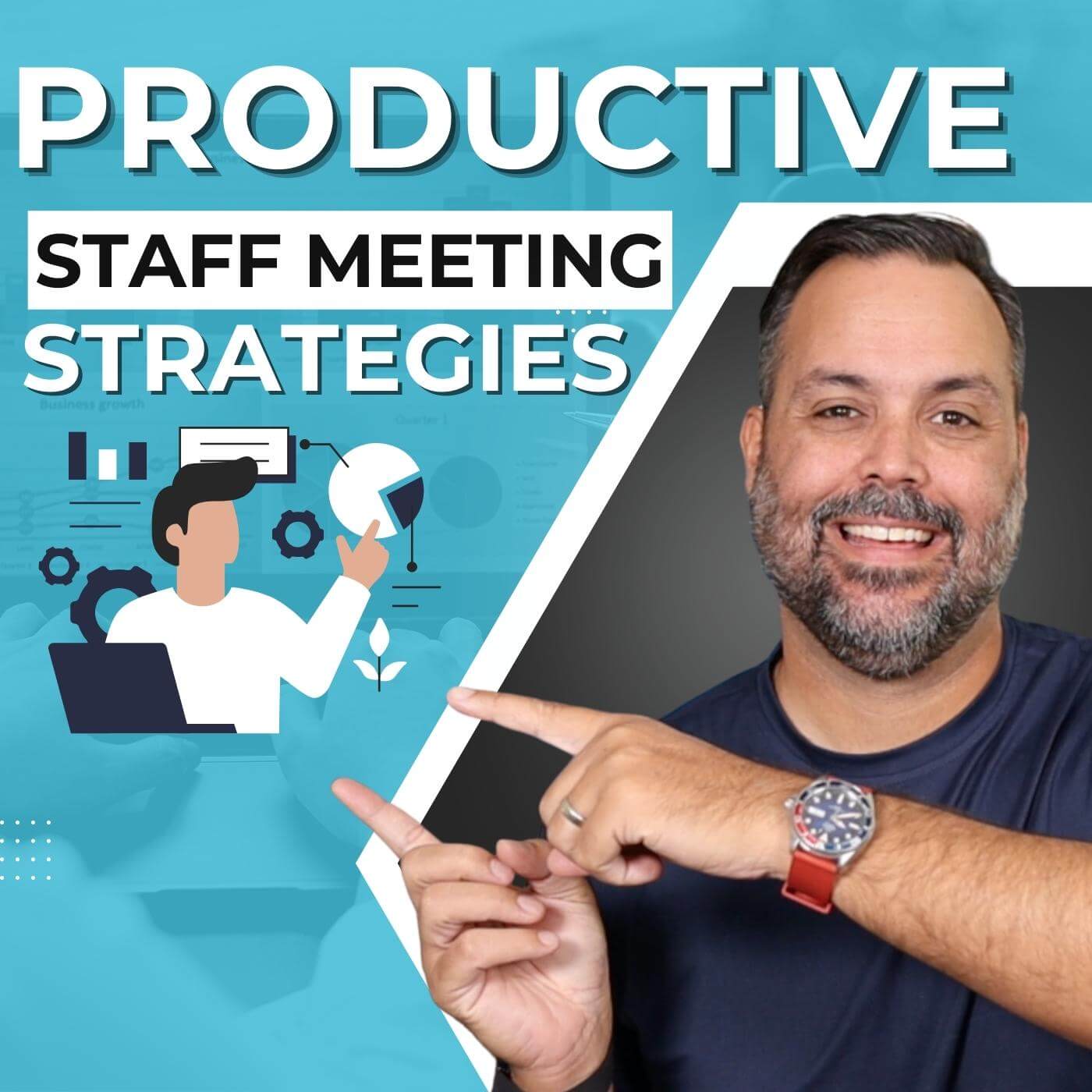
[00:00:00] Speaker A: Can I be honest with you? Most church staff meetings absolutely stink and there's a few reasons why. And we're going to uncover today five tips to help you get the most out of your church staff meetings. We hope this conversation helps you reach more people and grow.
You're listening to the Reach Right Podcast, the show dedicated to helping pastors and church leaders reach people the right way. Hosted by me, Thomas Costello, and with me, as always, is my co host, Ian Hyatt. We're here to help your church see more visitors and grow.
Well, hey guys, welcome to the Retry Podcast. I'm your host, Thomas Costello, and with me, as always, is my co host, Ian Hyatt.
[00:00:57] Speaker B: What's up, Thomas?
[00:00:58] Speaker A: Hey. Not much, man. I think we have a good conversation ahead of us here today. We're going to be talking about something that is near and dear to my heart. The topic is church staff meetings. And we're going to give five tips to make them more productive and make them stink much less. Hopefully. So. Boy, I feel like having been on multiple church staffs, both as a church staff meeting leader and a church staff meeting participant, that they are hard. I think so many of our pastors that we work with struggle with them too. And I feel like it's something that is a. There is an art to running effective meetings. I don't know. Are you a meeting guy, Ian? Do you like meetings?
[00:01:37] Speaker B: I'm not a meeting guy, never have been. But I mean, I shouldn't say that. I love productive meetings at times, but overall I'm not a meeting guy.
[00:01:46] Speaker A: Right. I think the culture has just shifted where, like, we have so many other and frankly more beneficial communication methods now.
So whether it be email or, you know, we encourage a lot of churches to use a tool like Slack or Discord to have conversations back and forth that really meetings, they don't need to happen so often. Like, so how often do you go and you kind of think, well, that meeting could have been an email. I know for my kids sports sometimes like an email would have been a much more effective way to communicate the things that you wanted to say. So I know you're knee deep in kid sports all the time and I'm sure you felt that way about parent meetings and some of that kind of stuff. But hey, church staff meetings are the same, you know, like a lot of times if you're leading any size of a staff, a lot of these things could be better done just via email. But I think that the church staff meeting, a weekly meeting, probably is still very Important. It's a important time to kind of come together. And so we want to give five tips today that go through how you can make those church staff meetings not suck anymore. Because I think most of them suck. And I know as we were joking, getting ready to come on here today, you were telling me that you talk to pastors all the time. Like, what do you hear all the time about what happened in their staff meetings that you were looking forward to?
[00:03:06] Speaker B: Ian, I was so excited to talk about how reach right can help us with church growth. Everything we talked about, I had it ready. And for whatever reason, we just didn't get to it. There was all these other items. And so, gosh, yeah, that's exactly it.
[00:03:21] Speaker A: So I think that everybody has had that kind of experience. We don't talk about the things that we should be talking about. We talk about things that we shouldn't be talking about. And that's just. We want to help you avoid some of those things. So I will kick us off then. I think step one in having a great church staff meeting is defining a clear purpose. Why are we having this meeting? And so we're going to be talking primarily today about our weekly meetings. So we think it's a good rhythm that most church staffs, any. If you're a staff of any size, and whether it's volunteer or paid staff, whoever it is, that having that weekly rhythm of a meeting is important. But I think it's important that you have. That you have a really clear purpose of why we are getting together. Like. Like what are those reasons for that? And so there's a few things that you can accomplish, but the main one shouldn't be things like reporting and asking questions about.
About how we do certain tasks or updating those kinds of things. It should be more in kind of the theme of unity and what you can do to build relationship and kind of make sure everybody's going in the same direction. So as a team leader, if you're the pastor of the church, you're an executive pastor, the one that runs these team meetings, runs these staff meetings. It's your job to make sure that the purpose of this meeting is clear. And the way that you do that is by gently reminding people when maybe that topic could be something that would be better offline, that it's. If it's. If it's just between two people, that's probably not a good conversation for a staff meeting. That's something that should happen in email or after the fact. That. But if it's something where you're looking to get input from everybody, from a large group of people. That's the kind of thing that should be happening at a staff meeting. So I think just kind of getting that purpose out there and then it's going to take some bristling. I think sometimes, like, sometimes if someone, if you have to say in a meeting, hey, let's go ahead and take this offline or, hey, maybe this would be best talked about one on one later or we'll go, we'll circle back to do this at some other time. I think that's the kind of thing. It might be a little bit uncomfortable to do that at first, but once you start to define what this meeting is about, it becomes easy after a few weeks.
[00:05:33] Speaker B: Right, right.
[00:05:33] Speaker A: Yeah.
[00:05:34] Speaker B: And that goes against what I was saying. The issue that I hear with pastors and ministry leaders all the time is just that, you know, I've heard pastors say, well, you know how these meetings go, Ian. You know, there's all sorts of things we're talking about and we don't get to some of the things we need to. That's exactly what we're saying. Let's define the purpose and the pastor should know the purpose. And so I'm surprised when I hear that, that, that, you know, the pastor does not know the purpose or the pastor does not set the purpose. That's not that other leadership won't be defining a purpose either. But yeah, it's just, it, it's baffling to me often.
[00:06:10] Speaker A: So, yeah, yep, that's good. Get the next one for us.
[00:06:12] Speaker B: Next one is, it's very similar.
[00:06:14] Speaker A: It's, it's.
[00:06:15] Speaker B: Once we define the purpose, we need an agenda to clear. Clear agenda for what we're meeting about what items. So this is not just a to do list in your head.
This is. You should have it written out. You know, items that you're going to be discussing, who's discussing what, you know, what leaders are going to be talking about, what you shouldn't just. We know how any meeting and church staff meetings can just. People can go off on tangents. Or you have maybe your kids minister with too much to say about technology or communications, you know, not that they can't weigh in on those things, but who's talking about what. And here's a real key one that I like, setting a maximum amount of time for each item, because I think if you do that, it helps everyone. I mean, that might, you know, it might kind of make some people feel like they get cut off, but I think it Just keeps it in order, and it keeps you on the agenda of what the purpose is.
[00:07:11] Speaker A: So. Yeah, that's absolutely right. I think that this agenda thing is something that's often overlooked. I think that this is something that I picked up in our. In. In my years of staff meetings are effective ones. We always started by creating an agenda. So what we would always do is go around the room and each person would just kind of. To one person who was writing it down, each person would give the one or two or three things that they need to make sure that we discuss as a team.
They would just kind of give a little blurb about it, and then when it got to their turn, we would talk about that. And we had to do some hard things. Like in the middle of a staff meeting, if someone wants to bring up something else, we. We have to say, well, that's not on the agenda here. So that might have to wait until next week. And again, you know, there's grace for this kind of stuff, But I think when you do that, it helps you just to stay focused and on topic for what you need to discuss and the things you need to get done. How often do we have staff meetings? I know I've done this. I just did this the other day. I went into a. It wasn't a staff meeting, but another meeting with one of our team members here. And I knew I had three things and I didn't write them down, and I got through two of them and. And I just never got to have that conversation with that person about that third thing that was kind of important towards some of our marketing goals and that kind of stuff there. So get an agenda and write it down. I think that's really wise. That's good.
Awesome. Next one is make sure the right people are in the room. Like, so you want to make sure that you're staffing and there's this careful balance between. You don't want it to be too broad. People that don't really need to be there, we don't need to waste their time with some of these kinds of meetings. And at the same time, you want to make sure that everybody that does have a stake, that they do have an opportunity to. To chip in, to chime in, and to kind of get their input put into things there. Yeah. So as a general rule, I have always liked to set up my staff meetings with two tiers. Basically, if you kind of think of it in an org chart, two tiers of employees that are working there. So usually a leader, whether that be a senior pastor or an executive pastor, and everybody that reports to would be in that kind of a staff meeting. But you don't necessarily, if you have like a youth director and that person has several youth interns below them that kind of report to them, they probably don't need to be in your senior leadership staff meeting. Right. So making sure that those right people are at the table, I think it really makes for a more effective meeting. Now, there is something to be said to be bringing in other people if they're not like, maybe they're sitting in a way that they're there to take notes or be a part of the meeting, but maybe not getting involved or setting the agenda or some of that kind of stuff. Not because we don't like them or don't value what they have to say. It's just not their role in the organization at that point there. So I think these readings often get derailed when you have three or four tiers of different employees and volunteers and things that they're chiming in on this. Now, all that being said, there might be some occasions where you want to bring in a specific person. So. Right. Let's say you have a homeless ministry and that person's not on your staff. They don't. Maybe they report to your outreach director, who is on your staff there. Well, sometimes it's good to have them come in and bring a report and update a testimony on stuff that's happening, but that's usually just kind of an isolated scenario. Not in a week in and week out every single time. That's a great way to kind of breed frustration on your staff. If you're bringing in people that don't have any stake and don't have any say. Making them sit through a meeting every single week.
[00:10:34] Speaker B: Yeah, that's right. And I don't have much else to add to that. I think I kind of had. What I like that you said is just the right.
Like, some people won't be even if they desire to weigh in. Like I use the example literally. Maybe it's your children's pastor wanting to weigh in on technology and communications. Well, not to say that they shouldn't be able to weigh in on that, but maybe to keep things organized, they don't need to be there for that meeting, but they can be briefed on what happened on the meeting and then, you know, have chime in on anything else they may want to add. So it's just those decisions. I know we all want to do church as a team, as pastors, you, everyone, you know, the nature of unity within church life is to, you know, include everyone, but it just can't happen sometimes to stay efficient. So yeah, and I think that's a good segue to the next one that I'll tackle. It's keep your meetings on time and short. Another.
[00:11:26] Speaker A: It's a good segue. So that's it.
[00:11:30] Speaker B: Everyone knows that Thomas talks a little more on these podcasts. He has some great things to say. More better things to say than me. But I always am like, man, let's keep it a little shorter maybe. So anyway, it's a challenge in a podcast, it's a challenge in a leadership meeting. Right.
But I think, yeah, again, for efficiency and again, just why you want to have the right people in there. I think we find that again, attention spans are the same everywhere. People have short attention span. The longer a meeting drags out. I also think the reason to keep it short is the longer a meeting drags out, the more likely important things could be forgotten or not acted out or called upon, delivered, if you will.
So I think it keeps it efficient. It keeps people focused on the task at hand or the purpose and the agenda at hand. So.
And yes, making sure everyone's on time. We know that there's some habitually late people, but you know, keeping that and respecting everyone's time is a. Is a very important thing.
[00:12:33] Speaker A: Yeah. Here at Reachwright when we do our staff meetings, we set aside an hour for them for our all staff meeting.
I feel like that is a pretty appropriate kind of time. I think that's a good time to keep there.
I have been a part of churches that our staff meeting has started at 8am and it went till 10:30 or 11. And it was kind of like an open ended meeting.
And as much as I kind of appreciated hearing as a younger church leader at the time, I remember that well. I appreciated hearing people that have gone before me and some of the things they were doing. I enjoyed those. But at the same time, I feel like you lose a lot of productivity time when that kind of stuff happens. And like you were saying, attention spans are getting shorter.
So if you're looking for a recommendation, I would say make your goal a one hour staff meeting that we powwow for one hour.
Everybody that's supposed to be in the room is in the room. We set a clear agenda. We max out at 10 minutes on any topic and we just really kind of plow through the things that we have to discuss there. Department updates, those kinds of things there. So yeah, I think that that's I don't know. Do you think that's reasonable? An hour? I would.
[00:13:42] Speaker B: The only thing I would say is, but if it doesn't happen, have to be an hour. Don't make it drag out.
[00:13:46] Speaker A: But you would say that, right?
[00:13:47] Speaker B: Yeah, so.
[00:13:50] Speaker A: So yeah, that's it. No, I. I totally agree. I think if you could get it done in half an hour, and that's the way our staff meetings here at retri go is that sometimes they're 40 minutes and really rarely. I mean we have appointments usually scheduled right after, so we encourage that. So we have a hard stop. So that's a good way to kind of keep yourself accountable is have people on your staff schedule meetings for exactly when the staff meeting is supposed to end. And you can never really run, run long because everybody's going to be leaving the room. So it's a good way to. To keep things accountable that way there. So that's good.
Last one here. I'll go ahead and hit it. Is that you want to. This is so important. You want to set clear action steps and like next steps for people. So you want to make sure an action and a follow up is right there for before you. Now this is something that I think a lot of churches miss, is that we like to speak in kind of generalities and things that we would like to accomplish but not hard and fast actions and deadlines. So I think that you should take that agenda document and someone, whoever the recorder is of your staff meeting should write a sentence about.
Ed is going to follow up with June about X, you know, and he will do this by this time, like having those things written out that way. One of the first items you can discuss in every staff meeting is, hey, did you miss any of the things you said you were gonna follow up with June by this day? Ed, did you get that done? How did that conversation go? There's some conversation to go around it. So that's obviously something that I think everybody could do well with is having kind of that, that accountability, that backstop that's gonna say that we're gonna know this is gonna get done. Because I know I'm gonna have to talk about this again next week. And we wrote down what the actual plan is. So yeah, if you're, if you're not doing this part, you will find that often your staff meetings devolve into, you know, like a lot of times just thoughts about things that could happen.
[00:15:45] Speaker B: But move it up in the air and no, no decision is made and no action is taken. And then guess what? That means to. That leads to another unnecessary meeting.
[00:15:54] Speaker A: Right, Exactly.
[00:15:56] Speaker B: So, yeah. And what are we big on, Thomas? What do we always not leave out? It's a call to action. Right?
[00:16:02] Speaker A: Calls to action.
[00:16:03] Speaker B: Calls to action. Or they're a part of life. They should be.
So I think that that's, that's the thing to. To mention as well is that, you know, what good is a meeting if there's not something that's going to be delivered or, you know, decided upon after that? That's not to say you don't need a. Sometimes certain big vision items or things may need a second meeting, but. But you always want to have some sort of an action item and follow up.
[00:16:29] Speaker A: So if there's nothing that we need to say about it, like something else to do other than like a praise report, I guess, hey, you know, here's a great thing that happened that so and so was healed or whatever that would be. There probably still is an action item for that. Let's. Let's follow up and get a testimony from them or whatever it would be. But everything in your staff meeting should have an action item that goes with it and it should have a deadline on when that action item should get done. So I think that is the recipe. And here's the big. The big takeaway I think is you got to write that down. Right? So you should be writing down those two things. At the start of the meeting, you write out all the things we want to talk about, and then at the end of the meeting, you write down all the things we're going to do as a result of the stuff that we talked about. And then in the end, you wind up with, I think, a productive meeting that way. So anyway, good meeting.
[00:17:15] Speaker B: Good meeting. Yeah, absolutely. And it wasn't an hour, but it was very productive.
[00:17:21] Speaker A: We could have kept it. We could have gone longer for sure. Lots to say about meetings, but I hope this has been helpful and it may be if it just gave you one idea of, hey, we really need to do a better job in our staff meetings of incorporating this. If that happened, let us know in the comments. We'd love to hear if you have any other tips that you have found that really help you with your church's staff meetings. I think the Reach write community, we'd love to hear about it. So drop that in the comments down below if you're not already subscribed. It would mean a lot to us if you would do that. Thanks for being a part of the Reach. Write family and we hope to catch you next week.
Thanks for listening to the Reach Write podcast. We hope this episode will help you reach people the right way.
Looking for more resources for your church? Check us out
[email protected] if this episode has been helpful to you. It would mean the world to us if you would rate, review and subscribe on itunes or wherever you get your podcasts. Thanks again for listening and we'll see you next week.