Episode Transcript
[00:00:00] Speaker A: Well, a new study from Barna unpacked some of the ways that people think about Jesus and megachurches and even the term evangelicals. We want to dig into the numbers, and we did just that. Let's do this.
You're listening to the reach right? Podcast, the show dedicated to helping your church reach more people and grow.
Hey, guys, I'm Thomas.
[00:00:22] Speaker B: And I'm Ian.
[00:00:24] Speaker A: And today we are talking about the perception that people have of Jesus, the church and everything related to Christianity in the United States. Should be a good conversation. It's coming from a recent study from the Barna group. They're always putting out some really great information.
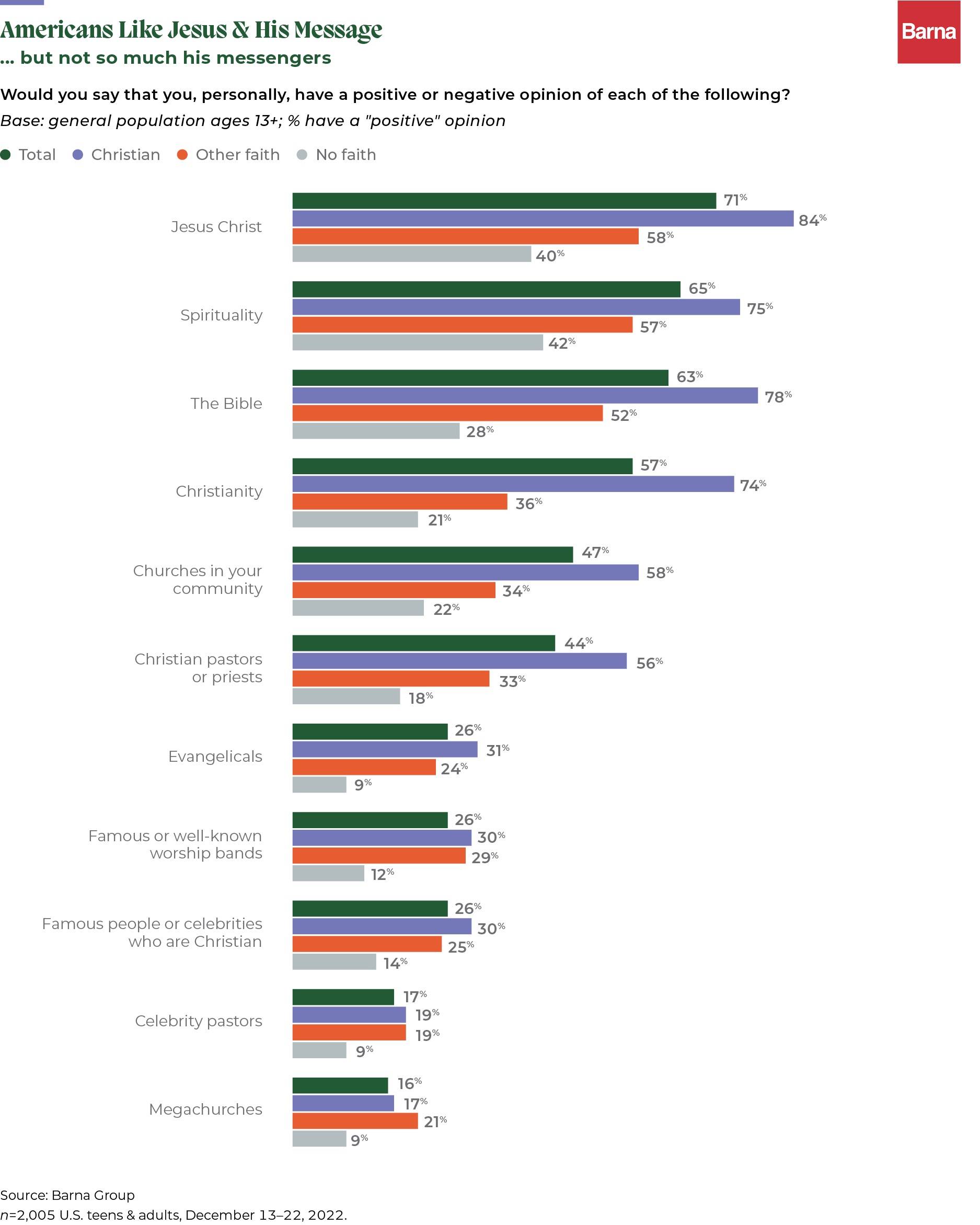
Really fantastic researchers. We're going to link to the whole study and the graphic down in the show notes here. It's on the full blog post for this episode, so you can take a look at it there. But pretty good stuff. Basically, they asked this question. I'm going to read it out here. Would you say that you personally have a positive or negative opinion about each of the following? And then they kind of broke it down by Jesus and Christianity. Evangelicals, different terms or different groups. And the numbers are pretty flooring. They also broke it down to the total population. Christians, people of other faiths and people that have no faith or atheists, agnostics. That's good. So they have some really good data, and I think it's helpful for us because while this doesn't really measure the change, this is kind of a 2023 study that they did. But it's been obvious to me that there are shifting perceptions of what people think about Jesus. The church ministry, some of them good, some of them bad. So I think it's going to be fun for us to break it down a little bit.
[00:01:46] Speaker B: Yeah, I like this r1 fun. And I'm not surprised that there's been shifts, just when you look at how culture has been shifting and everything. So, I mean, some of these surprise me, but I'm also not surprised that there's been shifts with how people perceive each one of these.
[00:02:03] Speaker A: That's good stuff.
All right, so let's go for it. So again, the question is, would you say that you have a positive or negative opinion of the first one was Jesus Christ? He was the top, the number one vote getter. He was the most positive. So overall, the total population of Americans, 71% of people have a positive view of Jesus, 84% of Christians. I'd love to meet the 16% of christians that have a negative view of Jesus.
[00:02:31] Speaker B: Get them out. I'm kidding.
[00:02:33] Speaker A: It's probably not a good sign there. 58% of people of other faiths and only 40% of people that are agnostic or have no faith, they have a generally positive opinion of Jesus, I think. Not surprising that Jesus takes the cake.
He's the number one. I don't know that I've ever met someone that says I have a negative view of know. I don't know what a few, but not, I mean, so I think they maybe have problems with other things, as we'll dissect in this conversation. But when you think about the man of Jesus and the things that he taught, the things that he did, I think even to, no matter left wing, right wing, all races, I think generally speaking, people, and the numbers bear this out, they have a positive view of him. Like we joked, like the 16% of Christians, if you're going to identify yourself as a little Christ is what Christian means, to have a, you just have a negative self view, I guess, if you're doing something like that. But anyway, I thought this was bitter.
[00:03:39] Speaker B: Maybe they're bitter right now with Jesus. There you go.
[00:03:43] Speaker A: Probably. But even other faiths, I thought that was interesting. So Buddhists and Muslims, they generally have on average a positive view of Jesus. So this study doesn't cover the neutral views, it's just positive or negative.
[00:03:56] Speaker B: Right.
[00:03:57] Speaker A: But this is the percentage that would say they were positive on these topics. Thoughts on that?
[00:04:03] Speaker B: Again, not surprised when you hear even what people of like no faith or just agnostics, people that don't attend church, when they think of Jesus, you see them wearing shirts, he's my homeboy or he was a great teacher. He seemed to do good things and had good mindset with things. So I'm not surprised at that.
[00:04:28] Speaker A: Good stuff.
[00:04:29] Speaker B: So the next one is spirituality. I like this because it's kind of broad. It's just people being open to some sort of spirituality.
And in a way, I guess I'm not surprised, but kind of surprised that Jesus edged people out. In total, there were 65% of people in total. Just because when I think of people that aren't necessarily christians, a lot of people consider themselves spiritual or they're doing or practicing some sort of spirituality out there. So this was 65% and of course of christians, 75%.
So again, like we joked about with the 16%, I guess the other 15% of christians that aren't into spirituality, they also wonder why we clearly have a spiritual walk. And then of other faiths, we have 57%. Again, a positive view of spirituality and then of no faith, 42%. So I guess maybe those folks of no faith just been like, if someone wants to be spiritual, that's fine, I guess.
[00:05:36] Speaker A: Yeah. Well, I think that was interesting to me, is that the spirituality, the only group that likes spirituality more than Jesus is just the people of no faith. So people are open to just general spirituality if they have no faith. But even people of other religions, they like Jesus more than spirituality. Close, but just about the. There's a little bit of difference with that. There next one is the Bible, and it starts to go down a little bit here. So Jesus was at a 71. For people in general, the Bible is at a 63.
So that's a little bit lower than I would expect generally. And I think the Bible, with our kind of social media world that we live in now, I think the Bible has taken some hits from the world out there. Now, obviously, christians, they like the Bible. We're at 78% of christians like the Bible, at least. Again, I don't know who the other ones are, but yes. So 78% of christians like the Bible, 52% of people that are of other faith think the Bible is great. They have positive opinions, and it goes down pretty drastically for people that don't have any faith, again, as they see it as a book of fables in most cases, I would guess.
[00:06:49] Speaker B: Yeah, that makes sense to me, that one.
[00:06:52] Speaker A: Right.
But we're starting to see some back off. I think it has to do with just the way that the Bible has been used.
And again, this isn't a condemnation on this, but people would view the Bible as having been used to harm people. And I've heard things before that the Bible was used as a foundation for slavery because it doesn't maybe outright condemn it in their minds.
[00:07:19] Speaker B: Right.
[00:07:19] Speaker A: So you hear those kinds of arguments now. So I've seen the Bible take some hits, and that's why I think that it's kind of at this 63% level.
[00:07:27] Speaker B: Yeah, it's weird. At first glance, I was a little surprised that it was that high. And I mean, just with looking at current culture and with some of the things you just mentioned or people understanding what it says about homosexuality as a practice and other of these big issues that are out there, and just the fact that the image that comes to mind, that it's something that people still put their hand over when they're testifying in court, which I'm glad to see personally.
I'm pleased to see that it's in the positive still. I was actually a little surprised there, personally.
Well, the next one's Christianity, and this was just in general at 57%.
And then glad to hear that 74% of christians were okay with Christianity. Yeah. So again, not sure about the others.
[00:08:23] Speaker A: Look for a new faith, probably if you have a negative, not to encourage anybody that way.
[00:08:28] Speaker B: There are people sitting at the back of church or got drug. I don't know. So I'm kidding. But then you have 36% of other faiths being okay with Christianity, and then you have 21%, of course, with people of no faith. Not surprised that number is low also for people of no faith.
[00:08:50] Speaker A: Interesting, though, that of what we consider a christian nation, a lot of times founded that way or people think of it that way. 57% have a positive view of christianity, meaning 43% of people have at least a neutral or negative view of Christianity. So it's important for us to remember that when we're doing evangelism or reaching people in our communities, which some of these next stats will really show us, I think, too.
[00:09:15] Speaker B: Right.
[00:09:16] Speaker A: That's where we're operating from. It's almost like a coin flip whether someone has a positive worldview towards Christianity or a negative one. So something to keep in mind. All right, so here we pivot from things that have a generally positive view to things that have a generally negative view. And the first one, and probably the one that is saddest to me, was churches in your community.
That number was 47% of people have a positive view of churches in their community.
To me, that's something that is.
As someone who's pastored local churches in three different states, I've pastored local churches. Like the idea that people wouldn't have a positive view of my church. Church that I pastor. I know that they maybe don't agree with everything we teach, but they have a negative view of the work that we do, the outreach we're doing, the way we're helping the community. That's an indictment. I think it's kind of scary to think that I'm not here to argue the merits. This is just the actual numbers of what people really think. It's not whether they're right in thinking it or wrong in thinking it. I just think it's the reality that we have to face as church leaders, that the majority of our people do not have a positive view of the local churches. Maybe your church is different, but local churches in general, in their community, they don't have a positive view of them.
[00:10:45] Speaker B: Yeah, that one was a little surprising to me, too.
And it's funny, the next christians being at 48% view, maybe they think that their local church is the only one that's good, or they've left two others in the community. So that's what get funny thing, but not so funny came to mind.
I was a bit surprised. A little depressing on this one. We're all for the local church here at reachwight, our services and what we.
[00:11:15] Speaker A: Do is to, we're at 100% here. We're 100% for local churches here.
[00:11:20] Speaker B: Absolutely. And that's what we do is help local churches grow and reach people. Absolutely. That was interesting.
Well, the next one goes to christian pastors or priests. And so this one a little bit lower.
Again, people in general, 44% have a positive view. Christians 56%. A little surprised at that one, I guess.
And maybe these are the ones that consider themselves christians but are burnt out and not going to church or didn't like what their last pastor had to say or whatever. And then of course, we're lumping in priests with this too, which I think that's something noteworthy, meaning that there is a difference between Catholicism and then, of course, evangelical churches and Christianity. I think that's a bit interesting as that one's lumped in. And again, 18%, I'm not surprised of people of no faith that have a negative view of pastors and priests. So I guess that doesn't surprise me all that much.
[00:12:30] Speaker A: I think that I've known this for a decade or so. I'd say that. And you just see this like anecdotally when people find out that you're a pastor and you gauge their response, like, is it generally positive or generally negative? I think that when I got into ministry in the early two thousand s and right out of Bible college, I think people generally had a positive view. Oh, it's so great. You're giving your life to that, and it's good. And then I've noticed that more recently, it's kind of like they're not going to come out and say, well, I hate you.
[00:13:05] Speaker B: You can see the look in their face.
[00:13:07] Speaker A: Right.
It's not a great conversation starter.
It's more like, what do you do for a living? I'm a pastor.
That's kind of how that goes.
[00:13:20] Speaker B: Right? Awkward pause. You got to have to kind of think of what you say next, where you're going to take the conversation.
[00:13:26] Speaker A: I imagine this is really regionally dependent as well with this year, and I'm sure all these numbers are. I think if you're in a big progressive city, if you live in San Francisco or New York, it'd be very different numbers than if you're in a rural, small community at an established church that's been there for decades, but I think it's just important that we have to come to terms with that.
Maybe that's not a good lead. Maybe that's not a great way to introduce yourself anymore, because in a lot of places, that's not a positive. And I think pastors in big cities, I pastored in not a big city, but in Madison, Wisconsin, which is not. It is a more post christian city than most, I would think, in our country. And I know that I learned quickly to not make that my introduction. I would talk about other things and wait to introduce that fact. But, yeah, something to be aware of. Yeah.
[00:14:20] Speaker B: And that's an interesting one.
[00:14:23] Speaker A: I think I'm next. So this one is where it really falls off a cliff. And this is one that I have had to pivot on as well. So 26% of people have a positive view of evangelicals. So I am an evangelical Christian. I believe you are as well.
[00:14:41] Speaker B: Same. Yes.
[00:14:42] Speaker A: Everybody on our staff, we're all evangelical Christians, but I would not describe myself to someone as an evangelical Christian here on this podcast. I imagine most our audience understands what I mean by that. But if I'm meeting someone, you know, tell me a little bit about you. Oh, I'm Thomas. I'm an evangelical Christian.
I'd avoid that. Right. Yeah. And I think that that's something that it's political, mostly because they kind of turned that into a voting bloc.
[00:15:12] Speaker B: Oh, you voted for.
[00:15:15] Speaker A: So they. That is a synonym for a lot of people. In their minds, that is a synonym of Trump supporter is what that means. Right.
It couldn't be further from the truth. That's not the case, but I think that is the way people think of that title of evangelical Christian. So as sad as that is, I encourage most churches to move on from that. If you're doing your new members class and those kinds of things, I mean, it's okay to kind of talk if you're going to give the context for it, but don't ever leave that term out there without some kind of context added to it, because people hear something different. When you say evangelical Christian, I think what we mean is we say people that are born again christians that feel a personal responsibility to take the message of Jesus to the entire world. Right. That's kind of what that means. And there's a certain set of beliefs that we all share, but to them, they hear something very different, and that is to the vast majority of the world, or at least the United States, they hear something different when we say that. So use that term with caution. And always add context to what you mean.
[00:16:25] Speaker B: If you're going to say it, it's well said. Nothing much to add on this one. The next one's very interesting to me, I guess, people's view, positive or negative, of famous or well known worship bands. So in people in general, it was 26%.
Funny to me that 30% of christians, I guess that was funny to me. Okay. I guess even if you only prefer your church's worship style and you don't like the big hill songs or something. I don't know. That's who I'm thinking of. I don't know what those people, Christians, not just those people, are thinking.
And then, of course, people of other religions. 25%, of course, 14% for people of no faith. Not too shocked about that one. When they're thinking of people that are famous or well known bands that are worshipping God.
[00:17:19] Speaker A: I thought it was interesting that there's only a 1% difference between Christians and people of other faiths when it comes to well known worship bands. I don't know. I could offer some theories as to why this is. I think that this is strange, because I think that all the music that we play in churches, almost all of it comes from well known worship bands. Right. They're not obscure bands that we play. Like, you go to any church in the country, and chances are I'm going to know probably 80% to 90% of the songs that they're playing there because they're written by well known worship bands. So we like them enough to play them in our churches. But this was just really surprised me that 30% of christians don't like well known, famous worship bands. I think that what it is is that this study was done right around the time there was a lot of the hoopla with Hillsong. I think that is probably one comes to Hillsong or Hillsong United is what people think of when they think of well known worship bands. And there's other ones, like, you think of Bethel and Jesus culture and Maverick city and elevation worship and those guys. Right? So all of them. Now, as far as their theology and those things, I can see that you could have issues with some of them in some cases.
We're not here to talk about that, but to have just an overall negative view. Maybe that's where that comes from, is that there's a lot of. I see there's a movement of a lot of very conservative christians, and there's a lot of dialogue on like, we shouldn't play Hillsong songs anymore or elevation songs in our church because the things that they play at their church, but they're still the most played songs out there. So anyway, there's some debate on that, but I think that's a little bit surprising. The next one, this is equally surprising to me. I guess I'm wondering who they're thinking about. It was about famous people or celebrities who are Christian. So Christians, not people that are famous for being christians. So this isn't like celebrity pastors. We'll talk about them in a second. But when I think of this, I think of like your Chris Pratt's, maybe.
[00:19:27] Speaker B: Your.
[00:19:29] Speaker A: Of, maybe you go into your Stephen Baldwin's, some of those kinds of people, I guess, Kurt Cameron, maybe they're thinking about these kinds of.
So there's differences on these. Right. So I think generally speaking, people, I'm surprised if we're talking about Chris Pratt's that people has that much of a negative view. I guess I'm not surprised if we're talking about Steven Baldwin's and Kirk Cameron's that they're that negative. Not nothing against those guys personally, but this is kind of the noise that I hear out there. Sure. And I do know there is a lot of negativity. I've read a lot of things about your Chris Pratts and those things, but yeah, it surprised me. So here's the numbers, though. It is 26% of the general population have a favorable view of famous people who are Christians. 30% of christians like them. So we don't like our own at that. 25% of people that are not Christians or their other faiths. And only 12% of, I'm sorry, only 14% of people that have no faith, that have themselves as agnostics or atheists there. So anyway, interesting.
[00:20:38] Speaker B: Yeah, it is interesting. The only other thought I had to share was maybe because they are celebrities and they're christian. If people think that they shouldn't, I don't know, be that popular, making that much money or something like that. I don't know, that just popped in my head. But the other one, hate.
[00:20:53] Speaker A: I think it's a love kind of thing.
[00:20:55] Speaker B: That too. Yes. So next one, celebrity pastors.
I guess I'm kind of not as surprised on this one, but 17% of people in general are favorable towards celebrity pastors. Only 2% more with christians at 19% have a positive view of celebrity pastors. People of other faiths the same as Christians, 19% not surprised at the 9% of people of no faith. Having a positive view of celebrity pastors.
[00:21:25] Speaker A: Yeah. Right. Yeah. So this one's tough because it depends on who you're talking about. Right. So I have many celebrity.
[00:21:33] Speaker B: Yeah.
[00:21:34] Speaker A: But I think a lot of the megachurch pastors and people, whether you're talking about your Stephen Furticks or Rick Warrens or those guys, I generally have favorable opinions of those. But then there's all kinds know, late night, I don't know if you'd call, certainly not like big world celebrities, but your Kenneth Copeland's and Jesse Duplanis's and those things. I think there's obviously reason for negative feelings towards some of those kinds of late night ministers and those kinds of people there. So I don't want to speculate too much on that. Just interesting. I think interesting stats there. And it's not as surprising to me. Here's one that I think that this is the last one and this is surprising to me, especially on the christian side. So the very lowest opinion of all of these things that we talked about here today was megachurches. People feel worst about megachurches, like, of anything that we're talking about, which the numbers are this. So it's 16% of the general population have a favorable view of megachurches, 17% of christians. So less than one in five christians are favorable churches, 21% of non christians, but people of faith. So they're most popular with people of other faiths is what megachurches are. And then 9% of people that are not religious at all.
So what's flooring to me is that people go to megachurches, like, lots and lots of people go to. You go to a megachurch.
[00:23:08] Speaker B: And I do.
[00:23:09] Speaker A: Lots of people go to a megachurch.
[00:23:10] Speaker B: At a mega sized church. Yes.
[00:23:14] Speaker A: I've landed at one for a few months for a time in a time of transition. But I've never been a part, like a fully invested part of a megachurch before.
I hear all of the complaints. I see some of the frustration. I think it is kind of a love to hate kind of a thing that's going on there, which saddens me. I do not speak poorly of megachurches. I think they certainly have challenges and things that they need to be aware of. And we have lots of clients who lead megachurches. And so it's something that we do here at retrieve. We help churches of all sizes. And so megachurches are a lot of our customers. So we certainly don't have a negative view. But I hear about the negative view, and I'm surprised that it is this low on the list, that it's the absolute least popular thing that Barna could research for was megachurches. So I don't know, as an attendee, what do you have to say, ian?
[00:24:13] Speaker B: Yeah, I'm surprised that it's this low for sure. I'm with you on that, I guess I'm also still somewhat not surprised when you consider the number that popped in my head is that the average size church in America is still around 80 or so ballpark.
And we work with so many. I would say more of those churches work with megasized churches too, and everything smaller in between, mid size, all of that. But I can see that I've heard over the years, just like you said, it may be a love to hate, it might be that they're just viewed as there to make more money, a big production and show and not true worship of Jesus. I've had people surprised to hear when I talk about our church has a great coffee shop and they sell breakfast tacos in the morning before church.
But everyone that attends our church loves that. My daughter.
[00:25:07] Speaker A: Are they good?
[00:25:08] Speaker B: Deal. They are good, yeah. I mean, they're not the best breakfast tacos in town, to be honest. But I'm not going there for just the breakfast tacos.
Well, they only sell them during service anyway. But I guess what I'm saying is that I see all of that. People often think of Jesus turning over the tables with the money changers in the temple, and I've heard of that scripture being referenced, and I can see, of course, there's been abuse of power at certain megasized churches, just like there has been at smaller churches, too.
I can see it. And at the same time, yes, you'd mentioned earlier there's challenges at every church. Megasized churches do pose a couple of unique challenges. I do feel like if someone is just going to take a seat and hear a powerful message and they're not giving or going deeper, that often can be a challenge. So we know of a lot of these factors. I was surprised that it's that low. But I also, when I think of how much more smaller churches there are compared to megasized churches, I'm kind of also not surprised if that's kind of the mindset with.
[00:26:19] Speaker A: Let me ask a question. Well, first of all, how much are the breakfast tacos at your church?
[00:26:23] Speaker B: They're only a couple of dollars, and I don't even know if they charge tax.
I don't know the exact price.
[00:26:30] Speaker A: Tax deductible donation for them.
[00:26:31] Speaker B: Yeah.
[00:26:32] Speaker A: All right. So everybody, I imagine in your community, because I know where you live, and it's like in the shadow of your church, basically, right. Your community is there, would you say, most people in your suburb or your area there, if you said your church, if you said celebration church, would they know it?
[00:26:51] Speaker B: Yeah, they would know it.
[00:26:53] Speaker A: And if you took a poll, do you think that one out of six of them, only one out of, like, you think five out of six would say, I have a negative view of your church?
[00:27:05] Speaker B: Five out of six? No, I don't think so. No.
[00:27:09] Speaker A: That's what surprises me. I feel like people when you know one, because even if you don't, I've.
[00:27:14] Speaker B: Had these conversations, and what will come up is, how do you feel going to a church that big? What's that like?
So I do get that. I do know that there's probably those mindsets out there, but, no, I am very surprised there wouldn't be that. Five out of six.
[00:27:29] Speaker A: Yeah, I wouldn't think so either. I mean, I think maybe half would have kind of something like that would have been my guess. But that's what it is. So, anyway, I think it's important that we know this, right? So if you lead a megachurch or you're involved or you're in a community, it's important that that's what the numbers look like. The deck is kind of stacked against you, and you need to do everything you can to combat that. I think if you want to win people for Jesus, I think a lot of it is that they're the butt of lots of memes. So I know one of our best performing memes, and we do it. So we make memes a few times a week here at reachwright, and one of them is like a guy with a rocket jetpack on his back and he's flying in. And I think the title we gave it is like megachurch pastor landing for Sunday service or something like that because of all the big joke at the big show and stuff that churches do. We've all seen those memes of, like, Christmas services and guys coming in on suspended ropes and those kinds of things. But anyway, I think that they're the butt of lots of jokes that we take. But in the end, I think that's unwarranted. But I think it's important for us to know that that's kind of where culture is right now if we want to do something about reaching people and get serious about it. Good point. Good stuff. Ian, anything to add as we wrap up here?
[00:28:43] Speaker B: No, I just hope that pastors and ministry leaders can take this gleam from it, apply it to what you're doing. It's important to identify these stats, be aware of them. And I think it gives pastors a good barometer to look at. Okay. How does this affect my local church? What can I do or not do differently? So, yeah, we hope that it was helpful in that way.
[00:29:05] Speaker A: Yeah, absolutely. I think you got to know these things. You got to know what people think of what the general culture is on these terms that we use to define ourselves. And when we do, I think we can kind of course correct if we need to and add context where it's needed. So I want to ask you a question as we wrap up here. If you're in our audience, I'd love to know what you think of this last question of megachurches. Is it surprising to you that one out of six people have a positive view of them? What are your thoughts on megachurches? Let us know down in the description. Ah. Or down in the comments there below if you haven't already hit that subscribe button. Guys, thanks for being a part of the reach right family and we'll see you next week. See ya.