Easter Service Planning Made Easy: A Step-by-Step Guide for Churches

March 07, 2024 00:17:09
Easter Service Planning Made Easy: A Step-by-Step Guide for Churches
REACHRIGHT Podcast
Easter Service Planning Made Easy: A Step-by-Step Guide for Churches

Mar 07 2024 | 00:17:09

/

Show Notes

As the joyous season of Easter approaches, churches around the world prepare to commemorate the pivotal event in our Christian faith: the resurrection of Jesus Christ. So how can we properly honor and host this important holiday? Easter service planning goes beyond logistical arrangements. It is a sacred endeavor aimed at facilitating profound spiritual experiences for Christians in your church.

The significance of Easter calls for meticulous attention to detail in crafting a service that resonates with the essence of the Christian message—redemption, hope, and renewal. From setting appropriate goals to choosing the right worship songs to crafting an impactful sermon, each element plays a vital role in conveying the meaning behind Easter Sunday.

This podcast is a comprehensive guide to aid pastors, church leaders, and volunteers in orchestrating an Easter service that not only honors the traditions of the faith but also invigorates hearts and minds with the transformative power of the Easter story.

Let’s jump in.

Estimated reading time: 11 minutes

Understanding Easter

Understanding Easter

Easter is a special time for Christians all around the world. It’s not just about chocolate eggs and bunnies; it’s about something much more important. Let’s explore why Easter is so significant.

Easter Sunday

Easter Sunday is the most important day in the Christian calendar. It’s the day when Christians celebrate Jesus rising from the dead after being crucified.

This event is called the resurrection, and it’s the cornerstone of the Christian faith. All of this together means that Easter Sunday is a day of great joy and hope for Christians everywhere.

Easter Services

Easter services are special gatherings that take place in churches on Easter Sunday and throughout the Easter season. These services are a time for Christians to come together to worship and celebrate the resurrection of Jesus.

During Easter services, people sing songs, listen to readings from the Bible, and hear sermons that remind them of the significance of Easter. Easter services help Christians remember the sacrifice Jesus made and the hope that his resurrection brings.

Easter Season

We have to remember that Easter isn’t just one day; it’s a whole season that lasts for several weeks. The Easter season begins on Easter Sunday and continues for 50 days until Pentecost Sunday. During this time, Christians reflect on the meaning of Jesus’ resurrection and what it means for their faith.

The Easter season is a time of renewal and new beginnings, as Christians are reminded of the hope and new life that Jesus’ resurrection brings.

Easter is a time of great importance for Christians around the world. Easter Sunday, Easter services, and the Easter season all play a part in helping Christians celebrate the resurrection of Jesus and the hope that it brings to their lives. It’s a time to come together, worship, and remember the incredible love that God has shown to humanity through Jesus Christ.

Planning Your Easter Sunday Service

Planning Your Easter Sunday Service

Preparing for Easter is a special time for churches everywhere. As we’ve established, Easter is important to our faith, so we must honor it rightly.

Planning your Easter service can be exciting and fun, but also challenging. From setting goals to choosing music and organizing logistics, there’s a lot to think about. In this section, we’ll break down the steps to help you plan a successful Easter celebration that honors the significance of this special day in the Christian calendar.

Setting Goals

Before you start planning your Easter service, it’s important to think about what you want to achieve. Setting goals can help you stay focused and make sure your service is meaningful for everyone who attends.

Think about what message you want to share with your congregation. Do you want to focus on the hope and joy of Jesus’ resurrection? Or do you want to explore the themes of redemption and new life? Once you know what you want to say, you can start thinking about how to communicate that message through your service.

Another important goal to consider is how you want people to feel during and after the service. Do you want them to feel uplifted and inspired? Do you want them to feel connected to God and each other? Thinking about the emotional impact of your service can help you choose the right music, readings, and other elements to include.

Pre-Planning

Make an Easter planning checklist for the entire Easter service so that you can stay on top of things and make sure you accomplish your objectives. Throughout the entire planning process, you’ll want to make sure your entire team is communicating and adapting.

We would also suggest planning far in advance so that you can get invites out early. An Easter landing page on your church website is a great way for people to easily access the information about your Easter service. Advertise it on your social media platforms for even more reach!

According to Statistia, 51% of Americans visit church on Easter.
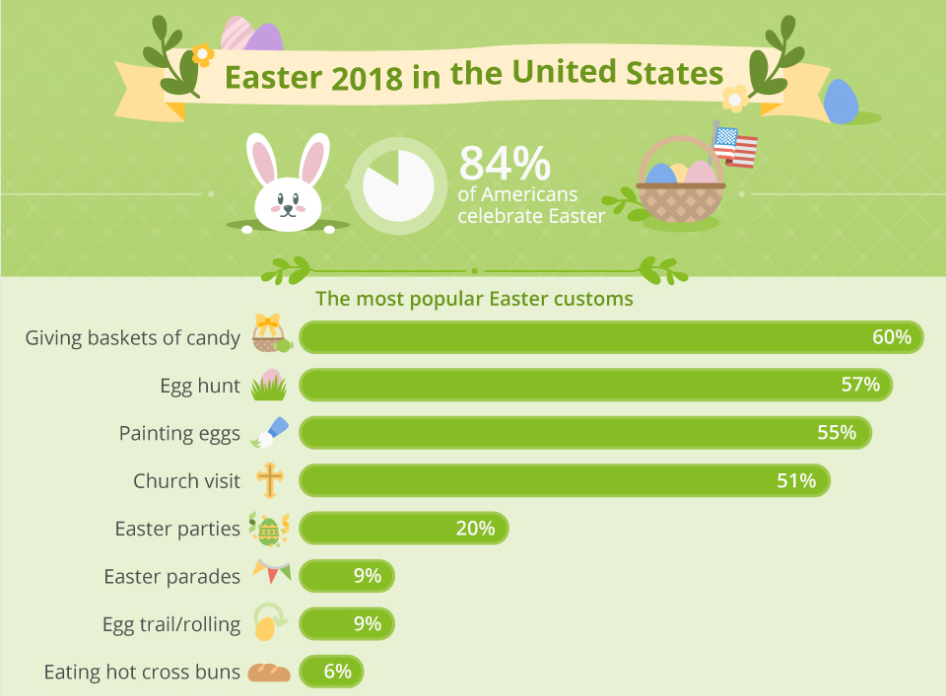
Statistia

This means you will have to prepare to receive a lot more people than you normally would. Make sure you have enough room and resources to hold extra people that may show up.

Order of Service

Once you’ve set your goals, it’s time to plan the order of your Easter service. Start by thinking about the flow of the service and how each element will fit together to create a cohesive whole.

Begin with an opening that welcomes Easter guests to the service and sets the tone for what’s to come. This might include a greeting, a prayer, or a piece of music that helps people focus their hearts and minds on worship.

Next, think about how you want to incorporate music and worship into your service. Choose songs and hymns that reflect the themes of Easter and help people connect with God in a meaningful way. Consider including special music performances or choir numbers to add variety and interest to the service. We have more suggestions about music in the next step.

After the music, you might include readings from the Bible that tell the story of Jesus’ death and resurrection. These readings can help people understand the significance of Easter and its importance in the Christian faith.

The centerpiece of your Easter service will likely be the sermon or message. This is your opportunity to share the Easter story in a way that’s relevant and engaging for your congregation. Think about how you can bring the message of Easter to life through storytelling, personal anecdotes, and practical application. We’ll cover this in more detail in a later section.

Finally, end your service with a closing that sends people out with a sense of purpose and mission. This might include a final prayer, a blessing, or a commissioning that challenges people to live out the message of Easter in their daily lives.

Music and Worship

Music and worship play a central role in any Easter service. Choose songs and hymns that celebrate the resurrection of Jesus and help people connect with God in a meaningful way.

Consider the mood and tone you want to create with your music selections. Upbeat, joyful songs can help people celebrate the hope and victory of Easter, while quieter, reflective songs can create space for contemplation and prayer. Here are some worship song suggestions:

In addition to congregational singing, consider incorporating special music performances or choir numbers into your service. These can add variety and interest to the worship experience and help people engage with the message of Easter in a deeper way.

Logistics and Resources

Finally, don’t forget to think about the logistics and resources you’ll need to make your Easter service a success. This might include things like sound equipment, projection screens, and printed materials like bulletins or programs.

Make sure you have enough volunteers to help with things like greeting people at the door, leading worship, and running sound and multimedia during the service. Consider holding rehearsals in the weeks leading up to Easter to make sure everyone knows their roles and feels comfortable with the flow of the service.

Think about any special elements you want to include in your service, like baptisms or communion. Make sure you have everything you need to make those elements meaningful and impactful.

By setting goals, planning the order of your service, choosing music and worship elements, and thinking through logistics and resources, you can create a meaningful and memorable Easter service that helps people connect with God and celebrate the hope and joy of Jesus’ resurrection.

Crafting an Easter Sermon

Crafting an Easter Sermon

Crafting an Easter sermon is a special opportunity to share the powerful message of Jesus’ resurrection with your congregation. Here are some key steps to help you create an impactful sermon that resonates with your audience.

Understanding the Message

Before you start crafting your sermon, take some time to reflect on the meaning of Easter and what it represents in the Christian faith. Easter is a time of hope, redemption, and new beginnings. It’s a reminder of God’s love for us and the victory of life over death.

As you prepare your sermon, think about how you can convey these themes in a way that speaks to the hearts of your listeners. Consider using stories, anecdotes, and personal experiences to illustrate the transformative power of Jesus’ resurrection and how it can bring hope and renewal to our lives.

Choosing Your Key Points

Once you have a clear understanding of the message you want to convey, think about the key points you want to emphasize in your sermon. What aspects of the Easter story do you want to highlight? What lessons or insights do you want your congregation to take away from your message?

Choose a few key points that resonate with the overarching theme of Easter and develop them into the central focus of your sermon. Keep your message simple and straightforward, and try to avoid overwhelming your audience with too much information.

Focus on communicating a few powerful ideas that will leave a lasting impression on your listeners.

Refining Your Delivery

Finally, consider how you will deliver your sermon to your congregation. Think about your tone, pacing, and body language, and consider how these elements can enhance the impact of your message.

Practice your sermon beforehand to ensure that you feel comfortable and confident delivering it. Remember to speak from the heart and allow your passion for the Easter message to shine through in your words.

By crafting a thoughtful and engaging sermon, you can help your congregation connect more deeply with the true meaning of Easter and experience the hope and joy that it brings.

Evaluation and Reflection

Evaluation and Reflection

After your Easter service is over, it’s important to take some time for evaluation and reflection. This helps you understand what went well and what could be improved for next time.

Assessing Your Service

Post Easter, gather feedback from attendees and volunteers to see how they felt about the service. Ask questions like what they enjoyed most, what could have been better, and if the message resonated with them.

Take note of any technical issues or logistical challenges that arose during the service. Reflect on whether your goals for the service were met and if the message of Easter was effectively communicated to the congregation.

Learning and Growing

Use the feedback and reflections gathered to identify areas for improvement and growth. Celebrate the successes of your Easter service and acknowledge the hard work of everyone involved. Consider what changes or adjustments could be made to enhance future Easter services.

Use this opportunity to learn from the experience and apply those lessons to your planning process for next year’s Easter service. Remember, evaluation and reflection are key components of continual improvement and ensuring that your Easter services remain meaningful and impactful for years to come.

Easter Service Planning

Easter Service Planning

In conclusion, planning an Easter service is a journey of faith and community. By setting clear goals, crafting a meaningful order of service, selecting appropriate music, and organizing logistics, you can create a memorable experience for everyone involved.

Remember to reflect on the message of Easter and its significance, and strive to communicate it in a way that resonates with your congregation. As you evaluate and learn from each service, you’ll grow in your ability to create impactful Easter celebrations year after year.

With dedication and heart, your Easter service can inspire hope, renewal, and joy in the lives of those who attend. God bless!
More Resources for Holidays

View Full Transcript

Episode Transcript

[00:00:00] Speaker A: Well, hey, guys, I'm Thomas. [00:00:01] Speaker B: And I'm Ian. [00:00:02] Speaker A: And today we're talking about Easter service planning. Should be a good conversation. It's never too early to talk about Easter service planning, and in fact, it's probably too late to be talking about Easter service planning right now if you're just starting to think about it here. Yeah, we're recording this in early March and releasing this in the first week of March, I guess. But it's, it's, you know, late in the game here. 24 with Easter March 31 this year. Excited about it. But we're going to talk a little bit about what you can do to get ahead of the curve and plan for Easter this year. It is our super bowl. As pastors and church leaders, it's something that is vitally important that we make sure we know this is the day that the most visitors will come to our churches. And so big opportunity for us, right, Ian? [00:00:49] Speaker B: Huge, huge evangelistic opportunity. I know one thing that my church sees every year is so many new visitors and people that make decisions to start following Jesus. And we hope that they follow him, not just on Easter or Christmas, as we know some of those folks come to that we only see. But you're right, never too early to plan. It's funny, people will be looking for Easter services even right before Christmas. We've seen those types of searches done. It's insane. [00:01:22] Speaker A: Yeah, absolutely. It is funny how we have a lot of content here that we've made over the years. So whether it be one of them is Easter sermon ideas, right? [00:01:32] Speaker B: Yeah. [00:01:33] Speaker A: Very sad to say this, but the day that that blog post, like for Easter sermon ideas gets the most traffic is the day before Easter. That's when that happens. So I wish that I could say that it was like two weeks before Easter, but we'll talk more about that, I guess, as we get on with this year. But it's something that, that'll be a recurring theme in this conversation, is you want to do this today and not put it all off till the end of the month here with this stuff. Anyway, let me dig in. The first thing I guess I want to talk about as far as Easter service planning is start with the end in mind. Start by defining your objectives and what you're hoping to accomplish this Easter. I don't know. For me, I'm always someone that appreciates having measurable goals. I know some people aren't wired the same way as me. I'm a big New Year's resolution guy and I set up goals for reach, ride, all the time. You know, every one of us here within our company, we have our own departmental goals. And you have goals that for a number of churches you're going to help. And so I think the same thing is really important when it comes to what we're going to do on Eastern. I know it's intimidating. I know for a lot of people because again, we are here to water. And God's the one. He's the Lord of the harvest. He's the one that's going to bring people in the end. And we have no ultimate control over how many people decide to follow him or how many people even show up. But there certainly are things that we can do. And I think it's helpful to start off with, really starting about thinking about some of the goals and what we want to see happen, the objectives, those kinds of things. So I would recommend talking about goals of number of people that you're going to have show up, number of volunteers you're going to need to recruit, having goals about number of people that make a decision to follow Jesus. And there's value in just putting that stuff out there. I mean, again, it's not fully in our control whether people's hearts come or not, but there certainly are things that we do to play a part with God in making those things happen there. I'd start with some of those things, start with some of those objectives. And before you do anything else, make sure you know, what are we trying to accomplish? And they can be bigger than just how many people show up on Sunday or how many visitors we see, but things like how many people are we going to see sign up for our new membership class or those kinds of things, having those kinds of numbers in mind. So there's lots of ways to think about it. But starting with those goals is a great place to get going. [00:04:10] Speaker B: Yeah, what's the saying? If you don't plan to win, you plan to fail. And yes, there's a lot of stuff outside of our control. Yes, it's God who does the work. Number one, we believe that wholeheartedly here at Reachrite. But yeah, that last one you mentioned was what I was going to share too, because we jokingly at the beginning of this chat talked about those folks that only come, the CNES or C, what is it? M e's. I guess some of them are Mother's Day only in there with Christmas Eve and Easter, but mostly it's the CNES, the Christmas and Easter folks only. What can you do to get them sticky? I know my church focuses on this every, what are those clear next steps? What's the value, the benefit of someone not just coming on this one day but fully devoting themselves to the Lord? And that's a good segue into our next one, which is after you define your objectives, you need to have early and detailed planning. So again, we jokingly said that post we put out about sermon ideas for Easter that it's looked at the most the Friday before Easter. [00:05:16] Speaker A: Don't do that. [00:05:16] Speaker B: And in this case, for your service, start early and be detailed so months in advance. I mean, with this being the Super bowl for us in church and in ministry, you definitely need to do that. So what are the decorations? What are the digital invitations you're doing? What software are you using? What are you assigning to different team members? So all of those things are going to be vital. [00:05:42] Speaker A: Yeah, no, I think you're right. I think the detailed part that's kind of on my end, I think that's something that churches miss a lot of times. Maybe we plan early, although a lot don't. But I think just here's the thing I would like to leave our audience with is write it down. Like, write down your actual plan. That's what detailed planning looks like is. So start with big picture, or who are the people we're going to have to get involved and what are their assignments going to be and what is it going to take to reach those goals? How do you work backwards from there and create a plan, a written plan of how we're going to get to those kinds of places? What are some of the benchmarks we need to do? How many invites we need to send out ahead of time, and how do we equip people within our church now to start hitting some of those things? I think you hit it exactly right, though, early. And again, I would say a few months out in advance of Easter is when you want to probably have your first meeting. I think like January or February, you have your first kind of conversation around it. You start working towards it then. So, yeah, good stuff. Next one is organize a cohesive service flow. So kind of getting narrower in that funnel. As you start with the goals, you go into kind of some detailed early planning. And then part of that plan is going to be like, what is your service flow going to look like? What is the game plan for Easter Sunday? So you probably know the big elements is there's going to be a sermon, there's going to be some worship time. There's probably going to be some announcements in there somewhere. But beyond that. How do you flesh that out? How do you build from there on exactly what we're going to be doing? And then my encouragement to most churches is that this is like a lot of times we tend to make our Easter services longer because we want to fit in a special piece of music or maybe a dance or something else that happens, that this makes sense. It's kind of a once a year thing. We want to do a bigger. But in the end, people probably appreciate a shorter service if they're coming only at that time there. So I would aim to not go any longer than you normally do on Easter Sunday, even though you have extra elements to maybe you want to put in and maybe make more transitions in there. But something has to give with that. So if you do an hour and 15 minutes, typically don't turn Easter into an hour and 45 minutes just because you have more stuff. It really is a chance for you to edit further. And coming up with a plan, like a detailed plan of what your service is going to look like and your order of service, that's the way to get there, because if you just add stuff, you'll wind up going much longer. And that's one of the cautions we have for churches. [00:08:21] Speaker B: So I think this is one thing my church does a very good job of. This might sound funny, but I don't particularly enjoy Easter at my church. That might sound really bad, but here's why I don't. Normally, my pastor is known for preaching very lengthy and going overtime, and he preaches great. But one thing we do well at Easter, it is extremely short and it is a super evangelistic message for people that are new to the faith or not following Jesus already. And it is very, because we do so many services too, very short, and the message is most certainly really not directed at me. So that's what I kind of say when I don't enjoy it. I still don't enjoy worshipping the Lord on Easter at church. And it does work effectively when it's totally focused on the visitor. And that, again, helps with some of these other things we were talking about, like retention after Easter for visitors and those things. So, no, that's a good one. I'm glad you mentioned that one, Thomas. Yeah, this is a good transition to make sure you curate music and know plan ahead with know. I think usually for most churches, the worship is not just like the same as usual. It's going to obviously be sometimes songs obviously focused on Jesus'resurrection, but this is a time I know. And again, speaking of my church, we're very moderate in our approach for worship, but this is a time where we do throw in some hymns and we do mix it up, we do change it. So you want to make sure your worship team is, not only are you planning this ahead and giving it some creativity and variety, but make sure your team is on top of this well ahead of time as well. [00:10:07] Speaker A: Yeah, you want to be planning this stuff early. Again, that's kind of the recurring theme of all this is you probably want to know at least a few weeks out who and what we're doing with our music time. I really think that Easter is a great time to get more people involved on the worship team. And if it's just the worship team or if it's like choirs or dances or those kind of things involved with music, because that is a great invitational tool for people when someone can say, hey, why don't you come to church with me on Easter? Because I want you to. Or instead, if they can say, hey, I'm going to be singing this Easter on my church choir, I'd love for you to come there. That's a much more powerful invite people to invite their friends and family and help them make that decision to come to church there. So, yeah, you want to be thinking about that really early. Next one is planning logistics with precision. And I think with this, we really want to be thinking, when I talk about logistics, it's about teams. And what that is is we all know that Easter Sunday, it is the biggest undertaking that we have all year at most churches, and you have so many different people that you want to make sure you're putting your best foot forward. And it takes a lot, it takes dozens of people, even for small churches to execute this stuff well. So most churches are going to have additional food items and greeters and more people on worship teams like we were talking about, and they'll need more people for kids ministry. And it's just a logistical challenge with that. So you want to be thinking about this stuff really early. And I think part of that detailed plan is coming up with a list of how many people and who are the key leaders for each one of these areas, for every different kind of component of your service teams on Easter Sunday there. So, for instance, you're going to have more greeters and you're going to have more people visiting. You'll want to have more greeters to welcome them, and you'll want to make sure that they have a really good first experience and that they're given the right tools to make it the highest possibility that they'll take that next step and go to one of your new members classes and do those kinds of things. So the way that we're going to do that is you need to have a great team that's trained and ready to go and so be thinking about, hey, realistically, we're going to need a leader and we're going to need probably whatever it is for your church. We're going to need four additional greeters or 44 additional greeters. However big your church is, it's going to be different. But you'll want to plan that so that you can start that conversation and those leaders can start recruiting and just really starting to think through the logistics of the day. So the place that starts is on a document where you're going to outline, these are the teams, these are the leaders, these are how many people they need. And then the recruitment mission starts. It's all hands on deck on Easter and I think you got to make. [00:12:54] Speaker B: Sure everyone's going to show up. [00:12:56] Speaker A: Yeah, absolutely. You have to follow up with those things, but it's one of those things that the earlier you start with this and I think really helping your leaders paint the picture for the teams that they're leading. It's one thing to come up to someone and say, hey, would you mind greeting on Easter Sunday? That's a drag. But if you actually paint the vision behind it and say, hey, we're expecting to have 55 1st time visitors on Easter Sunday because you have the goals. And one of our deepest fears is that they're going to show up and not make a connection with someone. And that's something that we just can't happen. And I thought you'd be the perfect person to hop in there and actually help someone have a great first experience. Would you pray and consider doing something like that? Would you kind of set the tone and kind of make those things your standard operating procedure at your church? I think that's going to get you a lot further when it comes to Easter Sunday. So, yeah, some good stuff. [00:13:52] Speaker B: Yeah, that is good stuff. Nothing much to add. And I think that leads us to our last point, which is one we've already joked about. Prepare a relatable and engaging sermon. Make sure you have that in place again. Make sure you have it in place, not just on Good Friday. So again, this takes planning is still spiritual. Yes, the Lord can change things. We believe that he can pop something in your spirit or mind a couple of days before to tweak, but you got to plan something and know your audience. Again, I gave the example of what we do at our church. Again, the message is totally focused on a first time visitor or someone that doesn't have faith or is new to the faith. And so that is our plan all the time. And then also one thing to consider. I know a lot of churches do this, mine included as well. But I also see a ton of other churches doing it is having some personal testimonies that you share. Especially maybe this is around the time when you're talking about not just the Easter service, but how someone can get plugged into the life of your church afterwards, like small groups, like membership classes or just serving, having personal testimonies, maybe from people that are serving at your church, small group leaders, or someone that did take that next step to get into a small group, how they were impacted. So maybe having those things sprinkled in too, and not just being a message about, of course you'll identify the resurrection of Christ during know, and that should always be the main focus. But at the same time, mixing these things in, who's your audience be thinking through those things? [00:15:31] Speaker A: Yeah, we were talking before about keeping it short and erring on that. And I think the sermon is one section of the service as a whole that you can probably shave a few minutes off of what you normally do and have better results on Easter Sunday. And one of the things I've found is that shorter messages take more preparation than longer messages. I feel like if you really want to get something down, I know, at least for me, if I want to nail something in a very specific amount of time, let's say my goal is to go from 35 minutes to 25 minutes on Easter Sunday. That's going to take me more preparation to really make sure that I'm editing down and making sure I'm really hitting everything and my transitions work well. Because if I want to communicate this and I don't have ten extra minutes to get my point across, it's just going to take me more work in the end. So, yeah, now is the time to start doing that. And yeah, we all know that we want to nail our messages on Easter Sunday because again, it's our Super bowl. So good stuff. Anything to add as we close up, Ian? [00:16:34] Speaker B: No. We hope everyone that was watching or listening to this here today and at the time this is released has already done some planning. But if you don't, we hope that if you didn't, or maybe you have, we hope that you can insert a couple of these things here into the game plan. [00:16:52] Speaker A: Yeah. And if it has been helpful for you. Hit that subscribe button. That would mean a lot to us. It helps us to get the word out there about this podcast and help other churches. Also, if you haven't already, you'll definitely want to check out this video that we did about how to help get more visitors on Easter Sunday. Yeah.

Other Episodes

Episode

August 21, 2025 00:27:22
Episode Cover

Visitors Aren’t Finding Your Church Like They Used To… Here’s Why

If it feels like fewer church visitors are walking through your doors these days, you’re not imagining things. It’s not that people aren’t searching...

Listen

Episode

June 26, 2025 00:20:25
Episode Cover

The 7 Most Overrated Church Marketing Tricks—And What to Do Instead

Every church wants to grow, reach more people, and make a bigger impact for the Kingdom. But let’s be real: not every tactic out...

Listen

Episode 0

October 29, 2020 00:37:09
Episode Cover

Does Your Church Have A Front Door Or A Back Door Problem?

In today’s episode, we unpack the reasons why most churches in the United States are not growing. To put it plainly, if your church...

Listen