Speaker 0 00:00:00 If you lead a church, you spend hours every week preparing sermons, and then you deliver the sermon and your tech team spends hours producing it and improving it and doing all the technical things that go with putting a sermon online. But we've found that most churches don't spend anywhere near enough time in making sure their sermons are seen online. In today's episode, we're going to talk you through some of the tips and tricks. We've learned to get more people to view your online sermons. We hope this conversation helps you reach more people and grow. This is the reach right podcast.
Speaker 0 00:00:44 You're listening to the retried podcast. The show dedicated to helping pastors and church leaders reach people the right way, hosted by me, Thomas Costello, and with me as always is my cohost Ian Hyatt. We're here to help your church see more visitors and grow
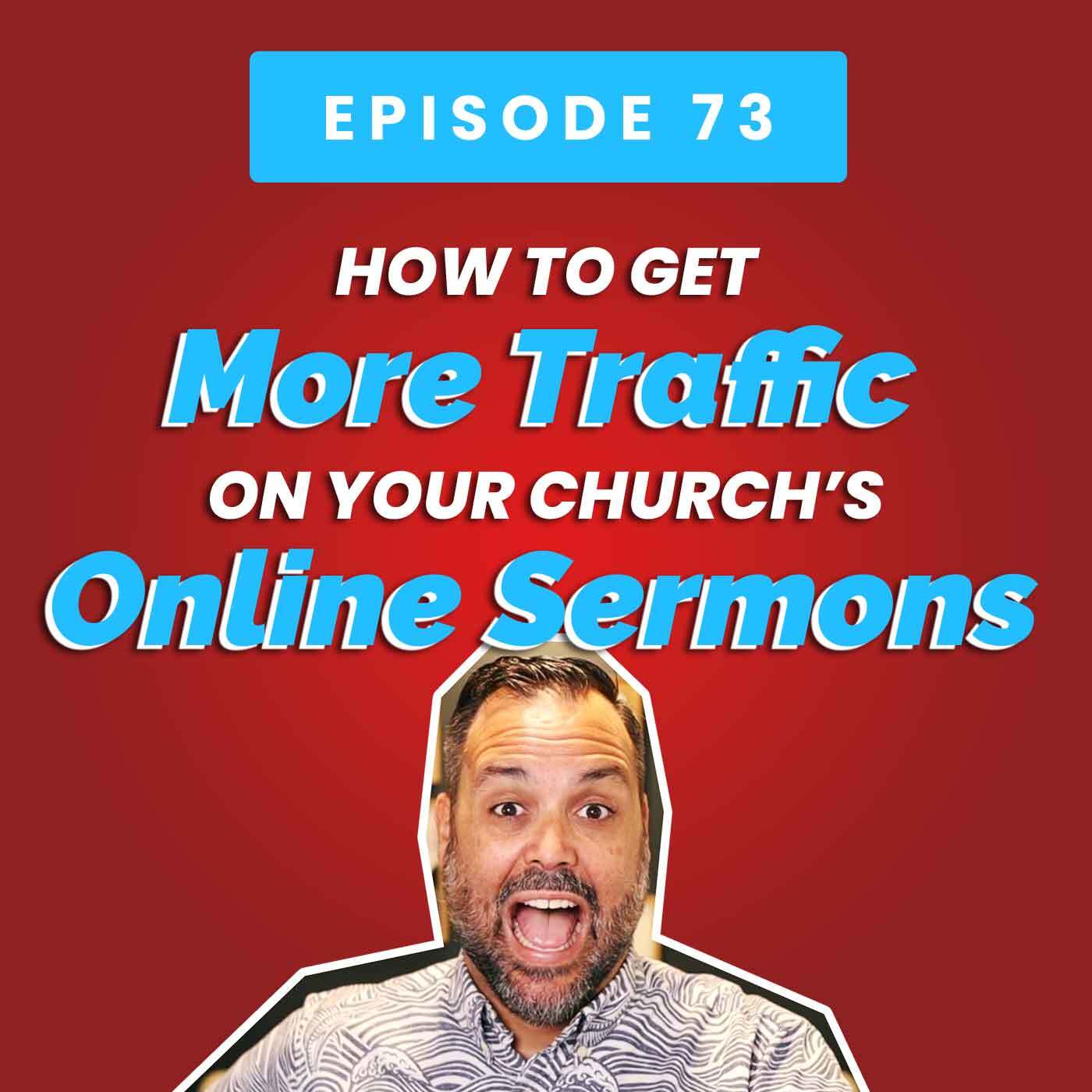
Speaker 0 00:01:11 Hey guys, welcome to the right podcast. Episode number 73, I am your host Thomas Costello. And with me as always is my cohost Ian Hyatt. What's up Thomas. Hey Ian, not much man. Excited to chat today. We'll be talking about how to get more traffic on your church's online sermons, how to get more traffic on your church's online sermons. Here's the thing is that we put so much time and really a lot of the work of the church is put into things tied to sermon. So pastor probably puts in hours every week. Uh, your tech team, uh, spends time getting ready for it and putting notes into the PowerPoint. And then they spend time putting it online and they clip it up and they edit it and they do all the things you gotta do. I mean, so much of church life happens and it's been this way forever.
Speaker 0 00:02:02 Is that, you know, it's all wrapped up around the preaching of the word, which we think is appropriate. That's a good thing. We think that we should invest a lot of time in preaching the word. That's something really important that all of us do. It's an important part of every church, but I feel like that one place that churches tend to neglect is a lot of the little things that we can do to get more people, to hear your sermons. Uh, and this is what this episode is all about today is helping churches think through some of those little things that you can do. Uh, and there's not anything here that's going to be earth shattering, but I think there are lots of things that might increase your sermon views by, by 2% or 6% or 10% at best. But you add that all up and you could get a, uh, you can almost double your audience if you do all of this.
Speaker 0 00:02:51 Right. Uh, so, and I think we've come so far when it comes to sermons, is that, um, just, uh, a few short years ago, or maybe a decade ago, a sermon was given once by most churches and then it went off into the air, it was gone forever. It didn't have any recurring value, uh, but now, uh, but there is a servant that you give once it can be used for, for years, if not like decades of generations to reach people with the gospel. So, uh, that's really what this all comes down to. I hope people hear our heart in this is that our first and foremost, our biggest goal is that we would reach people with the good news of Jesus Christ. We want to equip churches to do exactly that. And I think these things are ways to reach more people with the gospel. That's why we do what we do. So, uh, yeah. That's why we're talking about it. Anything to add to that?
Speaker 3 00:03:39 Yeah, I would just say, you know, th this was, this was important pre pandemic. Uh, you know, as far as, uh, pastors ministry leaders, churches wanted, uh, more traffic, uh, online for their sermons. They wanted people to watch and listen. Uh, the pandemic has accelerated that desire, uh, for a pastor to, uh, to have more traffic online. It's made it even more important moving forward. So, uh, very relevant topics. So, yeah, and I'll, I'll kick us off, uh, going right into the first one first thing here that, uh, someone wants to do to get more traffic on, on their sermons online is consider the titles. And we're talking about, we're talking about how you title your message online, uh, on, on your website. Uh, not, not how you title it at the church. You know, you, you can have a series going, uh, you know, on, um, Genesis or whatever, uh, or, you know, whatever it would be.
Speaker 3 00:04:34 Um, and you know, if you're preaching about Noah, you know, uh, you know, you might be titling at the church, uh, for your message when it rains, it pours, well, you don't want to title that, you know, on your website or your online message because, um, people, when they're searching, they're going to not, you know, be looking for when it rains, it pours or, you know, they're not going to be searching for Noah, uh, or anything like that most of the time. So they're going to be looking to doing something like how to grow your faith. That would be a better title, but this, these are important because of how people are searching online. Right?
Speaker 0 00:05:13 Yeah. I would say that it is possible that people do search for a title. Like no, like the name Noah, maybe not be search friendly, I think. Yeah. You want to be careful with those. Like when it rains, it pours that I could to use your example. Um, I saw one recently, uh, the name of the message was mountain, get out of my way. Uh, and it was about Jesus saying, mountain be removed. Or if you say this, uh, move this mountain, it will be removed. Like, I think that, like the, if you think about it, if you're looking for sermons on Noah or you're looking for topics on growing your faith, you're going to type in something to that effect. Like if you're typing in, when it rains, it pours, you're probably looking for memes about people that are getting piled on or something, or you're looking for some kind of a weather update or something like that is what people are searching for with that.
Speaker 0 00:06:02 So you really have to think about this and like this little change. This is probably, I think the mistake I see most churches making is not really thinking about a search engine friendly title. Uh, and when you get this right, I think it'll make probably one of the biggest differences of everything we're talking about here today. So get your titles, right? People will find you on search. You'll start to engage with more people that way. That's really important. I think. Good, good. Next one is always include notes, always include notes. And so there's a few different kinds of notes. We're going to talk about here. I'm going to hit this first one. Um, this is just talking about the notes that you have to go with the sermon. So at a minimum you want the scripture passages that you're teaching from. So you definitely want those in there.
Speaker 0 00:06:48 So if you're an expository teacher, that's how I typically teach is all I'll maybe have 12 verses or something, and I'll have those right in the body of the text. So people can read the verses will be reading in the message there. They can do it that way. You'll probably want to have maybe whatever your key points are. So if it's a three-point outline, you'll want those key points. Maybe if you have some sub points or a paragraph about each, that would be good things to have on there. And then you probably want some kind of call to action, your takeaways. Uh, I know at our church, one thing that we did was we would always have our small group questions because we had like sermon based small groups. So we would put the sermon, small, the small group questions right there in the body of the sermon to kind of good takeaway questions for people to ponder after the service there.
Speaker 0 00:07:32 So these kinds of notes, just having that, now it might seem like, okay, how does getting notes on there? How does that help our church? Like what, what does that do for us? Well, the answer is, is that search engines look at text content first. So when you have text content on there, assuming you're going to be using some of your key words, because if you're preaching from a passage, it will probably talk about your topic. At some point in that passage, uh, you're going to be putting it in your points. You're going to be putting it in your questions. It'll start to search it. Doesn't start to realize, okay, this is about growing your faith. And so when someone searches for growing your faith, this is something we should be showing them. So this is something important to help your search engine rankings as getting content in there. Um, so, uh, I think this is one of those things that most churches also skip. I mean, I don't know. You can tell me most of the people that we, you consult and talk to, how are their sermons set up? They don't usually have a lot of content there right now.
Speaker 3 00:08:31 Yeah. I usually, it's just, you know, there, you can click to watch or listen and, and maybe there's a couple of other things in there. Like someone can share it on social media, but yeah, I don't, I don't see notes as often as I should. And then I will say it's been the best church websites that I do see it have these notes in them. And what I mean by that is like their overall better websites when people take these extra steps. Uh, and, and so, but yeah, not enough to do it for sure.
Speaker 0 00:08:59 Just from a usability standpoint too. Like if I'm a user and I have the scripture right there, paste it into the notes on the, on that sermon. It's nice. I can actually follow along with what you're reading right there. I can do it all in one place. Uh I'm I'm with everybody. I know that I wish people would open their Bibles. And, but I just think that it's optimistic to think that someone is going to hit pause on your video. So let me go grab it, grab my Bible really quick and make sure what he's saying is true. And then, you know, do that. It's just like, yes, we would all prefer that, but in reality, that's not happening in most cases. So I'm a big proponent of putting all of those kinds of notes right in there. And yet again, I think it's going to help, it's going to get better user experience. And I think it'll help us think time on search.
Speaker 3 00:09:43 Yeah. And like you said, I mean, it's just, you're providing an extra resource for someone too. So that's also not just for SEO, but for that reason too. Well, good I'll tackle the next one. It's include an image everyone's visual, right? And most people are definitely, uh, the current generation, the next generation is, uh, you know, and people are more likely to just engage with a graphic or an image of some, some hind. Uh, and I still see, uh, I would say most church websites that I come across, uh, have some sort of an image now, but there's still a lot, um, of church websites that don't have that, uh, with, uh, or even on social media to just, uh, some sort of an image, you know, uh, that's, that's tied to the message. So, uh, this also helps for SEO. So we're kind of talking about two things, right? It's, it's good to provide a visual, it's engaging to someone they're more likely to click and watch if they see something, uh, an engaging image that catch their eye catches their eye, but as search engines are looking for that too.
Speaker 0 00:10:46 Yeah. And so it's kind of a broad thing is that, so search engines, what they're measuring in most cases is how many people that are presented with this link are clicking through to it. And if a lot of people click through to it, then they know, well, this is probably an important link. Let's continue to rank it higher and higher. And one of the ways that we get where people that click click on a link is that we have an image that goes with it. And I don't know, it's just, it's so obvious to me that if you see a nice image, that's drawn out about Noah, it's a picture of, uh, an arc in a storm or something like that, as opposed to just a title that says Noah, growing your faith, almost everybody would be much more inclined to click on the image than they would on just the title there.
Speaker 0 00:11:24 So it helps us search engines. It gets more people on there organically. Uh, it's a huge way now, a little, I guess, if I were to take it up another notch, a pro level tip is that you want to also name your image appropriately. So if you want to get into the search engine stuff, I think having an image is one thing, the image should be something very similar to your title of your sermon there, because it's your key word, right? So if you have an image on there and the title of your sermon is Noah Colon growing your faith, your image title should be growing your faith, uh, a Siri or a message about Noah, something like that, right? So you're using those same key words. You're reinforcing it. And it's helping with search engine optimization. Uh, images also have these things called alt tags, which is a little bit more technical, but you can get in there and edit those. You want to use keywords like faith and Noah and those kinds of things there too. So, um, yeah, using an image and making sure it's tagged properly. That makes a big difference in how many people are gonna see your message. Good stuff.
Speaker 3 00:12:27 Once you get the next
Speaker 0 00:12:28 One, the next one is a lot like my first one. Uh, so it's include notes and this, this one is include, or at least consider including a transcript. Uh, so it's kind of notes to the next level is what a transcript is. So a transcript of course, is getting a, actually written a written copy of exactly what you say in your message there. So now some churches have this done already. If you're the kind of pastor or church leader that preaches you write out a transcript, even if it's not exactly what you say on Sunday, but it's 90% the same because you kind of want to get every word exactly right. If that's what you do already, you already have a transcript. So it's a no brainer. Put that on there. If you're someone that is like me, you preach from an outline and you kind of have a, an understanding of your talk, but maybe not a word for word, you have a few word for words you want to really hit.
Speaker 0 00:13:17 But 95% of it is something that is more outlined based. You'll probably have to look to get this done and two options as I see it on how you can get it done. One, you could find a volunteer in your church that has a couple of hours and wants to be able to contribute. Maybe they, this is something that they're good at. They're a typist, or they like to, they, they learn some people learn by kind of copying, right? So if they want to really get the sermon into them, they can, they want to sign up to be part of the team that does transcripts of the sermons. There. Alternatively, there are services that on average, now the prices on this as have come way down because technology can usually really get this, get 90% of the work done for you. But most of the services are going to cost around a dollar a minute. You can find a surface that gets a really high accuracy on your transcript. So if you're preaching 30 minute messages, it's 30 bucks a week. Something like that is what you're looking at. So
Speaker 3 00:14:13 Another reason to not be a long-winded preacher, right? Save some money on your trends. Yeah, that's right.
Speaker 0 00:14:19 Yeah. Now here's the thing. And maybe you can add to this a little bit. I'm not a transcript reader. I don't think I've ever read a transcript of a sermon before. Uh, maybe I have of like a Spurgeon sermon because he famously would write out all of his sermons. So that's the only way we can hear, but given my choice of video or audio or, or reading it, I would almost always do video. Or if I'm in a car I'm going to be doing audio is going to be my choice. Right. But this is a big, another big boon to your search engine optimization on this sermon. Uh, if you have an average message is going to be probably four or 5,000 words, that's a lot of really quality content that you can put onto there. It could make for something really valuable.
Speaker 3 00:15:01 Yeah, that's good. Cool. I don't have anything out that I like this next one, uh, here, because it's something that I almost never see on, on a church's website that should be there is to link to related sermons. So within, within your, uh, sermons area or media area of your site, you know, uh, if you preached a message on, um, prayer, just making something up, let's just say was prayer. Well, if you have another, uh, message that you did a year ago, that was prayer related, you should link to that. Um, so, and again, there we're, we're talking almost like about on every one of these points. There's like two benefits, right? There's the SEO benefit, um, to, to make it more visible. And there's also, again, providing another resource if someone really, uh, is trying to grow their prayer life and, uh, your message encouraged them, but they want it even more. Well, they're going to be able to link to another message, like you said, for years now, uh, you know, most churches have been having an archive of sermons. Most, most churches that I run into, they, they have this already and it's just one easy, extra step that can add a lot of value to your sermons area on the site. Yeah.
Speaker 0 00:16:12 Again, this is another one of those double-edged swords. It's, it's great for, um, for SEO purposes, but it's also just good, good for actual users. Like people want to see relate if they're actually engaged with your sermon, they want to learn more about the kinds of things that you're talking about. So you can, there is no sermon that you can preach that you wouldn't think of something else you've preached about or talked about that you could link somebody off to. And this is something that we do like, so if you, if you scroll down and if you're on our site here watching this podcast or listening, you scroll down to the bottom of this here, you'll see a related links or more, it'll say something probably like we haven't put it in here yet because we don't know what the related links are going to be.
Speaker 0 00:16:54 But, um, it'll say something to the effect on, uh, about more on online sermons or more about that. And you'll have a whole list of things. Now we have a secret weapon with this. As we, we talked a couple of weeks ago about WordPress and some of the plugins that we think churches should be using. One of those was a search engine optimization plugin called Yoast. Definitely use that if you're on WordPress, but it does something amazing. It actually takes a look at your entire site and then it compares whatever the content you put into this sermon would be here. In this case, in this podcast, it'll compare our podcasts content to everything else on our site. And it'll say, here are the five things that you've done on your site that are most like this piece of content right here. So it's kind of an automatic related links that it puts in. It makes all kinds of great suggestions like that, but you should make it your goal that every time you preach a sermon have a number like five different sermons or five different pieces of content on your site that you link off to, uh, it'll just kind of help to build this web for search engine purposes, but also just for user experience purposes, I think it really will go a long way for people.
Speaker 3 00:18:03 Yeah. And I'm glad you mentioned that because I think with a lot of this, with what we've covered so far with each one of these items, I think a lot of people are thinking could be thinking, this is a lot of work. Gosh. Uh, and we don't have the manpower. I I'm glad you mentioned. There's a lot of, uh, tools, uh, specifically with WordPress, which is of course we're fans of, and we use, but there are tools out there to make this a lot easier than, than probably a lot of people are thinking. So that's good that you
Speaker 0 00:18:30 Generally, I think, again, this isn't a plug. We don't get any kind of commission or anything from Yoast, unfortunately, because we turned a lot of people onto it, but we absolutely love it. It is a great tool that you could be using and it makes your life a piece of cake is I, I think I'd be, I'd struggle to, I mean, we've done 70, this is, we said 72 episodes of this podcast. Now we have something like 300 blog posts on our site or 400, I think we just broke. Uh, it's, it's a huge number of, so I don't remember. I can't list off every single, um, uh, blog posts that we've done and tell you what episode 31 of the podcast was about. We don't remember all that stuff. I wouldn't grab her if I looked at it and, and refreshed myself, but the software does they know what is what's going on on your site? And so that's a hard ask because I don't expect any pastor out there remembered what they preached back in 2013. But if you have it on your site, you have some notes in there. Yeah. There are definitely tools. That'll help you organize that and get it out there. And it's just kind of a snowball effect. It'll help to improve things. Yep. That's
Speaker 3 00:19:32 A good transition to the next one you
Speaker 0 00:19:34 Got. Yeah, it's good. So the next one is use tags and categories. So I'll try and give a little bit of an explanation on what this is. Um, this is a, this is WordPress specific terminology, but every single platform out there that's worth its salt has a similar kind of system and they probably still call it tags. I mean, most people are familiar with tags or at least hashtags, those kinds of things. It's the same thing. But what it does is it, it helps you to put a few labels on every single sermon that you preach. So you're probably going to label it with things like the sermon series that it's a part of a tag or a category for that the speaker that gave the message. Uh, you're going to probably include, uh, the, the scripture, the book of the Bible that it's from, and then any kind of topic that it's a part of, maybe.
Speaker 0 00:20:24 So we've been talking about growing your faith with Noah. So you'd probably put things like Genesis, uh, Thomas Costello as the preacher, uh, series on, um, on Noah and about faith, whatever it would be. So you'd put all those things on there as tags and categories. And what it does is it kind of builds this searchable database, your site, so that over, over three or four years, you're going to have preached seven or eight sermons on faith. And you'll probably have talked about Noah two or three times. And the preacher who's preaching has probably done, you know, if you're doing the lion share, you've done 400 messages or something in that time. But if you're a guest speaker you've done seven and they can find all your other ones that way. And, uh, the topics are there. So it helps people to then locate these other topics or these other things that are similar content in the future there. And again, it's another play towards search engine optimization. It gets more people looking at your site, looking at other sermons and it gets more people finding you on Google. So that's what that comes down to
Speaker 3 00:21:27 Really good explanation. I'll get the next one, which is post to post your sermons to multiple channels. You would think this should be a no brainer, but I see a lot of churches doing this, which is great. Um, but it should be a no brainer to post get the message, not just on your website, get it on Facebook, get it on YouTube Vimeo. We can name a ton. And, and a lot of churches are, um, I think most churches that I come across now, uh, at least over 50% are using YouTube, uh, and, uh, and, and Facebook, for sure. So, uh, you definitely want to get those out there. Not everyone's going to end up on your website. Most people do before they go to a church for the first time and they'll get on there. But, uh, but, um, for people following you already on social media, YouTube, or whatever, you're going to get other people there and you're going to get the word out there on other channels whenever you, you do as many as you can. Yup.
Speaker 0 00:22:22 So we, we do, you know, we, we weekly, we're uploading a, a 30 minute video or audio file depending on how you folks are following this, uh, this podcast here. But honestly you do so much work. It's one of those things where you work so hard at writing the message, you deliver the message, you record the message, you edit the message that is like 95% of the work. All these things we're talking about today are pretty simple, but this one is so, so simple just to do. If you're loading it onto YouTube, it doesn't take that much more time to upload it onto Facebook, to even with slow internet, you're using a lot of the same content you're posting the same kind of video file. So it really is a no brainer to put it there. Yeah. To put it on Vimeo, to put it really on every channel that will receive it.
Speaker 0 00:23:07 If you are, uh, it put your clips onto Instagram, put a clip on to Twitter, uh, put, put it everywhere that you can possibly put this content and it will actually pay dividends for you. Again, this is not a double your audience. I mean, this one actually couldn't be close. I mean, if you are not putting your messages on Facebook and you have a good Facebook following, you're only putting it on YouTube. I mean, you can very easily see a 20, 30, 40% increase. I would say by putting it onto Facebook, now I'm going to go out and hit the last one because it ties into this. Here is the final thing today is that when you post it on multiple channels, always, always, always link back to your website as the primary place that people watch it. So, given your choice, you should always want people to engage with your content on your website instead of on YouTube or on Facebook or on Vimeo or on any other channel out there.
Speaker 0 00:24:01 The reason for that is there's multiple, but the biggest is that you have the most control over your audience when they are on your site. So you can suggest the other links on Facebook. They have ads on there on the side, they have other things competing for their attention. Further down on YouTube. There's a list of 12 other videos they could be watching instead of this one, right on your site, you have only your content and then maybe some links to other things that are your content and other related issues and scripture and the stuff we want to engage people with. So it's so important that you don't make the mistake of just putting your content on Facebook. Always have a link in that post that goes back to the website so people can engage with them. They can engage with it there, and it really will make a huge difference. What you have that.
Speaker 3 00:24:50 And I, I tell churches this day in and day out, you know, cause I, we, I do website evaluations and I'm looking at social, their social media and looking over their sites. And I tell them this too, that yes, the reason why you want to always pull in, like if it's live streaming or even on demand messages to your website and having people come back from social media to the site is because even if they watched a message on Facebook, they can't do things. They're like filling out a connection card, uh, or, uh, or, you know, make cause a lot of times after someone watches a message, they may want to get in touch with you and have, uh, questions about baptism, salvation, whatever it is, becoming a member at your church, or they may want to give which, which we don't want to, you know, make that hard for people to do. Let's face it in a church. It, no pastor does. Uh, but at the same time, uh, yeah, they can do more. Like you said, there's other content that's going to be on the website. They're a captive audience. You have control. Uh, but they can do more from the side again, all for social media, be there. That's why we said go to multiple channels, but they can do more with your sermon on your website now.
Speaker 0 00:26:02 And again, just back to this, this is one of the key factors in search engine ranking is how much time people stay on a post. So if they are watching your sermon and they're staying on there, they're clicking on to other sermons and staying on your site. This is every second they stay on your site. It's being recorded. And Google knows that they they're aware of how much content people are consuming there. And they'll start to rank you higher and higher if you do these kinds of things. Right? So again, the thing that take away from all this is we didn't give anybody a way to, you know, to 10 X, your, your serving sermon views or anything like that. Um, I think you do all this stuff, right? Uh, and you will see a 10 X not next week, but you will see it in in three years.
Speaker 0 00:26:45 If you do these kinds of things, consistently 150 sermons in a row, you keep doing this kind of stuff. You will see an enormous increase in this week. Take it from us. We, we we've started a podcast with a very small podcast audience and we see more and more, and we're in that snowball kind of a season with this here. So it's doing the little things, right? And I can't express this enough, just what a difference that makes if you're the average church in the country, you're preaching to a hundred people every single week. Well, what kind of an impact is it going to make, if you are putting these online and you're starting to do these things right, and you start to see 50 people watching online, and that becomes, it becomes a hundred, it becomes 200, it becomes 500. I would think that most churches that do this right will have a larger online audience than they would have an in-person audience. And with that, what you will, I mean, maybe that's something that you, that hurts your heart a little bit. I know that scares me a little bit. I think assembling together is very important. Uh, we, we believe in that you and I both, but there is still value in people that are watching what you're talking about and hearing the gospel online. I think that's why this is so important. So get the little things, right. Anything to add as we close in.
Speaker 3 00:27:57 I think that's good. I think that, uh, all of these things like, I, I just, you know, like we said earlier, I think they're not as hard as probably someone thinks to pull off. And, uh, and we're here to give tips on that if anyone wants help with it. So
Speaker 0 00:28:09 Yeah. Drop us a comment below wherever you're watching it. Uh, if yous has been helpful to you, in addition to a comment below you can rate review, subscribe, leave us a review on iTunes, on Google podcasts, Spotify, wherever you're listening or watching this. Uh, we love your feedback and comments on there. So thank you guys so much for being a part of our reach, right family. And we hope to catch you next week. Thanks for listening to the rich right podcast. We hope this episode will help you reach people the right way, looking for more resources for your church. Check us out
[email protected]. If this episode has been helpful to you, it would mean the world to us. If you would rate, review and subscribe on iTunes or wherever you get your podcasts. Thanks again for listening. And we'll see you next week.