Episode Transcript
[00:00:00] Speaker A: Almost every church that we work with is using video in their weekly services now. But not every church is optimizing and using the strategies that we've seen are proven to get churches more results with their videos. And in this conversation, we're gonna break some of those down. Let's do this.
You're listening to the Reach Write podcast, the show dedicated to helping your church reach more people and grow.
Hey, guys, I'm Thomas.
[00:00:28] Speaker B: And I'm Ian.
[00:00:29] Speaker A: And today we are talking about church video strategy and the top ten things that we see working for churches in 2024. I think it should be a good conversation. Video today is more important than it's ever been before. I think that's. And video today, it shows no sign of stopping. I was wondering, Ian, how I didn't ask you this beforehand here. What percentage of the churches we work with would you say are using video? I imagine it's the vast majority, but how many are not, I guess, is a better way to say it. Like, are not doing some kind of video content.
[00:01:08] Speaker B: I mean, off the top of my head, in all of the conversations that I've had, which I've literally had thousands in the last couple of years alone, I would say 92. 92% of church.
[00:01:23] Speaker A: 92%. Very precise. Thank you. I appreciate that.
[00:01:26] Speaker B: I didn't want to just say 90%.
[00:01:28] Speaker A: Because really, you made it up off the top of your head if you said that.
[00:01:33] Speaker B: And you know this, too, Thomas. It used to be about six to seven years ago, we'd come. I'd come across a lot of churches that really. They only had, like, audio sermons on their website.
But I see at least not just on a website, but a YouTube channel through Facebook, live. I mean, I see churches. I just. I. It's very rare that I don't come across a video, but I might get a church that's really, really behind the times or struggling or in a very rural part of the country. It's usually something like that.
[00:02:08] Speaker A: Okay, so I'm gonna go on record and say it here in 2024. Video is a must have for churches. It's no longer something that's optional. I think that if you. I mean, obviously, you can do what you want with this information, but I would strongly encourage every church to do it. It's. It's just one of the most important things you can do, from sermons to, you know, most of the things we're going to talk about here today is having to do with short form opportunities and some of that kind of stuff. But, yeah, it is a. It is a must have. And so what we wanted to do is give you a list of the ten things that we see, like techniques that we see that are helping churches get more traction with the video. So assuming you're in the 92% Ian's talking about, that. This hopefully will help you if you're in the other 8%, hopefully that first thing I said, you need to start doing video. It's time to do that. It doesn't have to be super expensive either.
There are solutions that you could probably bake into what you're doing at your church already for a few hundred dollars, and you'll be off to the races and have something that's good enough to create decent content. So.
[00:03:16] Speaker B: Correct.
[00:03:16] Speaker A: All right, so why don't I kick us off the first, and I'd say the most obvious is sermon highlight videos. So this is a technique that we're seeing. It is really tied to the rise of short form vertical video platforms to give you those, that is tick tock, Instagram, Facebook and YouTube, shorts, reels and TikTok, those things there.
The most obvious thing that we have at our disposal as churches is we have about half an hour of sermon content every single week that we've probably already videoed. And to turn that into something that is digestible and under a minute and would be good on one of those short form platforms, it is easier and easier all the time. There's services like, we have one here, it's called sermon sling. We can help you do those kinds of things, but with AI, there's things that are passable that you can use with tools like sermons, tech and opus clip. There's some different ones out there you can use, but this is a strategy that I think every church should be incorporating is turning your sermons into short form content. I would encourage you to start with just a goal of doing one a week. That'd be a good kind of starting point. It should be. You should be able to do a couple out of every sermon, but even if you just did one a week, I think that's a big step in the right direction.
[00:04:44] Speaker B: Yeah, no, that's good. Nothing much to add there, but the reason why we listed it first is that that's really a no brainer to be doing shorts and. And like you said, most churches are already recording their sermons, so this is the place to start, obviously, with video. So the next one has been tried and true. I would say tried and true, but it's been something that's been effective for years now. I still don't see a lot of churches doing it enough, though, and that's just doing testimonial videos. Obviously, it's great when people hear from the pastor, see the pastor on video, but how much better is it, in some ways, for it to come out of the mouth of a church member or someone that's been impacted by your church, where they've been touched by God, and they can share that in a brief video clip and a brief story? I've done video testimonials. I've really enjoyed them. It's fulfilling. Just like the Bible says, we overcome by the blood of the lamb and the power of our testimony. I've enjoyed giving video testimonials just about as much as over across the pulpit or whatever, or in a small group setting. So these are also just very authentic. Again, it's coming from the mouth of someone who is not just a face of the church. I mean, it can be. It could be a pastor that has a testimonial, too, obviously. But, yeah, these are very effective and easy to pull off, too.
[00:06:14] Speaker A: So, yeah, I mean, easy, I'd say is like a relative term. I mean, so it takes some work to do them well and everything, but I think there's something that you probably. They don't need a ton of scripting. It's basically you're doing an interview with someone, and then the key to these videos is edit, edit, edit. Because when someone shares a testimony, you'll probably need about 15 or so minutes of footage for a one to two minute testimonial video. Yeah. Interesting story. So, we had a lady from our church passed away last week, and what's really amazing is we saw this. She had done a testimony video, uh, about, uh, some things that God did with her. And when she had seen victory over cancer several years before, uh, God gave her some bonus years. Then we lost her just this last week, and we saw this enormous spike on her testimony video when we looked at our analytics, uh, just this, this week here. Uh, it's been amazing to see that, and just to see, and I don't want to make this like a too, you know, morbid or somber or anything, but just to see her.
Her message and the gospel be presented, even after she's left this world and gone to be with the Lord, it really is amazing to see that. I think that is cool. People just. And this is just. We didn't promote it. It's just something that happened organically. When she passed away, people kind of would do a search and maybe look her up and see if there's anything they could see from her and started sharing that powerful video that time that she shared about God's victory in her life, and really a cool thing. So, yeah, I'm all for testimonial videos. Really powerful. Next one is behind the scenes footage. I think this is an opportunity.
It has to do with this uptick and kind of the value that is being placed on authenticity. I would say it's on some platforms more than others. I think TikTok is really made for authentic content. That's the one where you'll see the best results. With a lot of times that just an iPhone, a front facing camera without even a microphone, just put it out and go, that kind of content does well there. And so really behind the scenes content is really something that kind of gives people an idea of what's going on at your church and what's happening there. So whether it's at a staff meeting and just seeing kind of the faces that are in the room and seeing people kind of in their normal, everyday life, or maybe it's kind of people praying before service and what happens there? Or I will say this one thing. It's. I don't know if I'd consider it necessarily behind the scenes, but one of the best times to get video of worship is not during service, but actually during the rehearsal time, when people are. If you're the kind of church where you rehearse right before service there, it really is usually gonna look pretty close to what the finished product looks like on Sunday mornings. And so getting some of your footage there, kind of behind the sceney, because you're actually getting the footage beforehand there. So a couple of tips. We're seeing work.
[00:09:07] Speaker B: Yeah, a keyword used in there that I like, Thomas, just like we said with the testimonials idea is, it's very authentic. And I think that breaks the. That reduces. If you're putting this out there and potential visitors are seeing it, people that have not yet visited, to me, that would come off as, wow, you know, this church is kind of. It's not just about come see us on Sunday. Wow. They're real people doing things behind the scenes, and they look relatable. And it's. Authenticity goes a long way with outreach these days with what you're doing online. So that's good. So next one is volunteer spotlights. As it said, volunteers are the backbone of the church, obviously. I think it goes without saying that every church greatly values their church volunteers. If you don't, then something's wrong. And how cool is it to spotlight someone who is not often on the pulpit? Maybe it's someone who's involved in all your outreaches.
Maybe it's even a greeter at the front of the church. Maybe it's for a quick season. I used to, and as you know, I've pastored as well, but for a quick season, I was the security guy, making sure when parents were picking up their kids after church that they had the right number and that the right kids were going out the.
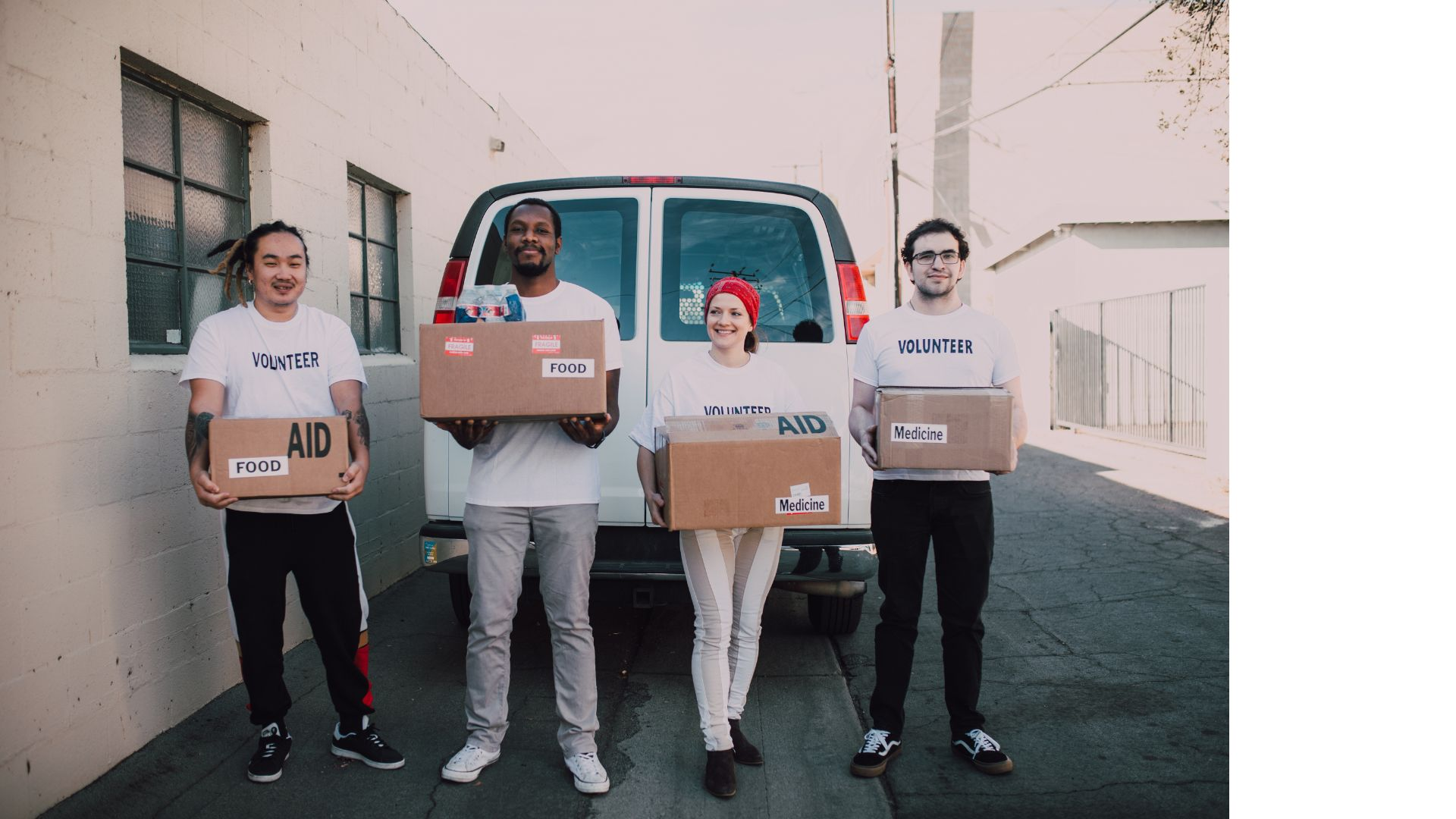
The door there. So, again, you know, whoever it is at your church, highlighting them also comes off as authentic, but it's also just a very good gesture. And, you know, you can interview your volunteers, catch them in the act of it. Maybe it is someone doing an outreach. You know, maybe it is someone, you know, at a food pantry serving or whatever, catching them in action, you know, maybe even getting a brief snippet of how they felt fulfilled after volunteering at a certain church event or something. Something along those lines. But definitely highlight your volunteers with video.
[00:11:00] Speaker A: I absolutely love these. I love these volunteer spotlight videos. And not even, like, for performance reasons, because they do really well. I've seen them do well, but I just think that they're powerful because so many people have no clue what it takes, like how many people are involved in volunteering to make church happen, to make all of the ministry. I'm not just talking even about Sunday mornings, but just everything that your church does.
It's just such an enormous amount of free labor that's given towards making these things happen. And so I love being able to celebrate people and the way that they're giving of their time and the way that they serve the church any chance you get. I think this is something that is really cool to do. Again, you can kind of incorporate some of the behind the scenes stuff. So if you are at church early and you want to film someone sweeping floors and then just ask them a quick question, hey, why do you do what you do and kind of catch them in the ass? That's cool.
A cool idea. Just these are. These can be volunteer spotlight videos. They're great for little pieces of content. That way, don't feel like you have to have an ultra produced spotlight video. Authenticity is really good for these two. So good. Next one is Q and a sessions. This is something we're playing with a little bit here at retry, doing some of these kinds of content. I think this works really well in the live format. So if you want to be able to get questions live from people, maybe you're going to do it on a Facebook live or something like that, inviting people to chat in questions. Or perhaps it's just filming a actual session of Q and A. Or people write in or text questions. Yeah, any format will work. But I just think that, again, the authenticity of this goes really well.
[00:12:44] Speaker B: Yeah.
[00:12:45] Speaker A: Especially when you are unprepared for the questions. I know that might be scary to some people because it's like, you know, what if I get a theology question that I'm not ready to answer or I say something I shouldn't, you know, I think that people are willing to accept that and you can just be candid about it, say, hey, you know, that's not something that I have an exact verse for right now to share with you. But here's what I do know about this topic and just kind of speak from the heart in these areas. Be candid, be open with people. Don't worry so much about, you know, how it'll make you look in the end. But I think these kind of Q and a ideas I think are really cool.
[00:13:19] Speaker B: Yeah, I like it. And if you're a senior pastor doing one, I think it makes you a little more real and authentic. I mean, often, you know, senior pastors are perceived as someone who's just delivering the message and not, you know, answering questions or interacting. So could be a good strategy for a senior pastor, too, to just make you a little more down to earth and relatable, so to speak. So good. Next one is a sermon series, teasers. This is a cool thing to be able to put together. I would say most churches that I come across now and connect with, they're doing a series.
Most churches are series driven, even if they're expository. They're maybe doing a very long series through the book of Luke or something like that, but doing teasers or, you know, on series or maybe certain sermon topics, putting together a video teaser, it can also just help people. It can increase or keep consistency with your attendance. If you're kind of putting these things out there and people are like, oh, wow, yeah, I can't wait for that series. And highlighting that ahead of time. I know it's something my church does that's really cool and has been doing this for years.
[00:14:29] Speaker A: Yeah, I do have a warning about this one. I've been like kind of noodling on this for a little while. And I'm gonna say this, but I think we care more about series than the people that go to our churches do like us as pastors.
[00:14:45] Speaker B: That's a good point.
[00:14:46] Speaker A: I think that they're a big deal for us, but I think, like, I've been getting this kind of feedback and it could be just local, baby. Let us know in the comments if you agree or disagree with this. But I think that we get so wrapped up in series, and especially with the series artwork and the series bumper and the teaser videos and everything, and I think if you did a poll of people in your church and just asked them, hey, what's the name of the series you're in right now? You know, maybe there'll be if, like, you're going through a book of the Bible, they could probably say, oh, we're going through, you know, mark or something like that right now. But if you know these cool names, like, you know, if it's called God with us or something like that, most people won't be able to tell you that stuff. So they'll say about this, yeah, yeah, they'll say what it's about. Right. But it's like, yeah, so these sermon teasers, I think that they are a trend and things that we. I don't think that they work very well on social platforms. I think they're valuable in service.
[00:15:45] Speaker B: In service, right.
[00:15:46] Speaker A: Good transition tool in those things. We just wrapped up a series on Nehemiah at our church, and it was like 15 weeks, I think is what it was. And we had this sermon teaser or bumper video, you'd call it. It was like, you know, 10 seconds or something super short. But it was just the same thing every single week that we used. And by the end of it, we were like, man, okay. I think I actually told you it was good news. You don't have to watch this anymore. I was preaching that last week of the series there, and I said, hey, great news. You never have to watch this again. So by the end of it, we were quite done with it. So for what it's worth, I think that there is some place for them still. But don't put too much weight on it, because I think we care about it more than people in our churches do a lot of times.
[00:16:28] Speaker B: Way to squash my excitement about it, Thomas. That's fine, though. That's okay. No, it's a good point. It's a good point.
[00:16:33] Speaker A: So.
[00:16:33] Speaker B: But next one, I just like them because my church does them a lot in total.
[00:16:37] Speaker A: No, I get it. You guys do a different one every week.
Same one for the series.
[00:16:44] Speaker B: Oh, the same. What are you talking about, different?
[00:16:46] Speaker A: So if you have a series that's four weeks, that's what your church usually does. Right? It's a four week series?
[00:16:50] Speaker B: Usually, yeah. Could go a little longer, but yeah.
[00:16:52] Speaker A: Is it the same? Uh. Do they play it the same? It's the same video all four weeks of the series?
[00:16:58] Speaker B: Oh, yeah. As far as the. Yeah, most of the time, yeah. Unless it's just something unique, but, yeah. So anyway, but enough of that.
[00:17:05] Speaker A: Yeah, enough of that. All right. Community outreach highlights. That's the next one here. So it's a great thing to be filming when you're able to make an impact in your community.
[00:17:17] Speaker B: Yeah.
[00:17:17] Speaker A: So anytime you can do that with whatever kind of local missions that you are doing as a church, getting that kind of stuff caught and onto social platforms just really reveals to people that you are bigger than what happens inside the walls of your church. And I think that is attractive to people. And those are the kinds of stories that get shared, especially when you can, from a social perspective, when you can tag other organizations and community outreach locations. So let's say you're doing a school cleanup day and maybe you're doing yard work at a local school or something like that. Tag the school, tag the school PTA, tag the school football team, or, you know, whatever it would be the people that, that are bigger accounts on there. If you're doing work near the football field, then, you know, tag them in there and you could start to gain some traction with that. So community outreach highlights. They're powerful videos and they're great chances for partnerships and collaboration and some of those kinds of things. So take advantage of that.
[00:18:18] Speaker B: Yeah, I kind of spoiled that earlier when I mentioned if it was someone volunte, when we were talking about volunteers, if they were volunteering at an outreach. But no, that's good to expand upon that next one. This one's kind of should be an easy one to pull off or just kind of a no brainer, if you will. Holiday specials, obviously, around those times of years, Christmas, Easter, if your church, I know so many churches are known for doing some sort of, whether or not it's a choir or singing time of worship at Christmas or maybe a festival or something like that, getting some videos of that out there or moments from those big events. And of course, just behind the scenes stuff like we talked about, we're speaking of volunteers showing if someone is putting together the decorations and all those things that go on behind the scenes, but definitely creates a little more warmth around those key times a year.
[00:19:19] Speaker A: So totally you're going to get a algorithm boost if you make content about a holiday in that holiday season. So that's good. We see this here at retwrite, like when we have our videos about Mother's Day and Father's Day ideas for churches. And lo and behold, at Mother's Day and Father's Day time, people are looking for it more. The algorithm boosts it more. Our shorts perform better on these topics right around then, and then they completely drop off right after the holiday happens because that's when people are looking for this content. So making Mother's Day, Father's Day, Christmas, Thanksgiving, if your church is willing, Halloween related content, any of those kinds of things, I think they all pose opportunities for churches to kind of get some more traction within the algorithm because it's relevant, timely content. So yeah, pretty good opportunity there.
[00:20:12] Speaker B: That's good.
[00:20:13] Speaker A: Good. Next one is educational content. What do we mean by this is just more digging deep into topics. So I've seen some churches create their own educational content on books of the Bible or training. One that I'm seeing more and more we're playing with at our church is like a baptism training video. So one of the things that people wonder is, hey, what do we need to teach people before we invite them into baptism within our church? Well, a video is a great way to do some of that kind of teaching. You could also, it's great to do it in person as well, to have a kind of connection with people. But you know, if you're doing 40 baptisms at a time, you know, you want to be able to find a way to easily get this content out. So having some of that kind of thing available as video content is great. A lot of our audience, I'm sure is familiar with right now, media as well. They produce educational content that then can, we can then use and place it onto our website and use it as educational content for spiritual topics and theology within our churches there. So some opportunities with that as well.
[00:21:20] Speaker B: That's good. Well, last but not least, and this one, correct me if I'm wrong, Thomas has more to do with not an idea for video content, but maybe how to make your videos more visible. And it's a little SEO related, but keyword research. So this is a good step in optimizing your online content, like your video content. So what are the relevant keywords people are searching for in your area? Is it local church services? Is it churches with great youth groups or youth kids activities?
And obviously these will make your videos, whether that's on your website or social media, that'll make your website and your social media platforms a lot more visible where people can take part in your video content. So we leave with, I guess, somewhat of a call to action to, if you're doing the work with doing video content, you want that video to be visible. And some of this keyword research, and I know you're very knowledgeable on this, Thomas, but will tie to video content directly, but somewhat. So, yeah.
[00:22:30] Speaker A: So there's two parts of this, and this is probably, I hate to say it, but this is probably the most important of all the ten points here because it's something that seems like so technical. It's not as hard as it sounds, but let me say, I guess the two times to do this. So before you make a piece of video content, if it's something you're going to invest a lot of time in, especially you want to make sure you do the research on whether or not this is something that people, people are actually watching already or not. Right? So, you know, we, this is just so obvious. Like, I'm going to use us as an example again here at retry. We did a video this week. It was called how much should churches spend on marketing? Yeah, it did pretty poorly by our standards, and it was something that I had really high hopes for. I think it was some of my best content that I filmed, and I was really happy with what I communicated, but it was just, the fact is that it was really good content, but it's just not something that people search for.
Alternatively, we did a podcast episode that we did this maybe like six months ago. It was called red flags about toxic church leaders. So the keyword was toxic church leaders that was in there. And meanwhile, that one that was a podcast that wasn't heavily edited. It was just kind of our standard podcast format, like this one. It is to this day, one of our most viewed videos.
And it's not because that was necessarily better content than the video we just made and was highly produced and put a lot of effort into with that. It was just the fact that people search for toxic church leaders a lot more than how much should churches spend on marketing that kind of a question there. So churches need to be looking at these kinds of things as well, especially for your long form content. You want to beforehand, make sure if you're looking for new pieces of content to make, ask yourself, is this something that people are searching for? And then the real thing that we can focus on? Because I have a hunch that most churches aren't going to change their sermon series topics based on what gets most searched. Right, because there's all kinds of things that we maybe aren't searched that we need to talk about. But after the fact, this is a huge, huge opportunity for churches. I cannot tell you how many churches that do great content, fantastic sermons, and then, you know, it's a sermon on a particular. As a passage in Luke, maybe. Let's say, for instance. And the name of the sermon that they put onto YouTube is June 14, sermon Luke 1218. Like Pastor Joe Smith. Like, that's the name of the actual file on there. Right. I just want to tell you, like, you will, you can, it'll be good for your members, I suppose, if you. That's your main goal. I would encourage you to broaden your horizons on that. But YouTube will not deliver your content to people. If it's named something like that, it has to be named. The only person that would see that content is someone that types in Luke 1218. Yeah, might see that in that case there. And it's still. You're going to be way down the list. Alternatively, I don't know what Luke 1218 is about, but let's say it's a passage about.
It's a parable of Jesus. Let's just say, for instance, it was the prodigal son story. So if your title is prodigal son Sermon, the passage of scripture, and then maybe even like a keyword or two in there, like that, will get much better results. So if you get anything out of this whole episode today, spend some time doing it. I've done, like, a really long deep dive on this. We have, like, a 30 minutes video that shows you exactly how to, like, a screen share of exactly how to optimize a sermon on YouTube. And I'm not kidding, like doing this, I think it attributes to about four times the results when you do that. So get those things right. Do the SEO optimization, do the keyword research on there, and you will see an enormous impact. So I'll link to it right here. If you're watching on YouTube, down below in the description, if you're watching or listening on some other platform, you'll find a link to that. But we have a total deep dive in exactly how you should be optimizing your YouTube videos. So I think we can leave it at that. Anything else to add on that, Ian?
[00:26:59] Speaker B: No, no, you covered that extensively, Thomas. So, no, great job. And no, that's good.
[00:27:03] Speaker A: Good one to finish the whole name. Extensive is what they call me there, so. Well, good. Guys, again, check out that video, if you haven't already. I think it'll really be helpful to you if you have any questions on what's working in the video realm or what's working for the keyword research side of things. Feel free to ask it down in the description or in the comments here. We do read every one of those. We're happy to answer every single one of those there, so let us know in the comments. Thanks guys for being a part of the Reach ride family. Hit the subscribe button and we'll see you next time.
[00:27:33] Speaker B: See ya.