Instagram Mastery: 9 Church Marketing Strategies for 2024

July 04, 2024 00:23:36
Instagram Mastery: 9 Church Marketing Strategies for 2024
REACHRIGHT Podcast
Instagram Mastery: 9 Church Marketing Strategies for 2024

Jul 04 2024 | 00:23:36

/

Show Notes

In today’s digital age, social media platforms like Instagram have become powerful tools for churches to connect with their communities. With over a billion active users, Instagram offers a unique opportunity for churches to share their message, engage with followers, and grow their congregation.

In this podcast, we explore effective Instagram marketing strategies for churches, from creating visually appealing content to using hashtags and stories. Whether you’re looking to attract new members, keep your current congregation informed, or simply spread positivity, these tips will help you make the most of Instagram’s features.

By leveraging this platform, churches can build stronger relationships, reach wider audiences, and inspire more people with their mission and values. Ready to learn more?

Let’s jump in.

Estimated reading time: 11 minutes

Should Churches Use Instagram?

Should Churches Use Instagram?

It’s time to face it: social media is here to stay. For the past decade, it has revolutionized the way that we communicate and connect with one another. While social media has proved to cause lots of problems, it has also been incredibly helpful to many who have an easy way to connect with loved ones or long-distance relations. It is responsible for some good and some bad. Regardless, it’s not going anywhere anytime soon.

So since it’s here to stay, what can churches do about it? Well we think churches should use social media to their advantage. It provides access to people like never before. Spreading news of your church and your mission has never been this easy!

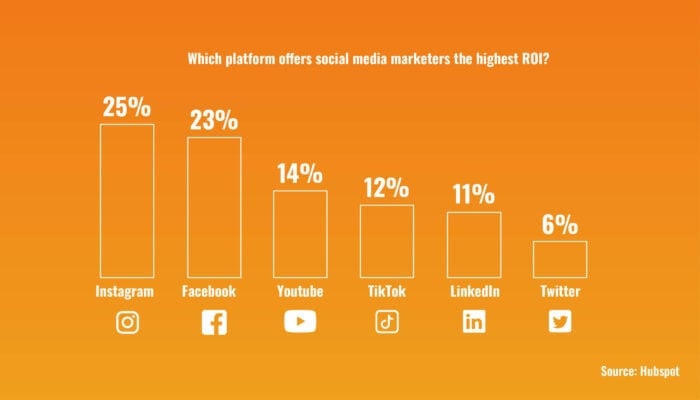
As one of the most popular social media platforms, Instagram can be used by your church to produce big results! According to hubspot (via Goat Agency), Instagram provides the highest return on investment when compared to other top social media platforms.
Goat Agency

This means that if you want to start marketing on social media, Instagram is the place to do it! Let’s learn more.

Reaching a Wider Audience

Instagram is a popular social media platform with over a billion active users, making it an excellent place for churches to reach a wider audience. By using Instagram, churches can connect with people who might not attend services regularly but are still interested in spiritual growth and community.

With visually appealing social media posts, churches can share inspirational messages, event announcements, and updates. This helps keep both church members and potential visitors informed and engaged. A well-planned social media strategy can attract new members and spread the church’s message far beyond its physical location.

Engaging the Church Community

Instagram offers various features that can help engage the church community effectively. Features like Stories, Reels, and IGTV allow churches to share daily updates, short videos, and live streams. This creates a sense of closeness and involvement among church members. For example, a church can post behind-the-scenes content, highlight community events, or share testimonies from members.

These types of social media posts make the church feel more approachable and relatable. Engaging content helps strengthen the bonds within the church community, making everyone feel more connected and supported.

Enhancing Visibility and Outreach

Using Instagram for marketing can significantly enhance a church’s visibility and outreach efforts. By incorporating hashtags and location tags, churches can make their posts more discoverable to people in the local area and beyond. This is particularly useful for promoting special events, services, or community outreach programs.

Additionally, collaborating with influencers or other local organizations can further amplify the church’s message. An effective social media strategy includes regular interaction with followers through comments and direct messages, making people feel valued and heard. This kind of active engagement can lead to a more vibrant and growing church community.

Instagram is a powerful tool for churches looking to expand their reach, engage their members, and enhance their visibility. With thoughtful social media strategies and creative posts, churches can build a strong online presence that complements their offline efforts.

9 Church Instagram Marketing Strategies

9 Church Instagram Marketing Strategies

We hope you are convinced that Instagram is the way to go. Churches can use it for marketing and reach people like never before! But what does that marketing look like?

In this section, we’ll cover the top 9 strategies for your church to use when marketing on Instagram. As always, these are just suggestions, so pick and choose how you would like. If some of these aren’t working for you, don’t worry about it! This list is to get you started and to help you excel on Instagram, but it isn’t going to always look the same for everyone.

Ready to find out what’s on our list? Let’s dive in.

1. Create a Consistent Posting Schedule

Creating a consistent posting schedule for your church’s Instagram account is crucial for keeping your audience engaged. Regular updates help followers know when to expect new content, which can include inspirational quotes, updates, and announcements about upcoming events.

Aim to post at least a few times a week to maintain a steady presence. Plan your content in advance, considering important dates and church activities. This way, you can ensure timely reminders about services, community events, and other church-related news. Using a content calendar can help you stay organized and consistent.

Consistent posting not only keeps current church members informed but also attracts new followers who may be interested in joining your church community.

2. Use High-Quality Images and Videos

Using high-quality images and videos is essential for effective Instagram posts. Visual content grabs attention quickly, making it more likely for people to stop and engage with your posts. Share clear, bright, and well-composed photos of church events, worship services, and community activities.

Additionally, create videos that highlight sermons, Bible studies, and testimonies. When posting Bible verses, use attractive backgrounds and readable fonts to make the text stand out. High-quality visuals reflect the church’s dedication to excellence and help convey your message more effectively.

By investing in good visuals, your church’s Instagram account will look professional and inviting, attracting more followers and keeping current members engaged.

3. Promote Events and Services

Promoting events and services on your church’s Instagram account is a great way to keep your community informed and engaged. Use Instagram posts to share details about upcoming church services and events. Here’s how to effectively promote them:

These strategies will help ensure your church services and events are well-attended and appreciated.

4. Feature Church Members and Testimonials

Feature Church Members and Testimonials

Featuring church members and testimonials on your church’s Instagram account is a powerful way to share personal stories that highlight the church’s mission. Posting testimonies allows members to share how the church has impacted their lives, providing authentic and relatable content. Share photos and videos of members talking about their faith journey, involvement in church activities, or personal experiences with the community.

These stories not only inspire others but also create a sense of belonging and connection. Highlighting individual members shows the diverse and supportive nature of your congregation. It also reinforces the church’s mission by demonstrating its positive impact on people’s lives, encouraging others to become part of the community.

5. Utilize Instagram Stories

Utilizing Instagram Stories is an effective way to engage your audience on various social media platforms. Stories allow you to share quick, temporary updates that disappear after 24 hours, making them perfect for timely content. Use Stories to provide daily inspirations, behind-the-scenes glimpses, and reminders about upcoming events and services.

You can also share real-time updates from church activities, creating a sense of immediacy and involvement. Interactive features like polls, questions, and quizzes can make your Stories more engaging and fun. Highlight important Stories to keep them accessible on your profile for longer periods.

By regularly using Instagram Stories, you can keep your church community informed and connected in a dynamic and engaging way.

6. Go Live

Going live on your church Instagram account is a powerful way to connect with your community in real-time. Live videos allow you to stream events such as church services, Bible studies, and special announcements directly to your followers.

This instant interaction fosters a sense of closeness and engagement, as viewers can comment and ask questions that you can respond to immediately. Going live also allows you to reach a broader audience beyond your physical location, including those who may not regularly attend in person.

Whether you’re sharing a sermon, hosting a Q&A session, or showcasing a community event, going live on Instagram helps strengthen relationships and encourages participation in your church’s mission and activities.

7. Create Engaging Reels

Creating engaging Reels on Instagram is a great way to connect with your church community through short, impactful videos:

Engaging Reels can capture attention quickly and encourage viewers to engage with your content through likes, comments, and shares. They’re a versatile tool to strengthen connections within your church community and reach a wider audience with your message of faith and positivity.

8. Use Hashtags Strategically

Using hashtags strategically on your church’s Instagram posts can significantly increase their visibility and reach. Hashtags categorize your content and make it discoverable by people interested in similar topics or searching for specific keywords. Choose relevant hashtags that relate to your church, events, and community activities.

Include popular hashtags like #faith, #worship, and #bibleverse, as well as location-based hashtags to attract local followers. Create a unique hashtag for your church to encourage members to use and share their experiences. Use a mix of broad and niche hashtags to maximize exposure while targeting your intended audience.

By incorporating hashtags effectively, you can expand your reach beyond your current followers and connect with individuals who share your church’s values and interests.

9. Engage with Your Followers

Engaging with your followers on Instagram is crucial for building a strong community and fostering meaningful connections. Respond promptly to comments, messages, and mentions to show that you value their input and participation. Ask questions in your captions or stories to encourage conversation and feedback. Like and reply to comments to create a sense of interaction and appreciation.

Show genuine interest in your followers’ lives by acknowledging their contributions and sharing their posts when relevant. By actively engaging with your audience, you not only strengthen relationships but also make them feel heard and valued.

This interaction builds loyalty and encourages more active participation in your church’s Instagram community, ultimately fostering a supportive and engaged online presence.

Church Social Media Marketing

Church Social Media Marketing

In conclusion, leveraging Instagram for church marketing offers a powerful way to connect with your congregation and beyond. By maintaining a consistent posting schedule, sharing high-quality visuals, and engaging with your followers authentically, you can strengthen community bonds and amplify your church’s message.

Utilizing features like Stories, Live videos, and Reels allows for dynamic content that resonates with your audience. Strategic use of hashtags and showcasing member testimonials further enhances your reach and engagement. Ultimately, Instagram serves as a vital tool to not only inform about upcoming events and services but also to inspire and uplift with inspirational messages and personal stories.

By embracing these strategies, your church can effectively use Instagram to nurture a thriving online community while spreading the core values and teachings that define your faith. We pray success in your Instagram marketing endeavors! God bless!
More Resources on Instagram

View Full Transcript

Episode Transcript

[00:00:00] Speaker A: Well, in my view, Instagram has become the most important platform for social media for churches. And there are some mistakes that I see a lot of churches making on Instagram. And so, in this conversation, we're gonna unpack some of our favorite tips to help you get the most out of your church Instagram account. Let's do this. You're listening to the reach. Right? Podcast, the show dedicated to helping your church reach more people and grow. Hey, guys, I'm Thomas. [00:00:30] Speaker B: And I'm Ian. [00:00:31] Speaker A: And today we are talking about Instagram marketing mastery for churches and some tips and things that we see working in 2024 that. We were talking about this before. If you are doing the same thing in 2024 that you were doing in 2022, chances are it's not working the same for you, and you're probably seeing diminishing results. So I think it should be a good conversation for us today, Ian, be able to talk through some of these things, and I. Instagram is important. [00:00:59] Speaker B: Yeah, it is. Absolutely. And more and more churches we are seeing using it. It used to be, you remember several years ago, Thomas, every church had a Facebook page, and we're utilizing Facebook, but they were like, oh, yeah, our youth maybe is doing Instagram or doing that, or some of the young adults, but now most churches are utilizing both. And, yeah, always good to keep fresh on trends and best practices there. So I think it should be helpful, too. [00:01:29] Speaker A: You were saying before we started that you've found yourself using Instagram more lately, which is as a. You know, as a mid gen xer like you. I mean, that's kind of out of the ordinary. [00:01:40] Speaker B: Not a mid. Not a bid. 45 to everyone watching. Okay. [00:01:44] Speaker A: Yeah. [00:01:44] Speaker B: So. But anyway, no, I have lately, for one reason or another, some of it is because of my son's sports stuff that he's doing. A lot of the coaches and a lot of the guys that. That they're utilizing Instagram for that they're sharing photography things from different sports camps. Kind of sucked me in, and then I started really getting kind of sucked into the stories there and everything when I started following that. [00:02:12] Speaker A: So now describe it. It sucks you in, doesn't it? If done right, I think if it's done right. Yeah, I've been sucked in before to, like, the. The loop of reels where, like, you just kind of scroll through something or. I usually use YouTube shorts more for when I get sucked into something, but, you know, I turn around and it's been 20 minutes, and I'm like, oh, my goodness, I have to get off of this because I'm going to throw my entire day away if I don't change something quickly here takes you off track. [00:02:40] Speaker B: Yeah. [00:02:40] Speaker A: But we have nine tips for people, I guess, today, things that we see working on Instagram right now from a church marketing perspective. So whether you are a heavy Instagram personal user or not, you need to know that I think it has probably become the most important platform for churches, especially when you include things like reels and that stuff in there, which we will talk about a little bit today. But Instagram is probably. I would have, if you asked me a year or two ago, I still would have said that Facebook remains the most important platform. I think it depends on the age of your church, if you're reaching mostly young families, like most churches want to reach now. Young families are, by and large, younger millennials and Gen Z at this point, if it's truly young families. So you probably want to be on their social networks, which is Instagram and TikTok and those kinds of places. But Instagram probably catches all of them. I don't know anybody under 40 years old that doesn't have an Instagram account and connected on there. So I think it's a pretty important opportunity. So why don't you kick us off, Ian? Give us the first tip we're talking about today. Yeah. [00:03:49] Speaker B: And I'm glad we have this as the first one here to get things right here. And that's that you got to create a consistent posting schedule. We say this for, you know, really virtually any social media, but particularly with the way Instagram should be used now, you need to be very regular with it, so you want to stay consistent. That's what's going to keep people engaged with your content that you're sharing there. And it helps in a number of different ways, but you definitely want to plan your content in advance, get a regular posting schedule. And another reason why a regular posting schedule is good is because if you're doing varied content on Instagram or certain things that people are engaging with already, if you're doing that on a regular schedule, they're going to be expecting it at a certain time during the day. Case in point, I follow a guy on Instagram. He's a pastor, and he does a brief devotional at like 08:00 a.m. every morning. Well, I've been tuning in for that. [00:04:49] Speaker A: Interesting. [00:04:50] Speaker B: And so, yeah, so. But again, I've expected it. I'm like, oh, yeah, he should be on right now, you know. [00:04:55] Speaker A: Yes, I would say that it doesn't matter. It matters for live stuff, which we may talk about a little bit as we go into this conversation some more. So it would matter there. I don't think that, like, you're ahead typical posts that you would wind up doing, like your normal, like, just, you know, doing stories or like, I don't think you need to necessarily. It's always at nine and you can't do it at 1130 in the morning or something like that. I don't think that matters. But I think for live stuff it does. Yeah. But consistency is absolutely the key. I mean, it's something that I would rather. It doesn't even really matter what the schedule is in my view. If it's, you know, a post every day, great. If it's three posts a week or two, you know, two stories and one reel a week, whatever it is, you kind of decide what you can manage and then commit to it for a long period of time, you know, so don't reevaluate this every week to say, well, I feel like this is something we should do. I have kind of a weekly posting schedule and say we're going to do three posts or seven posts or twelve posts or whatever it is, and they're gonna be these kinds of posts, and then just stay with it. That's the key to success on Instagram. I would certainly rather you. I see this happen so many times where a church will go really hard and post every day for two weeks and then just realize they can't keep up the pace. And then it's. It's just crickets for three weeks after that, which is a bad habit to be in with that there. So one thing to mention is that we do offer a 365 day posting idea calendar. So we actually have that available for you free of charge. It's a simple download on our site. I'll put a link in the description for you guys. So take advantage of that. Hopefully you don't have to use it every day. Maybe you'll choose three out of the seven days each week we'll do these posts. So some ideas there, but yeah, hopefully that's a good resource for you. But let me get the next one. It is using high quality images and videos. By high quality, that doesn't necessarily mean expensive camera. I think you can absolutely take high quality images and photos with any modern smartphone. So a iPhone, which is what most of you probably have, an Android, a pixel camera or a Samsung camera, one of those. Most of those will be good enough to do really high quality photos. It's more about the operator than it is about the actual equipment nowadays. So doing that and making sure you get it right for the format, I think really keeping an eye on your framing. Remember that for Instagram, for stories we like, you know, vertical photos, vertical video, for reels, it's going to be vertical video. So you want to make sure you're filming with the right orientation. And then remember that even on Instagram posts you're doing more square type photography. So make sure if you're doing a large group, I find it easier to still do it vertically. And make sure you don't have people that you have to crop off half of their heads when you do Instagram posts there. So yeah, give yourself plenty of breathing room and make sure you get that right. [00:08:06] Speaker B: Yeah, that's good. And the next one here is promote events and services. You might be saying, duh, of course we'll promote our events and services, but I think it's more of the way that you do it. Again with Instagram being very visual and photography driven, having good eye catching images for events and announcements, and then of course, the date, time and location, along with those using stories for quick updates, reminders, those types of things, you know, there's all sorts of things you can do, guest speakers featuring them in your posts and then, you know, share highlights after the event. That's another cool thing too. [00:08:45] Speaker A: Yeah. [00:08:45] Speaker B: And that, that really comes off as authentic and taking, taking visitors or maybe people that are not a part of your church or maybe people that are a part of your church behind the scenes just makes you more authentic and real to folks out there. Not just here's the event, but hey, here's what happened. Here's the. And that's good storytelling, which is what we talk about doing all always online. [00:09:09] Speaker A: So, yeah, so I'm gonna give a word of caution to go with this one because I think the, a lot of churches, this is what they think that social media is for. And it can't be your only content. It can't just be about event promotion. It's not a very good announcement tool. It's more of an, it's more about telling the stories of the things that are happening. And so the best way to promote an event on Instagram is to use photos and videos from maybe previous versions of that event. So if you have a, you know, your Easter service this year, you want to promote your Easter service, let's say. And last year you had a really great Easter service, use photography of people dressed up in their Easter colors or videos, those kinds of things to tell the story about how amazing Easter at your church is and then you can kind of do it as an event promotion. You can talk about what's coming up and your Easter schedule and those things, but don't fall into the trap of using Instagram primarily for. For promoting events. I think it's a nice, I guess a general rule, I would say I've heard in marketing, the rule of like one out of five is kind of the rule I would even lean even more into. One out of ten is where we kind of aim for here at reach. Right. And if you follow our content at all, you know that, that we don't make a lot of content that we publish out there that's just about, hey, buy our stuff or, you know, fill out your information. We may mention it in these kinds of things, but we do this kind of an episode. We don't even sell any products at reach right here that have anything to do with Instagram management or any of those things. But we just want to be a resource and we give these things away so that, you know, once in a while we can mention some of the things that we do offer as a company. Same kind of rule for your church, so use it in moderation, I would say. Next one is feature church members and testimonials. Such a powerful tool. Just using Instagram to tell stories is so important. And doing that through video format of testimonials of members. I was this now God, then God, and then here's what I am today. These are things that are amazing. You tag them in these kinds of testimonials too, and then all of their Instagram follower base is able to see it. You can do collaborative posts with people if they have a powerful testimony. Just a lot of opportunities with this. Something to look into, I think for every church. [00:11:29] Speaker B: Yeah, it could be a very powerful evangelism tool. Like you said, if you've tagged a member and their friend, everyone following them sees it and it obviously steers back to your church. So. And testimonials for years now over social media have been just always effective. I don't see them going away now. Of course, they're all formatted. They're done differently from each social media platform. But, yeah, good. [00:11:52] Speaker A: I think as far as strategy, they have about a 2000 year track record of doing really well. Testimonies. [00:11:59] Speaker B: So people have been overcoming for 2000 years by the blood of the lamb and the power of their testimony. So, yeah, and that's a good transition. The next one is using Instagram stories. Now, these are a little shorter. This couldn't be like a long testimony, but these are just really short ways to get content out there. Could be an update, could be, you know, a lot of different things. But yeah, you can share quick, you know, piece of content. Now these go away after 24 hours, so that's something to take note. So this is something that, you know, again, engages people quickly, sucks them in, as we said at the beginning of the call, where I've been getting sucked into Instagram Stories recently. So, yeah, definitely really a neat thing to utilize. And again, they're very quick, they don't last too long, but a good way to get content out there. [00:12:53] Speaker A: I love doing them from like our live setup on Sunday mornings or like worship rehearsals or those kinds of things. I think they're really good sources for stories, especially because they're so, they have a really fast push and they reach a pretty broad audience. But it's, again, only for a very temporary amount of time. So they're a great thing to do an hour before church happens or starts, you know, just having that kind of content getting going, you know, maybe night before sermon preparation, a great time for a story, some of those things. But, yeah, I think it's a cool, a good tool that I find that churches are just starting to use this now and we've seen some good results from it. So do give that a try. Play with it. Most people do it personally, but I think it's a good, it's a great thing for churches to be using, too. [00:13:37] Speaker B: Yeah. [00:13:38] Speaker A: Next one is go Live like you were talking about earlier. I think that's a. I didn't know you were doing that, Ian, that you were popping in on a regular live. [00:13:47] Speaker B: I'm not going live, but I'm popping in on people. Going live on people's live. [00:13:51] Speaker A: Yeah. And, but just that you knew when it happened and that he does that, so, yeah, really cool. I think this is an underutilized tool for churches. It is something that, because of its nature, it's not something that can be highly produced. It's hard to make it highly produced because it does require a phone and that's the way you have to do it. So it's not something, in most cases that you're going to run through all of your camera systems and those things there at church, which kind of gives it that organic feel. It's great for a prayer time, doing a live prayer, maybe announcements for your church. I've seen churches do well with that, so maybe they're bringing a new staff member on board and making an announcement and building anticipation for that. Going live is a great tool to do that with. So something to explore. Yeah. [00:14:34] Speaker B: And it's pretty cool. Like if you, if someone does watch you live and they keep their instagram, you know, notifications on their, their smartphone, you get pinged when you go live again. So it's so that person, because they watched you live before, they'll get notified when you go live again. So that's been pretty cool as I've been partaking in that there as well, so. But yeah, yeah, awesome. Next one's create engaging reels similar to what we were talking about with stories but little different. But again, these are shorter, impactful videos as well. Like stories are. But I. You can highlight, again, events, you can have short inspirational messages, so many devotions, nothing too lengthy, but a way to engage people through those types of things, to feature testimonials, shorter testimonials, shorter clips of members sharing. So these are a little shorter, but I guess provide a little more content. [00:15:39] Speaker A: Yeah. So the obvious home run for churches here is to repurpose sermon content and turn it into Instagram reels and then, and put it onto all the other platforms like TikTok and Facebook reels and YouTube shorts. And this should be part of every church's social media strategy in 2024. So to me, that's something that is a no brainer for you. I think that if you have people there to help you produce those reels, fantastic. If you need to rely on even AI tools to do it, they can usually do a decent job. Right now, if you're watching this in 2025, they probably do a killer job because AI is growing so fast. But yeah, generally speaking, I think this is a no brainer, a home run for churches. If you're filming your services, plug that even into a tool like opus clip or sermons tech. There's lots of ones out there that can repurpose that for you and generally give you a good enough product. If you put in a 40 minutes sermon, it'll try to make 20 or 30 different reels. In a lot of cases, you want to choose one or two of them because you'll probably only have, you know, usually it'll find strange ones, like, you know, the, the part where you read the scripture or something like that. And that might not be the most effective reel, just you reading scripture. But hey, who knows? Give it a try and see if that works or not. [00:17:02] Speaker B: But maybe. [00:17:03] Speaker A: Anyway, so, yeah, reels are a home run, no brainer. Absolutely. Be using those next one is use, use hashtags strategically. I want to emphasize these strategically, and the strategy should be almost never, but you should use them. And I have a couple of use cases to talk about, so rewind a little bit. There was a time where hashtags were a vital part of every social post. You could game the system by putting the right hashtags, and anybody that was looking for that topic would use the hashtag and they would find your post, and it was a great way to get discovered. Now there are much more sophisticated algorithms. We all knew that was an inefficient system because marketers, if there's any way that you can get more reach, we will use it. And so people took advantage of it and it just turned into something that was useless on the big topics, at least. That being said, I think there is still a place for hashtags in a very specific circumstance, which is when you have a custom hashtag that you make for a very large event. So think about the last time. Maybe you've been to a wedding recently, and there's a wedding hashtag that people use sometimes at a wedding. You've seen this before, right, Ian? Where they'll have, it'll say, you know, it's a combination of their names or. Yeah, uh, or their two last name wedding or whatever it is a hashtag with it. And that way it's a reminder that everybody who posts photos, because everybody's taking photos at your wedding, they want photos of people dancing. They're dressed up in their finest clothes, and they're going to take pictures, they're going to post it on Instagram or other social platforms, and you'll want them to use that hashtag. And it becomes a really a cool thing, like at a wedding for the couple, because they can see from, you know, 30 different people all the different pictures they took from their wedding and get some of that instant feedback and, you know, kind of share those memories that way. For a church, it might make sense at a very big event. So let's say. Let's say you're, you have a really big vbs at your church, and people love to take pictures of it. And so you call it, you know, new hope vbs 24 or something like that. Something that no other church would likely use. You want it to be something that's totally unique. You don't want something. You can't just make it hashtag vbs because then you'll just be drowned out with all the other VBS hashtags out there. So you use a very unique one, you actually put it out there. So like you have to have signage that says, hey, use this hashtag when you post and then, you know, encourage people to be using it. So it takes some effort behind it. But it is a cool thing for you to then compile all of the photos and things that happen from there, from that particular event. So your biggest events, I think it makes sense. But yeah, do not try to game the system by, you know, hash Blesslife 24 hashtag, that kind of stuff, that's not going to get you anywhere. In fact, there's a lot of evidence that on, I don't have it on Instagram, but on other platforms, specifically on X Twitter, you can look at their actual code and it will tell you that they devalue posts that have hashtags now. So they actually created the hashtag and now they openly say if you put in hashtags, you will get less reach if you. [00:20:25] Speaker B: Interesting. Yeah, yeah, yeah. Well, good. Last but not least, engage with your followers. Duh. Right. I mean, obviously you're putting this content out. If people are, they're responding to it. You want to obviously comment back. You want to mention others that are connected with you out there, give them a shout. Definitely take advantage of the connection and community, if you will, that you're creating on this social media channel. So it shows genuine interest. And then if obviously you start having regular followers resharing their posts and everything else, showing that you really are engaged with them and care about them, that's going to be huge. So obviously, if you're taking the time to do all this and you're doing all these things, stay engaged with folks or else really don't do it at all. [00:21:17] Speaker A: Yeah. So you try to create engagement. So it's by asking questions or those kind of things, asking people to give feedbacks, you know, feedback on a question maybe, or, you know, doing polls, those kinds of things on there, that's one strategy. You want to create it, but I, you need to set a policy for your church that up into a certain size. I imagine that, you know, that there probably gets to a certain size of church or reach on instagram or it doesn't make sense anymore, but very few churches are there. You should respond to every single comment ever left on any of your social profiles. Make that a policy. I think any church under a few thousand people should easily be able to do this. And even if it's just someone just does prayer, you know, prayer hands or something like that as their comment, you know, respond back with an emoji in kind. That's totally fine to do that kind of stuff. So, yeah, just make it a policy to be responding to all comments that will further engagement. People feel affirmed when they do that. Hit like and hearts on their comments when it's appropriate. If they're bad comments, then delete them. Don't worry about that. If they're inappropriate, especially, just get rid of them. Don't worry about commenting on those. Uh, but yeah, I think that's something that, um, every church should have a policy on that up until being a few thousand members where you just. It's overwhelming and maybe diminishing returns on it. So. [00:22:40] Speaker B: Yep. [00:22:41] Speaker A: Yeah, that's good. Anything to add as we close up, Ian? [00:22:44] Speaker B: No, no, that was very thorough, Thomas, on, on that last one. Make it a policy. And, uh, we just hope that this is helpful. Maybe gave churches some fresh ideas for Instagram, maybe for churches that are new to it. Just gave them, you know, ideas of what to start doing right away. So, yeah, it should be good. [00:23:02] Speaker A: Yeah, good stuff. Be using it. Hopefully this has been helpful to you. If it has, it would mean a lot to me, talking about engagement and responding to our community. Give us a comment if you have anything that's working for you on Instagram. Any questions on Instagram or anything else social media related or church marketing related, we do answer every comment. We are not too big by any means for that, no matter where you're watching this. Leave us a comment and we'll get back to you on those things. Thanks so much, guys, for being a part of the reach ride family, and we'll see you next time. [00:23:34] Speaker B: See ya.

Other Episodes

Episode

February 12, 2026 00:22:15
Episode Cover

The Most Overlooked Opportunities for Church Growth in 2026

Every year, churches ask the same question in a hundred different ways: “How do we grow?” And in 2026, the answer might look different...

Listen

Episode 0

January 12, 2024 00:25:43
Episode Cover

Seven Social Media Schedule Ideas To Help Your Church Stay Consistent

When should churches post on social media? Some people believe they should post when they think of something good.  But for most of us,...

Listen

Episode

March 06, 2025 00:24:10
Episode Cover

Ranking the Top Social Media Platforms for Churches

Social media is a powerful tool for churches to connect with their communities, share messages of faith, and reach new people. With so many...

Listen