2024 Church Social Media Trends: What’s Next in Digital Outreach?

June 20, 2024 00:19:19
2024 Church Social Media Trends: What’s Next in Digital Outreach?
REACHRIGHT Podcast
2024 Church Social Media Trends: What’s Next in Digital Outreach?

Jun 20 2024 | 00:19:19

/

Show Notes

In recent years, social media has become a powerful tool for churches to reach and engage their communities. With more people connecting online than ever before, especially after the pandemic, it’s crucial for churches to stay current with digital outreach trends.

In 2024, new trends are emerging that can help churches enhance their online presence and connect more deeply with their congregations. This podcast explores these trends and offers practical tips for church leaders and social media managers. Whether it’s through short videos, live streaming, or engaging content, the goal is to make digital outreach more effective and meaningful.

By understanding and implementing these trends, your church can continue to grow and thrive in an increasingly digital world. Ready to learn more?

Let’s jump in.

Estimated reading time: 10 minutes

Social Media in Churches

Social Media in Churches

Before we jump into the social media trends we think your church should be using, let’s explore more about social media in churches. For many of us, social media is a new thing that maybe we don’t fully understand. However, social media is here to stay, and if we want to leverage the huge advantage it provides, we need to know more about it.

Let’s explore more about social media in churches so we can better use it to our advantage.

Historical Context

Over the past decade, social media has dramatically changed how churches connect with their communities. In the early 2010s, churches began experimenting with social media platforms like Facebook and Twitter. Initially, social media posts were simple, often just announcements or Bible verses. However, as social media grew, so did its role in church life.

Churches quickly realized the potential of these platforms to reach people beyond their immediate congregation. They started sharing more diverse content, including photos from events, inspirational messages, and videos of sermons. This shift helped churches create a more engaging social media presence. Instead of just informing, they began to inspire and connect.

One key milestone was the introduction of live streaming. Churches started broadcasting their services live on social media platforms, allowing members who couldn’t attend in person to still participate. This was especially valuable for those who were sick, elderly, or traveling. It also opened the door for new people to experience church life from the comfort of their homes. “Church online” was a whole new horizon.

As technology advanced, so did the creativity of churches on social media. They began using tools like Instagram Stories and Facebook Live to share behind-the-scenes looks at church activities, engage in real-time Q&A sessions, and host online prayer meetings. These efforts not only kept the congregation informed but also made them feel more connected and involved.

Current Landscape

Today, the use of social media in churches is more important than ever. In 2023, it was reported that a majority of churches had active profiles on various social media platforms like Facebook, Instagram, and YouTube. According to Lifeway Research, 84% of churches nowadays have a Facebook page.
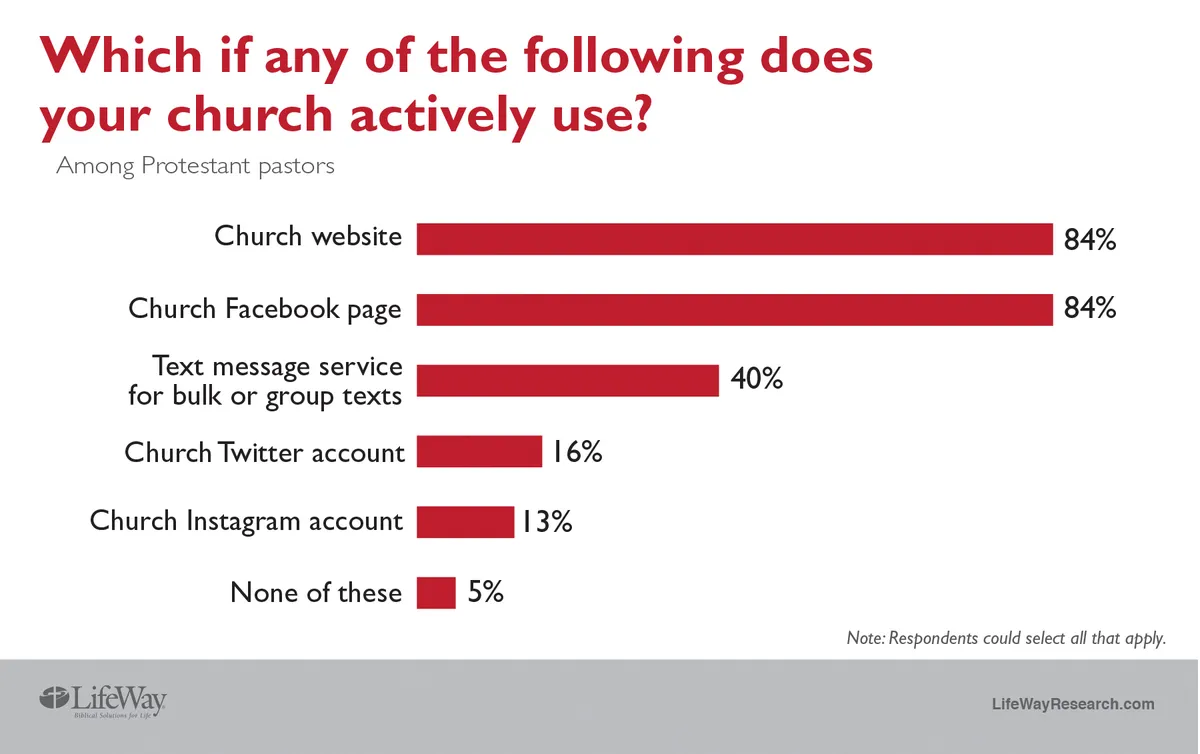
Lifeway Research

These social media platforms are now essential tools for daily communication and outreach.

A church’s social media presence can significantly influence its growth and community engagement. Effective social media posts can attract new visitors, keep current members informed, and provide spiritual encouragement throughout the week. For example, many churches now post daily devotionals, inspirational quotes, and snippets from sermons to keep their community engaged and inspired.

Social media has also become a space for churches to showcase their community work and events. Sharing photos and videos from mission trips, charity events, and community service projects helps highlight the active role the church plays in local and global communities. This visibility can attract people who are looking to get involved in meaningful activities.

One standout example of successful church social media is Elevation Church, which has a massive online following. They use a variety of content types, from professional-quality videos to heartfelt testimonies, to engage their audience. Their social media posts are not just informative but also deeply personal and relatable, making their social media presence strong and impactful.

Another example is the use of interactive content like polls, quizzes, and live Q&A sessions. These tools encourage active participation and make the church’s social media pages more dynamic and engaging. Churches also utilize hashtags to create a sense of community and make their posts more discoverable.

Church Social Media

Overall, the current landscape shows that churches with a strong social media presence are better able to connect with their congregation and reach out to potential new members.

By continuously adapting to new social media trends and tools, churches can ensure their message remains relevant and accessible in today’s digital world.

Key Social Media Trends for 2024

Key Social Media Trends for 2024

Now that we know more about social media, let’s dive into 2024 social media trends. These trends are all the things working on social media right now. We can’t say this will be the meta forever, so we encourage you to use these as soon as you can. We hope to provide updates each year as social media strategies shift and change. We want to make sure you always have the best social media strategy on deck.

Trend 1: Short-Form Video Content

In 2024, short-form video content is expected to dominate social media. Platforms like TikTok and Instagram Reels are becoming increasingly popular for their quick and engaging content. Churches can take advantage of this trend by creating short, impactful videos that capture the essence of their message in just a few seconds.

This user-generated content can include highlights from sermons, inspirational messages, or behind-the-scenes glimpses of church events. The church’s social media team can work together to brainstorm creative ideas and produce content that resonates with both current church members and potential newcomers.

Trend 2: Live Streaming and Virtual Services

Live streaming and virtual services continue to be crucial in 2024. Many people still prefer or need to attend church online, whether due to health reasons, distance, or personal preference. Enhancing the live streaming experience can make a big difference in how connected viewers feel.

Using high-quality cameras and sound equipment, along with engaging visuals, can help create a more immersive experience. Additionally, offering interactive features like live chat during services allows church members to connect with each other and with church leaders in real-time. This can make online attendees feel more involved and part of the community.
Trend 3: Authentic and Relatable Content

Trend 3: Authentic and Relatable Content

Authenticity is key, no matter the social media channel. Church members want to see real, relatable content that speaks to their everyday lives. This means sharing more than just polished, professional posts. Churches should consider posting candid photos, heartfelt stories, and honest reflections from both leaders and members.

Content that shows the human side of the church can create a stronger emotional connection. For example, a social media post sharing testimonies, personal struggles, and moments of joy can make the church’s online presence feel more genuine and welcoming. This approach can help attract a younger audience who values transparency and authenticity.

Trend 4: Community Engagement and Interaction

In 2024, social media is not just about broadcasting messages; it’s about building community. Engaging with church members through social media channels is essential. This can be done through interactive posts like polls, Q&A sessions, and discussion prompts. Encouraging your target audience to share their own stories and experiences can also foster a sense of belonging and participation.

For instance, a church might create a hashtag for members to use when posting about church events or personal faith journeys. The church’s social media team can then share these posts, highlighting the diverse and vibrant community within the church. This interactive approach helps to build stronger connections and makes the church online feel more like a real community.

Trend 5: Collaboration and Partnerships

Collaboration and partnerships are becoming more important in church social media strategy. Partnering with other churches, local organizations, or influencers can help expand reach and impact. For example, collaborating on community service projects and then sharing these efforts on social media can highlight the church’s commitment to making a difference.

Partnering with influencers who share the church’s values can also help reach a broader audience. These collaborations can bring new perspectives and ideas, enriching the church’s social media content. By working together, churches can amplify their message and make a greater impact both online and offline.

Implementing These Trends

Implementing These Trends

Those are our top 5 social media trends for 2024! Now that you have an understanding of them, let’s dig deeper into actually implementing these strategies.

Assessing Your Current Social Media Strategy

Start by evaluating your church’s current social media presence. Look at which social media channels you are using and analyze what types of posts get the most engagement. Ask for feedback from church members to understand what they like and what they would like to see more of. This assessment will help you identify strengths and areas for improvement.

Developing a Content Plan

Next, create a content plan that incorporates the key trends. Develop a content calendar that schedules a mix of short-form videos, live streaming events, authentic stories, and interactive posts. Ensure that your content is varied and consistent. Plan ahead for special church events and seasons, making sure you have engaging posts ready to share. This planning will help keep your social media presence active and interesting.

Engaging Your Congregation

Involve your congregation in your social media strategy. Encourage church members to share their own stories, photos, and experiences using a specific hashtag. Feature these posts on your church’s social media channels to showcase the community. Host live Q&A sessions, polls, and interactive discussions to make your social media pages more engaging. The more you involve your congregation, the more connected they will feel.

Measuring Success

Track the performance of your social media efforts using analytics tools. Monitor key metrics such as likes, shares, comments, and overall reach. Pay attention to which types of posts perform best and adjust your strategy accordingly. Regularly reviewing these metrics will help you understand what resonates with your audience and how you can improve. Use this data to make informed decisions and continually refine your social media approach.

By carefully assessing, planning, engaging, and measuring, your church can effectively implement these trends and enhance its social media presence. This will help you connect more deeply with your congregation and reach new people.

Church Social Media Trends

Church Social Media Trends

In conclusion, embracing the latest social media trends can significantly enhance your church’s online presence and community engagement. By implementing strategies such as short-form videos, live streaming, authentic content, interactive posts, and partnerships, your church can connect more deeply with current members and attract new ones.

It’s essential to continually assess your efforts, develop a thoughtful content plan, actively engage your congregation, and measure your success. Adapting to these trends not only keeps your church relevant in the digital age but also fosters a stronger, more connected community. As you move forward, remember that the heart of your social media strategy should always be to inspire, inform, and bring people closer together in faith.

With dedication and creativity, your church’s social media presence can thrive and make a meaningful impact. We can’t wait to hear about how it goes in the comments. If you have any other social media trends for 2024, comment those below as well! God bless!

More on Social Media

View Full Transcript

Episode Transcript

[00:00:00] Speaker A: Well, the social media landscape changes all the time, and that is true this year in 2024. In this conversation, we're going to unpack some of the tips and trends that we see working best on social media right now. Let's do this. You're listening to the reach. Right? Podcast, the show dedicated to helping your church reach more people and grow. Well, hey, guys, I'm Thomas. [00:00:27] Speaker B: And I'm Ian. [00:00:28] Speaker A: And today we are talking about church social media trends that you need to know right now. We're gonna unpack five of the things that we're seeing. Get churches the best results on social media right now. Yeah, so, yeah, the thing about this is we have to do this episode just about every year. We did it last year. We did it the year before, because these things are radically different. The things that we talked about in 2022 are totally different from the things that we're talking about now in 2022. We were just at the beginning of the vertical video revolution, the upswing of TikTok and some of those things. And so now things have really changed quite a bit. So I think it's something good for us to revisit. [00:01:10] Speaker B: Yeah, agreed. And trends can change quickly for things doing things online. And particularly with social media. There are some tried and truths that remain that we may cover, but you're right, these are the ones right now that it's. I think it'll be good for churches to just take a quick temperature check on what they're doing with social media and if they can implement any of these. [00:01:33] Speaker A: Yeah, well, at my church, I'm the executive pastor at my church, and we just are really taking a deep dive right now. And our social media director, I think this is stuff that, all the stuff that we're talking about, like right now, of the things we're doing and what we're doing to see gains and a lot of these things we've actually immediately seen gains with. So it's been really cool to see some of that. So. All right, I'll kick us off with the first one. This is a no brainer. If you get anything out of this episode, the main thing is short form video content. That's what's working right now. When we talk about this, we mean specifically four primary channels of putting content on YouTube, shorts, TikTok, Instagram reels, Facebook reels, those, those four channels while you're at it. I mean, we've, we've been testing things on LinkedIn and on Twitter and using some of that same content there. It probably won't hurt you. But those four channels, short form content is still going gangbusters. It is still the primary thing where it really is producing about ten x the results of any other kind of post that we're doing right now. So for that, churches have a few options. The easiest thing, and I guess where churches really have a leg up, is that we are usually producing long form video content every week. And so it's not that hard to turn that, I mean, relatively speaking, it's not that hard to turn that into short form video content, especially with some of the AI tools that are available now. I know that there's a non church specific one called opus clip, there's another one called Sermon tech and a few other I've heard of like sermon shots and some of these other companies out there that will turn your weekly sermons into multiple short form pieces of video that are basically ready. Now, is that as good as what a professional video editor can do? No, we don't use it here at retry it. We just can't quite get the quality that our, we have people on staff here that do video editing. So it makes sense for us to go the route that we've always done with that. But it's getting closer and closer. I will say the AI, the thing about it is it gets smarter all the time. But big picture is that there's really no excuse. You need to be producing video content. Short form video content is the way to go, um, beyond your sermon content, making other short form videos. Um, I think this is really, uh, so important right now. [00:04:14] Speaker B: Yeah. It hasn't shown any signs of, uh, going away as a trend. And, uh, like you said at the beginning, if there was only one thing you can do, this is really where it's at right now. That's why we're talking about it, uh, first. And, uh, and there's a reason why, I mean, I find myself watching I don't know how many shorts, uh, you. [00:04:31] Speaker A: Know, in a given day into it, don't you? You did. [00:04:35] Speaker B: It just happens. Goodness, it does. [00:04:38] Speaker A: So I, I'm what? You're mostly on Facebook or Instagram or. Where do you watch? [00:04:43] Speaker B: Well, no, I'm mostly on, well, I watch more shorts on YouTube, but, but I. On Facebook, I watch the reels and then I pop over to Instagram. But I'd say I'm what? I'm the old, the old social media channel guy. Facebook mostly. So. [00:04:59] Speaker A: Yeah, yeah. So some stats that we're seeing more and more of is that the YouTube is the audience, it's the platform. Of choice for the youngest viewers. So. And I think that's mostly tied to the fact that parents let kids watch YouTube and got pulled into shorts and they're not allowed to use TikTok or Instagram. So that's kind of, they've cornered that market with. [00:05:22] Speaker B: They started on YouTube early. That's true. My kids did. Yeah. [00:05:25] Speaker A: Yeah, absolutely. So that's the one that a lot of the, the ones after Gen Z, and we haven't named them yet, I guess maybe Alpha or something like that. But, yeah, that's what they use. Gen Z is more on TikTok and millennials are on Instagram. And you old fogies in, in Gen X, you guys are mostly on Facebook. [00:05:44] Speaker B: That's you, too. But, yes, so anyway. But yeah, anyway, we're. We're young Gen Xers. Okay. For the record. So anyway, next one. Live streaming and virtual services. So we kind of, you know, take a step back on this one. We often don't recommend live streaming for most churches unless, you know, it is pulled off extremely well and high quality. This can often hurt you more than help you if you're not in a good place to do this. So, however, it's worth mentioning because it's been a tried and true thing and it's been something that obviously has increased exponentially since the pandemic. Not even like mentioning the pandemic anymore. It was so long ago, I guess it feels like. But the pandemic did kind of really make this an ongoing trend, and it, churches have continued to do this more than ever before now. So I guess what we would say is encourage here is to use high quality cameras, make sure your sound equipment's good, you have good visuals, and you have a good lighting and setup, because again, if it's not done well, then it can often hurt you. And there's a lot of churches, too, that I've seen and that I talk to on a daily basis, that, you know, most churches that I talk to and I talk to many, as you know, on a daily basis, they are doing live streaming, at least on Facebook, live or YouTube, for their church services. [00:07:12] Speaker A: You find that most of the churches you're talking to are doing live streaming. [00:07:15] Speaker B: Yeah, yeah, yeah. Absolutely. Now, not doing it well, but doing it, doing it, that's for sure. [00:07:22] Speaker A: Yeah. [00:07:22] Speaker B: Yeah. And that's the thing. And so where we try to consult churches to do it well, but at the same time, again, it's something that if you can do it well, it makes sense. You know, people are watching messages online on social media. So I find myself, speaking of being the old fogey on Facebook, if I didn't make it to church, I find myself watching. Even though I can do this on my church's website or another area or YouTube, I find myself watching on Facebook Live. So. [00:07:53] Speaker A: And you find yourself often watching it live, you're saying? [00:07:57] Speaker B: Yeah. [00:07:57] Speaker A: Like, you find yourself doing that, or you find yourself watching the recorded live video, typically live. [00:08:03] Speaker B: Yeah. So, again, that's from the ballpark or. [00:08:05] Speaker A: Wherever you are for some reason. [00:08:07] Speaker B: Yeah. Like, if my son has a baseball tournament and I know I'm not gonna be there, I can go on. I know, in the services that we normally go to, so that's just me. [00:08:14] Speaker A: But, yeah, super interesting. So I. A couple things I'll say about this. First of all, we did a whole video that explains, like, a deep dive as to. And the title of, is it why most churches should not be live streaming? So I stand by that. I still feel that's the case. That's not to say that live streaming isn't a trend. That is a trend that we're seeing. And I think for the right kind of church, it does make a lot of sense. [00:08:44] Speaker B: Yep. [00:08:45] Speaker A: I think that the challenge with live streaming is that you need a large enough audience that you hit critical mass, because I think the issue is that so many churches, they try this only to find out that you'll have sporadically, like, a person hop on and then they'll hop off. And this is what the vast majority of live streams look like, is people watching for a few seconds, not fully engaged, because they didn't really. If you stumble upon it in social media, you're probably not looking for it. Right. You're just kind of scrolling through your feed and up pops your church's live stream, and then, you know, you weren't, like, ready to dig into a time of worship or a sermon. So I would say that the place of potential for churches is with non service livestreams. So doing a live stream of maybe like a q and a time with. With your pastor or a live stream of a prayer time, like a daily prayer where a pastor will pray for 15 minutes, maybe once a week or something, and just people can type in prayer requests and they can experience that. So there is maybe some room for that. But I get the big rub, is that you need a certain critical mass to make it make sense, like, even for us here at retry. So we're considering doing some live content right now. I've been talking with our video team about some of that, maybe doing live webinars or live site reviews or some of those kinds of things. And, you know, our concern and why we haven't jumped to that yet is that, you know, we feel like if it's. If we, if we don't have enough of a following, it's hard to kind of make it worthwhile. [00:10:26] Speaker B: Yeah. [00:10:26] Speaker A: Once you get to a few dozen people watching a stream at any given time, well, then it starts to make sense and you've built critical mass. And so that's kind of the rub, I think, on those things there. So I'd say possibly for non sermon content or non like church service content, but for the vast majority of churches, I still encourage you to think twice and really count the cost before you do it. If you haven't seen that video of ours, I'll leave a link down in the description. Or if you're watching on YouTube, I'll have a link for you up here where you can click on that and see that our breakdown as to why you probably shouldn't be doing that in most cases, that's good. Cool. All right, next one is authentic and relatable content. So I think this is something that, what we're saying by this is the trend I'm seeing, is that you don't need to have this ultra produced content for it to be seen as valuable anymore. I think that a lot of the platforms, especially platforms like TikTok. TikTok, they reward content that feels like it was shot on a front facing iPhone with no microphone. And really, I don't see any penalty that we're seeing by not having really nicely produced content on that platform. So even some of the viral dance videos that you see out there, they'll have music put into them that's really crisp. But there's not other microphones or things that's just shot on an iPhone. It's shot on something that you have in the pocket of your. In your pocket there. So I think authentic, relatable content, this should be welcome. And good news for us as churches is that the main thing is that you're making content, and it's more important to think about what you say and what the story behind the content and what the hook is of that content, as opposed to, like, the production value of the content and the amount of time and energy you spend on high end lighting and cameras and microphones and all those things. So good news for smaller churches. You don't need a big budget to do this. [00:12:25] Speaker B: Yeah, no, that's good. That's well said. And I think just again, people appreciate authenticity when you get too productiony and everything's gotta be big and, you know, under the lights or just, you know, standardized, whatever other terms we wanna use, it can come off as unauthentic. So. I like it. So. And nothing more to add there, Thomas. So. But, yeah, so next one, community engagement and interaction we can't forget because I think, we think a lot of churches think a lot of times, as they should with social media, about outreach and just putting things out there, not just for their members, but we got to remember that social media is still social media. It's about community engagement. And those that are following you, those that are your friends, those that are already tied you there, that's who you want to be concerned about. So you can't forget that. It still is a really good tool for church communication, if we want to put it that way. So whether or not that's doing Q and A's polls and just prompting discussion and all of that, that's something that churches need to, I think, sometimes be reminded of, is that that's where your people are following you. And remember, that's a place to stay engaged with them. [00:13:47] Speaker A: Yeah. So we've been doing a lot of experimenting right now with, with polls. I see that we, our social media team here at Reachwrite, we are putting out, I'd say probably four polls a week on our social platforms. A lot of, like, Facebook, Instagram, some of these channels have put in new polling tools so you can ask people. And it's just a really good way to get engagement. Like, I think that if, you know, don't just use it as engagement bait, but you want to use it about things, that it doesn't have to be something you're actually wanting to survey your church about. Don't think of polls that way. Like, should we move service time from 930 to ten? That's not what we're talking about with this here. It's just good for you to kind of build engagement and get the pulse of what people are like. And there's nothing wrong at the same time with making polls about simple things like, you know, I just. What's your favorite flavor of ice cream? You know, those kinds of, those kinds of questions. Yeah, they are really. They're good. And even if you find ways to get people to disagree in polls, not about things that really matter, but, you know, farming for some of that kind of disagreement, I think there's a really a good opportunity there. So what we're doing is when we're doing a real or a, or, or a YouTube short or something like that will usually do polls that go along with it. And we've been testing this over the last three months. At first we were seeing, you know, ten responses to a typical poll. Now we might see 75 or 100 responses on a poll that we put out there. And so it really is engagement and trying to build some connection with people. I think churches need to get into this some more. I think it's a really big opportunity that we have. And then I'll say this, and we say this quite a bit on the podcast, is that it is social. And so you need to be social. And I would make it a rule within your organization that anybody who leaves a comment, they will get a response from us, no matter what the comment is, unless it's profane or trying to take you off track, like, so if someone comes on and, you know, drops f bombs and stuff, just delete it. That's the solution to that. But if someone is asking a genuine question or they even express some disagreement with your sermon, let's say you put your sermon onto YouTube and someone says, hey, I don't agree with what you're teaching here about, about the Holy Spirit and speaking in tongues, for instance, let's say someone says that, have a conversation. Don't just delete it and say, well, they disagree, so get out of here. Have conversations on that. But the worst thing you can do is leave things unresponded to. So even if it's just a great message that someone comments, you know, leave an emoji back or say, hey, thanks so much, or have some kind of comment, this builds traction and it helps you to gain momentum on these things. [00:16:33] Speaker B: That's good. That's good. [00:16:34] Speaker A: Last but not least, all right, last one is collaboration and partnerships. I think this is a trend that I am seeing more and more opportunities for churches in. I know that influencers use this idea of collabs and sometimes we get caught up and, well, you know, I don't have, we don't have thousands of followers at our church. We're a small church. I would make a point of every time you're doing anything, partnering with any kind of an organization in your community, whether it's a local homeless mission or a school that you're partnering with or whatever the organization is, if you guys have a similar or some kind of a part of your mission overlaps, use it as a chance to collaborate on social. Chances are your, if it's a local school and maybe you are doing a, you're working with the PTA association, for instance, chances are the PTA has a Facebook or an Instagram account where they highlight pictures of things, do a collaboration there, do a shared thing, tag them in post that you do when they've, when you acknowledge good work that they've done, hopefully you'll get some reciprocal kind of interaction with those kinds of things. So I think this is something that we, we think that sometimes this is something that the really big influencers will use. So if I can't get a major name to kind of collaborate with, there's no point in doing it. But in the end, the major names in your community are things like your PTA organizations and other local churches and your homeless mission that's there and the laundry love ministry that serves your community there. Find ways to do partnerships with those things and I think you'll, you'll see more interaction and more connection on your accounts. [00:18:17] Speaker B: Well, after all, most churches, not all, but are looking to reach people locally. So you're right, it doesn't have to be some big external, faraway source. And so, yeah, that's good stuff, Thomas. [00:18:30] Speaker A: Cool. Anything to add as we wrap up? Ian? [00:18:32] Speaker B: No, we hope this gave at least one extra idea. Like we said at the very beginning, if there was only one to start carrying out at your church, we recommend the shorts big time. Get on that. We can help with that. If anyone has questions, let us know for sure. But yeah, no, this is good stuff. [00:18:52] Speaker A: Awesome. Yeah, it's good. Hopefully it's helpful to you guys. If it has been, leave us a comment down below. If you have a question about maybe something you're doing on social media or something that you can't seem to get results with, we'd be happy to answer anything you have down there. We still follow that policy here at reach, right, where every comment that is left, we will get you a response. Unless you start using obscenities, in which case we'll delete it. [00:19:13] Speaker B: That's right. [00:19:13] Speaker A: But thanks, guys, for being a part of the Reach ride family, and we'll see you next time. [00:19:17] Speaker B: See ya.

Other Episodes

Episode 0

November 16, 2023 00:17:21
Episode Cover

Six Effective Ways to Get More Online Reviews For Your Church

In the digital age, online reviews are the new stained glass windows of the church – they color the perception of potential visitors and...

Listen

Episode

July 17, 2025 00:21:50
Episode Cover

The AI Church Controversy That’s Breaking the Internet Right Now

Artificial intelligence has been moving fast. Maybe too fast. In every corner of our world, it’s changing how people think, work, and yes—worship. What...

Listen

Episode 0

December 07, 2021 00:21:19
Episode Cover

6 Things You Need To Do To Get Your Church Website Ready For Christmas

If your church is like most, you spend a lot of time getting ready for Christmas.  You decorate your facilities, both inside and out. ...

Listen