Church Growth Unlocked: 9 Proven Tactics for Expanding Your Congregation

September 12, 2024 00:18:31
Church Growth Unlocked: 9 Proven Tactics for Expanding Your Congregation
REACHRIGHT Podcast
Church Growth Unlocked: 9 Proven Tactics for Expanding Your Congregation

Sep 12 2024 | 00:18:31

/

Show Notes

We all want to grow our churches. The reason we lead a church in the first place is because we believe we have something our community needs. But expanding your congregation isn’t easy. In this podcast, we want to go over church growth tactics to help you grow your church.

Growing a church requires more than just a welcoming atmosphere; it involves intentional strategies that connect with people on a deeper level. Effective church growth strategies are designed to attract new members, engage the existing congregation, and create a community that fosters spiritual development.

These strategies can include outreach programs, improving worship services, and leveraging social media to reach a broader audience. Churches that focus on personal connections, relevant teachings, and active participation often see the most growth. It’s also important to understand the needs of the community and address them through various ministries. By implementing these strategies, churches can create a thriving environment where people feel valued, connected, and inspired to grow in their faith.

Church growth is not just about numbers; it’s about nurturing a healthy, vibrant community that reflects the love and teachings of Jesus Christ. In this podcast, we’ll cover everything you need to know about growing your church, as well as 9 church growth strategies to help you get there.

Let’s dive in.

Estimated reading time: 10 minutes

Growing Your Church

Growing Your Church

Before we jump into our 9 church growth strategies, let’s go over everything you need to know about church growth. We’ll cover why church growth is important, what it means to members and leaders, and what it even looks like.

Why Church Growth is Important

Church growth is vital because it directly impacts the spiritual health and vitality of the church community. When more people join the church, it means that more individuals are being introduced to the teachings of Jesus Christ, which is the core mission of any church. Growth allows the local church to have a greater influence in the community, spreading the message of hope and love.

It also ensures that the church can sustain its ministries and programs, providing for the needs of both its members and the wider community. By focusing on church growth, church leaders are helping to fulfill the church’s mission of reaching out to as many people as possible, encouraging their spiritual growth and fostering a stronger community of believers.

Why Church Growth Matters to Church Members and Leaders

For church members, growth means a vibrant and active community. A growing church often has a variety of programs and activities that cater to different age groups and interests, making it easier for members to get involved and connect with others. This sense of belonging is crucial for spiritual growth, as it encourages members to participate in worship, Bible studies, and service opportunities.

Church leaders also benefit from a growing church, as it provides them with the resources and support needed to carry out the church’s mission effectively. More members can lead to more volunteers, more financial contributions, and a wider pool of talent to draw from when organizing events or ministries. This, in turn, helps the church to expand its reach and impact in the community.

What Does Church Growth Look Like?

Church growth can take many forms, but it often involves an increase in church members, a vibrant and active church community, and a deepening of spiritual growth among individuals. It’s not just about numbers; it’s about the quality of engagement within the church.

A growing church may see more people attending services, participating in Bible studies, and volunteering for various ministries. There’s a sense of energy and purpose as the church’s mission is lived out through outreach programs, community events, and meaningful worship experiences. The church building may be busier with activities that serve both the congregation and the wider community.

Overall, church growth is reflected in the strong connections between members, the leadership’s ability to guide and support the community, and the church’s expanding influence in sharing the message of Christ with others.

Top 9 Church Growth Tactics

Top 9 Church Growth Tactics

Many churches are growing right now, but many churches are also shrinking. According to Gallup News, adult membership in churches in the U.S. is now below 50%, seemingly declining every year.
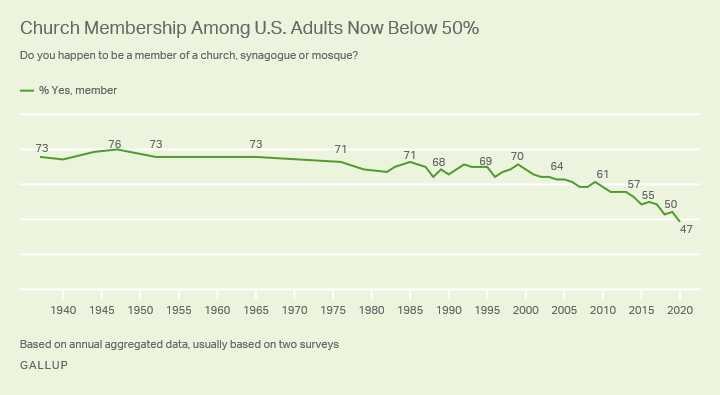
Source: Gallup News

You may be a church that has been slowly growing, but more likely you are a church that has either been decreasing in size or has stayed stagnant. Whatever the case, these 9 tactics for growing a church are for you and your team.

Keep in mind that these tactics are not cheap tricks to get some more numbers. They are real changes you can make to really increase your church’s growth. Use discernment with each one, and only utilize the ones you feel that your church should start doing. This list is not hard-and-fast either, some of these may work for you and some may not. Use what works!

1. Community Outreach Programs

Community outreach programs are an essential way for a church to connect with its local community. These programs often include church events like food drives, clothing donations, or free health clinics that meet the needs of those around them. By organizing these church activities, the church shows its commitment to serving others and sharing the love of Christ in practical ways.

Community outreach helps to build relationships, attract new members, and demonstrate that the church is an active, caring part of the neighborhood. It’s a powerful way to extend the church’s mission beyond its walls.

2. Small Groups

Small groups are an important part of building a strong church family. These groups bring people together in a more intimate setting to study the Bible, pray, and support one another. Meeting regularly, members of small groups can form deep connections, making the larger church feel more personal and welcoming.

These gatherings allow individuals to grow in their faith while sharing life’s challenges and joys with others. Small groups also provide a space where everyone can be heard and cared for, strengthening the overall sense of community within the church family.

3. Relevant Sermons

Relevant sermons are a key part of church growth strategies, as they connect with people’s everyday lives and challenges. When church leadership focuses on delivering messages that are practical and meaningful, it helps the congregation apply biblical teachings to their own experiences. This makes the sermons more impactful and encourages church members to return regularly, deepening their spiritual growth.

By addressing current issues, personal struggles, and common questions, relevant sermons show that the church is in tune with its members’ needs. This approach fosters a stronger, more engaged congregation, leading to overall church growth.

4. Social Media Presence

A strong social media presence is essential for church growth in today’s digital age. Social media platforms allow churches to reach a broader audience, share important messages, and engage with both members and non-members alike. By regularly posting content, the church can stay connected with its community throughout the week, not just on Sundays. Here’s how a church can use social media to grow:

5. Effective Follow-Up

Effective Follow-Up

Effective follow-up is crucial for church growth, as it helps turn first-time visitors into regular church members. When someone visits the church for the first time, a warm and timely follow-up can make them feel valued and appreciated. This might include a personal phone call, a friendly email, or a handwritten note thanking them for attending.

Church leadership can also invite them to upcoming church activities or offer more information about the church’s mission and programs. By staying in touch, the church demonstrates genuine care and interest in the individual’s spiritual journey. Consistent follow-up not only encourages visitors to return but also helps build a stronger, more connected church community, ultimately contributing to the church’s growth.

6. Children’s and Youth Programs

Children’s and youth groups are vital for church growth strategies because they engage younger generations and attract families to the church. By offering exciting and relevant programs for kids and teens, the church creates a welcoming environment that encourages both spiritual and personal development. These groups helps each church member and their children grow in their faith and form lasting friendships with peers.

For parents, it’s an added incentive to become more involved with the church. As children and teens participate in activities, they’re more likely to stay connected with the church as they grow older, leading to a more vibrant and dynamic congregation. Investing in these groups supports the overall mission of building a strong, intergenerational church community.

7. Discipleship Programs

Discipleship groups play a crucial role in church growth strategies by fostering deeper spiritual connections among members. These groups focus on helping individuals grow in their faith through structured study, mentorship, and mutual support. Here’s how they contribute to church growth:

8. Engaging Worship Services

Engaging worship services are essential for effective church growth strategies because they create a memorable and impactful experience for attendees. When worship services are dynamic and relevant, they capture people’s attention and foster a sense of connection with the church. Incorporating contemporary music, multimedia elements, and interactive components can make services more engaging and appealing.

This helps to attract new visitors and keep current members excited about attending. An engaging service also encourages active participation and a deeper emotional and spiritual connection. As people find the worship experience meaningful and inspiring, they are more likely to return, invite others, and become involved in various church activities, contributing to overall church growth.

9. Inviting Website

An inviting website is a key element in church growth strategies, as it serves as a first impression for potential visitors. A well-designed website makes it easy for people to find information about church services, events, and programs. It should be user-friendly and provide clear details about service times, locations, and what newcomers can expect.

Including engaging content such as sermon previews, testimonials, and photos of church activities can make the site more appealing. An inviting website also often features contact information and easy ways to connect with church leaders. By presenting a welcoming online presence, the church can attract new visitors and encourage them to attend services, ultimately supporting overall growth.

Church Growth Strategy

Church Growth Strategy

Incorporating these church growth strategies can significantly enhance the vitality and reach of a church. By focusing on community outreach, small groups, relevant sermons, and a strong social media presence, churches can create an environment that welcomes and nurtures both new and existing members.

Effective follow-up, engaging worship services, and robust children’s and youth programs further strengthen connections within the church family. Discipleship groups and an inviting website provide additional support, ensuring that both newcomers and long-time members feel valued and connected. As churches implement these strategies, they not only foster spiritual growth but also build a dynamic, thriving community that reflects their mission and values.

By continuously adapting and responding to the needs of their congregation and community, churches can achieve lasting growth and make a meaningful impact on the lives of those they serve.

More Resources on Church Growth

View Full Transcript

Episode Transcript

[00:00:00] Speaker A: I saw a stat the other day that the vast majority of churches in the United States were either plateaued or declining. And that got us thinking, what's actually working right now to help grow churches? And Ian and I put our heads together and came up with nine proven tactics that we think will help your church reach more people and grow. Let's talk about them. You're listening to the reach right? Podcast, the show dedicated to helping your church reach more people and grow. Well, hey, guys, I'm Thomas. [00:00:34] Speaker B: And I'm Ian. [00:00:35] Speaker A: And today we're talking about some proven tactics for helping your church see growth should be a conversation that is helpful. I hope we have nine ideas for you and things kind of that we would focus on if we wanted to see more people. We just recorded another episode where we talked about how churches in general are seeing declining numbers across the board. So I think it's really just a pertinent conversation for us to dig into today. [00:01:00] Speaker B: Absolutely. Church growth should always be of interest to a pastor or ministry leader. You should always be focused on it if you want a healthy and growing church. So, yeah, these should be helpful. [00:01:11] Speaker A: Thomas, I'm always worried, and I'm cautious when we talk about church growth because sometimes we are mistaken for thinking that we somehow are the ultimate ones in control of that. And that's certainly not what we believe, and we've said this all the time, but we believe that Jesus will build his church. It's a promise that he makes. He invites us to be a part of that and to come alongside him. And so our philosophy is we want to help churches. We kind of jokingly say we do anything short of sin to help them reach more people with the gospel of Jesus Christ. That's kind of our line in the sand that we have here. But, yeah, so we're hopeful that maybe as you're hearing this, you're like, well, you know, church growth is such an overblown topic. And I know there was a whole church growth movement that happened in the nineties and early two thousands that we weren't really a part of. But we do think that reaching more people is something that's close to God's heart, and we love to help churches do that. So why don't you kick us off, Ian, with some of the, with the first idea. [00:02:10] Speaker B: Indeed. And I like this first one. It's community outreach programs. A church should. We're in the age of digital marketing and social media and everything else. There's so, so many things you can be doing online. One thing that has stood the test of time and should never die until the Lord comes back. Is your church getting out in the community, serving the community, reaching out to people, getting out of the four walls, and not just having a come to us mindset, but going to the people that need the Lord in your community. So food drives, clothing donations, obviously there's all sorts of different kinds of outreaches you could be doing. But if your church does not have some of these on the calendar in a given year, then you're missing out on reaching a lot of people effectively. [00:03:00] Speaker A: Two quick ideas that I have seen make real impacts for churches. We just talked about this in a previous episode, but mental health initiatives in the community, outreach, this is on the top of everybody's mind right now, is mental health, and everybody has a family member that's dealing with it. So having outreaches to people that are maybe struggling with that, as well as addiction type recovery programs, huge opportunities, that's kind of like an in between. If you maybe you're doing a celebrate recovery or something like that, you can have something like that. And it is still a come to us kind of a thing, but it is designed for your community because people all over your community are looking for help in these kinds of areas there, so. That's right, yeah. Lots of good opportunities with that next one is kind of as a growth tactic that we're seeing work is doubling down on small groups. [00:03:49] Speaker B: Really. [00:03:49] Speaker A: We've seen this bee an enormous opportunity. I was talking to a church, a executive pastor at a church just the other day, and he was telling me about how their church that isn't really that large of a church on Sundays, they have 375 small groups and enormous impact that they're making. And I think I figured out that my daughter is at a university small group. That's one of their small groups. She's like in their cr. Their church management software. My daughter is in there, basically. So really cool to see the impact that they're making in these kinds of areas. What they do uniquely, though, and what I think is working for people that are, a lot of churches can have small groups, but you know that you are a church that's a. Where that's a priority, is if that's the main thing that you're measuring. Like if everything you measure kind of comes back to small groups. And this church I was talking to, they were really big on that, that every week they're measuring how many people went to small groups, how many small groups happened, and how many new small groups started. Those are kind of the big question marks that they have each time there. So, yeah, yeah. Small groups, I think, is an enormous opportunity for churches right now. [00:04:58] Speaker B: Absolutely. I've seen that in my own personal ministry experience when I was pastoring with you here in the Austin area. You know, our small group that I was leading at that time was I found an outlet to actually help people feel more comfortable to actually attend the church in person. So sometimes it can be that front door instead of just church on Sunday. And so, no, absolutely something that every church should be focused on. So, next one, also a big one. Relevant sermons. I guess key word is relevant here. Now, first of all, we believe that being relevant in preaching, relevant in today's modern day and age, should still be you teaching the Bible. That's our belief here. And not veering away from that. However, question, have your preaching methods maybe gotten a little stale or dated? Doesn't mean you always have to be in a sermon series, and we know there's different preaching styles from topical to expository and all of that. Not saying that our argument today is not any particular way to go about preaching, but being relevant. So are you giving something that helps people live out God's word? Practically, are the stories you tell, or if you're not telling any stories, maybe you should. But are the stories you're telling out of date? What are you doing that maybe you can freshen up, is the question. Yeah, yeah. [00:06:23] Speaker A: No, I mean, so obviously relevant sermons are important. I think that every pastor, if you're listening to this, you already know that. But I think one thing that I find myself doing is that you kind of get into this routine of like, this is the kind of preacher that I am. I prepare my messages this way. And once you've kind of got that locked in, I know I'm at least reluctant to try anything new or make any major changes just because I'm so comfortable. I was counting the day. I've done some, like 700 some odd messages in my life that I've written and preached. And so to change up my style or my flow to be more relevant, it's kind of like starting all over again in some ways. Not all over again, but to some degree. So I know there's a reluctance towards that, but I think keeping fresh in these areas is really important. So good stuff. [00:07:09] Speaker B: Absolutely. [00:07:10] Speaker A: Next one is social media presence. I think we miss the fact that people are in church for maybe an hour and a half every single week, and there's 166 and a half other hours that they're not in church. In a typical week. And social media is where they are for, I don't know, a dozen to 24 of those hours. And so that's a great place for you to continue to have an impact on people and introduce yourself. Here's one thing that I think so many churches miss about social media, though. We have to have a mindset change that social media in 2024 and beyond is for people that are not yet a part of your church, that people that are meeting you for the first time. Social media from ten years ago was a good way for you to keep people from your church connected. But now it's people that generally don't know your church. So stop or at least resist the temptation as much as possible to making it full of announcements of things you can do in person and actually use it to do ministry there on that platform, on TikTok and Instagram reels and on your YouTube channel and those things. Do the actual ministry there. Don't think of us in a place to try and attract people to do ministry somewhere else. That's kind of the advice I have for you. [00:08:27] Speaker B: Very good point. Not much to add there. So next one I think is important, effective follow up. We all know that closing the back door has been an issue within churches for years now. We still talk to so many churches. One of the biggest things, challenges we hear when we take on a project or start consulting with the churches, when we ask about assimilation and how people get plugged in at the church. Well, we're kind of working on that still now. I'll say in recent years, churches have done a much better job shoring that issue up. I come across a lot more churches that have that, and this is just one little piece of the whole assimilation process. We're just talking about effectively following up with first time visitors. So if you're getting first time visitors, great. Be excited about that. But don't forget, you can quickly lose them if you don't have some sort of a process in place. So if you have not put in thought to a follow up process, whether or not that's a, you know, coffee with the pastor at some smaller churches that are able to manage that, or an invite for that if they visit. And we talk a lot about email sequences, obviously after someone has given you their information, to have several touches after that follow up, there's a lot of ideas. But the main thing is you need to have something in place for follow up that you can test. [00:09:52] Speaker A: Yeah, good stuff. I won't add too much. I did a whole video about this, a couple of months ago, we were in the middle of rebuilding our visitor follow up process. I have it here. I'll link to it. If you're watching on YouTube, I'll link to it right above me here in ithood. There we give away our entire, like all the entire script of our entire visitor follow up process. So think of it as a template. I made it so that you could use it and you could use it. I recommend changing your church name and your name on it. But other than that, you can use it exactly as I wrote it. There's no copyright or any of those things. So there's a video about it and then that even links to a download where you can freely download that. No cost at all, just take advantage of that. But yeah, you have to nail your visitor follow up process, so hopefully that's a good resource for you. Next one is children's and youth programs. This is something that obviously is so important. It's something that every person, every parent, the reality is they just will not become a part of your church if you do not love their youth and kids. So it's just something that's so vital. I think this has been true and we've known this for decades. At this point, you know, someone's going to get radically saved. But if they, if you don't have ways to really love their kids and aren't really invested in that area, they won't stick around. And on top of that, it's terrible stewardship. Like, if we are not discipling the next generation, we're going to find ourselves in the situation where we are 20 years from now, a very different church. The people coming up behind us will not be able to take over the mantle. And our church, our churches just will not exist if we don't solve this problem. So I believe the church is designed to be multigenerational. I believe that it's something important that for our youth and our children, that we want to give them something deeper than a shallow faith or the seed that falls on kind of shallow soil there. We want them to have something that goes deep. So really pouring into your kids, I'm not just saying like the attractional way, but actual discipleship of our children is just so vitally important. So, yeah, if it's not a problem today, it will become a problem in the near future if you don't resolve this quickly. [00:12:06] Speaker B: Yeah, indeed. And the last thing I'll add to this is that, and we talked about this in our previous podcast, that if you're the church that's out there that's older and aging and you're just saying right now, well, Thomas and Ian. Ian, for. Easy for you to say. We just don't have any kids. We're not reaching any kids. We're all older. There's no excuse. You can still think through something that when you do attract that younger family or they do come, or that when you are communicating this online or from your website, you need to have some plan, at least that when, if you do attract them and when you do that, that you're going to cater to them and have something in place to where, like you said, you don't have to have the biggest, the big booming kids and youth and programs to reach younger families, but they, they definitely need to know you're going to invest in them, like you said, and have some sort of discipleship process for them. [00:12:58] Speaker A: So, yeah, that's good stuff. [00:13:00] Speaker B: Yeah. Next one's discipleship programs kind of goes, it's a good segue to this. So if you don't have, you know, something we talked about small groups, this kind of goes hand in hand with that. But also, you know, do you have specific discipleship programs for men and women, ways for people to grow their relationship? And more than just on Sunday mornings, you need to have some sort of on ramps. You need to have something for that person that needs to grow in their faith, for them to become a part of that's a no brainer and something that you need to do. [00:13:38] Speaker A: Yeah, no, I think it's after you get kind of the assimilation process we mentioned before, kind of like connecting with new people, you really need to have a clear path that you're going to take them down as you do that. So this is something else I've heard from churches often, is that they're kind of sorting that out. They don't really know kind of. They, they have the idea of where they want to go, but it's not really well defined just yet. So take the time to really define that. When someone comes for the first time, draw out what is that process, so that, you know, for the first few weeks, they're just kind of coming on Sundays. What is the next step? Is it coming to your growth track or youre, your class 101 or your roots class, whatever you guys call it at your church? And then what's after that? Do you have a second tier of those classes? Is it straight into a small group or a life group? Do you have some kind of a, another class they take at that point, really take the time to define those things and I think you'll actually reap the reward for that. So, yeah, good stuff with that, Ian. Next one. Again, engaging worship services. This is something that I think is obviously easier said than done. Everybody wants to have an engaging worship service, but it's something that you probably have to revisit from time to time. If you're doing your services the same way today as you were ten years ago, chances are engagement has changed. People find new things interesting, and so it's something you have to wrestle with. I know this is something I do as the executive pastor at my church is every week we have a staff meeting and we go over our previous week's service and we talk about, hey, what worked, what didn't, did we spend too long on this and we go too quickly in this area. What could we have done better? Like, we actually talk about that, and it's really cool to see people that are, you know, in other. We've really cultivated this environment where anybody can speak up to that, and it's supposed to be something where you can freely talk about it. And it's a little bit uncomfortable at first to say to the lead pastor of a church, like, you know, maybe we could have said this a little bit differently in the sermon portion. And people, you have to be cautious with this stuff. And you don't go in guns ablazing and go, sorry, I hated that sermon this week. So that's not how it's given. But, you know, maybe you use the sandwich approach where you talk about some things you like, and maybe one thing we can approve, but take the time to evaluate it. And I think that's the first step towards getting the engaging services that you're hoping for. [00:15:58] Speaker B: Yep, for my pastor, it's preaching too long. So there you go. [00:16:03] Speaker A: I'll let him know. Let me send him a quick demo on that. [00:16:06] Speaker B: Yeah, go ahead. Last but not least is have an inviting website. You know, again, we help churches with. We definitely can do a great church website. If a church, if your church needs help with that, we help with other digital marketing. But I think we end with this one, because I think in this day and age, when we have social media, you have apps, you have all these other things that you can do. Sometimes people forget that your website is actually still where 80% of people thereabouts will end up before they physically come. And one thing that I point out, because I know a lot of pastors and ministry leaders, they know it's not all about the website. So sometimes they forget, though, that in this day and age, people will be googling churches near them or in their area. Google looks to send the traffic to your website first and foremost. And so particularly for newer people looking, that's where they will go. Now, people that have already come a time or two, they may start engaging on social media and other, and they may download your app, obviously, if you're doing that, but the website is still where they're going to end up 80% of the time before they've actually visited. So if you've neglected this for a while, as we come across churches doing a lot of other marketing and other good things that they're doing online, but they've sometimes abandoned the website, it could be hurting you big time. [00:17:28] Speaker A: Yeah, no, it definitely is. This is the first impression, like you're saying. So, yeah. If you want to see your church grow and reach more people, it's hard to get visitors. If they get onto your site and they decide this, this place is really isn't for me, I don't really feel any kind of. This doesn't seem interesting to me, so. [00:17:46] Speaker B: Right, right. [00:17:46] Speaker A: Yeah. So important to really nail that area. So thanks, Ian. This has been good, I think, and helpful. Hopefully it's been helpful to you, our audience here. Thanks guys for being a part of the Reach ride family. Here's a kind of quick call to action for you guys. If you have anything that has been helping your church see more visitors or keep them coming back, we'd love to hear that down in the comments. Maybe you have a question about something we talked about. Drop us that down there below. We try to answer every single one of those and we've been even using some of those as launching off point, make new podcast episode ideas or other videos that we're doing here at reach. Right. So thanks, guys. Let us know down in the comments and we'll see you next time. [00:18:29] Speaker B: See ya.

Other Episodes

Episode 0

November 29, 2022 00:30:05
Episode Cover

11 Easy TikTok Content Ideas for Churches

We know what you’re thinking…another social media platform?! How in the world am I going to come up with TikTok content ideas on top...

Listen

Episode

January 02, 2026 00:25:27
Episode Cover

How to Reach Gen Alpha in 2026 (What Most Churches Miss)

Most churches are still focused on Gen Z. And while that matters, they may be missing the generation that is already sitting in their...

Listen

Episode 0

December 30, 2020 00:31:26
Episode Cover

Top Church New Years Resolutions For 2021

In today’s episode, We share our top 6 church resolutions for the new year. 2020 has been a year of monumental change. If you...

Listen