Church Branding Design: 5 Keys to a Memorable Church Identity

August 08, 2024 00:20:06
Church Branding Design: 5 Keys to a Memorable Church Identity
REACHRIGHT Podcast
Church Branding Design: 5 Keys to a Memorable Church Identity

Aug 08 2024 | 00:20:06

/

Show Notes

Every day, people are bombarded with hundreds of ads and images and voices from a hundred different companies, influencers, and organizations. If you want your church to reach new people, how are you supposed to stand out in all the chaos? The answer is church branding.

In today’s visually driven society, the concept of branding has expanded beyond businesses to include institutions like churches. Church branding design plays a crucial role in shaping a church’s identity and outreach efforts. By creating a cohesive and compelling visual presence, churches can effectively communicate their mission, values, and community spirit to both current members and potential newcomers.

In this podcast, we explore everything you need to know about building your church brand strategy, including our top 5 keys to church branding. If you want your church to stand out online, this is the podcast for you. Ready to learn more?

Let’s jump in.

Estimated reading time: 10 minutes

What’s Your Church Branding Strategy?

What's Your Church Branding Strategy?

Church branding is the process of creating a unique and consistent visual and communicative identity for a church. It involves developing a church’s brand that reflects its mission, values, and community.

This branding can include everything from the church logo to its color scheme, typography, website, and social media presence. The goal is to create a recognizable and appealing image that resonates with both current members and potential newcomers.

Why Church Branding is Important

A church’s brand identity is essential for several reasons. Firstly, it helps communicate the church’s mission and values clearly. A well-defined visual identity can convey the church’s message more effectively than words alone. Secondly, consistent church branding fosters a sense of unity and belonging among members. When people see a cohesive and professional brand, it reinforces their connection to the community.

Thirdly, in today’s digital age, a strong church brand helps attract new members. Many people search for churches online before visiting, and a compelling brand can make a significant first impression.

How to Get Started with Church Branding

So how do you get started building your church branding strategy? Here are six easy steps to get you started.

1. Define Your Mission and Values

Start by clarifying what your church stands for. What are your core beliefs and values? What is your mission? Understanding these elements is crucial because your church’s brand should reflect them.

2. Develop a Visual Identity

Create a visual identity that represents your church. This includes designing a church logo, selecting a color scheme, and choosing typography that aligns with your church’s personality. Your visual identity should be consistent across all platforms, from your website to social media and printed materials.

3. Create a Branding Guide

Develop a branding guide that outlines how your church’s branding should be used. This guide should include details on your church logo, color schemes, fonts, and any other visual elements. It helps ensure consistency in all your church’s communications.

4. Implement Your Brand Across All Channels

Consistency is key in church branding. Ensure that your visual identity is reflected in all your materials, including your website, social media profiles, bulletins, and signage. This unified approach helps create a strong and recognizable church brand.

5. Engage with Your Community

Use your church’s brand identity to connect with your community. Share stories, events, and updates that align with your mission and values. Engaging content that reflects your church’s branding can attract new members and strengthen the bond with existing ones.

6. Evaluate and Adjust

Regularly review your church’s branding efforts. Gather feedback from your congregation and community to see if your brand resonates with them. Be willing to make adjustments as needed to keep your church’s brand fresh and relevant.

By focusing on these steps, you can create a compelling church brand that reflects your mission, unites your community, and attracts new members. Remember, church branding is not just about aesthetics; it’s about conveying who you are and what you stand for in a way that inspires and engages people.

Top 5 Church Branding Keys

Top 5 Church Branding Keys

You should now have a solid understanding of church branding and getting started. Now, we want to explore our list of the top 5 keys that will take your church branding to the next level. These tips are for those who want an effective church branding process and want to really establish their church brand identity.

Let’s dive in.

1. Unique Church Logo

A unique church logo is essential for establishing a church’s brand identity. This logo serves as a visual representation of the church, encapsulating its mission, values, and spirit in a simple yet powerful image. A well-designed logo is memorable, making it easy for people to recognize and associate with the church.

Creating a unique church logo involves several key elements. First, it should be simple and uncluttered. An overly complex design can be difficult to remember and reproduce. Second, it should be meaningful, incorporating symbols or elements that reflect the church’s beliefs and community. Third, the logo should be versatile, looking good in various sizes and formats, from large banners to small social media icons.

The colors and fonts used in the logo should also align with the church’s overall visual identity, creating a cohesive look across all materials. It’s important to invest time and effort into the design process, possibly working with a professional designer to ensure the final logo effectively represents the church. It is something you will use all the time, everywhere, for many years, so it’s something worth investing in.

Here’s a fun tip: according to Exploding Topics, 40% of Fortune 500 businesses use the color blue in their branding.
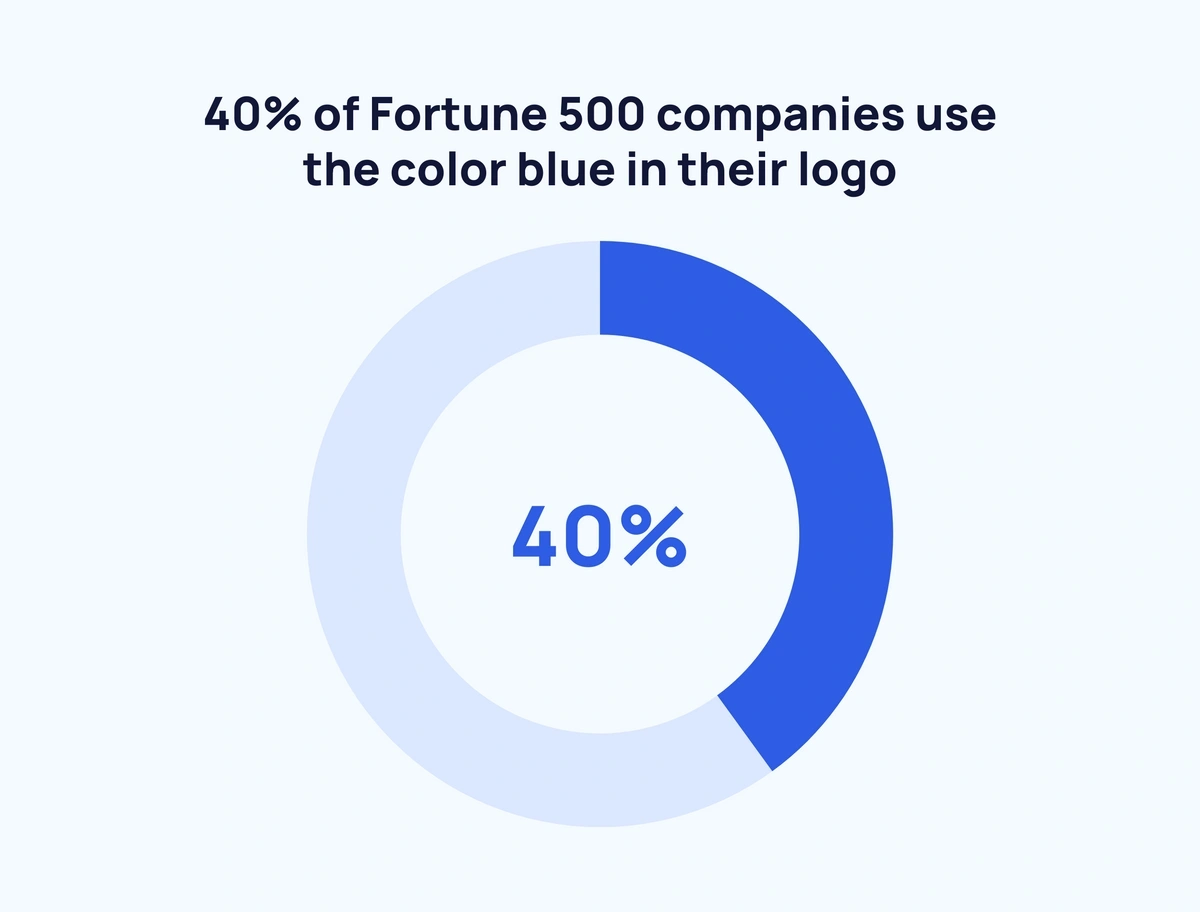
Source: Exploding Topics

Now we’re not saying your church should be a business or that it’s logo needs to be blue. We’re just saying that there’s something effective about that color in branding. If you don’t have a place to start, maybe give it a try!

A unique church logo not only helps in branding efforts but also fosters a sense of unity and belonging among members. It becomes a symbol of the church’s presence and purpose in the community.

2. Engaging Website

An engaging website is essential for any church looking to connect with its community and attract new members. As the first impression many people will have of the church, the website should clearly reflect the church’s brand identity and mission. Here are some key elements to include:

To further enhance engagement, consider prioritizing mobile-friendliness. Optimize the website for mobile devices, as many visitors will access it from their phones.

An engaging website helps attract new visitors and keeps current members informed and connected. It serves as a digital hub for all church activities and communications, providing a welcoming and informative experience for anyone seeking more information about the church. Investing in a well-designed website can significantly impact a church’s ability to reach and serve its community.

3. Active Social Media Presence

Active Social Media Presence

An active social media presence is crucial for church branding, as it helps churches connect with their community and effectively communicate their mission and values. Social media platforms like Facebook, Instagram, and Twitter are powerful tools for building and maintaining a church’s brand identity. Regular posts help reinforce the church’s brand identity, ensuring that the church’s mission is clear and recognizable. Consistent messaging and visuals help create a cohesive image that resonates with both current members and potential newcomers.

Engagement is another important aspect of a church’s social media presence. By interacting with the congregation and broader community through comments, messages, and posts, churches can build a sense of community and belonging. This active engagement shows that the church is approachable and caring, which can strengthen its brand.

Visibility is also enhanced with an active social media presence. Regular updates, photos, and videos showcase the church’s activities and events, making it easier for new people to discover and connect with the church. Sharing authentic content, such as behind-the-scenes moments, stories, and testimonies, adds a personal touch to the church’s brand. This authenticity can inspire and resonate with followers, deepening their connection to the church.

To maintain an active social media presence, churches should post regularly, engage with their audience, and ensure that their content aligns with their brand identity. This helps create a cohesive and impactful online presence that supports the church’s mission and connects with the community.

4. Quality Materials

Quality materials are essential for effective church branding, as they help convey a professional and cohesive image. High-quality printed and digital materials reflect the church’s values and mission, making a positive impression on both current members and potential newcomers. From bulletins and banners to brochures and websites, every piece of material should align with the church’s visual identity.

Creating quality materials on a budget is possible with some strategic planning:

Investing in quality materials ensures that the church’s branding remains consistent and appealing, even on a budget. By using templates, printing in bulk, leveraging volunteer talent, and focusing on digital materials, churches can create professional and impactful materials without overspending. This approach helps maintain a strong and recognizable brand identity that supports the church’s mission and engages the community.

5. Training and Alignment

Training and alignment are crucial for maintaining a strong and consistent church brand. When everyone in the church understands and supports the brand, it helps present a unified and professional image to the community. Training involves educating staff, volunteers, and key members about the church’s brand identity, including its mission, values, visual elements, and messaging. This ensures that everyone knows how to represent the church correctly in all communications and interactions.

Alignment means that everyone involved in church activities, from greeting visitors to managing social media, consistently uses the church’s brand elements. For example, the same colors, fonts, and logos should be used in printed materials, digital content, and signage. Consistency in how the brand is portrayed helps reinforce the church’s identity and makes it more recognizable.

Providing regular training sessions and clear guidelines helps ensure that all team members are aligned with the church’s branding efforts. This might include workshops, written guides, or one-on-one sessions to address specific needs. When the entire church team is trained and aligned with the branding strategy, it creates a cohesive and professional image that effectively communicates the church’s mission and values.

Church Branding Design

Church Branding Design

In conclusion, effective church branding is a powerful tool for building a strong, recognizable identity and fostering community engagement. By focusing on key elements such as a unique church logo, engaging website, and active social media presence, churches can create a compelling and cohesive brand that resonates with both current members and newcomers.

Investing in quality materials and ensuring proper training and alignment across the church team further strengthens this brand, making it consistent and professional. Even on a budget, thoughtful strategies and creative solutions can enhance your church’s branding efforts.

A well-defined and actively managed brand not only attracts new visitors but also deepens the connection with existing members, supporting the church’s mission and helping it thrive in a dynamic and ever-changing world.

More Resources on Church Branding

View Full Transcript

Episode Transcript

[00:00:00] Speaker A: One of the most important things that your church can do if you want to reach more people and grow is to really nail a consistent church brand. But that's easier said than done. Let's talk about some of the ways that your church can make your brand more memorable. This year you're listening to the reach. Right? Podcast, the show dedicated to helping your church reach more people and grow. Well, hey guys, I'm Thomas. [00:00:27] Speaker B: And I'm Ian. [00:00:29] Speaker A: And today we are talking about church branding and specifically some tips on how you can make your church brand memorable. I think it should be a good conversation for us. This is something that is so important, you know, even before we're church marketing people, you and I, Ian, and this is what we do. And part of that, I think, like the initial step that every church should be taking is really developing their overall brand and making it something that is memorable is easier said than done. And we wanted to give some tips today on how churches could make that happen. [00:01:04] Speaker B: Yeah, and this is something that I still see a ton of churches struggle with. There's a lot of churches that are doing a lot of great stuff online with social media and so forth, but the brand often just gets left behind or in the dust or. Or it's just out of date, you know? And we're going to talk about some of the things that can get out of date with, with church branding or just that churches are just not carrying out. So I think it's a good topic, Thomas, for sure. [00:01:32] Speaker A: Totally. Yeah, I think it should be a good thing. And when we talk about branding, I mean, it's. It's more. A lot of times people just go to this first one, I'll go ahead and give it to you. The first tip is having a unique, quality church logo. And before I get into what that looks like, I want to say that branding is bigger than just your logo. We have four other things we're going to talk about here today, but it does. I think it's probably. It's first for a reason. The church logo is something that is really important and it's kind of the foundation of every other piece of branding that you're going to do. So you want it to have some continuity and feel similar to all the other elements and everything else you do as a church. I think a lot of it will start from that church logo and your church logo, like the icon or whatever you would use there. You probably want it to encapsulate something about your message that makes you unique. What makes your church different. Really thinking about those kinds of things. Most churches will have a logo that is some text, like your church name, and then some kind of an icon. We're seeing more and more churches maybe bridge the gap and get into more. Just a text icon or text logo like. So hillsong famously does that. They have their Hillsong script. They don't have any kind of an icon. It's just the name Hillsong. But it has kind of a rolling hill style to it, I think. So you can almost think of it as an icon in some ways. But most churches are gonna have an icon and then have their name in there. And you just wanna find a way to make that icon and make your script something that captures who you are as a church and make it unique to you. So one of the things that we do when we do logos for clients here at retry is we will go through and kind of ask them for some feedback on logos that they like. And one of the things we struggle with is that sometimes churches want something really close to another church's logo. They'll say, yeah, just do exactly what they do. And that we can't in good conscience, as designers do that first and foremost. [00:03:31] Speaker B: Right. [00:03:31] Speaker A: But I think that's missing the point too. Because you want something that is truly unique to your church. Something that is distinctively yours. So I will say this too. I'll let you get into this thing here in a second. Or give your feedback on this too. Ian, we do have a video I want to mention if you're watching this here on YouTube. We have a video where our lead designer, he picked the top several church logos of 2024. We just released that. I think it'll be really helpful to you. So if you want some more inspiration on church logos, that's a good one to take a look at. But don't copy them. They have to be unique. [00:04:02] Speaker B: That's right. That's right. No, that's a key thing. And it's easy for us to see elevations, logo or Hillsong or whoever out there. Just other well known churches. Maybe even nothing so well known. And actually, it's funny you reminded me. We had a client that wanted us to basically copy the brand of Dunkin Donuts for their logo and website and everything else. Which was very unique. Not an everyday request. That's why I'm remembering it. But you definitely want something unique. [00:04:35] Speaker A: The colors of Dunkin donuts or. What was it? [00:04:37] Speaker B: It was the colors and even the. [00:04:39] Speaker A: Style of the font thing. [00:04:41] Speaker B: Yeah, rounded all of it. Yeah, they really wanted. And it was weird. It was weird one, but at the same time, and that's fine, you know, there's other brands that stick out to me. I love Adidas logo. I love the three lines. Just. It's always appealed to me. But you're right. Like, so if I'm starting a church, definitely, I might kind of gleam from the style of the Adidas logo, but you can't totally copy it. So I like that you said unique. Another thing I would just add to that is something simple. You know, something simple is key, because you and I, again, we've been doing church marketing for a long time. We see less of these logos now, but there was a time where you and I would run across a lot of what we called the TBN logos, if we could say that. Or. And there was just like seven different, you know, biblical symbols. There was like the lion of Judah, and then you had, like, you know, one I'll never forget was there was the globe, and the cross was stabbing through the globe with blood coming out, you know, onto the world. And, you know, again, what they meant by that was, you know, the world needs the blood of Jesus and the cross and salvation. But, yeah, just all of these. And we saw ones with, you know, the lion of Judah flames and, like, all of the gold and all of that. Again, churches mean well with that, but again, those. If you have a logo like that, it might be time to consider a redesign to get a little more modern and current with things. [00:06:13] Speaker A: I'll say. Every major brand right now has pivoted over the last 20 years. And every time they pivot, they become simpler and simpler and simpler. Logos are never getting more complex if you take a look at them. So even you take a look at, if you haven't seen this before, maybe the history of the Starbucks logo, how they seem to just be zooming in closer and closer to the center of what used to be a pretty complex logo that they had there. Yeah, same thing with Google, where they always have had a relatively simple logo, but they've stripped out any of the outlines, they stripped out any gradients. They simplified the colors and made them closer together. Until now, it's like the simplest, you know, just saying Google in very standard colors and there's no gradients. The reason for this is because I think big brands realize that they have to put their logo on every. And so do you as a church. So when you're building a logo, you know, these very complex logos, some of the intricacies will be lost when you try to simplify things more and put it on a t shirt or put it in a favicon on the top of your web browser so people see it there. And so you have to have a logo that is versatile in all circumstances. And so generally speaking, very good advice. And it's more memorable if it's simpler. [00:07:30] Speaker B: That's it. And moving on to other things that build a church's brand, the next one is an engaging website. Still to this day, websites have been around a very long time on the Internet. And to this day, your website is still where 85% of first time visitors will end up, even if they find you somewhere else online, hear about you another way they're going to end up here. And the way we like to put it, this part of your brand is telling your story. It's funny, you know, we do think of the logo first, but every church has a unique story to tell to a potential visitor or someone looking for a church for the first time. That's part of your brand. And one of the key places to tell that story is your website. So you still, even in the age of apps and social media, need an engaging website, something that also does. And every website should have your church's logo on it that we just talked about, and it should match the colors and the fonts and the same style to the logo. And so you will have those things, but you also want to tell a story to visitors there and build your brand. And this is a place you can do it more broadly. [00:08:45] Speaker A: Yeah, yeah. Little inside scoop here on things that discussions we've had here at reach ride over the years, we have always seen this challenge is that there's very inexpensive ways to build off the shelf websites. But the number one problem they have is they don't have memorable branded look and feel that goes with it. So from the very beginning, as a company, well, we probably could have made more money if we just sold off the shelf websites where we didn't have to pay designers to get in there and do design work and just turn it on for clients. We have decided that we weren't going to do that and we were always going to offer, like, fully brand developed websites. And so we do that in a couple of different ways. We do high end, custom websites, we do middle of the road, kind of tailored websites, where this is what's still really important is you have to take your church logo, you have to take your color palettes, you have to take your fonts, and you have to get all that onto your website, because people know people. I know that chances are when people are searching for a church, they're not going to stumble upon two of the exact same template websites, but there's something that you catch when you feel like this is actually them or this is just a generic website that they put their name onto. And so for so many, that's kind of the choice that they have made. And I understand that budgets are tight and I have to invest a little bit more. It's scary in some cases, but this is really something that is so important is making sure that your website, not just your logo, is on it, but like, the colors are consistent throughout it and they match what's on your logo. Your fonts and those kinds of things that you use in your logo are also probably ones that you use in other places on your site as well as other things that you do as a church. So, yeah, really nailing the consistency on your website and making it feel on brand is super important. [00:10:36] Speaker B: Yeah, it's good stuff. [00:10:38] Speaker A: All right, next one. Active social media presence. This is another place where your brand is going to really shine. I think this is why we always start with the logo conversation, because that's going to dictate what so much of the other stuff that you're doing out there looks like. So having consistency in your messaging, for sure, and the kind of way that your voice works, the way you talk, like your comments and your posts on social media should feel similar in voice to the way that your content is written on your website. But beyond that, you want to pull in your branding, your color palette, your logo, occasionally having that expressed in all of your design and even in your photography. Elevation church you mentioned earlier is brilliant at this. They have that elevation orange and almost every photo you see on their site there's going to be, or on their social media even. You'll see a little pop of that orange somewhere. It's not everywhere because you don't need a lot of it, but your eye immediately goes to that one spot there. So just having this kind of consistency in your social media, it really helps to develop your brand and it helps things to feel consistent. Now, there's lots of types of branding on social media that I think are not worth your time. So used to be that people would pay a lot of attention to their Instagram grid, like, so you know, when you go on to someone's Instagram profile, you want to make sure that there's like, that there's a rows of three and you want to make sure that everyone kind of works well with the other one and that you have like a beautifully designed grid. I think those days are over. You don't need to spend a lot of focus on those kinds of things. Maybe with your top three pinned posts on Instagram you might be able to do that. But I think just more generally, you want to make sure that every post that you put out there, it's never going to be kind of an eyesore that sticks out, but something that is common to the overall brand of the church. [00:12:27] Speaker B: Yeah, no, that's good. And one other thing with social media, too, that I mentioned with the website, part of your branding is telling the story there, too. Keep that same consistent story that you have that you're telling on your website. You know, do that story, you could even tell, you can even do more storytelling on social media that supplements your brand and of course, goes along with all the other visual aspects you just mentioned, too, for sure, Thomas. So that's good. Next one is interesting, but quality materials. So now, and this is, I think, something to where a lot of churches can, I guess, you know, they could forget about these. So we're talking about like, you know, your print materials, signage, you know, just anything that you have at your church that people are going to see. Maybe it's invite cards, you know, of course we think of letterhead, we think of all of that. But sometimes I think that, you know, churches, you know, when you enter into a church, even if they have a logo on their church sign out front or they, you saw the logo online or whatever, when you go inside the church and you see other pieces of print, whether or not it's print materials or signage or anything like that, sometimes it's easy for churches to get off brand there. You know, they had this sign in the back that they've always used in the foyer or whatever. And so having all of these supplementing pieces that are staying on brand is really important. [00:13:53] Speaker A: So, yeah, that's super important. We're doing a 21 days of prayer and fasting coming up starting next week. And I know that with that, we have this prayer guide that we put together. And I got to tell you how we get so much feedback because we took a lot of the content from other sources. So the actual words in the prayer guide, that's not all from us necessarily, but we made it uniquely ours and put it into our brand colors and used our brand fonts. And people within our church feel like it's something that is. That is ours. Right? So there's just more value that comes with that when you're able to keep everything on brand and it feels like it's something that is made by you as opposed to just. That's good. Taking something that you got from Saddleback church or from Church of Highlands and, you know, crossing out their name and putting your name on it, it's something that making it feel like it's your own is really something that's valuable. So, yeah, that's good stuff. Those materials are super important. Last thing is training and alignment. And this is something maybe you don't really think of when it comes to branding. But I can tell you as an executive pastor at a church, as the CEO of Reach, right. And as someone that works with, worked with thousands of churches over the years, this is the main problem that most churches have with their branding, is they just don't take the steps to train their people on how to use the brand. So every time we help a church with a new logo, a new brand, we will. Part of that is building a branding guidelines document. And in that document, we outline exactly how you're supposed to use the church's logo, the church's colors. We tell you exactly what those colors are. So no, church colors are blue and greenhouse. Like, it's a specific kind of blue and a specific kind of green. Like you, you have to have the exact color because small differences in shading, it's kind of like a game of telephone, over years, will turn into, you know, a lime green can turn into forest green if it's not used properly. And it's totally different. Right. So it'll outline the fonts that you use and the fonts that you don't use and what weight of those fonts you're going to use. How bold will you go with your font and how. How thin are you going to use the font? The letter spacing, it'll outline all those things and then it'll also tell people really clearly what not to do because people are doing their best. Not everybody is a designer. And I just see this all the time, where if you just send the files to someone and say, hey, here's our logo file, good luck with it, you'll see all kinds of brand violations and people spreading it out more to fit their design or maybe stacking it in a way that doesn't work. Work. Right. And so what's so important is that you have a. A master document that says, here's how we're going to use our brand. Here's how we're going to use our logo. Here's the ways we're never going to use it. And you hold tight to that. And when you see violations of the brand, which you will see all the time, you need to return to it in a kind way, but just have those conversations and say, hey, we. We don't use it that way generally, just because it kind of takes us off course. And I. I, you know, you don't want to attack their heart, what they're doing. I'm sure it took an effort to build that, but this is something that I see so many churches do. The older your logo and branding is, the more likely that there's been. Major creep, I know, for, even for our church, we have a dove and a branch kind of logo that we have, which I think we probably need to simplify in the near future, but I've seen so many different variations of the color of it that I'm trying to kind of rein in and say, hey, we always use this bright blue and not this royal blue that I see two different versions of. So there's lots to be said on this, but it all comes down to training and alignment, making sure your team's on the same page. Yeah. [00:17:42] Speaker B: And another thing I'll say to this, too, is this also includes training your team on your mission and values and your vision. And so that's all a part of your brand. It's funny, it reminded me, that reminds me of, we have recently created values for reach. Right. For our company. And we, when we have company meetings, we all talk about those values, or we have someone on our team that we think, you know, embodies one of those values and really carries it out well. And we'll have them share a little bit about how they do that with their. With what they do here at reach ride and how they serve churches. And I think that that's great because, you know, if people get behind your church's mission and values, they won't deviate there as well. Just like we're talking about deviating with colors and all these other things. You know, not that everyone's going to be a robot and just speak your vision and mission and values out at people in a weird way, but if they know those things and they're behind them, they will embody that. And that's going to make, you know, your. Your staff, your volunteers, you know, people that are longstanding members at the church. They're really going to be, I just think, very appealing to people, and especially new visitors or people that they're ministering to when they're all on board with your mission and vision and values. [00:19:04] Speaker A: Yeah, that's really good. Ian. Yeah, thanks for bringing that up, too. I don't want to bring it. Make it bigger than just the colors and fonts and logos. It really is about who you are and what your values are and reinforcing that. I know you're right. We do that all the time here at Reachwrite. In addition to holding the line on the kind of blue that we use on our site and those kinds of things, we reinforce all of our values all the time. So good stuff. Anything else to add as we wrap up? [00:19:30] Speaker B: No. No. Hopefully this was encouraging and maybe helped some churches brush up on it. Maybe it's made some churches think, hey, it's time to maybe rebrand and evaluate our brand and simplify things or streamline things. And we're here to help with that if we can, too. [00:19:44] Speaker A: So, yeah, absolutely. We'd love to do. Even if you're curious about getting some feedback on your church's branding and logo and want us to give you some of that feedback, that's something that we offer. Drop us a line. We'd be happy to help with that if this has been helpful to you. It also mean a lot to me if you would hit that subscribe button. Drop us a comment down below and we'll see you next time. [00:20:04] Speaker B: See you.

Other Episodes

Episode 0

February 15, 2024 00:26:11
Episode Cover

7 Church TikTok Strategy Tips for Energizing Your Ministry

Now that we’re in the digital age, connecting with Christians and communities goes beyond traditional methods. Social media, especially TikTok, has become the primary...

Listen

Episode

December 12, 2024 00:17:15
Episode Cover

Church Social Media Hacks Every Pastor Needs to Hear

Do you run your church’s social media account? Maybe it’s Instagram or Facebook or Tiktok or maybe all of the above. Nowadays, it seems...

Listen

Episode 0

December 14, 2021 00:24:10
Episode Cover

8 Ways to Promote Your Christmas Eve Service

For most churches, Christmas Eve services are the second most attended event of the year. Only Easter Sunday sees more attendance.  There are people...

Listen