6 Top Church Blogging SEO Tactics to Amplify Your Message

May 16, 2024 00:22:23
6 Top Church Blogging SEO Tactics to Amplify Your Message
REACHRIGHT Podcast
6 Top Church Blogging SEO Tactics to Amplify Your Message

May 16 2024 | 00:22:23

/

Show Notes

In the digital age, reaching out to your community and beyond requires more than just a Sunday sermon. Welcome to the world of church blogging, where spreading your message goes outside the church building and into the vast expanse of the internet. But what good is a blog if no one can find it?

That’s where SEO, or Search Engine Optimization, comes into play. In simple terms, SEO is the magic that helps your blog appear higher up on search engine results pages (like Google or Yahoo), making it easier for people to discover your uplifting content. From sharing weekly reflections to promoting community events, a well-optimized church blog can amplify your outreach efforts and foster a deeper connection with your audience.

So, whether you’re a seasoned blogger or just dipping your toes into the digital realm, mastering the basics of SEO can truly make a divine difference in spreading your message far and wide.

Ready to learn more? Let’s jump in.

Estimated reading time: 10 minutes
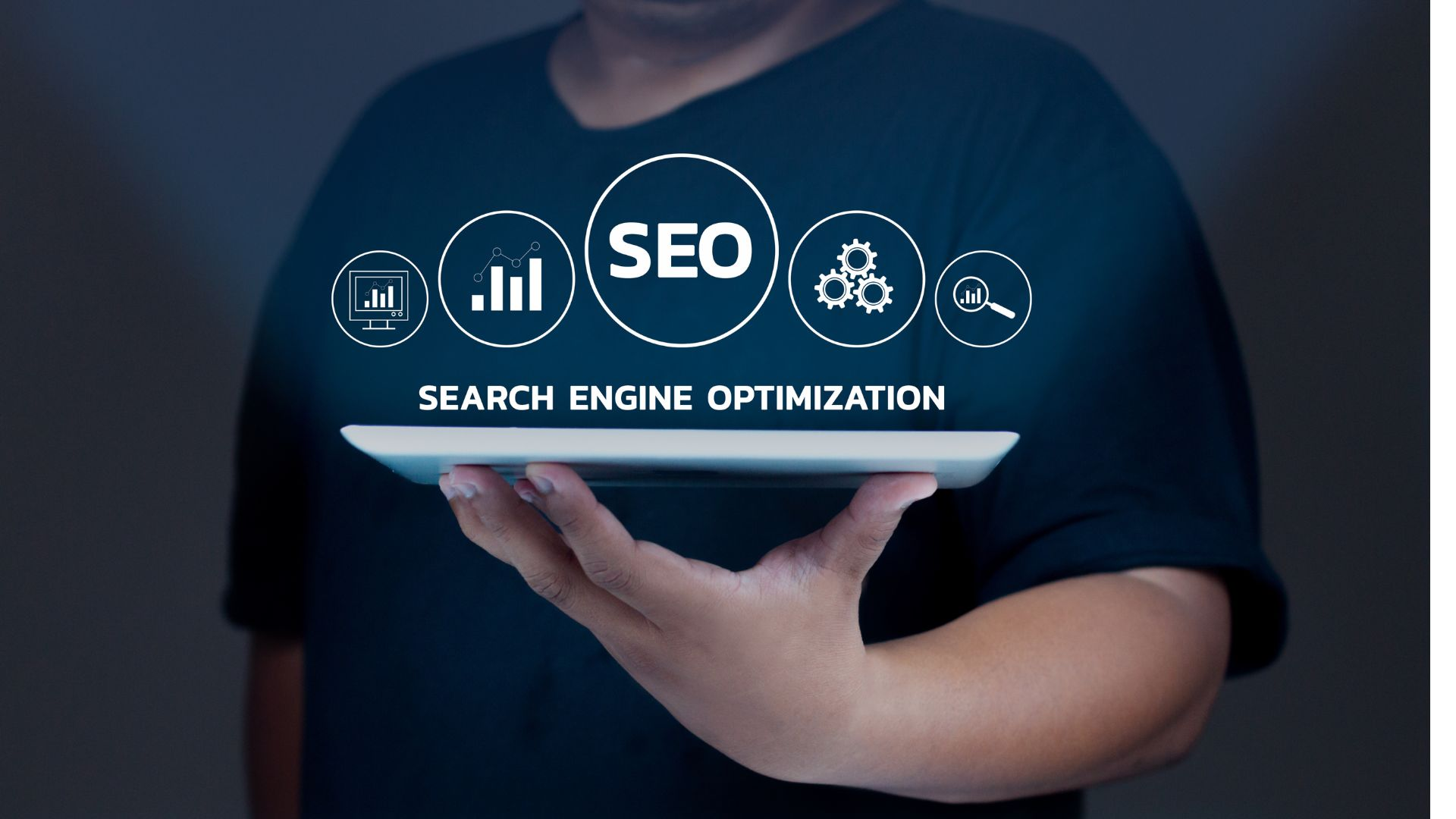
What is SEO?

What is SEO?

We’re currently in the information age. Everybody everywhere is getting barraged with information all the time. Ads, posts, videos, podcasts, blogs, and more. If you’re a content creator, getting noticed online is like finding your voice in a bustling crowd.

According to Ahrefs, 96.55% of pages get zero traffic on Google.
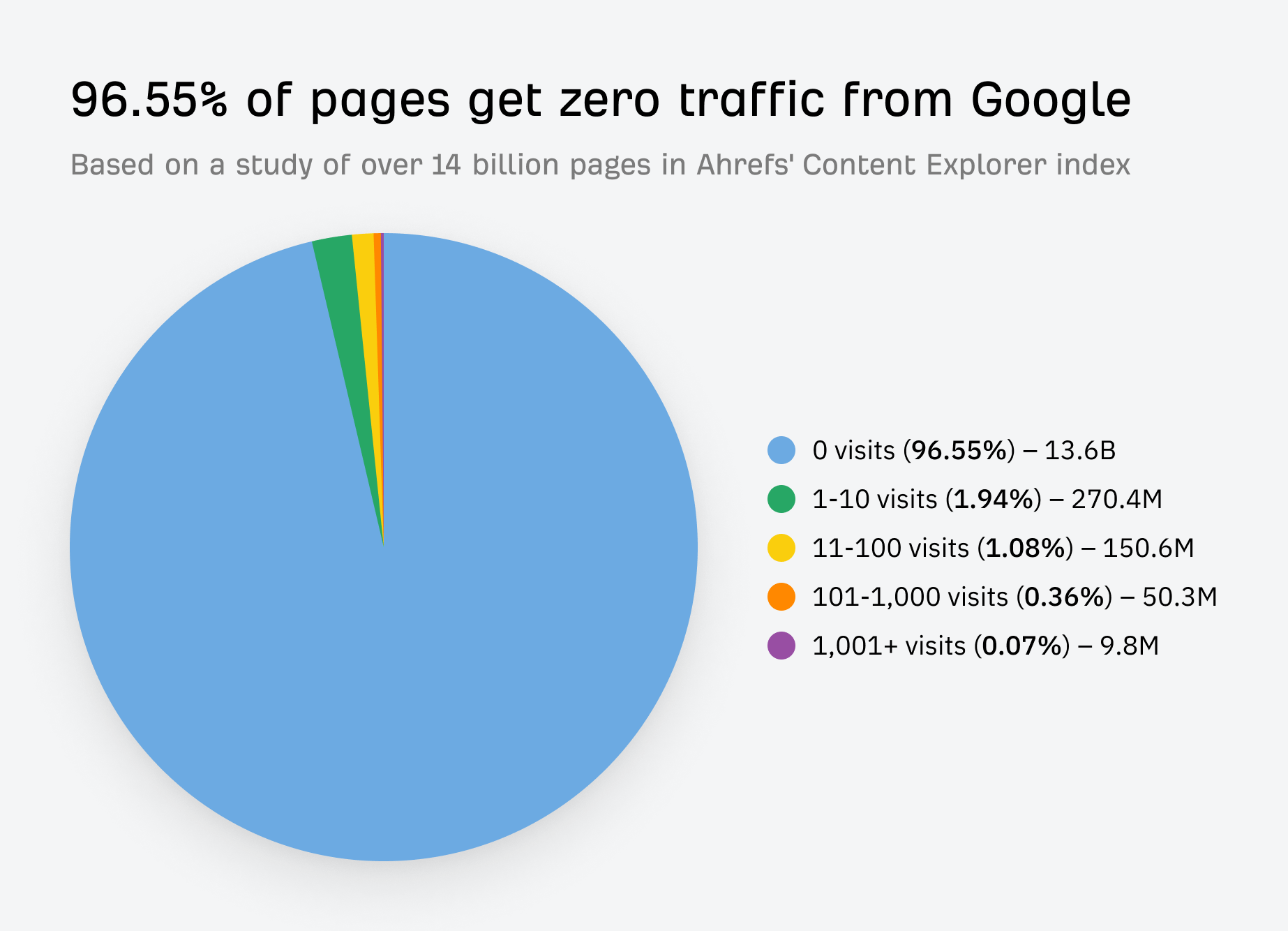
Ahrefs

That is a lot of blogs, pages, and content getting skipped over. We don’t want that to be you.

That’s where SEO, or Search Engine Optimization, steps in. It’s the secret sauce that helps your church website stand out in the vast sea of the internet. Let’s break down what SEO is and how it can make a difference for your church blogging.

Search Engine Optimization

SEO is like a map that guides search engines, such as Google or Bing, to your church website. When someone searches for something online, like “inspiring sermons” or “community events near me,” search engines use complex algorithms to decide which websites to show in the search results.

SEO is all about optimizing your website to make it more attractive to these algorithms, so your church appears higher up in the search results.

How Does SEO Work for Churches?

Imagine you’re planning a community event at your church, like a charity drive or a neighborhood cleanup. You want as many people as possible to know about it, right? Well, SEO works the same way. By using the right keywords and phrases on your church website, you can tell search engines what your content is all about.

For example, if your church hosts a weekly food pantry, using keywords like “food assistance” or “local charity” can help your website show up when people search for those terms.

But here’s the thing: church SEO isn’t just about keywords. It’s also about making your website easy to navigate and understand. That means organizing your content in a way that makes sense, using clear headings and subheadings, and making sure your website loads quickly and works well on both computers and mobile devices.

When search engines see that your website is user-friendly, they’re more likely to recommend it to people searching for relevant information.

Of course, that’s just for your church website. You would do the exact same thing for church blog articles you want to appear higher on search engines. We would suggest using SEO strategies on all kinds of internet content you create. That could be your website, your blogs, your sermons, and more!

Local SEO and Directories

When it comes to church SEO, local matters. Many people search for churches or religious organizations in their area, so it’s essential to optimize your website for local searches. One way to do this is by listing your church on local directories, such as Google My Business, Yelp, or Google Maps. These directories help people find businesses and organizations near them, including churches.

When you list your church on these directories, make sure to include accurate and up-to-date information, such as your address, phone number, and website URL. This not only helps people find your church online but also improves your chances of showing up in local search results.

Additionally, encourage your congregation to leave reviews and ratings on these directories. Positive reviews can boost your church’s credibility and visibility online.

So What?

SEO is a powerful tool for churches looking to expand their online reach and connect with more people in their community. By understanding how SEO works and implementing best practices on your church website, you can improve your chances of appearing in search results and reaching those who need your message the most.

So, embrace the power of SEO and watch your church’s online presence soar!
6 Church SEO Tactics

6 Church SEO Tactics

Now that we’ve covered everything you need to know about SEO, how can we use it for the highest potential? In this section, we’re going to go over our top 6 church SEO tactics. These are going to be aimed at church blogs specifically, but many of the strategies can be used for more than just your blogs.

Ready to dive deep? Let’s go.

1. Keyword Research

Keyword research is like finding the right key to unlock the door to your church’s SEO success. It’s about discovering the words and phrases people type into Google search results when looking for content like yours. By using tools like Google Keyword Planner, you can find out which keywords are popular among your audience.

Choose keywords that are relevant to your church’s message, events, and activities. For example, if your church hosts a weekly food pantry, keywords like “community food assistance” or “local charity events” could be beneficial. Incorporate these keywords naturally into your website content and blog posts to improve your church’s visibility in Google search results.

One of the reasons you might have found this podcast is due to keyword research! By making sure this article included as many relevant keywords that people may use to search for this topic, we are able to get this up near the top of search engines!

With the right keywords, you can help more people find and connect with your uplifting message online.

2. Optimized Titles and Headings

Optimized Titles and Headings

Optimized titles and headings are like bright signposts guiding visitors to your local church’s blog post oasis. They should be catchy, clear, and include keywords relevant to your content.

Think of them as the headlines that catch people’s attention in a bustling crowd. For instance, if your blog post is about upcoming community events at your church, a title like “Join Us for Exciting Community Gatherings at [Your Church Name]” could attract attention.

Likewise, headings within the blog post should be informative and engaging, providing readers with a roadmap of what to expect. By optimizing titles and headings with the right keywords, you can make it easier for people to find and engage with your local church’s blog content, ultimately strengthening your online presence and connection with the community.

3. Internal Linking

Internal linking is about connecting the dots within your church websites universe. It’s about linking one page to another within your site, creating a network of pathways for visitors to explore. Just like how a map helps you navigate a new city, internal links guide visitors to different areas of your website.

For instance, if you’re writing a blog post about upcoming events, you could include links to relevant pages such as your church’s calendar or registration page. This not only helps visitors find what they’re looking for but also improves navigation and encourages them to spend more time on your site.

We’ve done the very same here! You may have already noticed a few hyperlinks in certain sentences that point you to other relevant articles. That’s not by accident, it is a proven SEO strategy! By strategically placing internal links to relevant content, you can enhance the user experience and boost engagement on your church website.

4. Image Optimization

Image Optimization

Image optimization is like giving your church website’s pictures a clear path on the internet. It’s about making sure your images are easy for both visitors and search engines like Google to understand.

Start by choosing high-quality images that showcase your church’s events or message. Then, give each image a descriptive filename, such as “church-events.jpg,” and add alt text, which briefly describes the image’s content. Alt text helps visually impaired users understand your images and provides extra information for search engines.

Additionally, if your images include locations, mention them in the alt text, like “church events at [Your Church Name] on Google Map.” This can help improve your website’s visibility in local searches.

When you optimize your images with descriptive filenames and alt text, you create a smoother journey for your church’s online presence on the digital map.

5. Social Media Promotion

Social media promotion is spreading the word about your church’s message and events. It involves using platforms like Facebook, Twitter, and Instagram to connect with your community and beyond.

Start by sharing engaging content that resonates with your audience, such as photos, videos, and event announcements. Encourage your congregation to like, share, and comment on your posts to increase visibility. Engage with your followers by responding to comments and messages promptly. Additionally, consider using targeted advertising to reach specific demographics or promote upcoming events.

By leveraging the power of social media, you can expand your church’s reach, foster community engagement, and share your uplifting message with a wider audience.

6. Monitor and Analyze

Monitoring and analyzing your church website’s performance is like checking the pulse of your online presence. It’s about using tools like Google Search Console and Google Analytics to understand how people find and interact with your site.

With Google Search Console, you can track your website’s visibility in search results, identify any technical issues, and see which keywords are driving traffic. Google Analytics provides insights into your website’s traffic sources, user behavior, and conversion rates. By regularly monitoring these metrics, you can identify what’s working well and where there’s room for improvement.

For example, if you notice that certain blog posts are driving a lot of traffic, you can create more content on similar topics. By staying informed about your website’s performance, you can make data-driven decisions to optimize your church’s online presence and better serve your community.

Church Blogging SEO

Church Blogging SEO

In today’s digital world, having a strong online presence is essential for churches to connect with their communities and spread their message of hope and love. By implementing effective SEO strategies, such as keyword research, optimized titles and headings, and social media promotion, churches can reach a wider audience and make a positive impact online.

Remember to regularly monitor and analyze your website’s performance using tools like Google Search Console and Google Analytics to ensure your efforts are paying off. With dedication and attention to detail, your church can enhance its online visibility, engage with more people, and continue to inspire and uplift those who need it most.

So, embrace the power of SEO, and let your church’s light shine brightly in the digital world. We pray your church blogging efforts find success. God bless!
More Resources on SEO

View Full Transcript

Episode Transcript

[00:00:00] Speaker A: If I had to choose one marketing low hanging fruit for churches, it would probably be SEO or search engine optimization. And while we can't explain everything there is to know about search engine optimization in one video, we do want to give you six quick wins that your church can take advantage of. Let's do this. You're listening to the Reach Write podcast, the show dedicated to helping your church reach more people and grow well, hey, guys, I'm Thomas. [00:00:31] Speaker B: And I'm Ian. [00:00:32] Speaker A: And today we are talking about search engine optimization, or SEO for churches, a little bit specifically towards blogging and some of the strategies you can look at there. But in general, we're talking about search engine optimization, which I personally believe is one of the lowest hanging fruit for churches to see more visitors right now. Yeah, I have. I don't just say this out of the blue. I have evidence, I have anecdotal experience that when we focus on SEO at a church that I was pastoring most recently, that we grew and saw tons of visitors. And I know from experience that this is something that churches can do to see more visitors there. So I want to unpack it a little bit and talk about what you can be doing and a few strategies to get you some quick wins there. [00:01:20] Speaker B: Yeah, and you're right, Thomas. It's low hanging fruit. And I would say it's absolutely vital for every church to reach more visitors. If you're not doing SEO, if you're invisible online, it's just not good, put it that way, simply so there are a lot of things that you can do. When people hear the word SEO, it is, I feel like, technical in nature comes off that way to most pastors, ministry leaders. Of course, as you know, I consult with churches day in and day out about SEO, and I am, I will say, encouraged. There are a lot of churches now that do realize that they understand more now about what it is compared to years past. They heard of SEO. If I asked someone five, six years ago, a pastor or a ministry leader, hey, are you familiar with the term SEO? They would say, no. Now it's like, yes. Yeah, yeah, I have an idea of that. Or they'll just say, yeah, search engine optimization. And so it's definitely out there more now. But I still, like we said, a lot of churches aren't doing anything about it. [00:02:26] Speaker A: Here's the thing, and I don't know if you're finding this, Ian, in all your calls and everything, but I find that a lot of people, when they think of SEO, they think that it's some kind of like a technical, like programming thing that we can do to a website that makes it more visible. And do you hear that much like. I do think that. [00:02:45] Speaker B: Yeah, yeah. And of course, as you know, years ago when SEO started becoming more of a thing, that, that was more of the focus, right. Google has cracked down on a lot of. [00:02:55] Speaker A: But this is like a long time. This is like long time. This is at least ten more like 15 years ago that those things worked, right? That you could make a few technical changes and then your site would show up with when people looked for church, you know, or something basic like that. Yeah. Now it's much more sophisticated. And then here's the other challenge, is that with chat, GPT and other AI tools, that content is being made more quickly than it's ever been before. So we say all this, if you're watching this video or listening to this a few years from now, this is the year 2027 or later, we've probably done some new content on this and this may not be useful to you anymore because the world of SEO is totally changing because of AI and the fact that new content is, it can be produced in a matter of seconds. And there's a lot of people that are actually spamming and gaming the system right now, producing terrible AI content in just about every kind of, every kind of niche. And you know, church is not excluded from that. Church, church content or spiritual content, faith based content, it is being made by AI all the time for people just trying to get eyeballs on their content, which is a scary thing to think about, right? Like, so basically teaching, teaching people whatever AI says about their faith and Christianity and what it means. So all kinds of things are shifting. But I say all that we want to unpack, I guess six tips that I think are tried and true, tested and going to continue working. But I say all that kind of just to kind of lay the landscape of what SEO looks like right now. It is a changing world. So check back often about what the best practices are. But yeah, we just want to dig in and kind of give you guys some quick, I guess the theme here is quick wins some things that you can do to start to see some results. And ideally this will turn into visitors in a matter of weeks. You'll see new visitors coming in your church if you do some of these things, right? [00:04:52] Speaker B: I think absolutely no. And we've seen it. We help churches directly with it and full disclaimer. And yeah, it does yield results. So. Well, I'll dive into the first one here and this is one I think it's keyword research. It's funny. Keyword is a keyword that people think of with SEO. They do usually associate SEO with keywords. And yeah, that is still very relevant. People are obviously using Google and search engines and they're typing in specific keywords. You need to make sure you have keywords within your content that are associated with what your church provides. So obviously, if someone's looking for. If you're a charismatic church or a spirit filled church, if someone's looking for spirit filled churches in Austin, Texas, you want to make sure that you have those key words associated with that. Maybe you have a food pantry and someone's looking for community food assistance. That's a keyword search that would tie to your food pantry. It takes some thoughts based on, you know, who your church is, what your church is providing, certain events, certain activities, those things. Definitely you want to make sure that you're using the right keywords or that when people are searching with those keywords, it's going to be tied to the content on your website or within a blog to make you more visible. Yeah. [00:06:18] Speaker A: So, like, the first step in any SEO project for a church is that you want to make sure that Google knows and you use the term church on your site. Right. So that's like, that's like the base level. And this can actually be hard for a lot of churches. So, like, right now, I'm an executive pastor at a church called New Hope, and there's not the word church in our name. And so we don't naturally use the term church in a lot of our titles and those kinds of things on the site. So you want to be really careful and kind of do your research. But yeah, you're right, Ian, that, like, if you're only targeting the term church, like, there's really only so much traffic that could possibly get onto your website because only so many people are searching for churches. So when we talk about keyword research, that's thinking about what other things could you possibly be creating content around that people would be searching for in your area? And sometimes maybe you get stumped on this. There is no shortage of these kinds of things. I once wrote a post, and, you know, it's kind of crazy to think, but the thing that I wrote that has been read by the most people is it was called why you should never share that post that says, share this if you love Jesus, or it's something to that effect. Right. And so that blog post got a lot of interest from people all over the world because we've all seen those, you know, those posts on Facebook that are crazy and say, you know, has a picture of like the devil saying you probably won't share it or something like that. It's just sad. [00:07:47] Speaker B: And I'm like, you're right, I won't. [00:07:49] Speaker A: Exactly. Right. So, you know, those kinds of things. Like the key word there is like share if you love Jesus or people were typing that into search engines and then we would come up and that actually is a signal to Google that all of our other content might also be valuable. And it will also help your results when people are looking for churches near you or some of those more kind of close to home search engine terms. So creating content and doing some keyword research on what is that, that, right kind of content, that's what's really important with that. So, yeah, good stuff. The next one that kind of goes with it is optimizing your titles and headings. So making sure you do some of those kinds of things. When we say this, it's taking that keyword research that you just did, making sure that you're using those keywords in your titles and your headings on the site. So first off, if you do not have the name the word church in your name, it's super important that you find a way to get the word church into your site title. So for us, what we did is we are called New Hope Hawaii kai is the name of the church that I'm at. And so for our SEO title, we say it's new Hope Hawaii kai, a church in East Honolulu. So we use that word church in there. Kind of lengthening our title a little bit just to get the word church in there. [00:09:14] Speaker B: Yeah. [00:09:14] Speaker A: So same things with your, all of your headings and things on your site. You want to use the term your most important keyword, which is going to be church. You'll want to be using that in headings on your homepage and on multiple pages inside of your site. This is just a way that Google kind of figures out what your content's about. So yeah, using, using the term church and any other important keywords, using them in your titles and in your headings there. [00:09:40] Speaker B: Yep, that's good. And the next one here is internal linking. This is something we do a lot of when churches see our posts, our blogs think of this as a way like connecting, of connecting the dots within your, your church website. So a good example would be if you're writing a blog post about an upcoming event, you can include links in that post to other events, similar events, that your church has or that, that events registration page, you know, where they can register for it. So yeah, it's, it's, I guess the way to say this one way, Thomas, and I'm sure you'll also elaborate, is when the search engines, when Google sees this and they see internal links linking people to relevant content that they're interested in and that they're reading, you get some juice and a boost, if you will. And I'll add one more thing. It's a good thing to do, not just for SEO. You want to do it for SEO like we're talking about. That's the subject here. Think of it a way as also providing resources. If you, if you're doing a blog post on, oh, just, you know, healing or something like that, or sickness, and there was a old message that you preached that is in the archive of your sermons on your website, you can link people to that message on healing. So it's, again, it's a good way to resource people. But when Google sees this, you get rewarded. [00:11:12] Speaker A: Yeah. So there's two kinds of links that really matter when it comes to search engine optimization. So the best thing you can get is something called backlinks. And so this is links from outside domain. So other sites linking back to your church site, that's really good. Those are harder for churches and I don't really recommend, I don't think it's a good use of time for churches unless you really have a strategy for this, to spend a lot of time and resources to do that. You know, here at reachwrite we do that for our content and we do some churches kind of think through some of those things. But, you know, for simple things like external links, like for directories, that's a really great thing you can do. So you want to make sure your church is listed on all the available directories. But I wouldn't probably spend for most churches a lot of time talking to other churches and getting them to link back to you or those things. It'd be nice, but, you know, it's harder to do. What's easier and kind of a low hanging fruit is getting internal links going on your site. So one of the kind of rules of thumb that we use is that every piece of content that we make, we should have a minimum of three links to some other piece of content in our site that would be helpful to that person. [00:12:26] Speaker B: Yeah. [00:12:26] Speaker A: And the best way to do that probably is with your sermon content. We've said this before, we recommend every sermon that you publish onto your site is not just a video or not just an audio file, but you actually have some content that goes with it. A manuscript is great, but even just kind of a synopsis would be awesome too. So you do that, and then if you've done that for a year, let's say there's no shortage of other links you can have when you're kind of doing a synopsis of your sermon. Certainly there's other things you mentioned in other sermons that will be relevant to that same kind of content. So you'll just wanna kind of build that network. And that does, like you're saying it helps kind of people that are actually navigating the site find new, interesting pieces of content. But what it does also is it keeps people on your site longer. That's a signal to Google that people are finding this content valuable, and it uses that to crawl around the site and see how everything kind of works together. So there's lots to be said about internal linking and strategies. There's. But I think just as a general rule, it's a win if you can find three other places on every page of your site to link to another page on your site there. [00:13:36] Speaker B: That's good. [00:13:37] Speaker A: Awesome. Next one is image optimization. So two things I want to say about image optimization. Number one, make sure your images are sized appropriately. So this is a big mistake that so many churches make, is if you are not compressing your images, it's actually making everybody load way more content than they need to. And it basically slows down someone's load of your site, which is hands down one of the biggest signals to google of whether they should show your content or not. Things that take longer to load, it's less likely to be shown on search engine results. So you want to optimize and make sure that if you're using a small image, don't leave it full size and then just kind of crop it or, you know, kind of compress it down. Make sure you're actually cropping it to be the right size for your website there. So that's a little bit of the technical side. On the other side, image optimization, you want to make sure that all of your images are using alt tags and some titles and things on it because your images will be found in in searches. So if you have a big picture of people worshiping at your church, you know, make sure you don't just call it image 433974, IMG or PNG or whatever it is, JPG, title it something like worship at First Baptist Church, Nantucket and you know, put that on there, and then it has the word church. It has your church's name on there, and it's more likely to be shown to people, and it just kind of boosts your overall ranking. So that's a couple of quick wins. When it comes to image optimization, I would say. [00:15:16] Speaker B: You always use First Baptist church, nantucket, as an example. So I don't know if it's a. [00:15:21] Speaker A: Real church or not. [00:15:23] Speaker B: Every town, probably town has a first Baptist, right? [00:15:26] Speaker A: So everybody. [00:15:29] Speaker B: That's good. Very thorough on that, Thomas. I'll hit the next one, which is social media promotion. Well, yes, it's kind of interesting because we're talking about, you know, website and blog. You may not think of social media when it comes to SEO, but it's another way of obviously becoming more visible online. I tell churches day in and day out when we're talking about, like, simple, like, Google search SEO, like, when people look for churches near me or churches in Nantucket, you know, Google will look for the website to direct people to first and foremost, but it will also pick up social media profiles and links to your profile, rather, and those things there. It's not just about that initial Google search that we're talking about to be visible with your social media channels, but just in general, when it's another place to be online, where you're visible, where you're sharing content. And also, if social media is done right, it's going to link a lot of people back to your website or a blog on your website. And those two things work together to also increase your rankings when it's all tying together. [00:16:42] Speaker A: Yeah. Yeah. So Google definitely uses social media presence as a signal. It's not as. I wouldn't say it's the same as like a standard backlink. So just because you link from social media, that would be what we call user generated content. So Google doesn't give that the same authority that, like, a link from a, you know, another organization to your website would have, but it is still of some value to you. So making sure you're putting things out there on social media, it gets people back on your site. Google watches how long people are staying on your site and timing some of those things. So it is kind of a snowballing effect. So, yeah, post your content on social media. One quick tip for posting. We're seeing, in general, social media channels do not want to send content off of their, off of their site. Right? So Facebook, Instagram, any one of them, even YouTube, they generally do not like it when people click links and leave Facebook or Instagram. Yeah, that's why Instagram doesn't even have links in posts, but they don't like it. That's not good for their bottom line because people get off of their platform and they go onto yours. So one strategy we've seen is rather than just posting directly onto social media, do a post that kind of maybe teases some new piece of content, whether it's a sermon or a blog post, you tease it and maybe you have an image from it. But then in the first comment, that's where you put the link off to your post there. Maybe you've seen some of that. You've probably noticed that trend. We're, we've been testing some of that, and we think that's getting better results when you put your link in the first comment as opposed to putting it in the main post, because generally speaking, you'll get almost no views if you're doing something like that now. So something to consider with that. All right, last piece of advice is you want to monitor and analyze. We end every episode where we talk about SEO on this topic. [00:18:36] Speaker B: Call to action. [00:18:38] Speaker A: Call to action. It really is kind of in the same, it's, it's about measuring, and you really want to be keeping an eye on this. So this is something that I look at for reach write. I probably look at it at least weekly, uh, usually multiple times per week, to kind of see what's trending, what's picking up things. There's so much that you can learn. You'll find that a lot of your content is seasonal, I think, too, like coming up to Mother's Day or coming up to Easter or coming up to Father's Day. If you did a Mother's Day message or a Father's Day message last year and you have some good content around it, chances are you'll see a huge spike coming into those seasons there. We see that all the time with our content that we build around Easter or Christmas or any, anything that's coming, even Halloween related events at churches, there's a lot of seasonal content. So you want to be measuring those kinds of things and seeing where your opportunities lie, and it helps you to plan in the future. So if you notice that, hey, every time we do a Mother's Day message, we see a huge spike in our content on things here, well, maybe double down on those things. And that's what you do, is you find things that are getting some traction, and then you ask yourself, maybe, hey, why is this working? How can we double down here and make this post individually better. And how can we apply what we've learned about this post or this sermon to other sermons and posts and make sure that they start to get more traction too? So, yeah, measuring is really something important, I think, for the average church. If you're getting in there once a month to take a look at how things are doing, what worked well, what didn't, where are we gaining traction? And then make some, you know, just even one course correction because of that, I think that's a good step forward. [00:20:16] Speaker B: Yeah, absolutely. So good. Well said, Thomas. Nothing much to add to that one. [00:20:21] Speaker A: Awesome. Anything else to add as we wrap up? [00:20:24] Speaker B: No, you can do it. We talk about this topic very often, SEO. It comes up more than things like the episode we just did on Pinterest. So we talk about this very frequently. We love Pinterest too. If you're using it, great. But no, the reason we talk about it a lot is it's something that every church should do something about. And at the end of the day, it's for you to be more visible to people looking for a church or something related to what your church provides. And obviously every church wants to engage people in their community for the gospel. So that's why you should do it. [00:20:59] Speaker A: That's it. Hey, and if you made it this far into this podcast episode, I have something I wanna offer to you because you're a faithful listener. We actually do a totally free local SEO report for churches. It doesn't cost you anything. Costs us a little bit of money to run each one of these here, but we want to offer it to our loyal fans here of the Reach Rite podcast. Yeah, so I'm going to put a link down in the description. It goes to a page on the site where you can actually sign up for that. It doesn't require any kind of, certainly credit card or any detailed information, really. You just kind of put your church name into a box and then our system actually is smart enough to do all the research to figure out where you are and it'll give you a score on how you're doing in your community. When people are typing in terms like churches near me or the specific kind of church, maybe a denomination in your city, it'll give you all kinds of results and it's a great kind of baseline for you to figure out where your church is ranking and maybe where you need to do some improvement on things. So yeah, absolutely, take advantage of that totally free. Thanks. Also, leave us a comment down below if you have any other SEO tips or if it's a challenge for you or any other questions that you might want us to tackle here on the Reach right podcast. A lot of our content is user generated, so if you have anything you're looking for help on, let us know down below and we'll see you next time. [00:22:21] Speaker B: See ya.

Other Episodes

Episode

July 24, 2025 00:18:08
Episode Cover

Is it Time For Your Church to Ditch Facebook?

For a while, it felt like every church had to be on Facebook. A church’s digital presence, especially the church’s Facebook page, is often...

Listen

Episode 0

May 06, 2021 00:37:06
Episode Cover

Seven Church Newsletter Mistakes And How To Fix Them

In today’s episode, we unpack seven church newsletter mistakes we see and how your church can fix them.  A church newsletter is one of...

Listen

Episode 0

November 29, 2022 00:30:05
Episode Cover

11 Easy TikTok Content Ideas for Churches

We know what you’re thinking…another social media platform?! How in the world am I going to come up with TikTok content ideas on top...

Listen