Episode Transcript
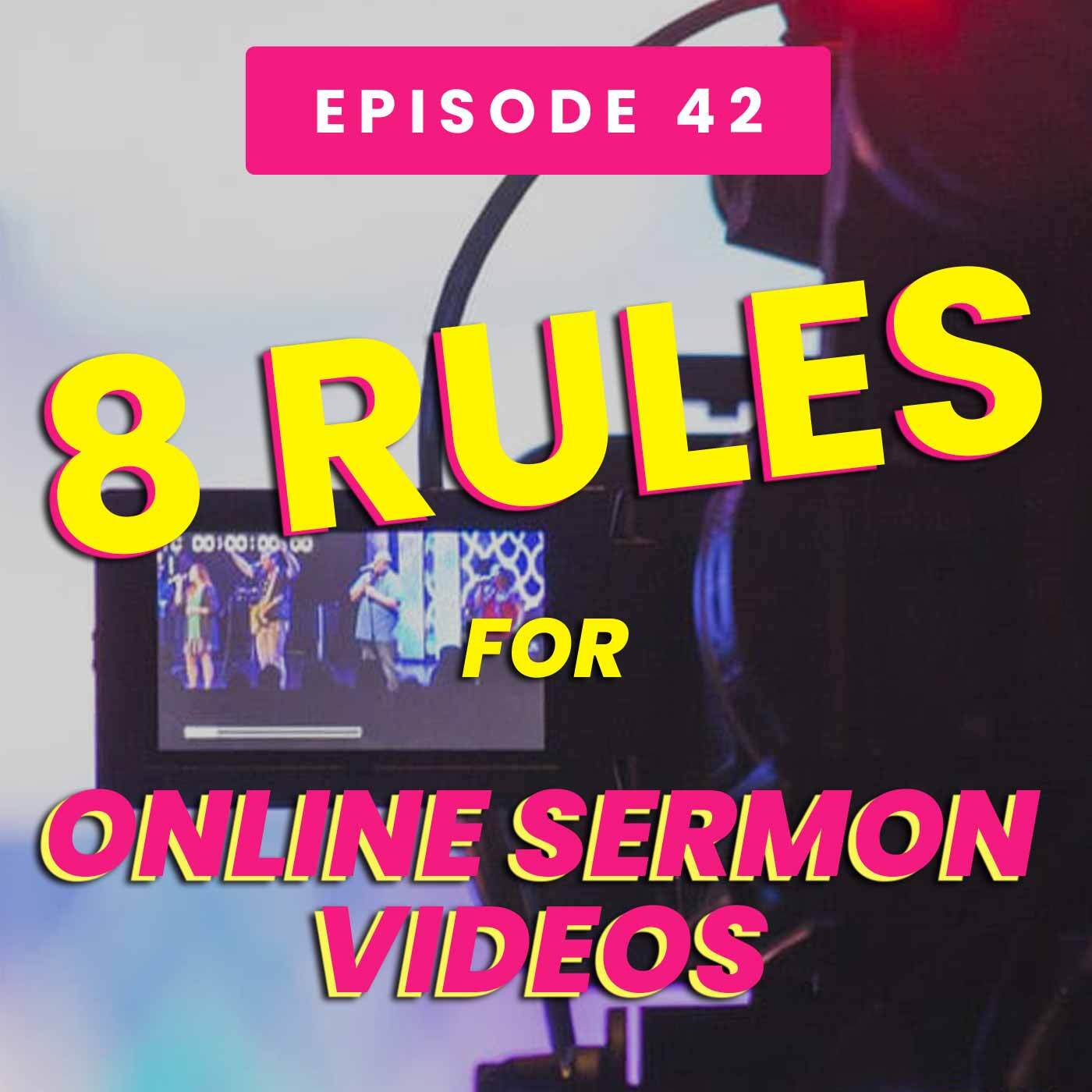
Speaker 0 00:00:00 In today's episode, we discuss eight new rules for posting your sermon videos. Online, the pandemic forced thousands of churches who had never done a video sermon to put their sermons online. There are some elements to preaching that work well in person that don't translate as well to digital join us as we discuss the ways your church needs to adapt your sermons to better reach a web based audience. We hope this conversation helps your church reach more people
Speaker 1 00:00:29 And grow. You're listening to the reach, right podcast, the show dedicated to helping pastors and church leaders reach people the right way, hosted by me, Thomas Costello, and with me as always is my cohost Ian Hyatt. We're here to help you your church see more visitors and grow well. Hey guys. Welcome.
Speaker 0 00:01:07 Welcome to the retrial podcast episode number 42. I am your host Thomas Costello, and with me as always is my cohost Ian. Hi. Hey Thomas. Hey man. How's it going, man? It's going good. Going good gray day here in Austin, Texas, but, uh, settled be out before too long. That's good. Excited for our conversation today. We're gonna be talking about eight rules for online sermon videos. Um, so we have over the last year, lived through, uh, the coronavirus pandemic. Uh, I feel like we're towards the end of it. Uh, I got that full shot in the arm yesterday, but one thing that the Corona virus pandemic did, uh, is it did make us, uh, it forced our hands when it came to video. And just about every church. I dunno if I have a, an exact percentage for people, but so many anecdotally, so many of the churches that we talked to are putting sermons online each and every week.
Speaker 0 00:02:03 Um, they're using a variety of channels like, uh, Facebook, YouTube, Vimeo. Um, those are probably the most common are just putting it directly onto their sites. Uh, but there are lots of things. Uh, I think there's a few rules that we wanted to share today that will help churches get better results, uh, that are things that maybe a lot of churches miss when they do post servants. So obviously it goes without saying the most important rule is preach good, right? Like give good servants. And so that we're going to assume, you know how to do that. And that's something that you're called to do if you're putting those on there. So having good content, nothing will substitute for that. You can follow all eight rules and if your content stinks, then yeah, it's not going to help. Can't help with that. That's that there are people that help with that.
Speaker 0 00:02:49 It's just not us. Probably we have uncovered, I think a handful of things that will actually help good content perform better and by perform better, I think it means seeing more people watch it, more people stay through the entire sermon. More people respond, more people connect with your church. Those are some of the goals that churches have with this. And so that's, our goal is to share some of eight of these things that are maybe, um, maybe missed for a lot of churches, uh, list missed for a lot of, uh, church leaders when they're putting their sermons online. Uh, because they're not things that you do, or maybe you did do pre pandemic when you weren't filming your services. So I think it's important to kind of talk through some of those. Does that seem right?
Speaker 2 00:03:29 Absolutely. Absolutely. And I think this stuff was already important pre pandemic, but the pandemic of course accelerated it like many other things, but I think church, a lot of churches have upped their game to not just only get their sermons online, but do some of these things we're talking about. So I think it's great. Why don't you kick us off?
Speaker 0 00:03:47 Yeah, will do. I'll get the first one. Uh, the first rule, uh, for online video sermons is do don't neglect the description, don't neglect the description. Uh, and by that, that means just in every place you'll ever put a video online, a sermon video, there is always a spot where you can put some content that goes with it. If you're putting your, your servant in a place where there isn't a content spot, some of the old video players that maybe websites had would have functioned this way, it's probably a bad idea. You probably ought to look at upgrading or getting a different system there, but all of the big players, whether it be a Facebook post, YouTube is probably the most popular, uh, Vimeo or some other channel like that. All of those have a big spot. And one of the most important things you can do is writing a good description that goes with your sermon there.
Speaker 0 00:04:38 Uh, the reason for this is because in order for servants to be found online, not just by your members, but by people that aren't yet members of your church, uh, people are usually using search engines to find that kind of content. And that even applies to like Facebook, right? It's not uncommon people to put, uh, topics of messages into the search box on Facebook and your sermons could come up. So this is something you have to have to have to, uh, write a description for every single message that you do. Um, I would encourage churches to make a description that's maybe even longer than you would expect. Um, I think you, you need to have at minimum, I'd say a hundred words in your description. I think my preference is if I was doing it, I would say 300 words. That would be kind of my target for what a description could have. And this description, it probably has like the points that you discussed and the scripture references just put the text of the sermon, right of the scripture, right in there. These are the kinds of things you need to put in every sermon that goes online, because it makes it more visible when people do searches. What do you have to add to that?
Speaker 2 00:05:41 Not much you covered a lot of it, but I think it's funny. Some of our listeners might be thinking, wow, that many words, you know, up to 300. And I mean, cause we're all thinking when it comes to the web and keeping everything, you know, shortening as simple as possible. And, and that makes sense in a lot of ways, but in this particular situation with your messages, because I think that, like you're saying the value it has for SEO, you want these to be found when someone's looking for whatever messages having to do with love or finances or whatever it would be that they're searching for. But I think also one thing that came to mind is when it comes to a sermon, a little bit more explanation is good. Anyway, compared to maybe something other content on your website, this is where you kind of have a little bit of a green light to be a little lengthier.
Speaker 2 00:06:27 Not saying you should preach super lengthy or the length of the sermon, but I think it also just helps not only for SEO and visibility when people are searching, but you know, give people a little bit if they're, if they maybe have missed the series so far or something like that, give them a little bit of explanation as to what the message is, give them some context. And like you said, I think one of the neat things you just mentioned that that makes this encouraging and not to work heavy for a pastor or a media person making updates to a site is that this content is really already being created. You know, when it comes to, like you said, sermon points, scripture references, those things are already there. So it shouldn't be too tough for someone to come up with a good one 50 to 300 words.
Speaker 0 00:07:10 Yeah. I think that what the content you're looking for here is kind of that that intriguing question is like, what is the problem that we're trying to solve in this service? So have you ever wondered this, or have you ever dealt with this issue in your life? Well, in these next, uh, in this, in this sermon, we're going to tackle six ways that we can, uh, uncover that and get victory over that situation. And so that's the kind of stuff we're not trying to give away the whole story. You don't want to give away the entire sermon. You don't put the application in there, but I think giving that description, it serves as a tool to help someone be inspired to stick around and listen to the ad and actually watch the video there. So yeah, that's it.
Speaker 2 00:07:50 That's good. Well, I'll tackle the next one, which is be careful with crafty sermon titles or titles to your messages. So be careful with getting crafty. This is it's easy to get creative, right? When it comes to a sermon, you know, and when you're thinking about it as a pastor and I've preached, you've preached, you know, it's, you're thinking about it from just your point of view and it's easy to kind of come up with something craftier too creative, and that's good. It's a positive thought. It's the right thought. But when it comes to again, people searching for specific things online. If you had, you had a good example when we were talking about this point earlier, brainstorming for this podcast, you know, if you're, if you have a message that it's about when Shadrach, Meshach and Abednego were in the fire, you know, if you want to call it, jump in the fire, you know, that sounds cool.
Speaker 2 00:08:41 And it's a little creative, but most people won't be searching for sermons or messages about jumping into the fire. Right. As far as that last thing that they want to, when they're thinking about heaven and hell, but no, instead it would be something like how to grow in your faith or something like that. Because obviously that would, that's a faith example in scripture. And so again, a lot of it has to do with, with SEO, but I also think that, you know, not just SEO, but if you would agree, thinking about it for the person doing a search, you know, jumping into the fire might sound cool to you, but for maybe that person that isn't in church every Sunday, or maybe doesn't even have faith yet, you know, it's a simple, more universal term, like how to grow in faith or how to have faith in God. That's going to be a little bit more applicable to those people too. Right?
Speaker 0 00:09:32 Yeah. I totally think so now, so this is one of those things that is totally different from in-person services to video services. I'm not even saying that you should change the title of your message in your services, right? So you might, in your video, you might, uh, the sermon you actually deliver, you might say the title of this sermon is faith under fire or something like that, whatever it is, but just know that that's not a useful title because, uh, when people, um, there's very few people that'll be searching. Like you said, jump in the fire. If that was the title of your sermon, very few people will search for that. Uh, and the people that are, are probably some kind of like a masochist they're figuring out how to do fire walks or something like that. They're, they're looking for like sarcasm or like a wit doesn't play. Well in
Speaker 2 00:10:17 Jackson had the title of a heavy metal Metallica song too. So they jump in the fire. So
Speaker 0 00:10:24 Top, but the fire. Yeah. So they're probably looking for that almost certainly they'll be looking for the Metallica song. So anyway, the point is, is that when it comes to how people type in searches and you should make simply ask yourself this question question, like every time you title a sermon online, ask yourself who would be searching for something like this. Like if someone who is searching for the answers that we're giving in this sermon, what would they type into a search engine, or what would they type into YouTube? YouTube is great for how to videos and, uh, for, for learning new topics. And so for a Shadrach, Meshach and Abednego sermon, uh, that's about, um, you might be, uh, how to keep your faith in trials or in hard times or something like that. That would be more appropriate for a title. Now, again, I'm not saying change your physical sermon title. When you give your, you could even end the video, you could say, Hey, the title of our sermon is faith under fire. That's, that's okay to do that. Uh, but, um, in the description that you're writing, when you're loading it on your site, on YouTube, on Facebook, wherever it is, the title should be something that you could conceive that a person who is looking for answers to the questions you're answering, they'd type into a search engine.
Speaker 2 00:11:42 That's good. That's good. Awesome. Excellent. Why don't you tackle the next one?
Speaker 0 00:11:46 Cool. Number three is consider a transcript, uh, consider giving a transcript. Uh, I've never been one of those guys, uh, preaches from a manuscript. Uh, so some of our audience I'm sure writes out every word of their message and types it out and they read from it. That was never just my, my way. I was more of an outline kind of a guy, but when it comes to, uh, to search engines and being visible online, uh, as a general rule, more good content is better than less content. Uh, so, uh, when you can, when it makes sense, and there's some, there's some costs to account with this, but having a transcript of your message, having it in written form is a really valuable tool for search engine. So, um, there's a couple of ways that churches can tackle this. So many churches probably have someone who, uh, is a volunteer or maybe someone who's good at typing who would love to, uh, take in the message each week and transcribe that.
Speaker 0 00:12:43 That's just something that they would have a heart to do. Maybe you have someone who comes to mind in your church that could do that. Um, that's fantastic. The other option is there's some really cool tools out there nowadays. Uh, and we can put a few of them in the description here. Uh, but there's some great tools that will, uh, you can pay for a service to transcribe things on average for decent transcription. You're probably talking about in the range of a dollar a minute. That's what those kinds of those kinds of services will cost. Uh, they use digital tools and then someone kind of checking on them for the more expensive ones. And then you'll have really cheap ones that cost a dollar for a whole sermon that just spit out the computerized version of it, with all of your ums and UHS and, uh, your stutters and all those kinds of things in there too.
Speaker 0 00:13:26 So, um, I have seen this be really helpful for churches just because it gets thousands of words onto those posts. And there are some people that would, that just learn by reading better than by watching. And so they would like to be able to read through a sermon and see what you have there. I know that there's a few pastors in history that I am so blessed to have been able to read like, um, Charles Spurgeon. Uh, we did one of our sites that we do after him, uh, with big Spurgeon fans. You know, I don't know that if I heard him preach that he, I heard that he just read from his messages when he preached. So I don't know that it would be as valuable to actually watch a sermon from Charles Spurgeon, if you could write, but reading, it has been something that's been valuable to me over the years. So there are people that really do learn that way.
Speaker 2 00:14:12 That's good. And I think again, more content, just like we've talked about with blogs, just like we've talked about with, you know, and we don't, again, we're not recommending you make your website busy with, you know, going too lengthy on things, but the more content with good key words, you know, cause there's going to be a lot of rich key words within sermon content. You know, pastor say a lot, they teach a lot, they give a lot of references and not just scripture references, but storytelling and all sorts of good content comes from that. And again, I think people they're digging into messages more these days too, after with the pandemic, a lot of people they prefer to not, not only just watch, but like you said, read, I've seen it on more websites than ever before. So I think it's a good thing. So excellent.
Speaker 2 00:14:58 I'll tackle the next one, which is make a cover image. So I think, you know, for a while now, way pre pandemic churches have been moving more towards doing sermon series and not every pastor's going to be a series oriented pastor and that's fine, but for a while now, we've known there's been value to having a nice cover image for your message or sermon series graphic, something we've known already that, that, that, you know, the current generation, next generation, people becoming even more visual now than ever. So for that reason, you're going to have something more engaging. It's easier now, more than ever, even if you don't have like a good graphic designer to your church, there's, there's thousands of options out there, images that you can find that tie to your message. And so it's not that tough to find these images. I'm surprised how many websites still that I come across though that don't have an image associated with there. There are so many either it's just a text, you know, it's just the title of it, of the message, or it's just the church logo, which I guess is, you'd think is better than nothing. If you have a good looking logo, you have some sort of a visual, but then again, it just makes them all look the same if just your logos up there in your messages, but not just for the visual appeal, but you can expand upon some of the other good reasons for that too.
Speaker 0 00:16:21 Yeah. I think that, um, the bottom line is that every bit of content you should make you make right now as a church and you put it anywhere online, it needs to have an image with it. Uh, so this is the case for blog posts. It's the case for sermons. It's the case for church events. It's the case for everything you put on your website, every post you put on Facebook should have an image. Every Instagram post obviously has to have an image, a newsletter. So photography, like the adage says that a picture is worth a thousand words. It's so true. Uh, so, um, the reason for us, like a proven fact that people are much more likely to click on and learn more about it. When they see an image versus just text or a title and image is going to be what grabs you think about the way for the, our audience that uses YouTube.
Speaker 0 00:17:06 Um, I get on YouTube and you can read all the titles. But what I tend to do is I tend to look more at the graphics that are there and usually the graphics have the title or some variant of the title in them. And that's what we're trying to get to. Like, you want your image to stand out, uh, and not because your title isn't going to stand out by itself in a sea of images. If it's just your logo or it's just the title of your sermon without image, then it just doesn't stand out the way that we want it to. So that's really important as far as tools to do this. Um, I highly recommend Canva, uh, for churches. I think that's a great product. Um, it's free, or you can get a paid version that's $10 a month. Uh, and listen, a as a design company at reach right here, we do web design and graphic design for a living.
Speaker 0 00:17:55 We still use Canva to put out all of our, our sermon graph, our, our, our video graphics for this podcast. Uh, we use it for doing all of our blog, posts, graphics, all those kinds of things. They all come, we put, we do that kind of stuff in canvas. So well worth the $10. That's really not an excuse in this day and age, it takes our team, maybe five minutes to put together a graphic for one of these things here. Uh, so it's not a hard project to take on. It's something you can churn out over and over again. So yeah, it's a must have at this point, good stuff. Awesome. Number five, let me hit that. Uh, it's loaded onto multiple channels, uh, load your sermons onto multiple channels. Uh, this is because if you're doing the hard work of recording a, uh, videotaping a service, you're putting it on one channel.
Speaker 0 00:18:43 It really isn't a lot more work to put it on to other channels. So I think that every church should have their sermons on at least YouTube, Facebook. And then, uh, probably, uh, you might want to use a Vimeo or something like that, and then certainly having it directly on your website. Um, if I had to rank the importance of each of those, I'd say having it on your website is most important because that's where people will go and expect to have that. And the moment you send people off of your site onto YouTube or Facebook to watch a message, you lose that audience. You no longer have control over what they see after that and where they click off to and all those things. So having it on your site is the most important. I think most churches today are probably putting it onto a YouTube or Vimeo and then embedding that onto their website.
Speaker 0 00:19:30 Right. But really, uh, like for instance, this podcast, we do a video format. We put that on YouTube and Facebook and our site. And then we also have an audio format that we put out onto, uh, Apple podcasts, Spotify, uh, all the podcast channels that it goes out to. Um, I know we're talking specifically about video in this conversation here, but I think you should also take the audio files of your messages and podcast them, put them out on all the channels where people can access podcasts, because really it's about reach. If we just did one channel. I mean, I, I look at our, our reach now and it's been steadily growing on our podcast here, which has been really fantastic, but our reach is divided. Uh, I mean, no one part has more than 50% of our audience. Our largest is as people listening on, on their devices, uh, the audio version, but we get lots of views on YouTube, lots of views on Facebook and those things are only growing. So it's, it's maybe an extra 10 to 15 minutes of work. Right? Put it out there, have your media people put it out there on all channels available. You'll just see better results that way.
Speaker 2 00:20:34 Yeah. And everyone's been already familiar with the term going viral, right? So obviously more visibility, you're going to get certain demographics or certain pockets of people and on certain social channels or, you know, some people spend more time on YouTube than they do Facebook and vice versa on Facebook more. But I, I like the point of it, the most important part of it being on the website. And there's a lot of reasons for that. And that's a, we can have a whole nother episode on that, but I think that if you're doing a good job, uh, when you're pushing it to other social media channels, always send people back to your website, funnel them back there. Cause they could just do so much more with it. They see the video and they can also fill out a form. They can respond in certain ways. So there's a, that was a good point.
Speaker 2 00:21:19 You touched on some good stuff. We'll all I'll tackle the next one here. So that's also provide related links. So within your sermon content, you know, this is, this is a really neat thing and it's not too hard to do, but this really helps for SEO. And it also gives people a good resource when they're watching, uh, one of your messages. And let's just say, you're, you know, in a series about prayer, just making something generic up there, you're in a series of prayer. And, and so, but then you touch upon something else that was maybe in another message in that series or another series you can link within the content. So again, in the description or the body of text there, you can drop a link in there. And, and maybe, maybe if you're in a series in prayer, but then you had another sermon years ago on prayer, you can also resource them to that. And all of these things kind of work together. So not only is it a resource for the person watching or listening to the message, it also helps for SEO and visibility, doesn't it?
Speaker 0 00:22:22 Yep, absolutely. So a couple of rules for SEO, there's two kinds of linking there's internal linking and external linking. Uh, so, uh, linking internally means linking to other places within your website. Uh, so when you have a, uh, a description on your site of a sermon, um, it'd be great to link to past sermons, or if you mentioned, um, baptism in your sermon link off to your baptism page where people can get signed up for that, those kinds of things make a lot of sense. Then there's external linking, which it's important that every sermon has at least one every post of any kind of content has at least one external link. Uh, so that's just kind of a general rule of what Google is looking for. Whenever we create content, we try to have an external link that goes somewhere else. Uh, that'll be valuable.
Speaker 0 00:23:10 So, um, this, I think a few ideas for what that could be as if you have a resource that you talked about. That's external talk about that, but I think if you're using any, um, statistics or quotes, it makes a lot of sense to link off to the source that you used for those statistics or quotes. Here's a new paradigm that we live in nowadays. And I know this as someone who's preached for, uh, over 15 or 20 years now, I guess I've been preaching sermons. When I preach at the beginning, people didn't have the ability to live fact check me while I was preaching. Right. So I could say whatever I wanted say no, but it's a, it's one of those things where now I, I, I know for a fact, especially online that people are live fact checking people like if a pastor quotes a statistic and you know, uh, they, they say that over 50% of statistics are made up on the spot, right?
Speaker 0 00:24:04 So if a pastor is quoting a statistic and it doesn't ring true to someone, I'm going to be surprised if they're not pulling up there another device, or maybe even that'll hit, make them stop your video and what they're doing in the sermon and go onto another window and try and figure out what's going on. So the best way to, um, to put that to rest is just provide links to it. If you have statistics that you're talking about, or you're talking about something that has a quote from someone else, put it right there in the description, link off to them, give credit where credit's due. I think everybody's happier that
Speaker 2 00:24:35 Makes you more credible too. Right? So whenever we talk about statistics with web design or search engine marketing or whatever, we, we, we mentioned the source so that it's, uh, people know it's a reliable and credible thing. So that's good. Exactly right? Yep.
Speaker 0 00:24:51 That's a good number seven. Let me hit that one. Uh, it's uh, create a short intro, uh, create a short intro. So, um, there's two kinds of ways to do this. So one way is like a, uh, a really short intro that just says, you know, the name of your church and maybe a little, uh, audible part that has that. That's not what we're talking about here. Kind of like a title screen. Um, that's good. Go ahead and do that. I think that every sermon video, um, should have, you should almost think of yourself as like, um, as a YouTuber, every time you preach. Uh, and you can do this after the fact too, but you should think of yourself like a YouTube, or do you think about the YouTube videos that you watch? Usually what they'll the format is, they'll have a excited person in the beginning telling you about all the things you're going to learn in this video.
Speaker 0 00:25:36 They'll have a little title screen, and then they'll go on telling you the things in the video they'll actually do the video. So, um, that's probably something like, Hey, you know, welcome. Uh, in this episode, you're going to learn about this. Or in this sermon today, we're going to talk about faith, how faith is going to make an impact on your life. We hope it makes a, it helps you make a life change today or something to that effect that just talks a little bit about what you're going to get and a reason to stick around on this video. And then it, and it helps them kind of get over that hump and not click over in the first few seconds. Cause here's the deal, the first 15 seconds, that is the most important part of the video because people decide whether they're going to stay for it or not in those first 15 seconds there.
Speaker 0 00:26:15 So that little intro, um, it's something that we've started doing here. We've always done it on the audio side, but it takes a little bit more work. And so we started doing that on our video side here too. And we've actually seen an uptick in our, our time that people spend watching videos as a result of having those little intro. So you probably don't do that already on Sunday. So taking just the raw footage from Sunday, that won't really work. What you might want to do is maybe after service on Sunday, you of get up there and, um, after your sermon, you'll say, Hey, in this sermon, we talked about this, this, we hope you stick around and catch the entire thing. All right. Or the one that I love is the ones that if you have like a, let's say you're one of those point preachers where you say you have seven points in this message or something like that.
Speaker 0 00:26:59 Yeah. You've probably seen this video, Ian, where someone says, uh, you know, in this video, we're gonna talk about the seven reasons, uh, that we're, it's important to keep your faith in fires. And all these reasons are especially are, are very important, especially number seven, right? That's what they'll say that way, that way that the, it kind of, it makes the audience think, wow, I really should stick around for all seven of these, especially the last one. Cause something special is going to happen there. So these intro videos are really powerful. I think a great tool. And I think it's, it is more work, but I think it'll get you better results. What do you have to add to that?
Speaker 2 00:27:35 Now? You made me think of several things. So back in college, when I had my public speaking class and the number one, like recommendation at the very beginning of your speeches to have an intense attention getting statement, you know, something that's just going to get people engaged right off the bat. So this has been a principle that's been around. I mean, like you said that first, this first few seconds, just like on a website, we say George Barnum came out with this stat. I don't know how long ago he said you only have about four to six seconds to get someone engaged on the homepage of your website. And within those first few seconds, they're deciding whether or not they're going to click further. It's the same kind of concept. And then it also made me think of my church. You know, I go to a larger church.
Speaker 2 00:28:20 We've talked about that. There's a lot of production put into our pastor's sermon series and everything, but you know, we they've put up and I'm not saying every church has to put a ton of production in this just, but what I've, what we've seen is when we do, you know, and this is a short thing, like you said, so, but when we do an impactful, short opening kind of, you know, intro to the sermon series, you know, we've heard people stand up and scream, they get so excited, you know, and Ooh, you know, and then they're ready and that's just how we're wired. It's how we're wired. And I think that, you know, you never get a second chance to make that first impression, like we've always seen. So, but that's, that's, that's good. Well, it's funny, you mentioned that some of those messages that said, especially point number seven, stick around for that we're on our last point number eight, which might be the most important.
Speaker 2 00:29:08 No, it's last but not least for sure. That's asked people to interact, you know, after they have, while they're watching, after they've listened or watched, we do it at the end of every podcast to like comment, subscribe. Um, we've seen this, it's a principle that's been around in marketing for years in the same. And it's going to help churches hear from people. I know that marketing, we don't always want to say all these words in ministry, but you know, it's something that's baked into anything you do. You know, when you ask someone to respond or do something, there are so many more times, I don't know how many statistically, how many times more likely they are to do it. Um, but they're, they are more likely to do it. So I think that that's always something you should do.
Speaker 0 00:29:54 Yep. You have not because you asked not it's something that is, uh, important. Uh, so the reason for this is that likes and comments and subscriptions and the shares and all those things. They tell each of the algorithms, whether it be YouTube or Google search algorithm or Facebook's algorithm, whichever one it is, it tells them this contents good. We should show it to more people like that. That's what that it reinforces it. So the more likes comments, subscribes shares that you get, the more visible your message will be. Therefore, the more people you will reach with the message, therefore the bigger impact you can have for the kingdom, with the messages that you're being given. Uh, and so, um, I think that this is something that is really simple. And I, I know I don't like doing it. It's just something that you kind of have to do.
Speaker 0 00:30:42 I feel cheesy even sometimes at the end, you know, saying smash that like button and doing those things and all the cool YouTube kids do. And, uh, you know, it's just, uh, everybody doesn't like asking for those kinds of things, but it really does make a difference. And here's the thing is that your audience like our audience, in most cases, they are, they're happy to do it. They want the, you know, like, remember this, the people watching your sermon, most of them want you and your church to thrive. They, they believe in the message and they want it to get out there. And sometimes that little gentle reminder of, Hey, consider doing this consider just hitting that like button, consider the, sharing this with someone that you think it might, that might appreciate it. I think that goes a long way to helping them get over that hump. They probably want to do it anyway. But if you ask your odds of them actually doing it.
Speaker 2 00:31:30 Yeah. Good stuff. Nothing much, dad there, hopefully this was helpful to everyone.
Speaker 0 00:31:34 Yeah. I have something to add. Would you, if this was helpful to you, if you would rate, review, subscribe, like share smash that like button, it means a lot to us. We hear from you guys and we hear from some of the people that watch consistently just a, that is making a difference in your churches and that, that means the world to us. So thank you guys so much for your continued support in this retried podcast. Thank you for being part of the retried family. And we'll see you guys next week.
Speaker 1 00:32:06 Thanks for listening to the reach right podcast. We hope this episode will help you reach people the right way, looking for more resources for your church. Check us out online at reach, right studios.com. If this episode has been helpful to you, it would mean the world to us. If you would rate, review and subscribe on iTunes or wherever you get your podcasts. Thanks again for listening. And we'll see you next week.