Episode Transcript
[00:00:00] Speaker A: Well, church website trends, they change all the time. And we're going to unpack in this conversation the eleven biggest trends that we're seeing in church websites right now. Let's do this.
You're listening to the reach, right? Podcast. The show dedicated to helping your church reach more people and grow.
Well, hey, guys, I'm Thomas.
[00:00:23] Speaker B: And I'm Ian.
[00:00:24] Speaker A: And today we are talking about eleven church website trends that you need to know for 2024. I think it'll be an important conversation. That is our bread and butter, I guess, here, you would say. Although it's not the primary thing we do here at retry anymore, we started out doing church websites and it is still very much a part of our DNA and what we do all the time for lots of clients. And so with that, we have our finger pretty well on the trends and what's working and what isn't working anymore for church websites. So I think it should be good for us to dive into some of these thoughts, Ian. Yeah. Yeah.
[00:00:59] Speaker B: You and I have, of course, dealt with church websites before church churches even knew they needed a website. So what? For almost over 15 years now. So we've most certainly seen the trends change.
[00:01:13] Speaker A: Say over 15 years, buddy. It's like closer to 18 years now, I think.
[00:01:17] Speaker B: Well, there you go. It's been trying to not make us sound that old. So, anyway, we've seen. We've definitely seen trends change over the years and have built websites for a long time and a lot has changed. Yeah.
[00:01:32] Speaker A: Yep. Yeah, it sure has. It's been a totally, totally different world now. So, in fact, we'll start off with the first one. This was one in our 18 years of doing this that didn't even exist then. It's mobile optimization. The idea 18 years ago that you'd have to optimize a website for mobile devices was insane. But now, with the vast majority of traffic that your church is experiencing, most people are getting onto your site not on the desktop computer, but on a mobile device. And so therefore, it needs to be mobile optimized. And by that, I would even say it needs to be mobile first. So here's the issue, is that so many of us, when we design and create content for our websites, that still is primarily done on a desktop or a laptop computer. And the issue with that is that that's where we check it. We take a look. Hey, did this content look good or is this graphic looking right? Yes, it is. We look at it on our same desktop. But then we need to realize that almost everybody else is going to see it on their phone or on a tablet or on some other kind of device. And so we need to make sure that we're actually designing it so that 1st first and foremost, it's a good experience on those devices, not first and foremost on a desktop or laptop device. So I can't overstate how important this is. Your mobile look and feel of your site is only growing. It's important, so make sure you're mobile optimized.
[00:03:00] Speaker B: Yeah, that's a no brainer in thing number one for these days. Do you remember when it used to be that you had to actually design a separate website for mobile?
So, yeah, again, we've seen a lot change with it. And one more thing I'll add with this, you don't leave desktops and laptops in the dust. Your website will still look good on those. It's just, you got to have it optimized for, for mobile. So we're not saying you don't look good on it. People will still use desktops and laptops. So next one also, that's been tried and true since we've seen the origination of church websites, Thomas, is to have interactive elements on your website. Interactive elements. Have it interactive, your website. So obviously, calendar, a church calendar is still something that people will interact with. Sermons on your website still obviously a given where they can give online. And I think what we've really seen as far as in recent years, the interactive portions, other than what we just mentioned, are just ways for people to respond. Good websites now have compelling content in a way, whether or not it's a form that someone fills out, some way for someone to respond and for you to engage them ahead of time.
[00:04:15] Speaker A: So, yeah, it has to be more than an online brochure. Your website, if that's all that it is, you're missing an enormous opportunity. Yeah. So I think just interactivity. I think even in like, your content that you're creating. Every time you create a piece of content, what we tell people to do is ask yourself this question, what do I want someone to do as a result of being on this page or in this section or watching this sermon? You want to make sure that's abundantly clear and that's a chance for interactivity. So asking people to comment or filling out a form if they want to check out your church for the first time, or just having some way to make it a two way street, it makes a, you know, and this is how it works nowadays. And this is one of the best ways to get results on your church. Website. Yeah. So, all right, next one. Obvious is modern design and aesthetic. We are seeing a trend more and more towards simplicity. I think that the days of busy websites and even lots of movement and things on your sites, we're seeing. I think there's a place for movement on a site and we still are huge fans of background videos and these kinds of things, but I think just simplicity is winning the day. And you see this across the board from even the biggest brands. Busy, loud websites with lots of things to grab your attention are not the right way. The right design aesthetic in most cases is one clear next step and everything, driving someone towards that. So, yeah, being modern with that, I think really making sure you nail your photography in those pieces, in your design, I think that really goes a long way, too.
[00:05:48] Speaker B: That's what I was going to say. Photography and videography really drives the look of a website compared to years past where it was colors and fonts and.
[00:05:56] Speaker A: Those things are still important too.
[00:05:57] Speaker B: You want to have a well branded website, of course. But yeah, it's simplicity, photos, video that drive the look of it. So do a very good job. Of course, those things there. So good. Next one is accessibility features. This is one that might be overlooked. You want to make sure that everyone can, despite whatever impairment they may have, be able to access and utilize your website clearly. So these are things like alt text for images, keyboard navigation options for people that don't have a mouse, adjustable font sizes for people with visual impairments, transcripts for audio content. So for people with hearing impairments, and then captions for videos as well. So those things are definitely important. You want, obviously, to serve anyone well, despite what their limitations may be from your website.
[00:06:58] Speaker A: Yeah, a couple of things I'd say about this. So if you've had a organization with a website for any length of time, you've probably got emails. I get these. I got these in churches that I've led. I get these at reach ride all the time, where it's almost like a scare tactic that people will use to tell you that, like, hey, you need to make sure your website is accessible to people of all abilities. And they'd warn you about some legislation that's out there where you're going to get fined thousands of dollars if you're not compliant with this.
And I don't. We give no legal advice here, so don't take this as legal advice. Some of that probably is true. I have heard exactly zero accounts of churches ever being sued or anything for having an inaccessible website. But again, I wouldn't do it for that reason. I do it because you actually want to help people of all abilities. And I will say as a little bonus is that you actually will see search improvement if you get these things right. So if you get your alt text right and your, you have a, one of the big things I see churches do a lot is they'll maybe make an image for an event. Let's say, let's say Easter is coming up and you have your big Easter image that's on the site and with that, that's where you have all the details of your Easter service. So it says Sunday at 09:00 and Easter egg hunt to follow. But it's in the actual image and not in the actual text of your website. Well, unless you put in alt text and things to mitigate this, a screen reader isn't going to see all of the text in the image and therefore it won't be able to tell someone who is, who is seeing impaired that what this actually says here. So you need to make sure you're thinking about that. And it's also like, remember that basically Google with its SEO algorithm, it sees the same things that screen readers see. So if your website is almost all imagery, which is great, having images on your site, but if that's the primary driver, you just have to remember that that is not the most search friendly. And screen readers, they work the same way for Google's SEO algorithm as well. So something to keep in mind with that. Yeah, that's good. All right, next one is a personalized user experience. I'm reading more and more about this. This is something that at a grand level isn't for every church. I've seen some churches that have all kinds of different, we'll call them segments of users. So it will have basically what it is, is the site will have some kind of a memory. And if you're a 54 year old man who is a member of the church and is married with kids, it'll show you different experiences based on all of those kinds of criteria. And so this is something that is certainly possible on websites now. And you better believe that some of the largest companies are using this. They know what your interests are and they know the things that you've looked at before and they're going to set, they're going to show you products based on your past purchases and things you may be shopping for.
I would say for the vast majority of churches, that's way over the bar of something that you'd be able to execute. And these are hundred thousand dollar plus kinds of projects to make sure you tailor. It's so that a, you know, 54 year old man is only seeing, you know, men's breakfast and certain things to invite their kids to and, you know, a very tailored experience and not seeing other stuff. So something to consider and maybe play with. And if you're on the cutting edge, look into a little bit. What I would say where this applies to most churches is making sure you have personalized experiences for your two main buckets. And that is people that are a part of your church and people that are not yet a part of your church. That's right.
I say most churches, they probably err on the side of making it a little bit too internal. So it's, you know, what would a member want to see? What are they looking for? Because they're the ones that are giving you feedback on your side and so you tend to cater to them. And part of our job here at retry, it is really pushing churches to think more visitor minded. What does a visitor want to see? What are they expecting? And really thinking through what your experience would be like for a visitor and giving them really clear next steps. If you have no familiarity with our church at all, like really helping tailor that experience for someone when they're on the site.
[00:11:31] Speaker B: Yeah, no, that's good. Another thing too is, you know, and that makes me think of I'm new pages or plan your visit pages that's totally tailored on the visitor. Of course, your events and sermons and giving, those are more membership tools as well. And then, and then one other little page that's very common now and effective is a neck steps page. That's also for the person that is newer, not like brand new, but newer. And looking to get a little bit deeper into the involvement of your church, whether or not it's serving, getting baptized, you know, joining a small group. So that this is a way to segment things a little more.
[00:12:09] Speaker A: That's the tool to pages, the tool to move them from bucket a to bucket b. Right. So they're going from not yet a part to a part. And that's the tool to help them bridge that gap there.
[00:12:19] Speaker B: And.
[00:12:19] Speaker A: Yeah, super, super important tool.
[00:12:21] Speaker B: Yeah. Next one is social media integration. This used to be a little different. You know, we talk about our past and what we've seen on church websites. It used to be that you would want to pull in every post from Facebook or every tweet into your website and you could still maybe do that. But honestly, now it's more of just making things shareable, like messages like your sermons, you know, someone able to share that easily on their facebook or wherever they want to send it to for social media. And, you know, now, too, it's one of those things, if someone goes to your website, you really do want to keep them there. So usually you do want for them to be able to link out, to start following you on social media. That's kind of expected in the footer as someone thumbs down from a smartphone to get down there. And maybe if they're after they've seen what they want on the website, to go check out what you're doing on social media. But we're in this day and age where people, if they're going to try to find you on social media, they're going to know how to do that on their own. You don't necessarily need to rely on your website for that, but there does still need to be integration there for sure. And another thing for SEO, which is what we talk about, so for you to rank well with Google and be visible is to not always send everyone out of your website for content, but keep them there. So you do want to kind of, you know, exercise caution when it comes to how much social media integration you have these days.
[00:13:48] Speaker A: Yeah. So in social media's earlier years, I'm thinking about Facebook and some of the earlier years of Facebook.
It used to be that you could share links on Facebook and if you shared a link, you could drive a lot of traffic to your website.
That is almost completely dried up because all of the social media giants, they've realized that our income comes from people staying on Facebook or TikTok or whatever platform they're on. That's where it comes from for us. So we're going to make sure that we don't send traffic off of Facebook onto someone else's site. And the same thing should go for you is that you should realize that, well, it's not income we're concerned with, but we're able to change hearts and minds and souls when they're on our website better than any other place on the Internet. So if you. It used to be that churches would try to get lots of content, or, like, you'd have those, you know, find us on Facebook links up in the top navigation. Terrible idea. Now you want to relegate those to the footer. One little tip, I would say is even with those buttons that are there for, whether it be x Twitter or Facebook or Instagram or YouTube, I would make sure that those open in a new window and don't just take someone off of your site, because once they've left your site, the odds of them coming back or hitting the back button are pretty slim. But if they're opening it in a new window, it kind of keeps that session alive and helps you to continue to engage with them there. So, yeah, I think. Well said, Ian. It's about integrating and giving people the chance to share your content on social media. I think that's really where this shines the most.
[00:15:20] Speaker B: That's it.
[00:15:21] Speaker A: All right, next one is security and privacy.
I don't know if this is really an outreach trend, but it is something to be serious about. We actually had a few of our sites, even today that we're dealing with that have had some challenges with security because best we can tell, people were using a password that was probably like Jesus 123 or something like that as their password onto the site. And so that's just never a good idea. You never want to be doing that. So, I don't know. Let me just give this as a reminder. If you're sitting here watching this podcast or listening to this podcast, and you're thinking, oh, that's exactly what my password is. It's Jesus one, two, three.
[00:15:58] Speaker B: Or seven. Seven. Seven, yeah.
[00:16:00] Speaker A: Or 777. Right.
It's probably time to get in and change that and use a strong password. Most browsers, like Chrome now, they have a really great password manager. It'll recommend it for you. Use the one they recommend. Those are almost impossible to crack, so get serious about those kinds of things. Again, not really an outreach tool, but it is something that will save you a lot of heartache in the future if you're using weak passwords on things. So take your security seriously.
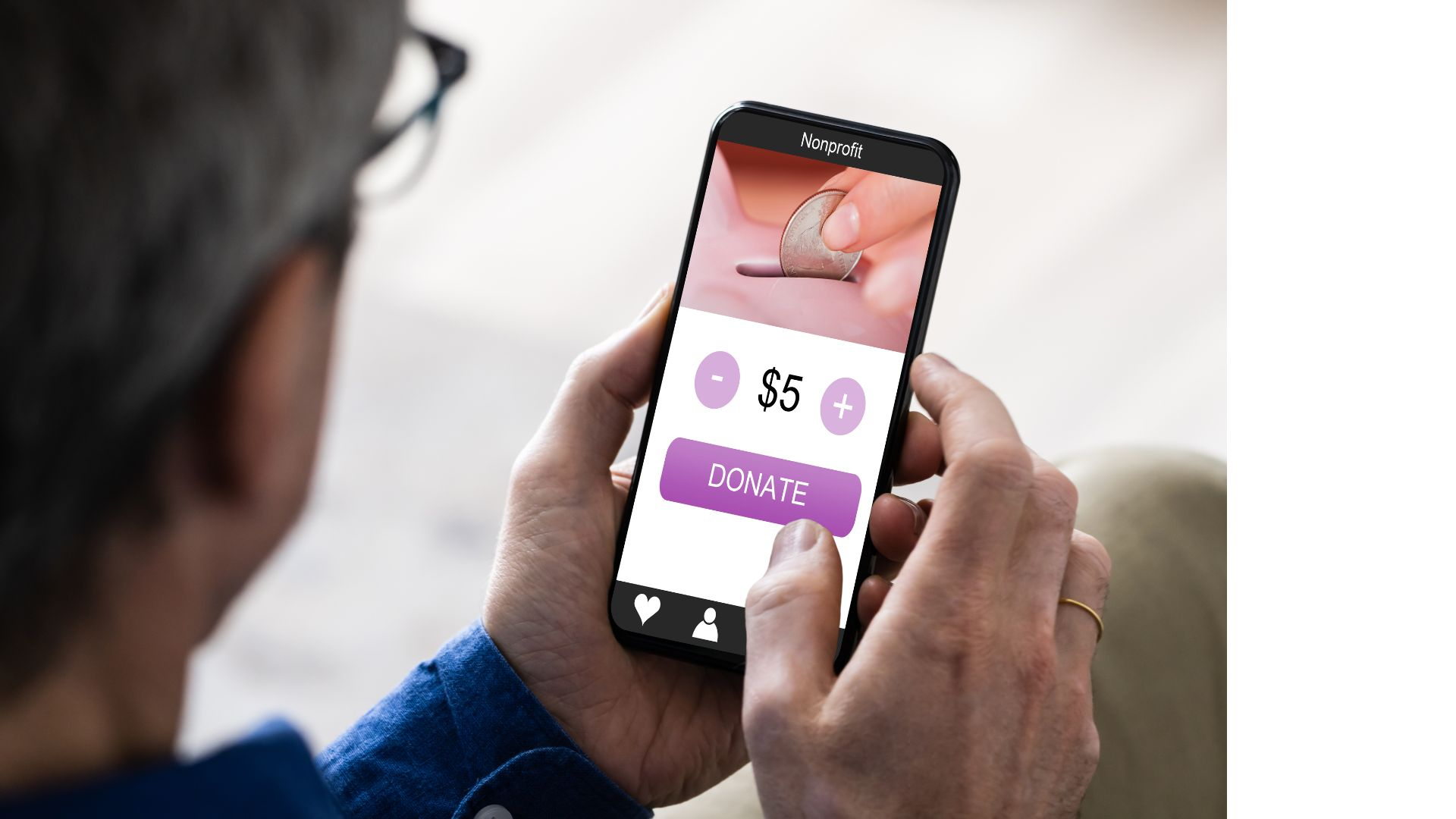
[00:16:28] Speaker B: That's good. Next one. This should definitely be a no brainer to these days is to have online gave. Online giving easily accessible. So online giving I rarely come across, although I do at times, a church that does not offer online giving. Even bad church websites that I see typically have somewhere where someone can give. But the key word, I think with this is easy. Now, we don't recommend you make it the main focus of your website and be obnoxious and, you know, have people have their stigmas, confirm that this church is just after my money and that's all they want. We don't want to cater to that mindset, but make it easy for them to give. Make sure that you're integrated. You have a good giving system that you're integrating into a good giving page. That's easy, easily accessible in your navigation, and you want to make sure that you don't make it hard for people to give on your church's website as they're compelled to do so.
[00:17:28] Speaker A: Good advice. Don't make it hard for people to give. That's something you want to make it remove any barriers.
I will say this. So one of the things that I see, we've done a whole episode or a whole conversation on this about asking visitors if they want to cover your donor fees.
And we did some research, we dug in pretty deep on this. Yeah, or, yeah, I'm sorry, the transaction fees, because on average, it's going to be about three, two to 3%, depending on the card and the provider and those kinds of things. And so two to 3% is a small amount in theory, but we all know that it adds up. If you're giving $1,000 a month to your church, well, that's $30 every single time someone gives amongst your whole church.
That's a big chunk. However, I think what happens is a lot of times churches will be tempted to say, okay, well, if we ask someone if they want to cover the fees to help us, absolve us of some of that cost, that makes a lot of sense. But there's a lot of research out there that shows that that actually is going to cost you more. Because when we ask people to cover the fees, it kind of, it kind of takes their focus off the real reason why they're giving and puts it onto all this transactional stuff, and it just doesn't make it feel right. So we came to the conclusion, could.
[00:18:47] Speaker B: Take the worship out of it a little bit. Exactly.
[00:18:49] Speaker A: Yeah. So we came to the conclusion that in most cases, it's probably better not to ask something like that. And so I think that it makes sense to, like, a part of keeping it easy is just making it something that's seamless and people don't have to worry about your administrative costs when they're making a donation there. So that's the bottom line. If you want to take a look at that video and see some of the research that we found there, we'll link that to that down in the description. Or if you're watching on YouTube, we'll put it in a note or a card up here on the top. You can check that out later. So next one is SEO optimization. This is really some of our bread and butter here. For churches. The primary kind of SEO optimization you want to focus on is local SEO. So it's for people that are searching for things like churches in my city or churches near me. Those kinds of searches. You want to make sure that you come up in the Google map pack when people do those kinds of searches there. So the way that you do that, one of the things you can do on your site is that you can make sure that your name, address and phone number is always identical everywhere that you write it on your site, that you have it in your footer would be the best place for that. So it's really clear where you're located and there's no confusion on that. And that that matches what every directory online says about your church. So places like, obviously your Google Business profile, Apple Maps, Yelp, you know, all of the main mapping and directory yellow pages, that kind of stuff, all those different sites out there, you want to make sure they have your church written in the same way on every one of those. So one of the big things we see is that if your first Baptist church, if one place it says FBC and other places says First Baptist Church, another place that says first Nantucket or whatever it would be, if it's written in different ways, Google will start to think, oh, this is a different organization that just happens to meet at the same place, and therefore they won't rank you as highly as you should be on that local map pack there. So that's an easy thing that you can do. Lots of other things involved with it, like getting more reviews and other things like that. We won't get too deep into it. We've done tons of content about local SEO. You can check that out. We'll leave some of those links in the description as well.
[00:21:10] Speaker B: And we just helped out First Baptist church in Nantucket. Good job, Tana.
[00:21:15] Speaker A: We did get on there.
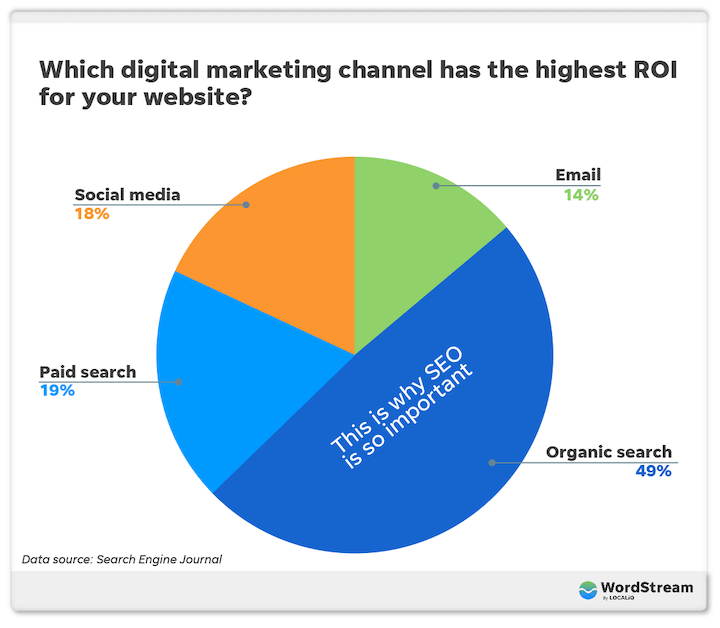
[00:21:16] Speaker B: I'm sure there is one there. There's a first Baptist in every city. So I will add one more thing to this. We did see some good data from search Engine journal. A really cool little graph that I wanted to just read off this was which digital marketing channel has the highest return on your investment for your church website? 18% was social media, 14% was email, 19% was paid search, and 49%, almost half, is organic search, which is what we're talking about for SEO. So that's a big, there's a big difference between all those percentages. So if for those out there that like statistical data, again, compared to all these other digital marketing channels, organic search, about 50%.
[00:22:04] Speaker A: So good stuff.
[00:22:06] Speaker B: Good. Next one is AI integration. Big topic now, right? So AI, of course, is all the buzz and, and we've talked about it at length during different podcasts. Different posts we've put out. But what does this mean for your website, Thomas? So what is AI specifically for a church's website?
[00:22:28] Speaker A: Yeah, it's a good question. So there's lots of things that you can be using AI for when it comes to advertising, marketing, church websites, those things. I think that the. Obviously for content generation, it can be a good tool to use. We say this every time we talk about AI. Do not use AI to write entirely sermons. It's a pair. A terrible idea. I'm sure there's people that have done it out there. It doesn't work. It's not good. So don't make that, don't do that. But I think that there are tools for creating content on your website. You can use AI. So let's say that you want to do a blog post. Maybe, you know, it's. Maybe you're coming into Mother's day, let's say, and you want to think of different ideas to give to families in your church, to honor mob and you want to make a blog post about that. AI is a great way to kind of give you a hit list of some of those ideas that you can then flesh out in your content and, you know, actually write the content for it and give it a spin for your church. So lots of things around AI and content.
I think when it comes to actual integration on the front end of your website, I am just starting to see a few churches play with some AI, like chat bots on their church website.
I don't think this is ready yet. I think this is a pretty big risk that people are going to get bad theological advice if they're typing into a chat bot and you don't want, like to. I can't see it working for a prayer chat bot or need prayer, put it in here and then AI praise for them or something like that. Don't do that. That's just. That's creepy. You know, maybe we'll eat our words someday and someone could have some kind of a. A theological response to that, but that's just a bad idea.
[00:24:11] Speaker B: Doing miracles, answered prayers through AI.
[00:24:15] Speaker A: Yeah, AI prayer bot. Yeah, no, don't do that. But I do think that there is some place to maybe field initial requests with AI at this point. And this is all something that it is coming, this kind of AI revolution. Like, I was just reading and it escapes me what company it was. I want to say it was stripe or some other credit card processing company. They released some of their numbers where they replaced half of their support staff that does chat support with AI bots. And then you know how big companies, they'll do like a survey after every single one of those chats to see how well your problem was answered, how quickly it happened. And the AI actually solved people's problems in the chat system faster and with a higher satisfaction rate than real customers on there. So than real people, real customer support representatives. Representatives, yeah, exactly. So there's a place for this. It's coming. I don't know if churches are ready for it yet, but it's something that it might be fun to kind of play with and maybe there's a place to field initial requests, but I think we're still at a place where a human has to get involved with it. Agreed? Agreed.
Cool.
[00:25:31] Speaker B: Last but not least.
[00:25:33] Speaker A: Yeah, go for it.
[00:25:35] Speaker B: Improvement and adaptation. So again, I think here, just taking the technical mumbo jumbo out of it, just keeping content fresh, regularly updating your website. If you don't already have analytics tied to your church's website, you're really missing out. Because if you're investing in a good church website, you want to know and monitor the results. We recommend Google Analytics, probably still the best at it, we believe, out there, and so get that set up. Obviously, we've already talked about mobile optimization, staying up with trends, testing your site, making sure it's optimized, making sure that you're always looking at the content on your website. Is that content strategic to reach first time visitors or is it out of date? These things we think are obvious if you're, if you're managing a website and keeping it fresh.
[00:26:29] Speaker A: Yeah. Here at retry, we measure everything. So when it comes to our website, especially, we have, you know, the, we have dashboards that you and I and the rest of our team look at and we, we gauge how we're doing. Not spiritually, but we gauge how we're doing, like performance wise, based on numbers. And this is something that's so important that you do this on a church level as well. I think you're going to find all kinds of things if you start measuring on your website. If you're, you'll, you'll notice that there's certain places where people get off of your website. And our first time visitor forms or our plan your visit forms are mostly coming to us from this particular page. One tool above Google Analytics that I would recommend is using Google Search console. This is, it's a tool that you can set up on your website. And if you have a web developer, they could probably help you get that installed there. Pretty simply if not, we'd love to be your web developer. So drop us a line in the comments. Or you could fill out a on our site but use Google search console. It's actually information that's more search oriented so it says what terms people are searching for that they wind up going to your site looking at. So you know, and what pages on your site are they landing on most often? And so you can do so much with that information. And what it helps you do is say, well, a lot of our traffic is coming from people looking for this. It'll always help you think of new ideas of how you can make more content like that and get more traffic onto your site, and that'll lead to more people visiting your church and really good opportunities for people there. So. Absolutely, yeah. Improvement and adaptation, it's a constant battle. This is something that in the website industry we wrestle with because people feel like kind of that sprint of getting your website launched is all the work. But that really is, it's the hardest work for sure, but it's really only the beginning because this has to be something that evolves with you and it really does snowball if you start to take this stuff seriously. So that's some good advice, Ian, that's good.
[00:28:34] Speaker B: That's good.
[00:28:34] Speaker A: Awesome. Anything else to say as we wrap up?
[00:28:37] Speaker B: No. We know that there was eleven of these, so quite a bit of information, but we hope it was helpful. And at least maybe you discovered that two of these things you weren't doing at all or anything. We love that and we'd love to hear other things, maybe something that we missed. Right? We'd love to hear from folks about that. Thomas.
[00:28:55] Speaker A: Yeah. Drop us a comment down below and if there's something that you're seeing that's getting you results right now that wasn't maybe before or something new you're trying, I'd love to hear about it. So drop us a comment down below, hit that subscribe button for us as well. That's how we get the word out there about the Reach Ride podcast and what we're doing here. Thanks guys for being a part of the Reach ride family and we'll see you next time.
[00:29:15] Speaker B: See ya.