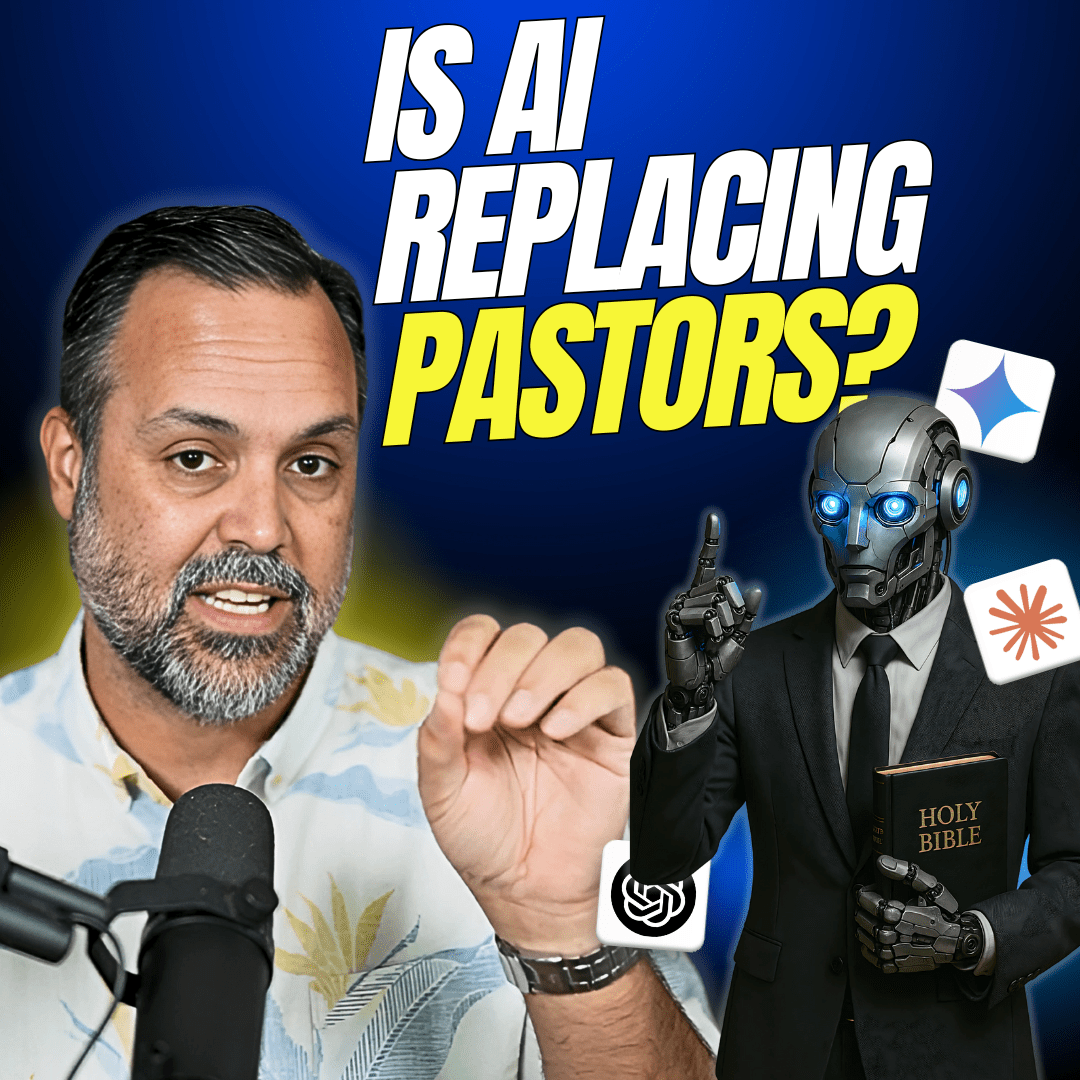
Artificial intelligence (AI) is changing how many industries operate, and churches are beginning to explore how these tools can support ministry.
From writing assistance to administration and outreach, AI technologies offer new ways to help churches reach people and manage daily tasks.
But with these new opportunities come new questions. What are the ethical implications of using AI in ministry? How do we make sure that artificial intelligence tools support our mission and not harm it? These questions don’t always have easy answers, but they are important for pastors and ministry leaders to consider.
In this podcast, we’ll look at some of the ethical concerns and principles related to using AI in ministry. We won’t tell you what to think, but we hope to give you helpful information so you can make wise, thoughtful decisions.
Estimated reading time: 7 minutes

AI, or artificial intelligence, refers to machines or software that can perform tasks that typically require human intelligence. These include things like learning, understanding language, solving problems, and recognizing patterns. Common examples include chatbots, voice assistants, and recommendation systems.
In ministry settings, AI tools might be used to:
These tools can save time and help ministry leaders focus on what matters most—serving people. But using AI technologies in ministry also brings ethical challenges that need to be addressed.

As churches begin using AI systems, they may face some of the same ethical concerns that business leaders and tech developers do. These concerns are important to think about in ministry because they affect how we relate to people and reflect our values.
Some common concerns include:
These ethical challenges are not meant to scare us away from AI but to help us think critically and act wisely.
When thinking about the ethics of AI, many experts point to a few core values that can guide responsible use. These principles can also help ministry leaders decide how to use AI tools in ways that align with their mission.
These moral principles are part of a growing conversation around ethical AI and AI governance, helping organizations make wise decisions.
For ministry leaders, the ethics of AI are not just theoretical. They affect real people in real communities. Here are a few questions that can help pastors and church staff think through the ethical implications of using AI:
These questions help ensure that ethical practices are not just about following rules but about loving people well.

There’s nothing wrong with using new technology to improve ministry. In fact, many churches already use machine learning and AI tools without even realizing it—like when they use social media platforms or online giving systems.
The goal is not to avoid AI but to use it in a thoughtful, intentional way. This means:
When churches promote AI ethics and prioritize ethical AI practices, they can enjoy the benefits of technology without losing the personal touch that makes ministry meaningful.
AI governance refers to the rules, processes, and oversight used to ensure that AI is used responsibly. For businesses, this might include compliance policies, audits, or leadership structures. For churches, governance may be more informal, but it’s still important.
Ministry leaders should think about who is making decisions about AI technologies in their church. Is there a team that reviews tools before they’re used? Are ethical concerns discussed openly? Do leaders take time to reflect on the long-term effects of new technologies?
Establishing simple guidelines and reviewing your use of AI regularly can help keep ethical principles at the forefront.
As artificial intelligence becomes more common in church settings, ministry leaders face important ethical questions about how to use these tools responsibly. AI technologies offer new ways to serve, but they also bring complex challenges that deserve careful thought.
Here are some key questions to consider:
AI tools can help automate tasks and provide quick responses, but they should never replace meaningful human connection. Ministry is relational at its core. Leaders should ask if a particular AI system enhances or replaces real engagement with people.
Even helpful tools may create new challenges over time. Will reliance on AI change how we think about preaching, discipleship, or leadership? Asking hard questions now can help prevent future problems.
Not all technology aligns with the mission of the Church. Leaders should evaluate whether an AI tool upholds moral principles and supports ministry goals, or if it introduces values that conflict with their faith.
When using AI tools, someone needs to be accountable. If the tool makes a mistake—such as giving poor advice or generating false information—leaders must be prepared to step in, correct errors, and provide care.
By asking these questions, ministry leaders can promote AI ethics, ensure alignment with moral principles, and use technology in ways that support their mission without compromising their values.

AI is not going away. As these tools become more common, the conversation around the ethics of AI will only grow. Churches that take the time to consider ethical challenges and embrace responsible AI practices will be better equipped to serve their communities.
The goal is not just to keep up with trends, but to use artificial intelligence in ways that uphold human rights, protect human dignity, and support the mission of the church.
By staying informed and intentional, ministry leaders can navigate the world of AI with wisdom, grace, and faith.

In today’s episode, we unpack the reasons why most churches in the United States are not growing. To put it plainly, if your church...

In 2024, church video marketing is more important than ever. With the rise of digital communication, churches are finding new ways to connect with...

You’ve uploaded sermons. You’ve got a decent logo. You tell people to subscribe at the end of your videos. But for some reason, your...