Episode Transcript
Speaker 0 00:00:00 Maybe you can relate to this. You upload your sermon to YouTube and crickets, nobody's watching. But it's not because you're a bad preacher or your sermon isn't very good, it's because you're not uploading and putting your content on the internet in the right way. In this conversation, we're gonna unpack some of the tips that we've learned to help you upload your sermons the right way. Let's do this. You are listening to The Reach right podcast, the show dedicated to helping your church reach more people and grow. Hey guys, I'm Thomas.
Speaker 2 00:00:34 And I'm Ian.
Speaker 0 00:00:35 And today we're talking about tips to get more engagement on sermon videos. This is one of those things that I think every church wants to see is that, uh, we put our sermons out there and we hope for the best. But if you're like most churches, sometimes you get crickets, uh, nobody's, uh, checking them out, and you know that you have hundreds of people, or maybe even some cases, thousands of people that are Yeah. Uh, seeing it. Or maybe they're, um, they're able to watch it, uh, but they're just not doing it. And so we're gonna kind of give you some ideas today. Uh, this came from a user, someone, uh, who had a question, I guess, about us and Yeah. Uh, about this topic, right, Ian?
Speaker 2 00:01:13 Yeah. They wrote in and they said, I'll read it out. They said, Hey there. Our church recently began posting sermon videos online, but we haven't seen much engagement yet. Like, none <laugh> any suggestions on how we can improve visibility in effect, effectively reach both our church and new visitors? Um, so in people who are not yet a part of the church, they said specifically. So,
Speaker 0 00:01:35 Yeah, that's a good question. Um, and I think this is something that almost every church has some experience with. I'd say the vast majority of churches, they put their sermon videos out there and they do not get any real traction. And, you know, maybe there's some bangers out there and you do a really great one, and you know, you have this one that kind of goes viral, but by and large, week in and week out, uh, I, most people I see, they tend to feel like they're kind of bummed out, uh, by the number of people that are watching. And, um, especially when you dig in a little bit behind the numbers and don't just look at the views, but you look at the actual watch time, um, from some of my research that I've done on, uh, clients that we've helped before, we've kind of taken over some of their projects here at Reach Wright.
Speaker 0 00:02:20 Yeah. The average sermon view time is a little under six minutes. Uh, <affirmative>. So those views are usually nowhere near the entire sermon. In fact, they're right in some cases, you know, depends on how long you preach, I guess, but Right. They're a fifth, maybe to a 10th of the actual length of the sermon there. So, um, yeah. Yeah, it, it's, it's, uh, it's rough and it's tough sledding, but there are some things you can do, I think, to increase that engagement. Uh, the, there's two things to think about, I guess when you think about engagement in video nowadays, it's the number of views. Uh, there's also the watch time, and then I guess there's a third one of the interaction people have with the video. Yeah. Which is another indicator for, that's more for the algorithms, I would say, is that that's a, what they use to determine whether a video is useful or not.
Speaker 0 00:03:05 But honestly, the biggest one today is watch time. Uh, if you're consistently putting videos out there and you get lots of views, but they only watch for an average of 14 seconds, that's gonna tell YouTube and the other algorithms that you're putting your sermons onto, uh, it's gonna tell them that, you know, there's probably nothing here worth showing to other people, right. Because no one's sticking around to watch it, and it's not good for their platform, so they won't show it anymore. So those are some of the things we have to overcome. But we do have some tips, I guess, to kind of break that down for, uh, people. Um, I guess I'll kick it off. I'll share the first one we came up with. Yeah. Um, it's, uh, you have to take some time and really consider your thumbnails and titles. Uh, this is one of the most important things that you can do because if you think about it on, we're gonna use YouTube primarily in this discussion here about how to get more engagement on YouTube.
Speaker 0 00:03:55 I think that's where the majority of churches are posting video sermons is on YouTube. Mm-hmm. <affirmative>. So you may be putting 'em directly onto your site only or on video, and some of these things will apply there too. But we'll speak mostly about YouTube. Um, with YouTube, nobody is going to ever watch any of your videos unless they're enticed by the thumbnail and the title. Think of it almost like a subject line from an email. Nobody opens your email unless they're enticed by the subject line. That's the only thing they'll see before they click into it. So, same thing with these titles and thumbnails, and to be really frank, it's as important as you might think they are. It's even more important than that. You really can't overemphasize the importance of thumbnails and titles and getting those things right there. So, uh, I think for a lot of churches, this is kind of an afterthought because most of the heavy lifting is obviously creating the sermon, writing the sermon, filming the sermon, editing the sermon, and we kind of, we just take whatever the name of the sermon was on Sunday morning and put that in there as the title.
Speaker 0 00:04:56 And then maybe you'll write that same thing on the thumbnail, or you'll just have a picture of the series graphic on the thumbnail. And I just wanna say, I guess that's not enough. You need to actually spend some time thinking about what would be provocative enough, uh, to grab someone's attention mm-hmm. <affirmative> and make them want to click this video. So, for instance, this, we have kind of a working title for this video right now. It's eight tips to get more engagement on sermon videos. Right. So if we named it like a sermon, um, it would be like, uh, you might say, um, off the top of my head here, but it's like, um, you'd call it like a, uh,
Speaker 2 00:05:36 God to honor God with, uh, well, yeah. Maybe not even the eight ways. You don't usually use
Speaker 0 00:05:40 Those in sermon titles. No,
Speaker 2 00:05:41 You wouldn't in a, we'll talk about,
Speaker 0 00:05:42 Like, it'd be, uh, heavenly engagement might be something we call it, or there you go. Godly engagement maybe, or something like that. I guess Kingdom
Speaker 2 00:05:49 Engagement. Yes.
Speaker 0 00:05:50 Yeah. It took me a while to come up with something there, because it's, it's something that, that may play well to an in-person audience, and maybe it doesn't either, but especially with like, some of these series titles that some churches use, they really don't have any relevance on channels like YouTube. So you need to make something, I don't, I'm not saying clickbait, but you need to make something that would have people engage and make them say, you know what? I kind of wonder about that. Or, I want to know what happens if I click on this here. So you need to choose titles like that. And then, as you know, I'll let you talk about this a little bit, cuz I know this is something we talk about a lot here. Talk about thumbnails, Ian, tell 'em, uh, about some of the things we've learned about thumbnails and what's working there and how much it annoys you, <laugh>.
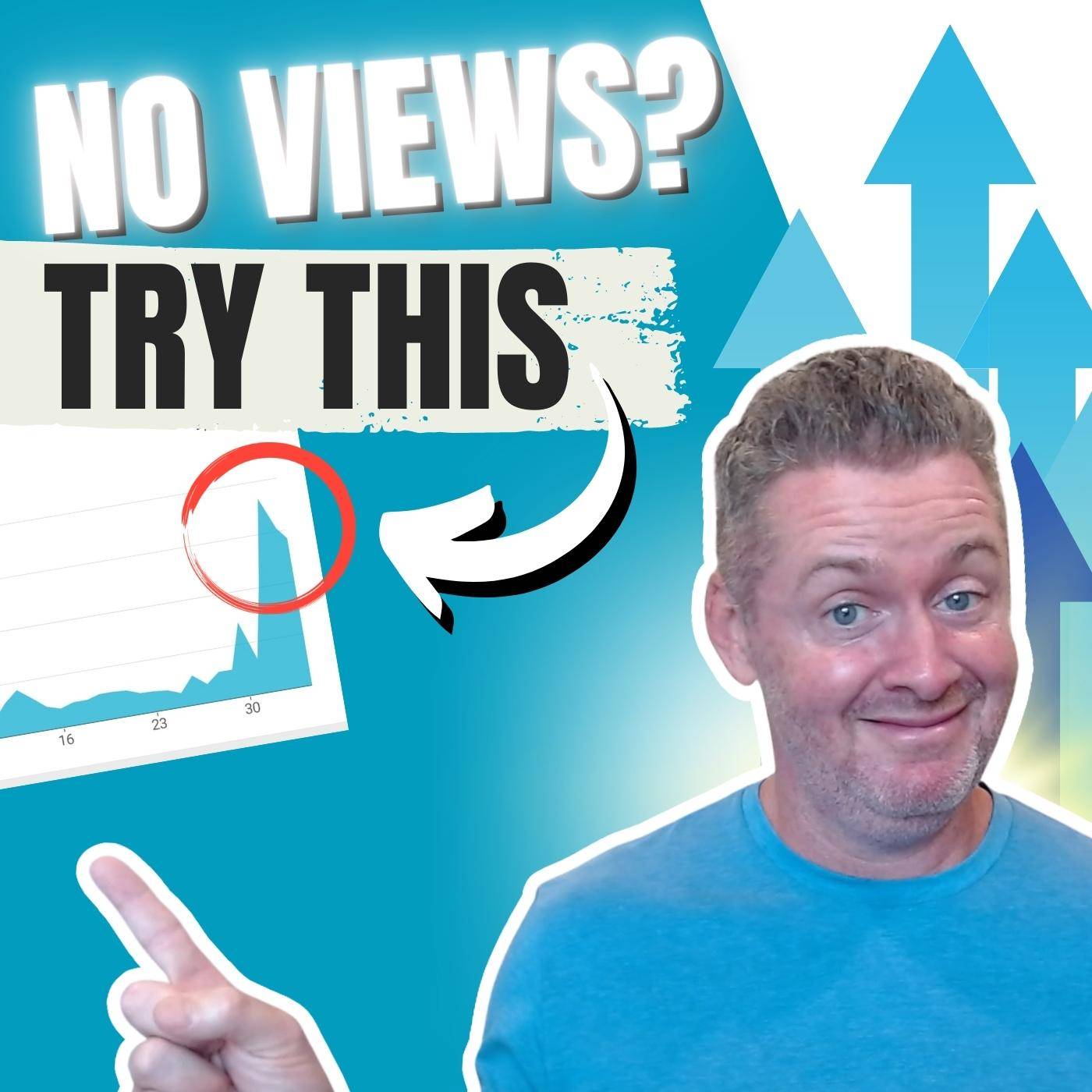
Speaker 2 00:06:31 Oh, yeah. Well, you know, yes, I've learned to love it, uh, what we do here for our podcast, and hey, I guess we've seen with the data and analytics that it, it does make a difference, but I guess what we've seen is, uh, almost goofy faces your mouth open, um, you know, stuff like that that, you know, you may be thinking, you know, I know I just want a professional image with me and my Sunday's best, you know, with a microphone bringing, but it is that kind of action shot of the face. And, uh, those things are, we see that they're still trending, you know, on YouTube, they're getting engagement mm-hmm. <affirmative>. Um, so, um, so it would be something like that. Or I, I know what we've done before, like, you know, think about this, have your finger up, you know? Yeah. Um, finger on your chin. I'm wondering, um, you know, flexing your muscles, stu you know, it might sound silly, but if it's gonna get people engaged and lead 'em to the gospel, which is what you're, you're preaching at your church, then that's it. Isn't it worthwhile? Yeah. Right. So, yeah,
Speaker 0 00:07:30 I think tight shots on faces, we've learned that. So just so the audience knows what we do, like once a month or so, Ian and I sit in front of these same cameras we're on right now, and we do like a bunch of sequences where we're pointing all over and making big, obnoxious smiles and frustrated faces and stuff so that some of our video editors can turn those into thumbnails. And so, yeah, I know, you know, maybe you're a pastor, maybe you're a, a communications person at your church, and no pastor that's preaching is going to enjoy doing this. They're not gonna want to go and make silly faces in front of the camera where they're really overly animated. But I'm telling you, that makes a huge difference. This is the difference between, like, these kinds of little things can get you like a 10 x increase in the number of views that you see on your sermons there.
Speaker 0 00:08:15 So getting this right, I think for the sake of the gospel, like you were saying, <laugh>, that's, it's really what it comes down to. So, other, one other little tip, I think what it comes to titles, uh, on the thumbnail, you don't wanna put the same thing that you have as the sermon title. You usually want some kind of a provocative statement. So for this one, we don't, haven't created the thumbnail for this one yet. That's kind of a, usually it's better practice to do it before you do it, but I think for most churches, um, yeah, you're not gonna have a thumbnail before you preach the sermon, but, you know, you'd wanna do something provocative. So, um, I might say, uh, something like, um, uh, 14,000 sermon views is like kind of a question mark would be something you'd put in a thumbnail and that would go along with the title of how you can get more engagement on your sermon videos. And then someone would be more enticed, like, these people are getting 14,000 views. Oh my goodness. They'll want to click on something like that. So that's kind of the idea here. So, um, now, uh, apologies if it's nothing like that when it's all said and on, these are all working titles and working ideas, but that's just kind of an example of our thought process on how we do these things here. So anyway, why don't you get the next idea we had for someone trying to grow their sermon museums in.
Speaker 2 00:09:25 Yeah. This one you would think, uh, should be a, a no-brainer, but I can, we could see how it's missed often, but this is having good video quality in editing with your messages. So, I mean, if you, we know a lot of churches are on a budget, we get that. And even if you're on a budget, you could still invest in decent cameras and microphones. Yep. Uh, of course the more high end you can go, the better. Um, but, you know, those types of things, making sure the video quality is clear and, and, you know, everything is presented well and produced well, that's gonna really make a big difference. I mean, think about it, like, it just made me think of, you know, when a 4K technology came out, you know, you're gonna, you're either looking at an old 32 inch, which used to be a big TV back in the day, and now it's not. You're looking at a 32 inch, four by three regular. If you look at that now, compared to what 4K looks like, I mean, obviously you're more engaged in 4k, it feels ridiculous,
Speaker 0 00:10:18 Doesn't it? Whenever you see something like, I watch my kids when they'll see like a footage from a, a sporting event or something from the early two thousands, and they're like,
Speaker 2 00:10:28 Squinting goodness, squinting. Like, what is that? Yeah.
Speaker 0 00:10:30 This feels like it was in the 18 hundreds when you look at it now, when you see these four by three, uh, aspect ratios. So Yeah, it's true. Yeah, absolutely. I think the biggest thing is the sound, honestly. Like when I think about the, I think about quality editing, and one of the biggest mistakes I see is not focusing on the sound. And I, I kind of, I, I think you're right. It's not a money situation for most churches. Uh, you can pull off decent sound, decent video, all you could do it for a thousand dollars. Like, so if you could put a thousand dollars and in, I, I don't mean to minimize that for some churches, maybe that's a really big investment and a huge leap. Sure. But, um, for the vast majority of churches and for the impact this can have, it's not so much about the money, I think it's just about the having the skilled people, uh, there to do it.
Speaker 0 00:11:15 Yeah. And training and learning, and you can learn all of these things on YouTube, and there's lots of great resources out there, uh, to get trained on how to better do that. But making sure you really nail the sound part of things. And then secondarily, I'd say lighting. That's one of the big things that churches often are hesitant towards, especially if they're in older buildings with lots of light coming in. Right. Um, and it doesn't really play well for a lot of, uh, a lot of filming needs and those kinds of things. Yeah. So, but put some time into that. Put some time into the editing and it'll pay some dividends.
Speaker 2 00:11:45 Yeah. That's good. That's it. You wanna catch
Speaker 0 00:11:47 The next one? Yep. Next one is social media promotion. Uh, so this is something that, um, it's harder than it used to be, uh, to do this, but you should make it practice that every time you ever preach a message and you put it onto YouTube, that you post it across all of your other channels out there just to get some momentum going on that. And you should also do that right away, the YouTube out the, the YouTube algorithm, it's actually built in a way that it puts a lot of priority on what happens right when the video is released. So if you put the video onto YouTube and then you wait three days and then you share it onto Facebook and you put it onto TikTok, or, you know, put clips on TikTok or you put it on Twitter, then YouTube will have already decided whether this is a good video or a bad video that they wanna show to more people.
Speaker 0 00:12:37 So best practice is you post it to YouTube and immediately within five minutes, get that same video link posted to all of your other social channels, get it out in your email blast, do all that kind of stuff that you can do to start getting some juice on this video, and that'll give it the best shot that it has of getting some legs on things there. So, yeah. Yeah, I think social media is good. It isn't what it used to be. Um, Facebook, if you've been on Facebook where one of the few channels where you can still post links, um, right. Like I, I think most churches, you put something like a link to a YouTube video onto Facebook, and you're gonna get a handful of impressions on this, maybe a hundred mm-hmm. <affirmative>. Uh, but it's gonna be something that is severely limited because they're trying to keep people on their platform and not link out to other platforms. So it's not what it used to be, but I think anything you can do to give it some juice will help.
Speaker 2 00:13:28 Yeah. Absolutely. I like the next point within the social media promotions, encourage your congregation members to share the videos on their networks. Yeah. Um, so, and you know why I like this is because it's a form of evangelism. You know, if, if, if, if someone was encouraged by your message and they feel like it's gonna hit home with a few of their friends, hey, encourage them to share it. Yeah. You know, a lot of people, of course, still nothing has changed. There's a lot of people that are shy about evangelism and sharing the gospel with people, and, and we shouldn't be, but we are, and this is one way where we've seen over the years, a lot of your members may be a little more comfortable just saying, Hey, my pastor, he preached a message on, on, uh, healing and, uh, I, I know Betty Sue in your life's, been going through some rough times with her health, or, or just could be spiritual healing mm-hmm. <affirmative>. And I just thought of you, this is a great message. I, I hope it encourages you, you know? Yep. So it's, it's really easy for them to do that. And, uh, and you should give your members the ability, encourage them to even do it. For sure.
Speaker 0 00:14:28 Yeah. No, that's good. Good. Next one here. Good. I'll, I'll get it. It's a consistency. Yeah. And keeping a tight schedule on things. So this is something that we should be good at as churches because we mostly preach our messages pretty consistently. Right. Most of us preach messages on Sundays, uh, for our seventh day at Advent listeners, you do it on Saturdays, but we all preach the same day every week. And so generally speaking, we have a leg up in that. We're not going, you know, six weeks without creating any kind of content. We're producing this content week in and week out. But it's important that you just get in that habit of always posting it. Uh, don't skip weeks because, um, you know, if you ha you gotta be careful to not have a bad video feed or bad audio that's not worth posting. And if you start to Ms. Weeks, it starts to YouTube and the algorithm starts to penalize you Yeah. For not being a consistent poster. So if you're doing it once in a while out of the blue, it will start to harm you a little bit. So not a ton to say on that, but I just think for churches, staying consistent is important.
Speaker 2 00:15:27 Always. Yeah. Consistency. So next one is use shorts. Yeah. Um, this is huge. Now, we, we know that, uh, uh, vertical video shorts are the rage right now. I don't know how many I see a day. I'm sure you do too. Um, whether or not it, not just sermon shorts, but shorts are out there. And this is a great way to get people's attention quickly, um, to cater to the average person with a very short attention span. Mm-hmm. <affirmative>, uh, good way to really produce your sermons and bite-sized, uh, you know, chunks, if we can put it that way, and push 'em out on certain platforms. Now we've found there's certain platforms that are better than others like Instagram, TikTok, and of course YouTube shorts are there as well. So definitely something we believe churches need to, to get with the program on. For sure.
Speaker 0 00:16:17 Every um, every few years there is a new product or a new method of social media, um, posting that really gets results. Yeah. And we are still in the middle of this one. We're kind of getting late into the shorts vertical video one, but I still, it still shows no sign of really slowing down on anything. Sure. But you know, what used to work was you could put scripture graphics and sermon series graphics on Facebook and Instagram. Yeah. And then it pivoted to, uh, what Snapchat was doing, and it brought out Instagram stories and people wanna do stories. And then there were carousel posts that work really well where you slide through different things and that got the most engagement. Yeah. But for the past, uh, I'd say post pandemic or right at the start of the pandemic on, uh, it really became the vertical video format, uh, made by TikTok.
Speaker 0 00:17:08 And then like every other, uh, every other time the other channels try to adopt that same thing. And that's how you wind up with Instagram reels, Facebook reels, YouTube shorts, and all these. But, um, it is an enormous opportunity. And the greatest thing about it is that it has the, these vertical videos. They have a bent towards showing your video to people that are not yet followers or subscribers or whatever the term is, and towards people that are local or in your area. There, there's a bent towards that. So, um, yeah, there's really no other, there's nothing to say about this other than like, it's an opportunity that churches have to be taking advantage of. Yeah. And I think it's one of the best ways to grow your audience. Uh, so, you know, we have seen huge increase in our audience on all of our channels as a result of posting shorts.
Speaker 0 00:17:59 And we do it consistently. We do six a week, we take Sunday off, but we do six every single week. We put out these shorts, uh, you know, frankly, some of them get 20 views, uh, but then sometimes they get 89,000 views on Instagram. Or, uh, we've had some get 20,000 views on YouTube, and that's big for a channel our size, where we have a little over a thousand subscribers at the time of this recording. Um, yeah, for our size, that's a huge reach. And every time it shows one of our videos to 20,000 people, we get a new influx of all kinds of new subscribers or people that are interested in our content, and it helps to expand our audience. So churches, this is something that you have to take advantage of, um, if you have this skillset and the people there on staff to do it yourself to get in there, and it's not just kind of clipping it and posting it, but, you know, put it, uh, get it edited, right.
Speaker 0 00:18:52 Do the cut so it's really tightly edited. Make nice transitions, put in text and transcripts on there, put video behind it. Do all those steps. You will get results. Um, if you have someone there, do it. If not pay, pay someone like reach Right. To do it for you. We offer that as a whole service. There's other companies out there that do it as well. Yeah. Uh, but it's, I think it is literally one of the best opportunities and it will not be here for long. Uh, it's something that this has, so I don't know what the next thing will be. I don't know when this is gonna go away, but I know we have this habit in social media of everybody moving to one thing and then the next thing comes along. Well, this is the time to make those gains. So it's time to strike all the irons hot with this. For sure.
Speaker 2 00:19:34 That's a good point. That's a good point. Yeah. Nothing much to add there. We're excited about, uh, what churches can do there as well, but, uh, yeah, why don't you get the next one? This one's important too. Yep.
Speaker 0 00:19:42 Uh, optimize for search engines, uh, that's something that we, um, really put a lot of attention, uh, in, uh, on, and we pay a lot of attention on this here. So, again, uh, the key word if you want to know on this particular podcast video is engagement on sermon videos. That's the key word that we're searching for. We, we've done some research and we've found that that is something not a lot of people, cuz it's a relatively small niche, if you wanna, you know, reach lots of people, don't get into the communications and marketing for churches only kind of a niche. That's my advice to you. Right. But it, it's a, it's a tight audience that we have, but we know that people are searching for this content. So we get that question and then we try and create a title that is optimized for what people are searching for engagement on sermon videos.
Speaker 0 00:20:29 Uh, so do that. Um, this is where it also makes sense to spend some time, uh, really nailing your description on your YouTube videos. And I know that's annoying and I, I find that most churches Yeah, they'll put a title on there and they'll say maybe at the most their description will read this, uh, pastor Joe preached this message about Yeah. Um, uh, an unwavering faith, uh, take a listen. That'll be what it said. Yeah. So take some time with your description. You know, honestly, use an AI system to help you with the description. Say, hey, mm-hmm. <affirmative>, I just preached a sermon on this. We use these verses, can you help me write a keyword optimized description for YouTube that's 150 words long. Um, do something like that. It'll spit out something for you that will be search engine friendly, and you can just copy and paste that. In most cases, you want to proofread it and make sure it doesn't have bad theology or something. And it usually won't. Uh, but yeah. Uh, take that and, and run with it, and you'll start to get more results that way.
Speaker 2 00:21:26 That's good. Yeah. The next one I'll, I'll tackle here, engage with community and, uh, what does that mean? Well, that means respond. Interact. Yeah. Um, you know, when we put this out there, you know, it's not just a, uh, okay, let 'em watch and, and engage on their own. So interact with viewers by addressing their comments. Um, we think you should address any comment that comes your way. As ridiculous as it may be, you're still interacting with someone. Yeah. And, and, uh, and this just gives people, it, it'll, if when other people see those comments, it'll encourage them to engage. It gets people talking about your, your message, your media, your content that you're putting out there. Yeah. And, uh, it's just really important to, you know, really focus on that and the needs and interests of, uh, people who've not yet visited your church, but also your members. Mm-hmm. <affirmative>. So that's another thing too, is stay on, uh, subject and context of what your church is dealing with and what the community that you're positioned, uh, in to reach there locally is dealing with. Yep. But focus on those things and, and really, uh, this is community. It's a form of community, uh, not in person, but, uh, this may lead to someone coming and joining you in person. For sure. We've seen that countless times. Yeah.
Speaker 0 00:22:39 Yeah. So we have kind of a rule here that, uh, at, at reach, right, we have one of two actions we can do in response to a comment is, one, we can respond to it, or two, we can delete it. Uh, those are the two things that we can do. And so almost everything is number one. You know, if you do a ministry or you do what we're doing for any length of time, you're creating content, you're gonna get crazy people commenting on your stuff and putting mm-hmm. <affirmative>, you know, just atrocious things and sacrilege and pornography and all kinds of things that we get see posted on our, on, on our content here. And so we're quick to delete those things. We don't comment on that. Uh, right. But we will, even if it's a simple comment like where someone writes something like, so true or something.
Speaker 0 00:23:21 We, I that's one I saw. Yeah. Or someone just put in today, uh, we did a, a video about, uh, having AI write a sermon like Stephen Feick, uh, and he said, but it's really good though. That's the whole comment. That's really good though. Yeah. <laugh> and then, so you have to come up to something to say with that we just said, I know. Right. And that's the question. And you put in emojis and do that stuff. But this does, it engages with that person. It makes them feel like they're talking to someone really on the other end. And it lets the algorithm again, know that this is a active channel that responds to the audience. So, um, yeah, there may be limits to this about how, how long you can keep doing this, but I would say I would make it my goal to respond to almost every comment mm-hmm. <affirmative> that you ever get on any of your video content, uh, until it's just something that is no longer manageable. Uh, so we're still at that place here at Reach, right? Where we get it, you know, probably on average, maybe five to 10 comments a day on our content, and we respond every single one of them. And I hope to do that when we have 40 comments a day and we continue to do those things. So Yeah. It's good to, it's good to engage that way.
Speaker 2 00:24:25 Yeah. Good man. Last but not least.
Speaker 0 00:24:28 Yeah. Um, it's, we always end with this. It's analyze and adapt. That's what you have to do. Yeah. So our, we always end with some kind of measuring. Uh, so here's what you need to do is that you need to keep a close eye on your metrics on YouTube. And the great thing on YouTube is that they give you more metrics than you could possibly want to look at. Uh, so you could look at basic ones like, Hey, this video gave us this many views and this one got this many views, and so let's do more like the one that got more views. You can do that. Yeah. Um, you can do the same thing for watch time. Uh, that's something that's also important to take a look at. You know, we, I did, and this is something I don't expect that you're gonna change your sermons very much in person.
Speaker 0 00:25:10 Uh, you're gonna use what you're already using in person and maybe you'll want to address your YouTube audience or your online audience in your sermon, but you're still catering to some the people that are in the room for most pastors, I'd say. Yeah. But, um, I think what you're gonna do is in the titles, uh, in the editing process, in the thumbnails, uh, in all of that kind of work that you do, that's where you can make the improvements based on the metrics that you look at. So, uh, the two things obviously you wanna look at is number of views. Uh, watch time is really important. YouTube gives a really cool graph after a couple of days where you can see not only the watch time, but what percentage of your audience was watching at every second of the video. And so after a while you'll start to see, boy, people really didn't like it at this part of the video right here when we Right.
Speaker 0 00:26:00 Maybe had a long transition. Or maybe you find that people always skip over the Bible reading portion or the prayer portion, right. Or something like that. You know what, I find that a lot of, uh, a lot of churches, they'll end their sermons with prayer, which is good. You should end with prayer. But I find that that doesn't play as well in an online form. Uh, it usually what churches will see is they'll have a relatively consistent line of people watching, and then when it gets to the prayer, it'll just drop off to only 10% of people, uh, watching still at the very end of the video. Yeah. So it, for an online purpose, maybe it's good to cut it at, uh, you know, kind of the last point and have an abrupt ending. And that's a signal to YouTube that people are watching through the whole video there. It'll start to signal that to YouTube and make a big difference. So, um, those are some of the things that I recommend that people look at. There's lots of other analytics you can take a look at. Yeah. But those are the, the two I think that you'll probably focus the most on.
Speaker 2 00:26:56 Yeah. That's good. I think I'll just end with this with a, why all this is important. A very important statistic we came across, there was a Cisco study done that 82% of all internet traffic is video. Yeah. So I think just in closing, no, this is important. 82% of all internet traffic is video. So video is important. It's worth going the extra mile for for sure to, to engage people.
Speaker 0 00:27:21 That's good stuff, Ian. Yeah. That's good. So, yeah. Well, thanks guys for being a part of the reach Right. Family. Thanks for watching. If you have any tips on things that you see working on your YouTube videos, let us know down in the comments things that maybe, uh, are helping you to get more views. Um, if you have any questions about this, please feel free to shoot 'em on here. We'll be sure to answer as long as, uh, we can, we'll be answering all these comments, uh, subscribe, like do all those kinds of things. Thanks for being a part of the reach ride family, and we'll catch you next time.
Speaker 2 00:27:50 See you.