Episode Transcript
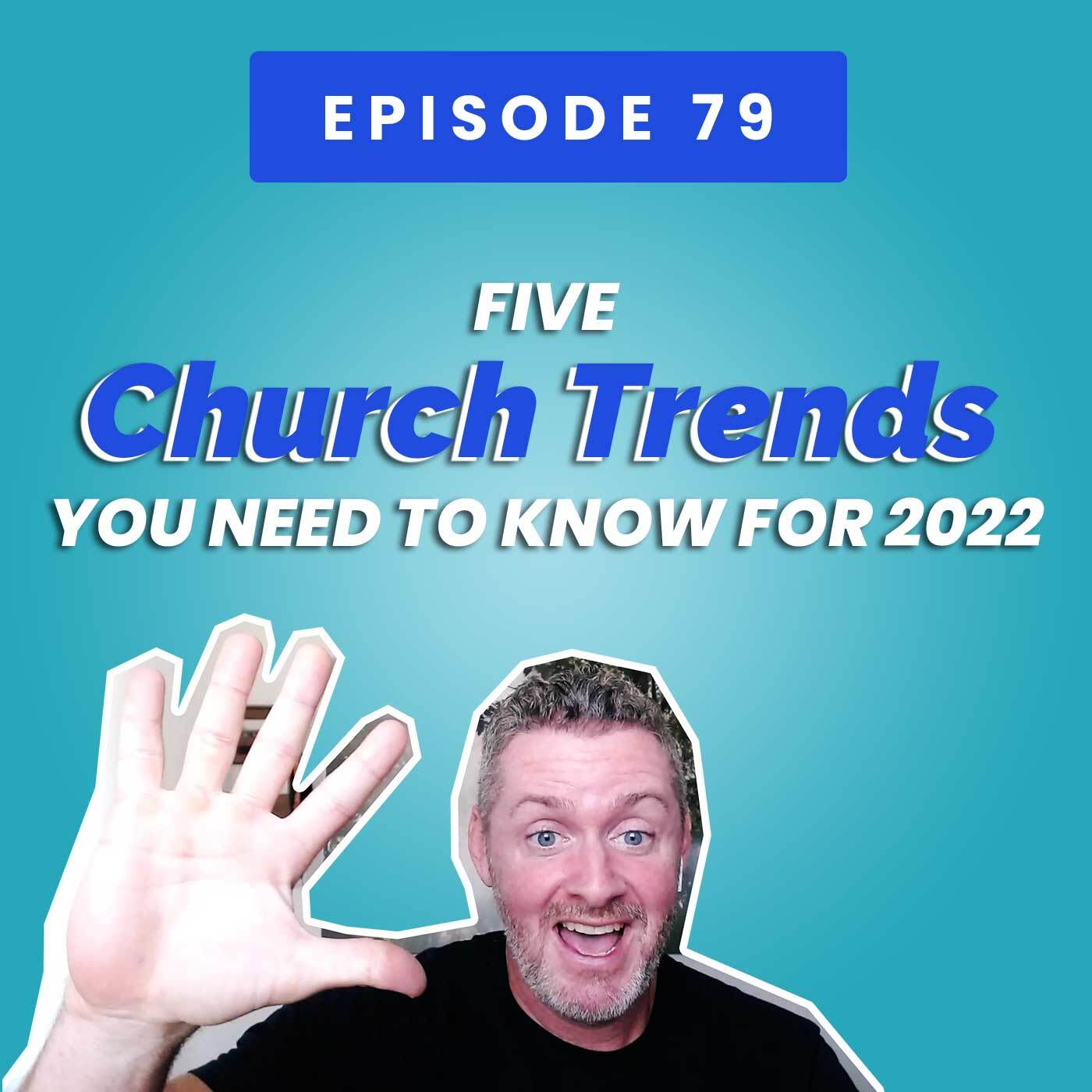
Speaker 0 00:00:00 So much has changed in the last year and let's face it. The rate of change is faster than it's ever been before. In today's episode, we're going to talk about five church trends that you need to know for 2022. We hope this conversation helps you reach more people this year and grow. This is the reach right podcast.
Speaker 0 00:00:30 You're listening to the retrial podcast. The show dedicated to helping pastors and church leaders reach people the right way, hosted by me, Thomas Costello. And with me as always is my cohost Ian Hyatt. We're here to help your church see more visitors and grow.
Speaker 2 00:00:52 I'm ready to get food.
Speaker 0 00:00:57 Hey guys, welcome to the reach right. Podcast episode number 79. I am your host Thomas Costello. And with me as always is my cohost
Speaker 3 00:01:07 Ian Hyatt. What's up Thomas.
Speaker 0 00:01:09 Hey, not too much, man. Uh, happy new year. Uh, I know it's not new year yet for us because we are recording this early here to kind of give our self some time with family over the holidays and things, but happy new year to you
Speaker 3 00:01:21 Happy new year to you. And I believe that you're going to be happy on the 1st of January.
Speaker 0 00:01:26 That's exactly right. Yeah. So this is coming out just after that time there, but, uh, I'm looking forward to this conversation. We, we did some research and, uh, we kind of came up today. We're going to talk about the five trends, five church trends that you need to know for 2022. Uh, we kind of do a lot of these kinds of episodes and blog posts this time of year. I know we probably just had a, a, we haven't written now, but the blog post is about to go live. At least that is the church statistics you need to know for 2022. Uh, we'll be doing a review of some of those in the podcast next week. So look forward to that. We're gonna be talking about urine, not you. And I will kind of share some of our favorites from that list there and what stands out to the most for us.
Speaker 0 00:02:09 But today we want to talk about, uh, just some of those trends that we are noticing. Some of the things that we are seeing, uh, you know, 2020 happened. And like, to me it feels like 20, 20, 20, 21 was like one year almost, right? Like, I don't know if you feel that way, but like, yeah, 20, 21 didn't even feel like I'm sitting here. Cause like, we, it felt like it was kind of the waiting for things to change after 2020, but it was really a lot more of the same. Uh, did you feel that way or is that just me? Oh, it's not
Speaker 3 00:02:40 Just you. I think people are joking about it in commercials. I see about saying it's been a year ish or what has it been two years? Everyone just did had been a blow.
Speaker 0 00:02:48 Yeah. Yeah. It's been what, 21 months or something since the world shut down, back in March of 2020 and yeah, it's just been kind of like this and I think that's what we expected it to be kind of a slow reopening of everything. And you know, who knows two weeks from now or three weeks from now, whenever this winds up, when we, when this is being released, the world may be different for all we know who knows what's going to happen. Exactly. But we have seen that there are some things that we are seeing as trends and they may be bigger than just trends that happened in 2021 into 2022. I think they're kind of big, maybe five-year long trends that we've been noticing, but some of them I think are really, um, they're really important, I think for churches that we need to be wrestling with here. So yeah, I think it should be a good, a good conversation, uh, for us to have her on that. So, uh, do you want to kick us off with the first one?
Speaker 3 00:03:37 Yeah. Yeah. First one a is a big one. I think that, uh, people are aware of now that, and that's the trend that, uh, a lot of people have shifted to working from home. Um, and I think that, you know, the pandemic has obviously played a big part in that, but you and I, even before the pandemic, boy we've been working remotely and from home for over a decade, uh, well, no close to it, at least right around that. Yeah. Right around that mark. But so we've seen this trend already, um, you know, taking place before the pandemic pandemic pandemic is, uh, accelerated it a bit, but, um, yeah, it is definitely something that a lot of churches probably want to consider. Uh, it saves, we've seen just for it saves time and it actually can, even though you've gotta be careful and there's some discipline involved with someone working from home, they have to stay disciplined. And there's some challenges that we'll be talking a little bit about it, but it, it does, uh, enhance a lot of pro productivity. It saves time and money. Uh, it can, it can correct. It can good way to put it. Yeah. So definitely.
Speaker 0 00:04:43 Yeah, no, I, I think that, uh, yeah, like you mentioned, we've been doing this retreat has always been a company where he worked from home. We've never owned or had an office. Uh, we have a mailbox that we get mail at, but everything is done in our homes in three different states and we're all spread out. And, um, not that we have homes in three different states, but we have team members that are in three different states as well beyond that. We have contractors that are in several other states and people all over the place. So, uh, so all that to say, um, we are big believers in working from home, but it is not without its challenges. And I think a lot of churches are just starting to experience some of those challenges because the churches I had worked in before I started leading my own church.
Speaker 0 00:05:28 And you know, my time of being a work from home pastor has been long before these last six years of reach, right. It's been, you know, when we, you and I planted a church together in Austin, Texas, and we never had a church office or a church office was, I guess it was my house. That's where a lot of our meetings took place. And that's exactly right. So it was, uh, it's, it's kind of always been that way for us. But before that churches I've been a part of, there was a very nine to five culture that was happening and it wasn't like you had to be in office, but you just had to be not at your house from nine to five, like you were expected to be in the office at nine and then go do the things you have to do, do lunches and coffees and all that stuff.
Speaker 0 00:06:07 And kind of check back in at the office before you went home at five or whatever that time looks like for you. Maybe you started later or worked earlier or whatever it would be, but that was kind of the culture. And that all changed in March of 2020. Uh, when we, you know, in most cases weren't allowed to come to the church office. Most churches, uh, didn't have services for at least a few weeks. Some of them several months, some of them still to this day. So, um, things have really changed, but here's what so many organizations are dealing with is that they all went to a work from home or anybody that could went to a work from home model. And then they saw that there was a drop off in productivity for some of these organizations, because maybe they weren't set up right, or really let's face it.
Speaker 0 00:06:54 Not everybody is set up to thrive in a work from home environment. If you have four kids in a two bedroom apartment, working from home will have a unique set of challenges that a single mom or a same, not even about a single, an unmarried person without kids in a studio apartment or a one bedroom, there'll be just fine. You know, that's gonna be a different set of challenges. So working from home, isn't the same for every single person. So what has happened is a lot of companies, and this is a I'm, I'm reading a lot about some of the biggest tech companies like Twitter. For instance, they've gone completely remote. They've said you don't have to live in San Francisco anymore, live anywhere you want. You don't have to be in the office. So some of these big tech companies are doing it. Other ones like apple, they just spent billions of dollars on this beautiful apple complex that they built, uh, right there in, uh, in, oh man, it's escaping me where they are down in the, in the bay area.
Speaker 0 00:07:48 Uh, where, where in Cupertino is where apple is Cupertino. Okay. So they built this beautiful donut building. And then right after that, the pandemic happens and they're having to talk to people, kind of got this taste of working from home and really loved it. And they're wrestling with, we need people, our productivity is down. We need people back in the office, especially when we're designing things in groups. Like they kind of needed people to be there. So they're wrestling with that. And I think a lot of pastors are the same way right now is that we're really taking a look at it in that. Yes, there's a lot of advantages to working from home. I think most employees appreciate it. Like if you had a taste of it, it's really I'd say for you. And I, I assume for you, it'd be hard to go back into the office everyday.
Speaker 0 00:08:29 Now, if we do a job where we were in the office from nine to five and you just weren't at the house, like it's something that we're kind of used to. So that ask would be challenging, but at the same time, a lot of people are aren't really set up for it. So there is a whole minefield here, I think for churches. And I think it's something that needs to be navigated carefully. But I think the advantage side of things, what you were saying, like when we said it can be helpful, I think you can save big time on office space, like churches, you don't maybe need to build the giant office spaces and things that we used to have, or I know I was a part of a church that rented an office space and spent thousands of dollars a month on offices. So all of that can go back into ministry and helping your community. So that's a huge opportunity there. I think people love it, but you really need to get some of the systems in place that help people stay as productive if not even more productive. So maybe you can talk a little bit about some of the things that we use, uh, to kind of keep us connected. And I know you, I'm sure you are aware of some of the software and stuff we use to stay connected here. Oh yeah,
Speaker 3 00:09:31 Absolutely. And well, first of all, we use slack. Uh, we, we, you and I connect over slack daily. Uh, we have video meetings with other staff here too, and we can reach out to them individually and, uh, you know, on a one-on-one basis or, or we can even do that in a big, you know, company meeting, uh, setting. So we can do, we use those types of things. One thing too, I'll take a step back. You made me think of too, is that whenever I said productive, I was thinking back a bit, you, and I's past, we used to work for, it was kind of more of a corporate field. We were in a nine to a nine to five type, uh, you know, thing with a cubicle, uh, you know, there were multiple meetings each day. Um, we're not anti meetings. We have them here at reach, right.
Speaker 3 00:10:14 But I think one of the things that you and I both found when we started working from home is we would get accomplish in a shorter amount of time, what we needed to get done compared to being in an office setting. And that, for me, that helped me. And I'm a social guy. It'd be easy for me to go walk and talk to someone over here in another department and then get snagged at the water cooler. And then some companies are notorious for having too many meetings, uh, and, uh, tend to where you have no time to get anything done that you're meeting about doing. Uh, and so, uh, that was what I was thinking through that. But yeah, we do things like slack. We use, uh, we use, of course, as a zoom, we use zoom as well. Those are both, these are both video, you know, vehicles, if you will. But, um, and then there's other things
Speaker 0 00:10:57 We use a, we use Calendly. That's been a huge help for us, like, so I think that's really great. And I think that's actually a cool tool for churches to look at. For those that don't know, Calendly is a, is something where you can have your calendar set up for other people to schedule time in it. So if you need a 10 minutes or you need an hour long meeting with your, your children's director, you can see their availability, choose that time on their church. You probably ought to use Google calendar already. I think most people probably use that for their calendaring or apple calendar, if you're on an apple system, something like that. But so there's those kinds of tools I think, are, are super helpful. We use Dropbox for sharing a lot of the content and, and, uh, you know, text files and those things, video files.
Speaker 0 00:11:41 We do all of that on there. So, you know, there are tools that frankly are a fraction of the cost of what it would be to have a building that we met in and an office space, you know, for all of our subscriptions together between all of our software, it might cost us a couple of thousand dollars a month for a company our size, you know, for, I think for a church, it might be a couple of hundred dollars a month, which would be a huge savings over what you would normally spend on these kinds of things. So anyway, I think that it's something that I think you probably already are exploring at your church in our audience here. You're probably thinking about this already. We want you to know that you are, you're like every other church out there. Um, it's, you're wrestling with it.
Speaker 0 00:12:22 You're probably feeling some of the growing pains from it. There's probably people on your team that don't do as well. Working from home. There's probably people that really want to work from home and insist on it, but you just need to probably embrace it and understand the trend is definitely moving more towards working from home as opposed to away from it. So something to be thinking about, uh, next one, um, I think this one is, uh, is good. I think we need to, as a trend, we need to really work through our thoughts, feelings, desires for online attendance and what that means for us. This is something that we've been continually coming back to here in the podcast is that I don't think we've really landed yet on a consensus as to the value of online attendance at church. I think kind of where we're at right now is that it's like the, the ignored stepchild of regular church attendance.
Speaker 0 00:13:15 Right. It's kind of that one that, yeah. I mean, they go to church, they kind of, they go to church, but you don't really go to church. Right, right. Right. I think for most churches, that's the case and I get it. Like, I think that's really something that we're really having to, to, to sort out because we know that in 2020, every single church, they made this move from having to be weekly every Sunday to trying to do it online, to varying degrees of success. We know this uniquely at reach, right. Because shortly before, like probably in 2019, like the end of 2019, we put out a, uh, a blog post it called the ultimate guide to live streaming your church services. And that post got like maybe like 30 or 40 hits a week before the pandemic. And then in March of 2020, that post was getting like over a thousand hits a day of people like just looking at this stuff, like, what do we do freaking out?
Speaker 0 00:14:14 So we know this became really serious for just about every churches. There was maybe five, 10% of churches that were doing a good job streaming services weekly before that. But really the question is what do we do now with online attendance? Where does that fall? How does it fit in with our overall strategy? How valuable is it? Can we actually disciple people that are only attending online? Can we, does it fulfill people's requirement of not for seeking the gathering of the saints that were called in scripture? Are we doing all of that? So I dunno, like, I don't know that we're having an answer for this, in this conversation here today. We're just pointing out that this is a trend that every church is going to have to wrestle through. And we need to know that the trend is not going to be reversing. There's not going to be, I mean, there may be some organic movements that say we really going to be gathering together, but online in everything is really growing.
Speaker 0 00:15:09 So, um, you know, with the launch of Facebook moving towards its meta platform, and I am sure that I almost assure you, there will be churches this year that are doing VR services. They'll have virtual reality church services where you put on a headset and you're there. I think this is the year where that's going to become it. Won't be common, but I think you'll see some churches that are actually doing it and more power to them. I think that's really an exciting idea. At least I'm not ready to say that that is, uh, you know, the, the solution to, to the great commission there, but I'm interested to see what happens, but I don't know. What are your thoughts on kind of this online attendance phenomenon we're seeing?
Speaker 3 00:15:48 Yeah, yeah, absolutely. I think that, like you said, at the very beginning, uh, of unpacking this is that, you know, some people kind of, don't almost consider it really counting or they just don't know how to measure it, but I've talked to a lot of churches that have grown in this and seen growth through this. Um, and I think that we're still learning as a church, you know, uh, you know, especially all the churches that we're not doing this pre pandemic, but started it. Uh, I've talked to churches that have, who do measure it, the churches that measure their online, attendancy better results from it. And they also learn how they can grow in it. Because if you see that, if you all of a sudden, instead of just pushing everyone to Facebook, live nothing wrong with that, we recommend every church use Facebook live and social media.
Speaker 3 00:16:32 But if you push everyone there, but you don't have an area on your site where it's streaming on your website, where people can maybe even fill out like an online connection card, we've seen churches that they've added that one little thing. Um, or they use a system that allows people to give, raise hands, emojis, and hearts, and those things, whenever a is preaching, um, you know, the church online platform, there's a lot of good ones out there. Uh, but, but you know, it, when you start using it and you start doing a little bit more, it will help your church grow in in some way, because imagine if you're, you know, you're streaming and someone fills out one of those connection cards, that could be one more person who's saved and is added into the folder. It becomes some sort of a person engaged at your church. So, yeah. So I think it's definitely worth taking seriously making different efforts for it and measuring how those work.
Speaker 0 00:17:26 Yeah. I think the part that we didn't figure out well was the assimilation part. Right? So getting people to watch something like that, that's a metric that is really important. How many people are watching your services, watching your sermons online? I mean, this YouTube generation, that's something that's really important, but like it is a, an emoji raised hands the same as an alter call, raised hands in person. Right? Probably not yet. At least. I mean maybe, I mean, I'm not saying always never can it be that way? Right. So it's, it's not always that that doesn't count, but I'm saying I have a hard time imagining that every one of those emoji raised hands is a person that's really having a holy spirit experience. Right. Then when they do that again, I'm an anti emoji. Tarion right. Like that's not my thing. I don't, I don't really do the emoji thing unless it's something that I we've talked before about how they're really valuable in subject lines on emails.
Speaker 0 00:18:26 But in general, I don't use a lot of emojis out there. Uh, so I don't know. I still struggle. Like, cause I think we, we all know that what we say online is different from what's happening in reality. Like if I put our, oh, we're rolling on the floor, laughing or whatever that abbreviation is, RLF RFL or whatever it is, you're not actually rolling on the floor. Laughing. If I say LOL, in most cases, people aren't actually laughing out loud. If people type in, I'm literally crying in most cases, that means they're figurative, figuratively, crying. They're not actually crying in that case. So anyway, I think that it's it. I I'm ha I think it's something we really need to be thinking through at your church. That should be the lesson from this year is that your church needs to get serious about thinking through the big question is not so much.
Speaker 0 00:19:16 Can people watch online? Can we get that to happen? Because that's been proven, like we can see people watch online. The big question is how do we turn online Watchers into Christ, following disciples as people that are growing in their faith. And that really is the question I think, for this entire generation that we're going to have to answer. So that is a trend. I hope it's something that you're wrestling with at your church. We'll probably do some ideas on how to, we do have a podcast episode that was about this. We maybe should refresh that here in the new year. I think at some point, you and I should do something like that. So anyway, absolutely. To work through.
Speaker 3 00:19:53 Great. I'll get the next one, which is shifting gears here a little bit. That's a attention to mental health. We've been hearing about that, uh, with athletes, that's the first thing that came, came to mind. You had, um, Simone Biles was the big one during the Olympics and, and more, uh, more and more athletes after that started coming about, uh, just with, with, you know, confessions, to not having the best mental health. And, but it's happening also within the church now, mental health has always been an issue, always been something that people have been struggling with, but we're seeing a trend of that becoming more of a topic and more of something that everyone's addressing in society. So I think churches need to have a plan in place and take action to really, um, help these individuals that are dealing with this and make sure your systems and what you have in place with staffing and so on and so forth are going to help these folks.
Speaker 0 00:20:47 Yeah, that is, that is really well said, Ian, I think this is something that is, uh, that is absolutely a trend that we have seen like a couple of years ago. People didn't ever talk about that, especially not in the church world. It was just starting to, you know, you saw a few high profile pastors talk about like, you know, having nervous breakdowns and those things, that kind of stuff did happen, but like putting that mental health label on it, there was such a stigma attached to that. Like you were like, it basically was a death nail for your ministry. A lot of times, if you say I have mental health issues or I'm struggling with depression, or I'm struggling with anxiety, like, you know, the idea even like 10 years ago would have been said, if you said, Hey, I'm struggling with anxiety. Well, someone would say, well, Jesus says be anxious for nothing.
Speaker 0 00:21:35 So stuff like that would be the response to that. Right. And so thank you. So I think that we obviously have fresh eyes and I hope you're not still saying if you're leading a church, that's not the right answer to that question. Right. You know, Jesus does say that and there is truth in scripture that may come up eventually. For sure. Absolutely. Yeah, no, that's it, of course, but that's not helpful right now. In most cases, if people are really struggling with those things. So if you, if you haven't been living under a rock, you've realized that mental health is a topic for conversation. There is a lot of interest around it. I think it actually presents a very strong evangelism opportunity for churches. If you, if you have, if you're the church of a size where you have the resources to have mental health professionals on your team, or even a mental health professional on your team like that, that would be any normous evangelism opportunity, not to even mention the opportunity is for people within your church to have those kinds of services and have those things available to them at little cost, no cost, whatever that would be.
Speaker 0 00:22:39 Um, it's something that, listen, your church has many people that need help in their mental health like that. That's something that they're struggling with. You have people that are depressed in your church. You have people that are, have anxiety of people that have had suicidal thoughts in your church. You've had people with all number of mental issues happening in your church. And so I think this presents one of the biggest opportunities. Now, that being said, do not make the mistake that this is a, um, an encouragement that or a license to say that you, as a pastor, as a pastor of a church are a mental health professional. Like yes, you have the holy spirit living in you. You can do all things through counsel. Yes. There's things you can, you cannot call yourself a council lore in most cases, but you, uh, you, we, we serve a wonderful counselor and the holy spirit can give us wisdom to speak into these kinds of situations, but do not make the mistake.
Speaker 0 00:23:35 If someone comes to you and they are having suicidal thoughts, or they are bipolar and they're dealing with some of those kinds of things, and yes, you still have a job. You, you can help with their spiritual health. You can be praying for them. You can speak into their life. You could speak truth, but part of that truth should also be that you encourage them to go see a professional that can help them in these areas here. So this is really an area that I think we've had, like, this is a shift that's taken place in churches. I think there are some churches that haven't quite made the leap just yet in this area, but it's something you have to really take seriously just for legal reasons. First of all, there are major legal, uh, dangers, if you're not careful in these areas here, but on top of that, I just think it's a huge opportunity for your people.
Speaker 0 00:24:21 Listen, they're looking for it. The people in your community are looking for mental health resources. Your church can point people to them or become them if you have the right kind of people within your team there. So yeah. Huge opportunity. I'd say that's good. That's good. Once you get the next one. Awesome. Uh, next one is less, is more, less is more. And this is been a trend. I think that the pandemic, it really brought this on in a lot of ways, because I think that in, in 20, we were maybe moving a little bit towards the lessons, more idea, but I think 20 15, 16 we were in the more is more world like that was, you know, the bigger we can do, the more smoke we could make in our service ministry, the more lighting that we have, the more ministries we offer, the more classes we have, the better we are as a church, the more people we can reach.
Speaker 0 00:25:11 And the fact is that for all, but a couple of churches, or maybe, you know, a few dozen churches out there, you cannot really be all things to all people. And even the largest of large churches, they still struggle with this. That's something that, you know, that, that you're, you see diminishing returns on these things and trying to be everything to everyone is really a challenging thing to do. So what we have seen as a trend is churches really starting to pick their lane. So first of all, there are some things that if you're a pastoring, a church, or if you lead a church, a church needs to do a few things, right? It needs to be gathering people together, probably physically still I think. Yeah, no, I think we're ready for the online, but physically gathering people together for some kind of worshipful and experienced teaching of the word, that kind of stuff.
Speaker 0 00:26:00 People are going to be involved in discipleship of some kind. So whether that's small groups or some other strategy you have and giving people a place to serve and giving these are the kinds of things you'd need to hit those things. Like you need to have solutions to how people serve, how they're discipled, how they give their life to Jesus, how they gather together, that kind of stuff has to happen in a church beyond that. You probably, I think there's a real trend and we're finally getting it that it's better. If we focus really hard on one thing or just getting those things right. Or doing one thing really well, as opposed to trying to offer everything to everybody. So I know at the church I pastored last, but there were so many different people that came to us and say, Hey, I have this great idea for ministry.
Speaker 0 00:26:46 I'd like to do this service in the community. And we always were very open-handed said, yes, please go and do that. But our church, isn't going to do that because we are totally and completely focused on, we do the ministry called laundry love. So we took over laundromats and we would provide free clothes washing. And we would just bless people that way, that weren't able to get their clothes washed. And that's something that it really is kind of dehumanizing if you're living in dirty clothes because you can't afford to wash your clothes. So we felt that that's what Jesus would be doing. And we decided to put all of our, our outreach eggs into that basket. Again, we released people that felt like they were called to do something else. That was fine, but we put all of our attention there. So really only choosing a thing or two or only choosing one discipleship path in a lot of ways that will get you better results than trying to have 12 discipleship paths. And here's 11 different ministries you can get involved in and use seven different options for your kids or whatever it would be. Do one, well, do two. Well, instead of doing 75, that's the
Speaker 3 00:27:51 That's really good. And one little thing I'll add to that. And, and actually you and I have seen this and chuckled over the years, even though it's really kind of not funny, but in working with a lot of smaller churches, which we love to help, because we're all about church growth. And, and, um, and so it's, it's near and dear to our, our hearts when we come alongside of a smaller church that, that, you know, we're able to help them numerically grow or grow in, in a lot of other areas. But I know there was a trend we'd come across. Maybe some, maybe it was a 30 to 50 member church and they would list out that they had about 10 different ministries. Uh, and, and, and you and I both would know, and I would almost chuckle inside. I'd be like, no, you really, I know you, you really don't, you don't have, you know, you barely have enough people to lead each one of those, those ministry.
Speaker 3 00:28:38 Now, again, the heart behind that was pure for forage as they absolutely. And they, and, and they wanted to provide something for every person stage of life. But again, um, what's the saying, is it, uh, uh, probably botch it a little bit, but when you try to be good at everything, you're no good at any one thing. Um, so, and other than that, I think that the other thing that came to mind when you were talking there is that when you're good, at one thing, it makes you more memorable and it actually kind of help build your brand as, as a church. And what I mean by that is you, wouldn't it be great to say, I'm just like that laundry love example you gave that you did at your last church, people would say, oh yeah, you guys are the church that wash people's clothes for free. How awesome is that to be remembered for something? And so I think that's also, you want to be memorable. And as we all know, when there's too much for someone to digest, they don't remember any one particular thing. So I think that's a good takeaway from it too.
Speaker 0 00:29:34 Yeah. I think that that's, I think that's really it. I think that, uh, you, you need to do one thing. I think the way that here's a way you can do a quick test at your church, because we see this all the time too, is we help churches with websites and we do a lot of constant consulting on websites and those things, um, how often do we open up that ministries tab? And it's like, there's a drop down that goes down like this, right. Of all the different ministries. And then how often do we get on there? And like, most of them have one sentence on that page. Right. It says like we offer men's ministry, uh, on Sundays once every quarter. Right. So that's what it says on there. Like that's all they could possibly say about this ministry. Yeah. Perhaps just perhaps that's a good thing for our audience to do. Take a look that just a good way to test it is look at your website. If you have tons of ministries on there they're listed and you can't say more than one or two sentences about it. Yeah. Probably as one you maybe need to take a hard look at and say, would we be better off investing more in these ministries that are really having a lot of momentum. People are coming to Jesus in them. We're serving our community with them. That's a really good test. I think
Speaker 3 00:30:39 That's good. Well, I'll bring us home with this last one, which is a very important one, which is a, there's a trend and a good a shift in, uh, where churches need to change their metrics. So a change of your metrics. So again, we've talked about this in, uh, one of our past, uh, recent episodes that, you know, traditionally churches have tracked, you know, giving and physical attendance. Again, those are still important metrics, right. But a lot has changed, uh, over the years and even pre pandemic. There's been a lot of, uh, just shifts in the way that people do church, I should say. So, uh, and, and, and the way that you lead a church and the way that people attend churches. So there's a lot of new things that we're going to kind of discuss and throw out there and dig into here briefly, um, that you should consider other than just attendance and, and giving and some of those traditional things. And you could probably expound on a few of these things. I know we put together a good little list here. So
Speaker 0 00:31:36 You share some of the ones on the list. I think just the key term is engagement, right? So I think that making a move from measuring, uh, quantitative things like, uh, like attendance and giving, and again, I want to be clear. We're not saying to stop counting, giving to you need to count how much money comes in. That's important. You should measure it. You should set goals around it. You should try to increase it. All of those things are important at the same thing for attendance measure it, count it, but just don't put your, certainly don't put your worth in it. I know a lot of us pastors struggle with that is that we will preach a message and we just feel better if we preach to 500 people and we feel better than if we preach to 50 people, right. If we have an empty building, it doesn't, it makes us feel depressed on Sunday night because we preach to a smaller crowd. So fight that that's not something we should do. And I think on top of that, it really is important that we take a look at some qualitative engagement type of metrics, things that measure how invested people are in our church. So I'll let you go ahead and hit the list you and I know we came up with a handful there. So why don't you have
Speaker 3 00:32:42 One is something churches should hopefully already be doing to that have a small group ministry, but that's number of people in small groups. You definitely want to track that. That's a huge, uh, I think for sure
Speaker 0 00:32:52 Number, number, and like the percentage of your church, I mean, that's easy to find once you find the number, but comparing your small group attendance with your Sunday attendance, right. And I've seen some pretty bold claims from some mega churches out there, like Saddleback famously says now that they have way more people in their small groups than they have on Sunday mornings. So, you know, it's interesting, uh, to measure, I think that, you know how you count that it may be different for different churches there, but yeah, that's a big one.
Speaker 3 00:33:22 Well, and that kind of leads to the next one. It's a number of people involved in a service. Uh, so that's, that's what we have here as well. We have hours watched on YouTube. There's a number of shares on Facebook, traffic on your blog posts, a number of opens on your church emails. And there's more that we can expound on, but these are some, some ones to kind of consider and do differently.
Speaker 0 00:33:47 And all those things, again, they measure how engaged somebody is engaged. If someone, I could make someone like I, I used to try these strategies is, Hey, if you're on our church leadership team, please share our Facebook posts. Please do that. You can ask people to do that, but really, if people are organically doing it, that means they're there. They're bought in. They're involved. That is you are there. They're sharing you on Facebook, on YouTube. It's so amazing. Cause you can, you can track how many hours or minutes or whatever it would be. You could track how much time people are spending. What a great measure of engagement. If you find that we get like 400 watches every Sunday for an average of 90 seconds, well, you can kind of measure that. That's like not that engaged, right? If people are, are doing that. So you can really measure the great thing is there's so many tools to measure engagement.
Speaker 0 00:34:38 Now these kinds of digital ones are really great at it. So these are really important things. So shifting out as a lot of churches, probably right now, I know it's early in the new year and everything. So if you haven't already, you probably have some goals for your year, but take a look at what those metrics are. And maybe considering adding some more of these engagement type metrics to see how engaged, how involved, how much, what people think about your church. That really is what matters. Now there's a saying, cause you know, we're in digital marketing obviously, and is that we are competing for people's attention. And as much as I don't like that thinking for churches, right? I think it's kind of true is that we are, we are in this world now where there are so many things that compete for people's attention in their lives.
Speaker 0 00:35:24 There's there's, I mean, there's 17 different streaming streaming services you could be subscribed to. And your church online services, one thing that they can watch per week, but you're competing against like, uh, you know, the Witcher or whatever it would be, or you're competing against video games or whatever, whatever that is. That's out there that people are watching. That's when you're online, that's the competition and you make a mistake to think, well, we are a physical church that we meet in person still. That's great. I'm what we're all for you. And I, again, we really love that idea of meeting in person there, but don't mistake thinking that you're not still like making something. I know it's different from watching something on Netflix, but that's the big competition is that you have, you have people's time and you have kids sports and all those things.
Speaker 0 00:36:10 And in life, I think are leading to this decrease that we're seeing in people's overall. Like there's been new studies from the, um, from, uh, the wall street journal that said that again, that were down to like almost 40% of people identify as not religiously affiliated right now. And almost all of that decreases from people that considered themselves Christians only 10 or 20 years ago. So we're seeing a decrease here because that is the world that we're competing in is that we're competing in this world of, of, uh, you know, of so many different options. So much recreation, so much streaming, so much sports, so much travel. There's so many things that can be involved. So we really need to be measuring people's engagement. That's what it comes down to. Good. That's a good word to end with there. Cool. Awesome. Well, thank you guys so much for being part of our reach, right family and kicking off your new year with this episode.
Speaker 0 00:37:04 Hope you guys had a great year. Uh, if this has been helpful to you as you've been kind of looking at trends this year, uh, it would be so much to us. If you would hit the like button for us, you would rate this, review it, subscribe to it, share it. If you're watching this on a social media platform, uh, thank you guys so much for being a part of our retread family. Really. We couldn't do this without you. We thank you for all of your feedback and input and being a part of what we do here. We hope to catch you guys next week. Thanks for listening to the reach right podcast. We hope this episode will help you reach people the right way, looking for more resources for your church. Check us out online and reach right studios.com. If this episode has been helpful to you, it would mean the world to us. If you would rate, review and subscribe on iTunes or wherever you get your podcasts. Thanks again for listening. And we'll see you next week.