Crafting the Ultimate Year-Round Church Social Media Plan: Strategies and Tips

April 18, 2024 00:21:21
Crafting the Ultimate Year-Round Church Social Media Plan: Strategies and Tips
REACHRIGHT Podcast
Crafting the Ultimate Year-Round Church Social Media Plan: Strategies and Tips

Apr 18 2024 | 00:21:21

/

Show Notes

This podcast is a roadmap for churches to thrive online. In this guide, we’re combining simplicity and effectiveness to unveil easy-to-follow steps for engaging your audience year-round. Online marketing/interaction isn’t easy, so that’s why in this podcast, we’re covering church social media planning.

Discover how to harness the power of social media platforms to build community, share inspiring messages, and promote events. From creating captivating content to scheduling posts strategically, every aspect is broken down into manageable tasks.

With practical tips and insights, this resource empowers churches to amplify their presence, build meaningful connections, and spread positivity online. Get ready to embark on a digital journey that enhances your church’s impact.

Let’s jump in.

Estimated reading time: 11 minutes

Church Social Media

Church Social Media

In today’s digital age, harnessing the power of social media is crucial for churches to connect with their community, spread their message, and foster engagement. But why exactly? Social media can be daunting, overwhelming, or stressful for some of us. So is it worth the effort?

We think so. Let us explain.

Connecting with the Community

A strong church social media strategy serves as a bridge between the church and its members. Through platforms like Facebook, Instagram, and Twitter, churches can reach out to their congregation in real-time.

They can share updates on upcoming events, sermons, and community initiatives. By engaging with posts, members feel connected and valued. This creates a sense of belonging within the church community.

Reaching a Wider Audience

Social media platforms offer churches an unparalleled opportunity to expand their reach beyond the physical walls of the church building. With billions of users worldwide, platforms like YouTube and TikTok allow churches to share their message with people who may not have otherwise encountered it.

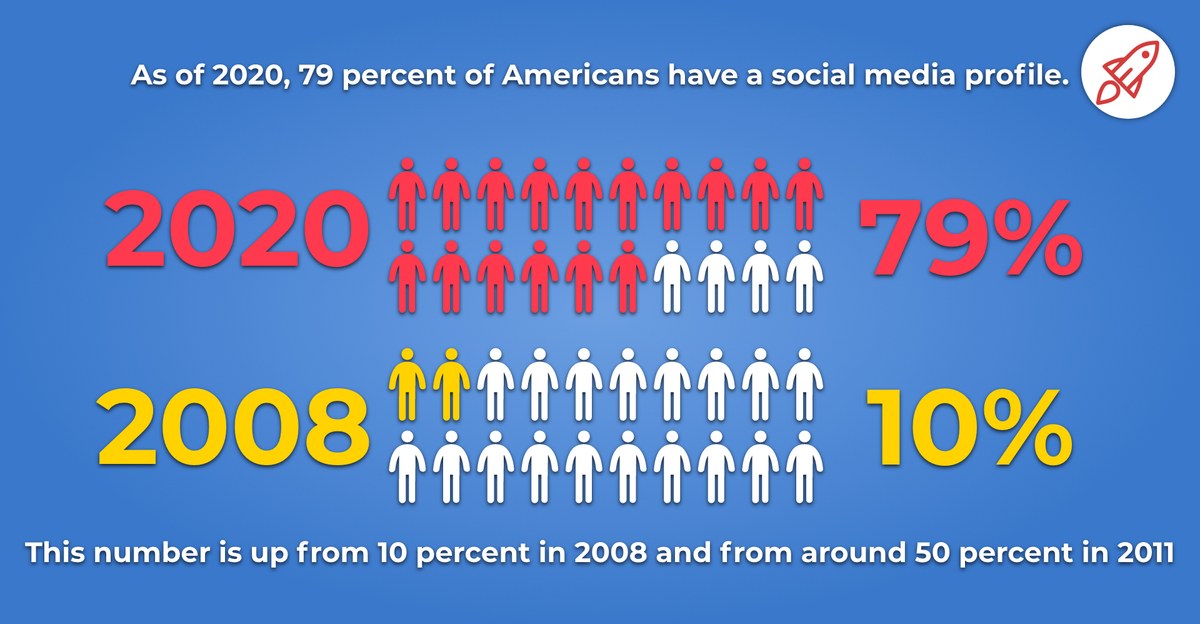
According to Empex Digital, as of 2020, 79% of Americans have a social media profile. It’s been increasing rapidly for years (see 10% in 2008), so now that it’s 2024, there’s probably even more Americans on social media.
Empex Digital

If you want to reach a lot of people, social media is the place to do it.

By creating compelling content that resonates with a broader audience, your church can attract new members and spread their message of faith and love.

Enhancing Social Media Presence

A robust social media presence is essential for churches to stay relevant in today’s digital landscape. By maintaining active profiles on popular platforms and consistently posting engaging content, churches can increase their visibility and attract followers.

Regular interaction with followers through likes, comments, and shares helps to build a sense of community and fosters deeper connections with members. Additionally, a strong social media presence can help churches attract younger generations who are more likely to engage with content online.

Churches should utilize social media to connect with their community, reach a wider audience, and enhance their social media presence. By developing a comprehensive church social media strategy and leveraging the power of social media platforms, churches can strengthen their relationships with members, attract new followers, and spread their message of faith and love to the world.

Crafting a Year-Round Social Media Plan

Crafting a Year-Round Social Media Plan

Crafting a year-round social media plan is essential for churches to maintain a consistent and engaging online presence. By following these simple steps, churches can effectively manage their social media platforms and connect with their community throughout the year.

Setting Goals and Objectives

Before diving into social media planning, the church’s social media team must establish clear goals and objectives. These goals could include increasing engagement, attracting new members, or promoting upcoming events.

By defining specific and measurable objectives, the church’s social media strategy can be tailored to achieve these goals effectively.

Know Your Audience

Understanding the demographics and preferences of your audience is key to crafting engaging content. The church’s social media team should conduct research to identify the interests and needs of their followers.

This knowledge will inform the type of content to post and the best times to post it. By catering to the preferences of your audience, you can increase engagement and build a stronger online community.

Choose the Right Social Media Platforms

Not all social media platforms are created equal, and it’s essential to choose the ones that align with the church’s goals and target audience. Platforms like Facebook, Instagram, and Twitter are popular choices for churches due to their widespread use and engagement features.

However, a niche social media platform like LinkedIn or TikTok may also be relevant depending on the church’s demographic. The church’s social media team should carefully consider which platforms will best serve their needs and focus their efforts accordingly.

Create a Content Calendar

Create a Content Calendar

Consistency is key when it comes to maintaining a year-round social media presence. The church’s social media team should create a content calendar outlining the types of content to be posted and when.

Here are some ideas for a church’s social media content calendar. These are an assortment of different social media posts you can post at specific times as related to your calendar.

By planning ahead, the team can ensure a steady stream of content that keeps followers engaged and informed.

Engage with Your Audience

Social media is not just a one-way communication channel; it’s an opportunity to engage with your community in meaningful ways. The church’s social media team should actively respond to comments, messages, and mentions, fostering a dialogue with followers. Message boards like a Facebook group are also a way for members to feel like they’re voice is being heard.

This interaction helps to build stronger relationships with members and demonstrates that the church values their input and participation.

Promote Cross-Platform Integration

To maximize the reach of your social media efforts, it’s important to promote cross-platform integration. This means sharing content from one platform to another and encouraging followers to follow the church’s social media accounts on multiple platforms.

For example, a post on Instagram could be shared on Facebook and Twitter to reach a broader audience. By leveraging cross-platform integration, the church can amplify its message and engage with followers across different channels.

Track and Analyze Performance

Monitoring the performance of your social media efforts is essential for refining your strategy and achieving your goals. The church’s social media team should regularly track key metrics such as engagement, reach, and follower growth.

This data can provide valuable insights into what types of content resonate with your audience and which strategies are most effective. By analyzing this information, the team can make informed decisions to optimize their social media strategy and drive better results.

Crafting a year-round social media plan is essential for churches to maintain a consistent and engaging online presence. By setting clear goals, understanding your audience, choosing the right platforms, creating a content calendar, engaging with your audience, promoting cross-platform integration, and tracking performance, the church’s social media team can effectively manage their social media accounts and connect with their community throughout the year.

8 Social Media Tips and Tricks

8 Social Media Tips and Tricks

As we’ve covered, social media can be a powerful tool for churches to connect with their community and spread their message. Here are some tips and tricks to enhance your church social media outreach.

1. Create Engaging Content

The best social media strategy is one that focuses on creating content that captures attention and sparks conversation. Share inspiring stories, thought-provoking questions, or interactive polls to keep your audience engaged and invested in your church’s social media pages.

2. Be Consistent

Consistency is key to maintaining a strong presence on social media. Establish a posting schedule and stick to it. Whether it’s daily, weekly, or bi-weekly updates, ensure that your church’s social media pages are active and regularly updated with fresh content.

3. Utilize Multimedia

Don’t limit yourself to text-only posts. Embrace the power of multimedia by incorporating images, videos, and graphics into your content. Visuals are more likely to capture attention and increase engagement on social media platforms.

Here are a few ideas for multimedia posts:

4. Interact with Your Audience

Interacting with your audience is vital for your church’s social media success. Respond promptly to comments, messages, and mentions. Engage in conversations, ask questions, and encourage feedback. Show appreciation for their support and involvement

By fostering dialogue and building relationships, you create a sense of community and belonging. Encourage followers to share their stories and experiences, making them feel valued and heard. By actively engaging with your audience, you strengthen connections, inspire loyalty, and foster a supportive online community around your church.

5. Promote Engagement

Promote Engagement

Promoting engagement is key to growing your church’s social media presence. Encourage followers to like, comment, and share your posts. Use call-to-action phrases like “Share your thoughts” or “Tag a friend.” Host interactive polls, quizzes, or challenges to spark participation. Respond to comments and messages to keep conversations flowing.

When you actively engage your audience, you create a sense of involvement and community. Encourage followers to share their stories and experiences, fostering a supportive online environment. Promoting engagement not only increases reach but also strengthens connections and builds a loyal following for your church.

6. Use Hashtags Wisely

Using hashtags wisely can boost your church’s social media reach. Research relevant hashtags related to your posts, events, or themes. Incorporate them strategically to increase visibility and attract more followers. Avoid overloading with hashtags; stick to a few meaningful ones per post. Monitor popular hashtags and trends to join conversations and expand your church’s online presence effectively.

7. Monitor and Analyze Performance

Monitor and analyze your church’s social media performance regularly. Keep track of metrics like engagement, reach, and follower growth. Identify which posts resonate most with your audience and refine your strategy accordingly. Use insights to optimize content and posting times for maximum impact. Adjust your approach based on what works best to strengthen connections and spread your message effectively.

8. Stay Authentic

Above all, be authentic and genuine in your interactions on social media. Share real stories, experiences, and moments that reflect the values and mission of your church. Authenticity builds trust and credibility with your audience, fostering stronger connections and engagement over time.

By implementing these tips and tricks, your church can develop a best social media strategy that enhances outreach, strengthens community ties, and spreads your message of faith and love effectively on social media platforms.

Church Social Media Planning

Church Social Media Planning

When you utilize these church social media strategies, your church can effectively reach and engage with your community online. Remember to set clear goals, understand your audience, create engaging content, and maintain consistency in your posting schedule.

Encourage interaction, utilize multimedia, and monitor your performance to refine your approach over time. With authenticity and dedication, your church can leverage the power of social media to strengthen connections, share your message, and make a positive impact in the digital world.
More Resources on Social Media

View Full Transcript

Episode Transcript

[00:00:00] Speaker A: Well, as the saying goes, if you fail the plan, you have a plan to fail. And the place where this is most true is on church social media. Every church needs a plan. And in this conversation, we're going to help you figure out what your plan should be. Let's do this. You're listening to the reach, right? Podcast, the show dedicated to helping your church reach more people and grow. Hey, guys, I'm Thomas. [00:00:27] Speaker B: And I'm Ian. [00:00:28] Speaker A: And today we are talking about church social media and why it's so important for you to have a plan, and even a calendar, if you will, to make sure you get the best results for your church. So, should be a good conversation, Ian. [00:00:41] Speaker B: It should. You know, even after years of churches understanding that they need to be using social media and being on social media, we still, and I still come across so many churches that really just don't have a plan or a strategy with it, a real plan. [00:00:57] Speaker A: So, yeah, so today we want to talk about, like, how do you go about building said plan? It's something that really, if your strategy is just kind of, hey, you do social media and then just kind of post when you feel like it. That's not going to work. We've just seen so many churches try that. And, you know, there's this kind of thing, when you think about social media, you hear these stories of, oh, I just. We did this one post and we just went viral and everything blew up. That doesn't happen. Like, you don't just post one post or your fourth post, and it just goes absolutely viral. And again, even if it does, that's not a strategy that you can rely on. Like, kind of the luck of going viral on things. And that may have happened ten years ago when it comes to social media, but the odds of that, at least for something good, are very slow, slim nowadays. I suppose you could go viral if you do something so outlandish or you have a preaching mistake that's so embarrassing that someone else shares your content and it goes that way. But for those that want to have something that actually works here, I think this is going to be a good conversation for us. A plan that'll get results. [00:02:05] Speaker B: Yeah, absolutely. [00:02:06] Speaker A: Cool. All right, well, I will start us off. The first one is to set goals and objectives. This is so important to make sure that you do that. This is something we do at Reachwrite. Every January, we dig into our numbers and we set goals for our social media. We look at every single platform, and the primary things we look at is the number of followers and the number of engagements we have in a given year is what we're looking at typically. And then for some platforms like YouTube, we'll look at like not just the number of views but also the number of watch the watch time that we see or the number of hours that people are watching our content there. So we come up with goals and objectives of how many people we want to see like subscribers on YouTube. So here, if you're watching this on YouTube now, our goal for this year is to hit 10,000 YouTube subscribers. I think what recording of this where right at that 6000 level or so and we've grown by almost 5000 in the last year. So we have these goals, our social media team knows these goals and we live by them and we kind of, we set out and we measure them every single week as to how close are we getting, what kind of progress are we making towards it. And this is the same kind of thing that a church should do. We should be having these kinds of goals when we're setting this kind of stuff up here. So thoughts on that, Ian? [00:03:31] Speaker B: No, I mean, that's the first step for sure is it's because it's, it's not just about posting, you know, just church specific topic. You need to know what your goals are before you kind of carry on with your strategy and your plan for the year. So it's a good segue to once you've identified your goals, this next one here is know your audience. So one of the goals and should be to reach people. But is that just everyone? I think the mistake that a lot of churches make is that you, you know, we know that of course anyone's welcome to your church. Everyone needs Jesus, all of that. But really, have you done demographic research? Do you know as far as the community your church is located in, who you're best able to serve and who not only you're best able to serve based on the community outside the church, but the community within the church. So thinking of your people, how they relate to people outside of your church and then, you know, crafting the content around that, maybe you're in a community with a ton of new Gen Z couples moving in, you know, to your neighborhood or to the area that you're located and they're going to need a church home. So being aware of those types of things and catering it all around your audiences is smart. [00:04:49] Speaker A: So I think for most churches, and this is important that you write this down. This is part of your plan, like, so once you have your goals and objectives, I should have said this about that before is that write those down. Like, don't just say, of course a goal has to be something you can measure. And the nice thing about social media is that everything is measurable, but it's one of those things where you want to write down, we want to have x number of subscribers and x number of watch time, or whatever it would be. The same thing goes with your audience. Don't make the mistake of with social media, just thinking that we just want to reach everybody. But you need to probably do something like creating an avatar of who. Who you envision you're writing your content to, or who are you making this short form video for. What is the kind of person? Are they, you know, are they single? Are they married? Do they have kids? Are they christians? Are they non christians? Do they live in your area? Do they not? There's lots of different kind of routes you can go with this kind of stuff, but you need to probably write down kind of, what is that person we're best able to reach on social? And then every time you do a media post, you're asking yourself that question, like, is this going to be effective at reaching this avatar, this person that we would envision, our primary person on social media? I think for us, like, you know, when we do this at reach right here, we think about this. For every single post that we do, we know that our audience are mostly church leaders, and they are mostly in the United States, and they are mostly english speaking. And we know that there's not a lot of catholic church leaders or even there's fewer mainline churches. So usually our avatar is leader of an evangelical church. Typically, the lead pastor of a medium size evangelical church is kind of who we target. But if that's not you, that's okay. I mean, chances are not everybody meets every criteria of that, but that's kind of our target when we're making these videos. Um, we hope that everything we do would help that kind of a person there. So go through that exercise for your church. I think it'll yield results for you. [00:06:54] Speaker B: Yeah, absolutely. [00:06:54] Speaker A: Cool. Next one up is choose the right social media platforms. It's good to do that after you've kind of figured out who your audience is and you've built that avatar, because then you'll realize that, well, certain audiences will lend themselves more to certain platforms, right? So there's some. There's not a hard and fast rule on this, but generally speaking, Gen X is primarily on and using Facebook, and millennials are really focused on Instagram, and Gen Z is really heavily into TikTok, and I've heard kind of ideas that Gen Alpha or whatever is after Gen Z, they're using YouTube and YouTube shorts because they kind of grew up on it, watching YouTube for kids and those things, and that's where they are. And so you probably want to adjust and maybe make one of your primary platforms. You'd probably want to choose the one that probably best matches your avatar. Now, here's the thing, is that a lot of times, you can do a lot of cross promoting on different platforms. And we'll talk a little bit about that as we go on here further. But just because you make, let's say, you're reaching mostly millennials, and so your primary social channel is going to be Instagram. But you also realize that I can use these reels on TikTok and I can make them into YouTube shorts and I can put them onto Facebook. So you're gonna be cross promoting a lot of your content there. Yeah, but it is good to have one primary one. So if you're watching us on YouTube, that's the one that we gear most of our content for, is for. It's built first for YouTube, and then we also will put it onto TikTok and Instagram and LinkedIn and Twitter, and we put in all these channels. But really, we care most about YouTube, and that's where we kind of aim our target there. So be thinking about those things for your church and choose your channels based on that. [00:08:41] Speaker B: Yep. And then after you've done that, this next one's a big one that's create a content calendar. So this helps you stay on track. And I think this is maybe, again, after all that's identified that we just discussed, probably the biggest action item is, you know, this will keep you stay on course. [00:08:59] Speaker C: Keep you on course. [00:09:01] Speaker B: And because what we see a lot of churches doing is not staying on course. They'll. They'll be on it for, you know, a couple of months, and then it's crickets, and then they're back for a couple of weeks, and then it's whenever their church volunteer can get around to it or whatever it would be. So. So, yeah, you definitely want to have a calendar that even annually, for this, to share those things. So I see you, Thomas. You're ready to say something? [00:09:28] Speaker A: No, it's just funny. I'm realizing that my meeting after this is with my church's social media team here. So we're going to have a good conversation about this. And I'm reminded that we need to really make sure we have this dialed in that we have a calendar, a schedule. So two things I want to say about this. First of all, let me just get this out of the way, is if you need a baseline for this, we actually built a church social media calendar idea guide for you. So it's 365 days with 365 different posts that you can put out there. It's totally free to download. I'm going to put a link to that down in the description, hop on and just download the calendar. Hopefully you'll be able to use it for your church. And, you know, if you don't use every single day, that's totally fine. But it'll give you an idea for every single day of the year here. So I know it's a little bit late in the year if you're watching this, when this comes out, to get a calendar, but I think it'll still be useful to you. And we put a new one of those out every year here at Reachwrite. So look for that. [00:10:26] Speaker B: Yeah. All right. [00:10:27] Speaker A: The second thing I want to say is that, yeah, you have to have your, your calendar written out. And I'm not talking about, hey, knowing here in April what your October 11 post is going to be. That's not what I mean by that. But I think most of these things are best done in a weekly rhythm. So you just take a look at your week and then you decide, we're going to post on these platforms. And once you've chosen your platforms, this is the hard part. You need to commit to a certain posting frequency on a weekly basis. So, so let me just rule this out. If it's less than once a week, that's not enough. So there's no platform where you'll get results posting less than once a week. [00:11:06] Speaker B: Correct. [00:11:07] Speaker A: But, you know, maybe it's daily for your platforms, maybe it's three times a week. I'm not really here to say that there's a right or a wrong frequency. And the amount that you should post at least once a week is kind of a, I would say, and even that's pretty low. But if it's three or five or seven or something like that, that's all fine. But the big thing is that you write that down. And whoever is responsible for posting that, you guys are committed to doing that, because I promise you this, there's going to come times where you don't feel like you have anything interesting to say and you have to actually do some work and you don't feel like making a graphic or there's something that's in the way that keeps you from posting that you just have to get over. And so having that written down, having people you're committed to doing that with, I think that really helps you get over that hump there. So have a calendar and just get ready to work it and live by it. And no compromises. You just have to get it done. That's what it is. [00:12:06] Speaker B: No compromise. I like that. That's right. You gotta commit. [00:12:09] Speaker A: All right, next one. Have a plan and a strategy for engaging with people on social media. So this is a mistake that I see a lot of churches make, is that we post out there and it's not social media. It's kind of like a one sided conversation. It's just media is what it is. So the social, it comes from us going back and forth with our audience. So one thing at reach right here, we have a commitment to anybody that ever comments on YouTube or really any channel, we will do one of two things. We will respond or we will delete. One of those two things will happen and we only delete. We only delete when it's something that's inappropriate or extremely negative and doesn't help us move our brand forward. And you know, if you've led a church long enough and you've had social media, you'll see people posting atheist content and inappropriate sexual stuff on your site. So obviously we did a whole episode about that, about how to handle negative comments and what you do with them. But yeah, so when you can delete them and then if it isn't something that you delete, you absolutely have to always respond to it. So always engage that way with every comment that comes in on every channel. There's not a channel where it doesn't make sense to do that until you are a certain size where maybe it's just overwhelming to do that. So if you are one of the largest churches in the country watching this and you guys get, you know, 2000 comments on every sermon, hey, it might even still be worth it to try and respond to all of those, especially the ones that are, you know, actually seeking spiritual answers and those kinds of comments, you want to have those conversations there. So it's the commenting, but it's also just engaging with other accounts out there. So have a plan. And that's part of our strategy here at Reachwrite is that we love to engage with our church clients and people that we're talking to. And so we, you know, we comment on their sermons and we, we love to have interaction with people that interact with us on social media. So we are proactively going on to accounts. And so maybe for a church, you might want to do that with other churches in your community, other nonprofits, members of your church, when they post things, get on there and comment on theirs and hit the like button. And it helps to kind of build interaction that way. So, yeah, we are all for. Any way that you can further engage your audience besides just you posting. That's right. [00:14:34] Speaker B: And that's what social media, that's what it was all intended to be from the very beginning. [00:14:37] Speaker A: So. [00:14:38] Speaker B: But it's social, so good. [00:14:40] Speaker C: And we kind of covered this one, this next one here a little bit already, but promote cross platform integration. So just meaning if you're sharing something on one social media channel, you want to give the access for that to be shared on multiple ones, whether that's encouraging someone on Instagram that also wants to share it on Twitter or X or whatever, or on Facebook. And then, of course, there's been ways for years now that if you post something on Instagram, it can automatically post on Facebook as well to cover that base. And so, yeah, you want to make sure that you're going to become more visible on more platforms. So even if you're, again, we said earlier, choose your platforms. Even if you're only using a couple of different platforms, you still want to empower others and have the ability for them to share it on other platforms. That's going to extend your reach, which is what we always want, obviously, in ministry, is to extend our reach and connect with others more. [00:15:39] Speaker A: So let me give a little bonus tip on this here, too. I think that one of the strategies that we're seeing, as you grow on your primary channel, it is a great chance for you to extend that into other channels and build momentum there. So, like I said, you know, our primary channel that we focus the most on is on YouTube. But that's not to say you heard just this week from someone that found us on TikTok, I believe. And we hear from people that connect with us on Instagram and all kinds of other platforms, but you'll find that you have the most engaged audience on one platform. But a great strategy is to encourage them to, hey, if people are following you on YouTube, hey, head over to Instagram and hit the follow button for us there. So let me do that appeal for each. Right. If you're following us here on YouTube, head over to Instagram and hit us on there. Follow us on TikTok if you're on there. That's right. So we'd love to engage with you on those platforms as well. Our content's a little bit different on each one, but those same kinds of things, you can do that as a church to kind of build momentum and it'll help you reach a wider audience on every platform and kind of snowball those things out there. So that's a big thing. [00:16:44] Speaker B: Absolutely. [00:16:44] Speaker A: All right. It should be no surprise to you if you follow the Retwight podcast that number seven and final point today is to track and analyze and make a strategy for how you're going to do that and a rhythm for how often you're going to track and analyze. I would suggest for most churches that you do it monthly. I think that doing it any more than that, you kind of will miss, you know, you'll have spikes and valleys. The way social media works is you might have one video that does well and you'll get 400 views or 4000 views or 40,000 views, and then the next week you'll have 17 views on something. So I find that for most small to medium sized churches, you're probably okay looking at this on a monthly basis, but have a commitment that you're going to track certain metrics, you're going to track them on that regular basis. And whoever's involved with social media, revisit those every single month. Take a look at these kinds of things. So here we do it weekly because we have a growing social media team and we grow growing social media presence. So we do a weekly social media report card as well as kind of monthly big picture things that our social media team lead. She goes through a lot of this content with our whole team every single month, right? Weekly. I connect with her and we kind of go over some of those numbers and how we're doing there. And that's just a good rhythm to get in and it helps you spot any anomalies a little bit quicker in the process and what's really cool. So, you know, we've had several things that did very well this year and then most things do kind of average. Obviously, that's what most things do as average, but we've had a few that really just blow it out of the water. And then you can kind of, you can celebrate those wins and then you can also kind of take a look and answer those questions quickly of like, hey, can we do anything to double down on this content? Build up and build on it. [00:18:40] Speaker B: Yeah. [00:18:41] Speaker A: Yeah. Right. So we did a video a year ago about the he gets us campaign. We did a video about that and what christians should think of it and church leaders and how we can get involved with it. And to no surprise of ours on Super Bowl Sunday last year and then on Super Bowl Sunday this year, the, it absolutely explodes, right? Everybody wants to learn about that. People watch the Super bowl commercial and then they're typing it into YouTube and they're watching our videos on there. And we just saw this huge spike that we expected last year and then didn't expect as much this year, but we saw it even bigger this year. And so what we got a chance to do is double down on that content and make some fresh content about the he gets this campaign and your church can do these same kinds of things. You'll see a post that maybe you do a post about parenting that does really well. Well, if you have these regular checkups, you can say, hey, look at that post. It did so well. Let's do some new content around that and kind of adjust your content strategy that way. So yeah, I'd say at least monthly be taking a look at this stuff. Anything to add there, Ian? [00:19:41] Speaker B: Results count as we say. It's a value we have and we always, we chuckle, but we chuckle because the reason why we, we beat this over the head is because if again, you're taking the time and you're leveraging your resources, your people to do this stuff, why wouldn't you want to track the results? And the results are telling, they help you continue to grow and, and obviously make adjustments. And at the end of the day, what that's all about for us in ministry is how can we better reach people for the gospel. And that's what this all leads to. So when you're tracking and measuring, that's going to help you better reach more people. [00:20:20] Speaker C: So. Absolutely. [00:20:22] Speaker A: So hopefully this helps you kind of get something. I think the main takeaway is get out a document and write this stuff down. I think if you get anything from this episode, these seven things are things that you need to have an actual plan that you're committed to doing. And if you are, I think you're going to see results this year. So get to that, meet with your social media teams and let's make it happen. This is a huge opportunity for churches. So yeah, please do that. Once again, I'm going to link to that free resource down in the description here. If you're watching on YouTube, if you're on our site, it'll be down there as well. You can get that totally free PDF calendar where it gives you a post idea for every single day of the year. I hope that's a help. And it's a gift free gift to you guys, so please do take advantage of that. That's all we have for this week. Thanks for being a part of the Reachwrite family. If you haven't already hit that subscribe button, let us know in the comments if you guys are seeing anything. Really help your social media team there and we'll see you next time. [00:21:20] Speaker B: See ya.

Other Episodes

Episode

December 27, 2024 00:18:01
Episode Cover

New Year’s Planning for Churches: The Ultimate Guide

New Year’s is a perfect time for churches to refocus and plan for what lies ahead. Whether it’s setting goals, building stronger ministries, or...

Listen

Episode

July 24, 2025 00:18:08
Episode Cover

Is it Time For Your Church to Ditch Facebook?

For a while, it felt like every church had to be on Facebook. A church’s digital presence, especially the church’s Facebook page, is often...

Listen

Episode 0

September 05, 2024 00:26:46
Episode Cover

Navigating Church Leadership Challenges in the 21st Century

The world is changing fast, isn’t it? It feels like every day there is a new technological advancement and something we just got used...

Listen