5 Game-Changing Church Email Automation Techniques

July 25, 2024 00:19:20
5 Game-Changing Church Email Automation Techniques
REACHRIGHT Podcast
5 Game-Changing Church Email Automation Techniques

Jul 25 2024 | 00:19:20

/

Show Notes

Let’s face it: we are living in the digital age.

We can communicate and connect with each other like never before. And effective communication is crucial for fostering community and engagement within a church community. That is why church email automation emerges as a powerful tool, streamlining communication processes and enhancing outreach efforts.

By automating routine tasks such as sending newsletters, event reminders, and personalized messages, churches can save time and ensure consistent, timely communication with their members. This technology not only helps in keeping the church informed but also builds a sense of belonging by delivering relevant content based on individual preferences and involvement. Moreover, automated email systems can segment audiences, track engagement metrics, and provide valuable insights for improving future communications.

Embracing church email automation can transform the way churches connect with their communities, making it easier to nurture relationships, increase participation, and support the spiritual growth of their members. But how does your church get started with email automation? What are the strategies to make it effective?

Let’s find out.

Estimated reading time: 11 minutes
Email Automation for Churches

Email Automation for Churches

Before we jump into our list of the top 5 strategies for effective email automation for churches, let’s learn more about email automation itself. What is it, how do you get started, and why should you care? Let’s jump in.

Introduction to Email Automation

Email automation is a technology that allows organizations to send emails automatically based on certain triggers or schedules. This process helps in sending personalized and timely messages without manual intervention. For churches, email automation can be a game-changer, helping to keep church members informed and engaged.

Using email marketing platforms (like Mailchimp or ActiveCampaign), churches can create automated email campaigns that save time and ensure consistent communication. Each email marketing platform offers various tools and templates to design effective emails. This makes it easier than ever to connect with your church community.

Benefits of Email Automation for Churches

So it’s pretty simple: email automation allows your church to send out regular emails without the need to do it all manually. All you need is an email marketing service provider and you have to write some emails in advance. But what’s the point? Why should you care?

Efficiency and Time Savings

One of the primary benefits of email automation is the efficiency it brings. Churches often have a lot of information to share, such as updates on upcoming events, prayer requests, and weekly newsletters. Manually sending these emails can be time-consuming. With email automation, churches can schedule these communications in advance.

This ensures that important information is sent out on time, every time, without needing constant oversight. By using an email service provider, churches can automate routine communications, allowing staff to focus on more personal interactions and ministry work.

According to HubSpot the best time to send out marketing emails is from 9:00am-12:00pm EST.
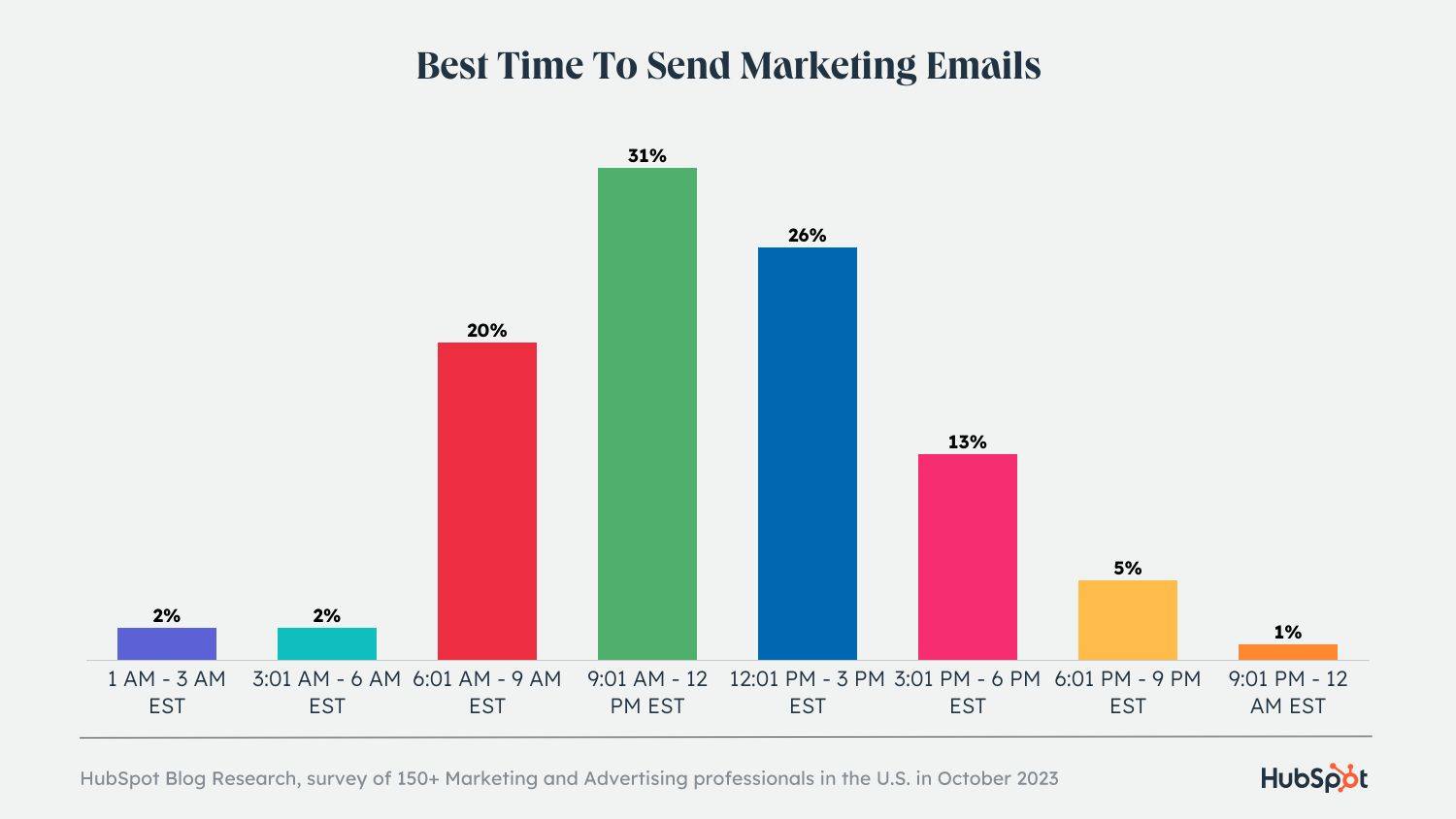
graph displaying the best time to send a marketing email

But that is not convenient for all of us. Are you in the car at that time? At home? Sleeping? With email automation, you can make sure the emails are sent out at the best time possible to reach the most people possible.

Personalized Communication

Email marketing software allows churches to segment their email lists based on various criteria, such as age groups, ministry involvement, or attendance patterns. This segmentation enables churches to send personalized messages that are relevant to different groups of church members.

For example, youth group updates can be sent specifically to teenagers and their parents, while volunteer opportunities can be targeted at active members who have shown interest in serving.

Personalized communication helps in making church members feel valued and connected to the church community. It also increases the likelihood of email engagement, as recipients receive content that is pertinent to their interests and needs. If you already use church management software to organize your community, than you don’t even have to do any extra work!

Enhanced Engagement and Tracking

Church email marketing is not just about sending out messages; it’s also about understanding how those messages are received and acted upon. Email marketing platforms provide tools to track open rates, click-through rates, and other engagement metrics.

This data is invaluable for churches as it helps them understand what type of content resonates with their congregation. For instance, if a particular newsletter has a high open rate, the church can analyze what made it successful and apply those insights to future communications. Conversely, if certain emails have low engagement, adjustments can be made to improve their effectiveness.

By continually refining their email strategies based on these insights, churches can maintain high levels of engagement with their members.

Recap

Email automation is one of many email marketing tools that can significantly enhance the way churches communicate with their members. By leveraging email marketing software and email service providers, churches can automate routine communications, save time, and ensure consistent messaging. Personalized and targeted emails make church members feel more connected and valued, fostering a stronger sense of community.

Additionally, the ability to track and analyze engagement metrics allows churches to continually improve their email marketing efforts, ensuring that their communications remain relevant and impactful. Embracing church email marketing through automation not only streamlines administrative tasks but also enhances the overall church experience for its members.

Top 5 Chuch Email Automation Strategies

Top 5 Chuch Email Automation Strategies

We hope you’ve been convinced. Automation can be a huge benefit for your email marketing strategy and your connection to your church. So what now?

In this section, we’ll dive into our list of the top 5 strategies you should implement into your church email automation.

other email marketing platforms

most email marketing platforms

1. Welcome Series

A Welcome Series for new members is an essential email marketing campaign that helps integrate newcomers into the church community. When someone joins the church, they can receive a series of automated emails designed to make them feel welcomed and informed. This series can include a warm welcome message from the pastor, information about the church’s mission and values, and details on upcoming events and programs.

Using email marketing services, churches can easily set up and schedule these welcome emails. The first email might thank the new member for joining and introduce them to key church leaders. Subsequent emails can highlight different ministries, small groups, and volunteer opportunities, helping new members find ways to get involved.

This personalized approach ensures that new members feel valued and connected right from the start. It also provides them with important information they might need to fully participate in church activities. An effective welcome series sets the tone for a positive and engaging experience, helping new members quickly feel like part of the church family. By leveraging email marketing services, churches can create a seamless and welcoming journey for every new member.

2. Event Reminders + Follow-ups

Event reminders and follow-ups are key components of effective communication for church events. These emails help ensure that church members are informed and engaged, leading to higher attendance and participation. Automated event reminders can be scheduled to go out a few days before the event, providing all the necessary details like time, location, and what to expect.

Using clear and engaging subject lines is crucial for these reminder emails. For example, a subject line like “Don’t Miss Our Upcoming Service!” grabs attention and encourages members to open the email. Inside, the email should provide concise and important information about the event, along with any necessary RSVP links or contact details.

After the event, follow-up emails play an important role in keeping the community connected. These emails can include a thank you message, highlights from the event, photos, and even links to recordings or resources shared during the event. Subject lines for follow-up emails could be “Thank You for Joining Us!” or “Event Highlights You Don’t Want to Miss.”

Automating these emails ensures that communication is consistent and timely, making it easier for church members to stay informed and engaged. By utilizing email automation, churches can enhance the overall experience of their events, fostering a stronger sense of community and involvement.
3. Weekly Newsletters

Weekly Newsletters

Weekly newsletters are a great way for churches to keep their members informed and connected. By sending a regular update, churches can share important news, upcoming events, prayer requests, and inspirational messages. This helps maintain a strong sense of community and ensures that everyone stays up-to-date.

Most email marketing platforms offer tools to create and schedule these newsletters. They provide easy-to-use templates, allowing churches to design visually appealing and professional-looking emails. These platforms also make it simple to add images, links, and other multimedia elements to enrich the content.

Using automated features available on other email marketing platforms, churches can ensure that their newsletters are sent out at the same time every week. This consistency helps members know when to expect updates and increases the likelihood that they will read them.

Benefits of Weekly Newsletters

By leveraging the tools available on most email marketing platforms, churches can efficiently manage their weekly newsletters, saving time and ensuring effective communication. This regular connection fosters a more engaged and informed church community, enhancing overall participation and involvement.

4. Birthday/Anniversary Greetings

Sending birthday and anniversary greetings is a wonderful way for churches to show their members that they are valued and remembered. These personalized messages make members feel special and appreciated, strengthening their connection to the church community.

Using email automation, churches can set up reminders to send these greetings automatically. This ensures that no important dates are missed, and members receive their messages on time. Each email can include a warm message, a scripture verse, or even a prayer for the individual’s special day.

For example, a birthday greeting might say, “Happy Birthday! We are so thankful for you and pray that your day is filled with joy and blessings.” An anniversary message could say, “Happy Anniversary! We celebrate your commitment and love and pray for many more joyful years together.”

These small gestures can have a big impact. They show members that the church cares about them personally, not just as part of a group. By regularly sending birthday and anniversary greetings, churches can foster a more caring and connected community, making each member feel seen and valued.

5. Volunteer/Service Opportunities

Sharing volunteer and service opportunities with church members is a great way to encourage involvement and foster a spirit of community. By informing members about ways they can help, churches can tap into their congregation’s diverse talents and interests.

Using email automation, churches can send out regular updates about upcoming volunteer opportunities. These emails can include details about the tasks, dates, and how members can sign up. For example, an email might say, “Join us this Saturday to help with our community food drive! We need volunteers to pack and distribute food bags. Sign up here!”

Clear subject lines like “Volunteer This Weekend!” or “Help Needed for Church Event” can grab attention and encourage members to open the emails. Including inspiring messages about the impact of their service can motivate more people to get involved.

By consistently sharing these opportunities, churches can ensure that their members are aware of all the ways they can contribute. This not only helps with church activities and outreach programs but also strengthens the sense of community as members work together towards common goals. Volunteering becomes a rewarding experience for everyone, enriching both the volunteers and those they serve.

Church Email Automation

Church Email Automation

In conclusion, implementing email automation strategies can significantly enhance a church’s communication and engagement efforts. By automating tasks like welcome series, event reminders, weekly newsletters, and personalized greetings, churches can ensure timely and consistent outreach.

These strategies not only save time but also foster a stronger, more connected community. Engaging subject lines and personalized messages show members they are valued and appreciated, while regular updates keep everyone informed and involved. By leveraging the tools available on most email marketing platforms, churches can streamline their communication processes, making it easier to nurture relationships and support spiritual growth.

Embracing these email automation strategies can transform the way churches connect with their congregations, creating a more vibrant and engaged community. As churches continue to adapt to the digital age, these tools offer a powerful way to maintain and strengthen the bonds within their faith community.

We pray over your church as you continue to grow and build your community! God bless!

More Resources on Church Emails

View Full Transcript

Episode Transcript

[00:00:00] Speaker A: Well, that may not be the coolest way to do outreach. Email marketing is tried and true, and that is true for churches more than anybody else. We're going to talk in this conversation about email automation for churches. Does it make sense to make things automated? Let's talk about it. You're listening to the Reach Write podcast, the show dedicated to helping your church reach more people and grow. Well, hey guys, I'm Thomas. [00:00:29] Speaker B: And I'm Ian. [00:00:30] Speaker A: And today we are talking about church email automation and some techniques that we have found will save you lots of time and help you reach more people at your church. I think it should be a good conversation because we have talked many times in the past about email for churches and email newsletters and email automation, and I think we wanted to give some extra tips. I know that it is not the most attractive thing to talk about and it's not the. You don't get all the buzz that you do around social media or TikTok advertising or any other Google adwords that we help people with the Google grant, that kind of stuff. But I think that email marketing remains one of the lowest hanging fruit for churches out there and it is such an important avenue for us to explore that we wanted to give you some tips that I think it's something that every church should be putting some focus into. So should be a good conversation today. [00:01:27] Speaker B: Yeah, absolutely. I agree, Thomas. And one of the things I thought of too, that's probably more of a. Or it has in recent years been a buzzword or of interest is text messaging for churches and mass texts, and those are effective, too. But why I thought of that is, you're right, it's not always popular to talk about email, but it's still very relevant. Something that we see churches getting great results with, something that my church gets great results with, as a matter of fact, and that I, that I follow still. So, no, it should be a great topic and hopefully helpful for a lot of churches. [00:02:00] Speaker A: Yeah. We have five tips today. I think we're going to explore them more. I think we have five ideas. I think the first one we're going to talk about is probably the most important and we'll have the most to say about some of the other ones, I think are things we can kind of play with. It's not for every church, but we'll just get into it here. So the first one is your welcome series. This is something that I think has, is so important that you nail it. And in most cases it makes sense to automate it. I think that when we talk about a welcome series. What I mean with this is when someone first comes to your church, it's the series of emails that you send to that person that helps to encourage them to take a next step, whether it be coming back the following week, going to a new members class, getting involved in a place of service, or probably some combination of all of those things. [00:02:53] Speaker B: Yeah. [00:02:53] Speaker A: It is so important to nail this, and I think every church needs to invest some time learning about this and really getting it because as someone who's pastored for years, this has been at a church I was pastoring recently. It was our secret sauce and we really nailed this. We got a lot of visitors and we were able to have a very high retention rate of those visitors because we really nailed this. Now, I'll say this before we get any deeper, we did a video a couple of weeks ago that I'm going to leave a link to down in the description and then right here in a card, if you're watching on YouTube, where we broke down my exact visitor follow up lead seq or visitor follow up email sequence that we would send to people. And I gave you the exact script that I'm using at my church as we're rebuilding this process. So I've used it before at other churches, we're using it at our church and I just wanted to make it for you. And there's a whole video about it. There's a free download included with it. So if you want the information on how to get these scripts, I'll have that all here. So you'd have to do any work. Just change your church name in there and you should be just about good to go. These are pretty tried and true, but all that being said, this is probably the most important thing you can do is having a sequence for people when they first come to your church and making sure that's automated. So any advice or tips on how to do that? Well, Ian, or any thoughts on that? [00:04:21] Speaker B: Well, first of all, I totally agree. And I agree with what you said about this being probably the most important because obviously your church wants to engage first time visitors and have them go deeper into the life of the church and keep coming back and get involved. So. Well, you know, no, some of the, I guess, ideas that we've seen and that we can throw out there is, of course, one could be a welcome greeting from, a personalized greeting from the pastor to the new visitor there. That's always good. They heard you preach on Sunday, you know, hopefully they enjoyed your message and when they get that from the pastor. That obviously gets a good, uh, impression there. It can be also on, you know, small group involvement. You know, we're going to get to some of these other things later, but, you know, if it is someone that's new and has come, you know, they might be wondering about. Okay, yeah, how can I meet some people? What other on ramps are there to, you know, being able to go deeper into the church could be around your values, upcoming events, those types of things. Visitors are interested if they, of course, if they enjoyed it. They do want to know about events. Do you have something for their kids or youth coming up, if it's a family or do you have an adult ministry that they would want to plug into stuff like that? [00:05:40] Speaker A: Yeah, I think you're right. And I think I have some thoughts on the automation of it. Well, this episode is about email automation, and I think this is a good thing to automate. And I think for a church the size of yours, for instance, Ian, wherever you guys probably have 100 visitors a week or something like that, if not more, you have to automate it, right? Like having this do it some other way would be just overwhelming. The thought of your pastor sending personalized messages to 100 people, that's his whole job, basically, if he's doing that, but I think the majority of our audience, it might make sense to not automate it just so that there's no chance of it feeling impersonal or something that is just auto generated or anything like that. Because you think of the average sized church, maybe there are 75 people, 100 people, something like that. How many visitors are you seeing every week? Well, I think if you're really healthy and you're growing, you're probably seeing six or seven visitors every week. If you're like most plateaued or maybe even declining churches, you're seeing a few visitors a month, maybe. [00:06:45] Speaker B: Yeah. [00:06:46] Speaker A: So it probably isn't too much for you to personally do this, and it might not even make sense to automate it if it's one a week or something like that. It's probably in those cases, it's usually easier just to send the emails yourself and not go through the whole automation process. So it's not for everybody. I think even at a church, my church's size 200, 5300 people, we are right between that. Or it might make sense for us to have a dedicated person who's administrative to help us actually manage that. Just because it can be challenging to make your emails, your automated emails feel personal at the same time, especially if it's going to be coming from your lead pastor or feel like it's coming from him. And let's say, you know, a church our size, our lead pastor usually meets everybody that's there for the first time. And so maybe you had some kind of a conversation and you talked about where they're from or what they do for work. You'll want to include some of that personalization in there, and it's hard to do that on an automated basis. So I have some thoughts on that. But I think for larger churches, you got to automate. For smaller churches, don't rush to automate. It might not make sense. It's okay to keep it unautomated. [00:07:53] Speaker B: That's good. That's a good point there. So next one is event reminders and follow up. So we kind of talked about introducing events to first time visitors, but reminders are good. You know, obviously everyone's busy these days and especially here. This has been actually a big deal for my church in the summer months as it is a lot of churches when people are in and out on vacations, those types of things. So it could be that, that youth event or that kids camp or whatever it is that can easily slip through the cracks. And this is year round, you know, just of course letting people know of upcoming events. And then the other thing in addition to that is once they've gone to the event or in case they missed it, sending emails that recap how the event went, photos, maybe testimonial stories or just something cool that happened or that God did during that event. And the subject lines are important to this too. So just in case you missed it would be for those people that maybe miss the event or don't miss our upcoming service or event or something like that. You want attention getting subject lines so people click and then get the information about your events and get those updates and follow ups. [00:09:16] Speaker A: One of the cool things you can do this is kind of in that automation camp is that you could set up in every modern broadcast email tool, whether you're using Mailchimp or constant contact or anyone that you're using, you should be able to send a follow up message to people that didn't open your message the last time you sent it. For instance. [00:09:37] Speaker B: I am. [00:09:37] Speaker A: So let's say you have a, a big event coming up, a baptism this Sunday, and you want to remind people to get signed up for baptism. You could send out a message on Monday and then you could have it automatically send a follow up message with a different text, different subject line. You don't want it to be the exact same thing, but send a follow up one to people based on what they did. Like. So if they didn't, if they opened it and clicked on the registration, maybe, and they didn't fill out a registration, you could send them a different email that encourages them to get signed up. Or you can, if they didn't even open the email, you can kind of send another message to only those people. So there's a lot of automation techniques there that you can look into, I think. Yeah, with event stuff. And especially you mentioned the follow up side too. Like I think even after events, that's a really good time to send emails also kind of in the post event time, asking for testimonies, some of those kinds of things. What was your experience? Like surveys, we've done some of those kinds of things. There's lots of ways you could be. [00:10:35] Speaker B: Using that or make people feel bad for missing the event and have all of the, like we said, all the photos and all of the success stories. [00:10:42] Speaker A: There you go. And automation for people that didn't show up, you send them only a rebuking email. There you go. [00:10:47] Speaker B: That's right, automated conviction. So there you go. But good. [00:10:52] Speaker A: Next up is weekly newsletters. So when it comes to automation for this, I find this one of the hardest ones to automate because a weekly newsletter is generally kind of a what's happening? Or maybe a individual blog post or some kind of a spiritual encouragement from the leaders of your church. And so the automation side of things with this is a little bit more on the challenging side for most churches. But I do think it's something that when it comes to email marketing, it is a pretty valuable tool. The one thing I think I'd say about email newsletters is that unless you actually invest time in it, it can be just kind of a waste and it'll actually hurt you with your other emails that you send. So let's say if you're the kind of church that has a bulletin and your weekly emails newsletter is just a copy and paste of whatever's in the bulletin every week, you just send that out to your entire church without like a lot of thought. It's just something that maybe a administrator puts together, just highlighting the times of events and that kind of stuff, not really that useful. Right. If people want that information, they get onto your site and what's going to happen is if you do that. And the worst thing you can do is subject line. It's something like weekly Update August 5. Whatever it is, that is something that doesn't get opened isn't useful when people open it. And what's going to happen is that the more you send those kinds of emails out and Google and the other email providers that see people's habits, they're going to start to see, hey, we send out this email every week, nobody ever opens it. This might be kind of a spammy account. Let's actually deprioritize them or put them into the promotional inbox on someone's Gmail account there. Those kinds of things, that's what you want to avoid. So when it comes to your weekly email newsletter, it has to have some thought. You have to have a real writer do some of those things to make it worthwhile. And if you do, I think it's totally worth the time. [00:12:49] Speaker B: That's good. Nothing more to add to that. I think you covered that well. The next one is a little creative, I guess, and thoughtful, maybe is the best way to put it, is sending automated emails for birthday and anniversary greetings. And again, I would say when we're talking about authenticity, keep these short and to the point, because if they are automated, you definitely want the person's name in there. But if it's an anniversary or birthday, it makes them feel thought of. But you probably don't want to go too deep on the messaging and the content because people are going to know that it's automated. Here, for example, my church, we haven't done this unless they just missed my birthday. But no, I would know, obviously, with the thousands of people that attend that my pastor Joe did not send it to me. But still, nice to be thought of that they know these dates, that they care enough, that your church cares enough to wish someone that well. But maybe it's like what you said. Correct me if I know we're talking about automation, but if it's a smaller church, you know, and it's one of those churches where, you know all of the families, then, you know, maybe it's something better, more personalized. And you gotta be careful on the automation. What are your thoughts? [00:14:09] Speaker A: Yeah, I think you're right. I think that that's like a birthday wish from a machine is basically useless, right? I get that from Panda Express. And they say, enjoy a free wanton or something on us for your birthday. You know, that that's. That's one thing. They're giving me something for free. If your church is gonna do that, you know, hey, happy birthday. Here's a free, you know, coffee shop gift card or something. [00:14:31] Speaker B: Yeah. [00:14:31] Speaker A: Never heard of a church doing that kind of a cool idea. A gift from your church might be interesting. But all that being said, I think that this is a tough one to automate because it's even smaller. Large church. A large church is gonna be obvious, like you were saying that the pastor doesn't know you. In a lot of cases he doesn't even know your name because it's a large church. In a small to medium sized church, you expect the pastor to know you, but you really like. The thing with automation is you really have to nail your data. Your list has to be super clean. So for instance, if a guy's name is Jonathan, but everybody knows he goes by John, right? If in the system it's his legal thing because that's what it said on his checks. When you put it in there and the email goes out to Jonathan, it's an immediate red flag that says, okay, nobody that actually knows me sent this email because he said Jonathan, and everybody knows my name is John or Johnny or whatever it is. So it's hard to execute that. Well, if you do the math on this, is that on average, if you're a church of 100 people, you're going to have two birthdays a week in your church, right? So I think you can automate a system that would ping the pastor or someone at the church on Monday of every week, or maybe they ping them on whenever that person's birthday is so that they can send a simple two sentence email to that person that says happy birthday and just encourages them. That's probably a better automation system than having the system itself do the email for you and risk the chance of making it clear that I don't care about your birthday, but the machine does, and it really isn't something that matters here. [00:16:17] Speaker B: So in the age of AI too, it's just more insulting. [00:16:20] Speaker A: So proceed with caution, I think is the more on that one. Automation is tricky with that. So last one I think is a good one. Volunteer and service opportunities. I think this is good for service reminders. So you definitely want to have ways to automate this. So for instance, everybody that's on for children's ministry this weekend, let's say you have six people that are serving in children's ministry, having a system that they would automatically get reminded of. That is really good. Now, is it as good, like, does it feel as personal as if the children's director writes you a personal message with what the content's going to be about and that kind of stuff? Maybe not, but I think that. I think people expect that when they know that they're signed up to serve. It's nice to get that reminder that says, hey, you're doing that. It's funny, when I preach at my church, I get these reminders, which is okay. Yeah, I knew I was preaching. I hope I'm not getting surprised on Saturday night. Oh, gosh, I have to preach tomorrow. [00:17:18] Speaker B: Yeah. Wow. [00:17:19] Speaker A: But when it comes to the children's ministry side of things, or ushers or people that are doing setup or tear down or banned members that are playing on the worship team, these are good things to use, I think. So those kinds of volunteering opportunities. And then also I think it's good just for general volunteer acquisitions. So getting more people to come on board and getting people signed up for certain ministries, asking people once they've been there for a while, do you want to find a place to serve? And having those kinds of requests be automated, that can go a long way too. You could have a list in your database of people that serve and people that don't serve. And you don't want to send lots of messages to get involved with serving to those that are already serving in two places. But for those that have never signed up for a team, well, you probably want to have some automated emails that goes out to those people that invites them into a place of service. So that's the thought. [00:18:13] Speaker B: Yeah, that's good. And one other thing to add is this is one of those areas of ministry that you kind of can't over communicate, meaning churches often need a lot more volunteer help. So the more you're making that visible and giving people those opportunities, the better. Because as we know, this is, you know, typically a challenge for a lot of churches. So. Yeah, no good stuff. [00:18:37] Speaker A: Yeah, no, awesome. Hope it's been helpful. Yeah. Your church should be using email whether or not you automate all of it. Don't automate all of it. Almost certainly, if it makes sense, do it. It's not for every church. I would say for that's those large churches, medium to large size, you start to get into that. For smaller churches, it might not make sense just yet, but I think it's a good thing to be looking into. You do need to be using email marketing, though, effectively. I'm going to leave a link in the description down below and then also there's going to be a card that comes up right here with a whole conversation we had on the importance of nailing your email marketing and gives you a full breakdown here. So until next time, thanks for being a part of the Reach ride family. We'll talk to you later. [00:19:18] Speaker B: We'll see you.

Other Episodes

Episode 0

December 27, 2022 00:28:11
Episode Cover

Church Stats 2023 – 6 Statistics You Must Know

As we enter the new year, churches of all sizes should keep an eye on the changing trends in the church world and society...

Listen

Episode 0

February 29, 2024 00:25:14
Episode Cover

8 Pro Church Videography Tips to Captivate and Engage Your Congregation

In a post-Covid, constantly technologically advancing day and age, church videography is becoming more and more prevalent by the day. Whether streaming Sunday services...

Listen

Episode 0

October 30, 2025 00:18:34
Episode Cover

7 Inspiring Church Thanksgiving Service Ideas

Thanksgiving is a time to reflect on all of the blessings in our lives. We all have many things to be grateful for, and...

Listen