Episode Transcript
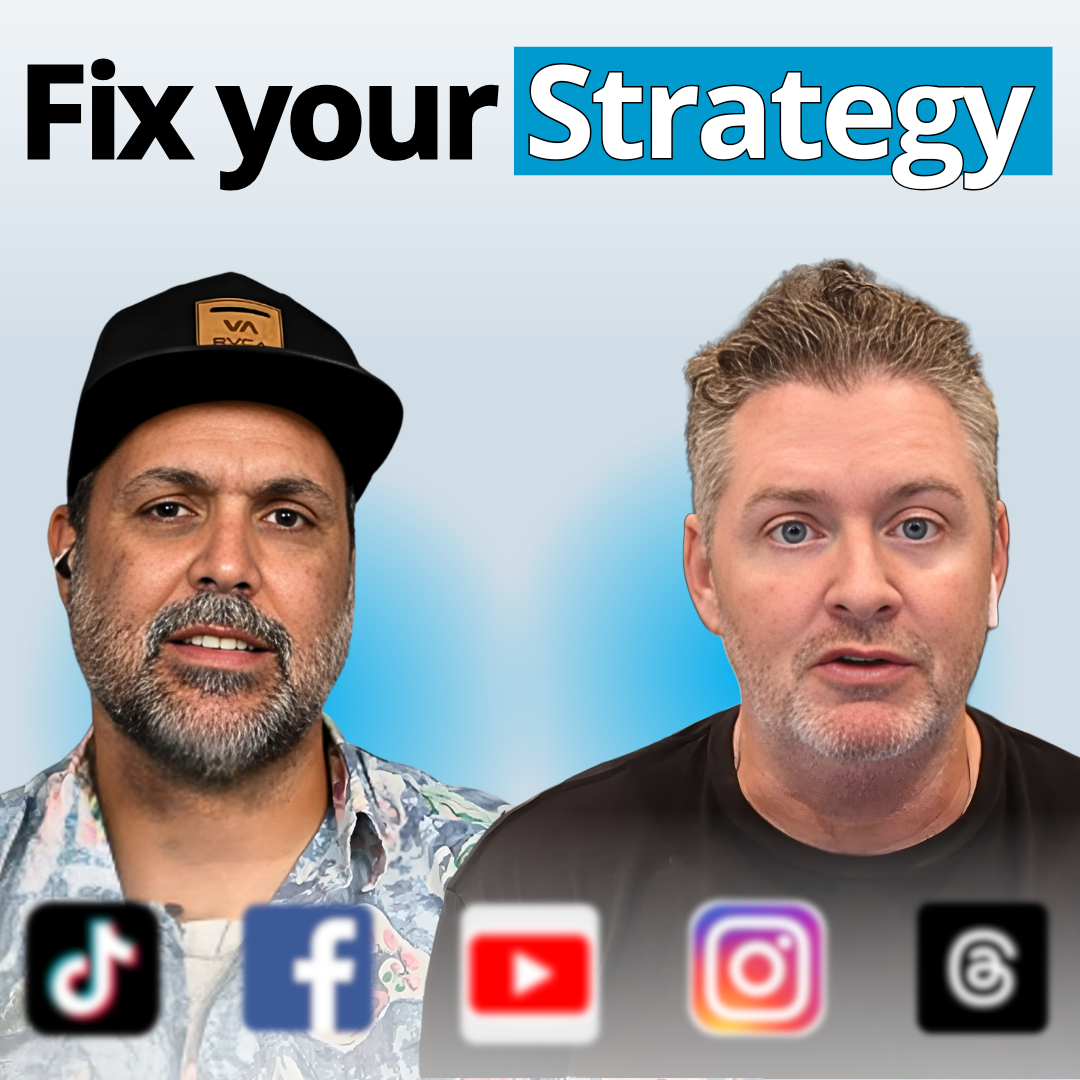
[00:00:00] Speaker A: Have you ever felt like your church's social media strategy is just, like, stuck in place? You're having a hard time getting more views and more impressions and engagement. Nobody really even gets on. Well, we're gonna break down for you some of the things that we are seeing right now that so many churches struggle with and how you can break through. Let's do it.
You're listening to the Reach Right Podcast, the show dedicated to helping your church reach more people and grow.
Well, hey, guys, I'm Thomas.
[00:00:29] Speaker B: And I'm Ian.
[00:00:30] Speaker A: And today we're talking about the idea that your church social media strategy is stuck. And we're going to show you what we would recommend to do to fix it. So, looking forward to this conversation, Ian. I think I hear this sentiment from churches all the time, and I think if you've done social media for any length of time, you start to get to that place where you do just feel this way. Like you feel there's nothing new that's left for me to say. I've done everything there is to do. And, and sometimes we just get into this social media administrator situation where we're stuck. So we want to talk through some of that today, and I think it should be a good conversation.
[00:01:05] Speaker B: Yep. And a lot of churches, I think another way to put it other than being stuck is they're just like kind of a hamster in a wheel when it comes to social media. You know, haven't done it this way the whole time, and they finally found someone to keep it up to date regularly. So they're just kind of doing the same stuff. I've seen that all the time too. So.
[00:01:22] Speaker A: Yeah, no, that's good. So we'll kick us off. Ian, why don't you introduce them and we'll. We'll talk through them one by one. We have seven, I think, today. Is that right?
[00:01:29] Speaker B: Yep. We got seven reasons why your church's social media strategy's fallen short.
And the first one is you're not creating content for the right people.
So it's been an age old, you know, thing. Thomas. We've again consulted churches for almost two decades now. We were just talking about that today, dating ourselves, the gray in our beards and everything else. But yeah, and I mean, I think it's just, you know, one of those things to where we still see, even though churches don't mean to totally do this, they're creating content and posting for themselves and not the people they're trying to reach.
[00:02:11] Speaker A: Yeah, yeah, yeah. I think that this is something that it's so easy to fall into this trap because the people that give you the most feedback about what you're posting on social media are people that you see on Sunday mornings and people you're encountering at your church and in small groups. And the fact is that, like, there was a time where that's how you did social media, where it was basically a thing that you could when. When that season was where everything you put on social media would be seen by everybody in your church. Then it was okay to post events and put, you know, sermon recaps and those kinds of things and just put that out there.
The problem is that most social media platforms now, and I think most churches are getting the best results from two things, I guess, primarily doing short form vertical video. We'll talk about that more later. And then also we're seeing more and more results from carousel posts. Those are continuing to perform really well on Instagram specifically. But the problem is that, like, you can't just post your church events on those things. You actually have to post content. That's how has a broad appeal if you want to have that broad kind of a reach there. So, yeah, I just see a lot of churches falling into that. I know. It's one thing that Even here at ReachWright, we had a content team meeting this last week. I was talking with some of the people there, and we've wrestled with this for years. We've put out memes on our YouTube channel or make like, little short form video memes.
And we decided this week to pull back from that because we're worried that, especially on YouTube, posting memes was diluting our audience a little bit. So we decided to cut out memes in general. And this is, you know, you may find that we may recant on this and not do this five months from now, but we're doing kind of an experiment where we're getting rid of all of our memes. See, with our memes that we would post, they would be like more broad Christian appeal memes, and they'd be just kind of funny things that any Christian could relate to. The problem with that is that this podcast and everything we do here at ReachWrite, it's really targeted towards pastors and church leaders, not to the average person who attends church once in a while or just kind of a member of a church. And so we found that these memes, they would build our audience with, like, I guess for us, the wrong kind of people. They're people that. There's nothing wrong with them personally. It's just that they're not interested in podcasts like this one about how to improve your church's social media strategy. Just because you, you commented on a meme that we put out there about, you know, how tired everybody is after Easter Sunday doesn't necessarily mean that you'll like this kind of content. So we've been doing a lot of this thinking here at Reach. Right. And I think churches need to do that same exercise. Who are you trying to reach? And you need to ask that question before you post every single time. Does this kind of meet our target audience? And, and if not, there's something to be said for diluting your audience. Now, the good thing about churches is that our target audience is actually pretty broad. Like there's nobody that's out of reach of the gospel. Right. So we know that. But I think we do have a location we're trying to reach. So I think hyper specific local content is always really good for churches.
You know, you do want to make it distinctly Christian. Not that everything you say has to be overtly Christian and only preach the gospel, but you don't want to, you know, go down other rabbit holes with those things. So think about the things that you're posting and remember it's not for your members, but then also remember that it is for kind of your target demographic and aim precisely and squarely at them every time you post. Yeah.
[00:05:45] Speaker B: And like you said, you know, churches are targeting any, anyone and everyone, no matter what their age, makeup is, everything with the gospel. But you know, if you're an older church, like I consult with older churches or aging churches all day, every day, you know, they're trying to reach younger families. So obviously you gotta be strategic with that content, which is a good segue into our next one is that you're using the social media platforms the wrong way.
And you know, it used to be Thomas, we've saw years back that, you know, with social, when social media was newer, that, okay, you know, it's just you're gonna hit millennials or younger Gen Xers or whatever.
Now it's really segmented. We have, you know, we have several different social media outlets that you can go Facebook, and that's primarily for Gen X.
You have Instagram, which is primarily for millennials. And then you have and gen Z, but TikTok is gen Z. So I think that's the thing too is kind of a lot of churches are posting just broadly on everything, not knowing that there's a certain age, age demographic who's going to be the majority on Each one of these.
[00:06:58] Speaker A: Yeah, I think that that's, that's good advice. I think that, like, really thinking about each of these platforms, I think it's so important that churches at this point, I would actually recommend that you just choose one lane and really lean heavily into this. I think usually your results will be stronger from investing like twice as much time in one one channel. Then it would be like spreading that same amount of time out over two, three or four channels.
[00:07:27] Speaker B: Yeah.
[00:07:27] Speaker A: So I think, like, if you just decide that, you know, we're really best on Instagram, we want to lean into that. Our church is primarily millennials and younger and we really want to try and target those people the most. I don't think you need to spend a lot of time working on creating Facebook posts and making sure your Twitter profile is perfectly dialed in and kind of doing that exercise and making sure you're everywhere. That used to be the strategy when you could just cross post everything. But man, I'm seeing more and more that the more we lean into the right channel for us, the better off will be. So my church, for instance in Hawaii, Kai here our pastors are in their early 40s, so kind of millennials. And so I am like right on the millennial Gen X line is where I am. And a lot of the people we're able to reach right now in our community are kind of in that millennial time frame. So we lean in heavy into two channels, Instagram and YouTube. Our Instagram is where we put probably most of our day to day effort and then we really try to dial in our YouTube.
YouTube. I'm going to treat kind of separately because I think that's one that while even younger than Gen Z, like Gen Alpha, they're on YouTube, but I think all ages are on YouTube. So I think every church should, should start there and be using YouTube, treat it like a social media platform and then from there probably just choose the one that makes the most sense for your church. And if you're primarily people in their 50s and 60s, man, they're on Facebook, you can lean into that. But if you want to go younger, you know, maybe look into other platforms. So just know what you're reaching into and just, yeah, take my advice, put all your efforts into one and really lean into that.
[00:09:03] Speaker B: Yeah, that also helps you start like where you can manage it. Right. So, you know, because a lot of churches are, you know, they're, you know, spread thin with volunteers who can be the social media champion. And that also kind of makes at a good starting point right before you branch out. So that's good stuff. So next one's a little different.
You don't have a consistent visual identity on your social media. What do we mean by that?
[00:09:29] Speaker A: Yeah, there's just a lot of value in looking the same all the time when you post. Yeah. So, you know, so there's a church right around the corner from me. They're really great on Instagram and everything they do is black, yellow, white and gray. And that's always their brand. Almost like school bus colors. They lean into this really hard and just the moment you see that yellow, that school bus yellow, you immediately know what church it is, you know, and it looks familiar. It's the same thing with branding everywhere, but especially on social media. Whenever you do graphics or even if you're doing photography and you're putting text over the top, make sure you choose a few fonts that you always use.
[00:10:09] Speaker B: That's right.
[00:10:09] Speaker A: Colors have the hex codes of those exact colors. I think that for most churches, your best bet is to have a good branding guidelines document. Yeah. And from there, like that, like you would extend that to all of your social media posts. One thing I'm doing right now is in AI, whenever we're creating new posts or new ideas or new mockups, I load in our branding guidelines document. So it knows like kind of what its parameters are to work from. And I'm designing a lot of our graphics in AI right now. And our team is doing this in using our branding guidelines document. I don't wanna get too technical, but it's in a JSON format and if you load that in, it's easy for AI to read it and we're getting really great results from it. But yeah, leading into that actual brand you use consistently, it really helps.
[00:10:58] Speaker B: Yeah, we've been saying that for years about staying on brand. Just even with your website, with any print you may do signage, all that same with social media. And it's something that's easy to kind of vary from.
Especially if you're doing a variety of content.
It could be tempting to kind of get off brand. So a good reminder there for sure. So next one's a big one. You said we'd be talking about it. A lot of churches are still not, even though it's been out for a while. Leveraging short form video.
[00:11:28] Speaker A: Yeah. Yeah. So I'm going to be really honest about this here.
It's not as good as it was. Like, I think if you're like waiting for it to hit its peak and its heyday that's, you've already missed that. So we're, we're past the point of the heyday of, of churches, I guess I say we're past the point of it being easy to get results. I don't think we've actually seen a reduction in the amount of posts that are being viewed on these platforms. And we're talking about this, we're talking about TikTok reels, YouTube shorts, those three things there.
So they are still being more consumed than ever before. All the data seems to show that what, what I'm saying is for churches, it used to be easy where you could just repurpose your sermons, you know, clip a few parts, even use AI to do this for you. It'll pop out something that'll get you some results.
I still think there's value in doing it. I still think it's something that you can and probably should be doing. But I'm just here to tell you the bad news is that it's not as easy as it was. And that low effort stuff that you can just kind of crank out with AI and it's so saturated with that. So it's, it's something where that doesn't work as effectively as it used to.
I think you probably need to lean into professional editing, probably at this point, and doing short form video that is custom made for the platform. So not just repurposing your sermons, but actually having something that's scripted or a very specific thing that you want to say with a well crafted hook and introducing curiosity loops and all kinds of, all kinds of rules that you have about how to make effective short form video. You probably have to lean into some of that if you want to see results nowadays. But all that to say it probably is still worth the squeeze. It's certainly better than posting scripture graphics or those kinds of things, but it just doesn't. You know where a year and a half ago a church might have posted a repurposed sermon clip and got 2,000 views. That might be more now, like a thousand views or 800 views. And I think that will continue to diminish as, as it becomes easier to produce this stuff. It gets less and less value and you really need to lean into it if you want it to work now.
[00:13:38] Speaker B: But still relevant. We're not saying if you, you know, that you've missed the train or whatever, but, but yeah, you're right, still relevant because even if you're not getting the same momentum, still going to engage a lot of people there.
[00:13:49] Speaker A: So yeah, so we, I Mean, that's a service that we offer here at Retread, right. So we have this service where we do it custom for people. We just heard from a client last week about how they, they went from seeing a couple of hundred people on their AI process sermon clips to thousands of people seeing some of their views. When we actually have our editors lean in and do the editing and kind of craft hooks for it and put music behind it and do all that stuff that you need to do to make it actually get results here. So yeah, it is still an art form that is working. It can be done. If you want some information, I'll leave a link down in the description on how you can learn more about sermon slang and how we could help your church doing that if you're interested in.
[00:14:30] Speaker B: And always awesome. When we hear from our churches that it's getting results, even if they were a little late to the game, they're seeing results.
So that's good. So this next one I like because it's been an age old problem since MySpace and Facebook started, which is you're posting but you're not engaging with people. So you're putting content out there and you're leaving it be.
[00:14:52] Speaker A: Yeah, yeah, I may be too young for that. What is MySpace, Ian? Is that something?
[00:14:56] Speaker B: Oh, you're not too young for that. You know what it is, Thomas, again, for everyone knowing that he picks on me. We have a lot of followers that always know that.
[00:15:03] Speaker A: No, let's just leave it there. We don't need to go in any year younger.
[00:15:07] Speaker B: So anyway, I did have a different
[00:15:09] Speaker A: decade, thank you very much.
[00:15:11] Speaker B: I think even some of the kids have heard of it, but they don't know what it is. So. But, but yeah, yeah, but again, age old problem, you know, you're putting content out there, not engaging. Again, social media is by, should be by nature so social, so.
[00:15:25] Speaker A: Exactly. Yeah, yeah. This is like kind of one of the easiest wins that a church can have, I think.
So first of all, I'd say this set a rule for yourself that if anybody ever engages on any of our content on any platform, we will always reply 100% of the time. And it doesn't even matter what they say. And this might not be the case if you are a church of, you know, if this is Elevation Church and, and you guys get 8,000 comments on every post you do. I'm not saying that applies to them, but for most of our audience, my guess is you probably get 1 04, maybe 7 comments, something like that on a really great post. Usually it's a manageable amount that you have. And so to you, I would say reply to every single one of them. We still do that here at retwrite. We get several, I don't know, 20, 20 comments a day probably on YouTube.
And we respond to often me, I personally respond to lots of them because I'm the face on a lot of these YouTube videos. I will take the time to respond. It's that valuable to us. It's that valuable to I think our overall community. And that is such an easy quick win. And sometimes you wonder like, well they just, like all they said was they just put in a fire emoji. What am I supposed to respond with? We'll just give them an emoji back. Like it's fine. Like yeah, about water. Don't put on, don't quench them.
[00:16:49] Speaker B: Yeah.
[00:16:50] Speaker A: But yeah, I think that there's, there's, there's something to be said for that. Like really leaning into that, responding to comments, side of things. And then on top of that just make your content demand a response every time you put something out. Ask people to do something. Typically in these podcast episodes, we'll ask people a question and then I know that our YouTube team that does a lot of the uploading and things, they'll almost certainly have a question as the first comment on this video to start conversations happening. So do things to encourage questions and comments that helps the algorithm like recognize this is an active site, an active page and it'll get you results that way. So yeah, to me this is probably some secret sauce here. It'll get you some quick wins.
[00:17:34] Speaker B: Yep. Yeah, absolutely. Next one again has been another age old problem is you don't have a plan for, for your social media strategy so you're just kind of posting blindly.
It is something that takes strategy and thinking through it. So that's a big deal. It's just, you know, there's no direction, just posts are, they could be random or the just same thing that you've done before.
[00:17:57] Speaker A: Yeah, yeah, I just think that it's, I just think having a weekly plan on how you're going to execute your social media for the entire year, like that's what like we need to do. And I'm not talking about anything sophisticated. It's just saying that we're going to post on these days, around these times here and, and be consistent with it, like actually follow through on those things. And my recommendation to churches is don't like, don't overstretch yourself when you're starting out I think even if you just were to say like, if you like totally struggle and you're in this camp right now where you don't have a plan and this, this sounds like you, I would say come up with this plan. Promise yourself you're going to post on whatever your platform is two times a week and you're going to do it on the same days every single week, like Tuesdays and Fridays. We're going to post every single week for the next 52 weeks. Don't take any breaks, stay on it and don't miss those days. And then you can kind of make adjustments. I think the thing that a lot of churches do say, okay, we're going to have a plan. And everybody tells me I have to post every day. So I'm going to post every single day. And it's a, it's a constant chore. It's always weighing on you.
[00:19:04] Speaker B: Right.
[00:19:05] Speaker A: I would say even if you just start with two, maybe three, if you're feeling adventurous and just consistently do that same strategy and you can even kind of plan for it to be the same kind of content. Like every Monday we're going to post a, a, a video, we're going to do a repurposed sermon video, for instance, we're going to clean it up. We're going to put that out every single Monday and then every single Thursday we're going to post a carousel graphic that breaks down the main points of last week's sermon in a really engaging way. And people can scroll through it and read those points if they weren't there or if they were there as a reminder. And so you just have these things in place. And even if that's all you do on social media is every week, you know, you have a sermon video, you have a carousel, a sermon video, a carousel. And, and that's it. That is better than the large gaps or missing a week here and there. Just staying consistent and you'll get some wins. Yeah.
[00:19:59] Speaker B: And if you do it that way too, people kind of know what to expect and they're excited about that content. They're like, oh yeah, on Monday, I want that cleaned up sermon. I want that. Yeah. So that's really good.
Last but not least, you're expecting instant results. And we know that with most communication media marketing it is a long term play.
And even if you put in a lot of. I know, because if a church puts in a lot of hard work and they revamp their social media strategy, which hopefully we help some folks do that with this video, they're expecting things right away. Right. We've made this step.
[00:20:39] Speaker A: Yeah, I know how you can get results right away. You got to pay meta ads for it. You got to pay for that reach. You'll get results almost instantly if you're willing to pay for it. But yeah, they know like this is not something that most people are willing to do. Most people that are just trying to, you know, make it in their business or their church or whatever it is, they're not willing to put in the time to do this consistently.
Facebook and Meta and TikTok, they all want us to do that. But so they'll reward you if you are consistent with this and by consistency. Like, honestly, this is not overnight. Like once in a while you'll hear these stories of someone that is just really good at making reels and they put out a reel and they got a million views on their second reel that they ever did. Yeah, but like that isn't reality. I know. Very rare. Yeah, I know like one church that that's happened to and it was a one time thing, they couldn't replicate it either. They couldn't go and do it again. They got a bunch of people that started following them right in the beginning. But that, that doesn't, that's not the normal story. So I think that's the thing is that that's why I kind of leaned on that consistency thing about just pick something you can handle and keep doing it. And then after you've done it for a year, maybe reevaluate. Can we do one more post but keep doing that? That's been our story here at Reach. Right. Is that we've built these channels not by getting really lucky or like we're at this place where you're maybe even seeing this video because you and I, Ian, back in Covid times, went into our bedrooms and put headphones on our heads and shot crummy podcasts by today's standards. And we just kept on doing it and kept improving. And here we are, 300 or some episodes.
[00:22:13] Speaker B: We lost our game during COVID because like we, we had more time to focus on it. But you're right around that time and definitely before COVID when we started it. Oh my gosh. Yeah.
[00:22:22] Speaker A: But we're coming up on our six year anniversary of doing this retwrite podcast. And how many weeks have we missed?
Zero. We've done every single week. Sometimes we've batched some together, sometimes to, you know, over holidays and those things. And that's all great but like it's just that Consistency.
Sometimes people look and say, man, I wish I could have a channel like that one. Or I had that big of a reach. Well, like it's. It's from doing the right things consistently for weeks, turn, months, turn, years, until you finally start to get results. And you know, it's great. We're seeing the. We love our Retry family. We love that you guys are watching this and are a part of this with us here. We hope that this is helpful and it continues to be. I hope that this is more helpful than it was six years ago when we started. We were trying to navigate through Covid and all those kinds of things. So anyway, I hope this episode has been helpful for you to forgive my
[00:23:15] Speaker B: video game headphones I used to have on back in the day.
[00:23:18] Speaker A: Yeah, so it was pretty funny. Yeah. And we couldn't. Like, I remember when we first started,
[00:23:22] Speaker B: you get old ones. No, maybe don't do that because then people would unsubscribe. So.
[00:23:26] Speaker A: So in Hawaii there were no. Nothing was allowed to be open for like almost a year. And so you couldn't even get haircuts like for like almost a year here in Hawaii. So like By like episode 30 or 40, I have this giant. Like I have. My sideburns are coming. It's crazy. So, yeah, go back and look at the archive if you'd like. Leave us a comment on that.
[00:23:45] Speaker B: Even back then. But yeah, go ahead.
[00:23:47] Speaker A: Not as much. My, My daughter just saw it. I had way darker beard back then, so it's funny now I'm an old, wise gray beard, I guess.
[00:23:55] Speaker B: That's right. That's right.
[00:23:57] Speaker A: Thanks guys for being part of the reach right family. If this has been helpful to you, leave us a comment down below. If you. If we miss something that's working for you on social media. Here's that request I told you we're going to make. Drop us a comment. I promise I'll respond and we'll see you next time.
[00:24:10] Speaker B: See you.