Episode Transcript
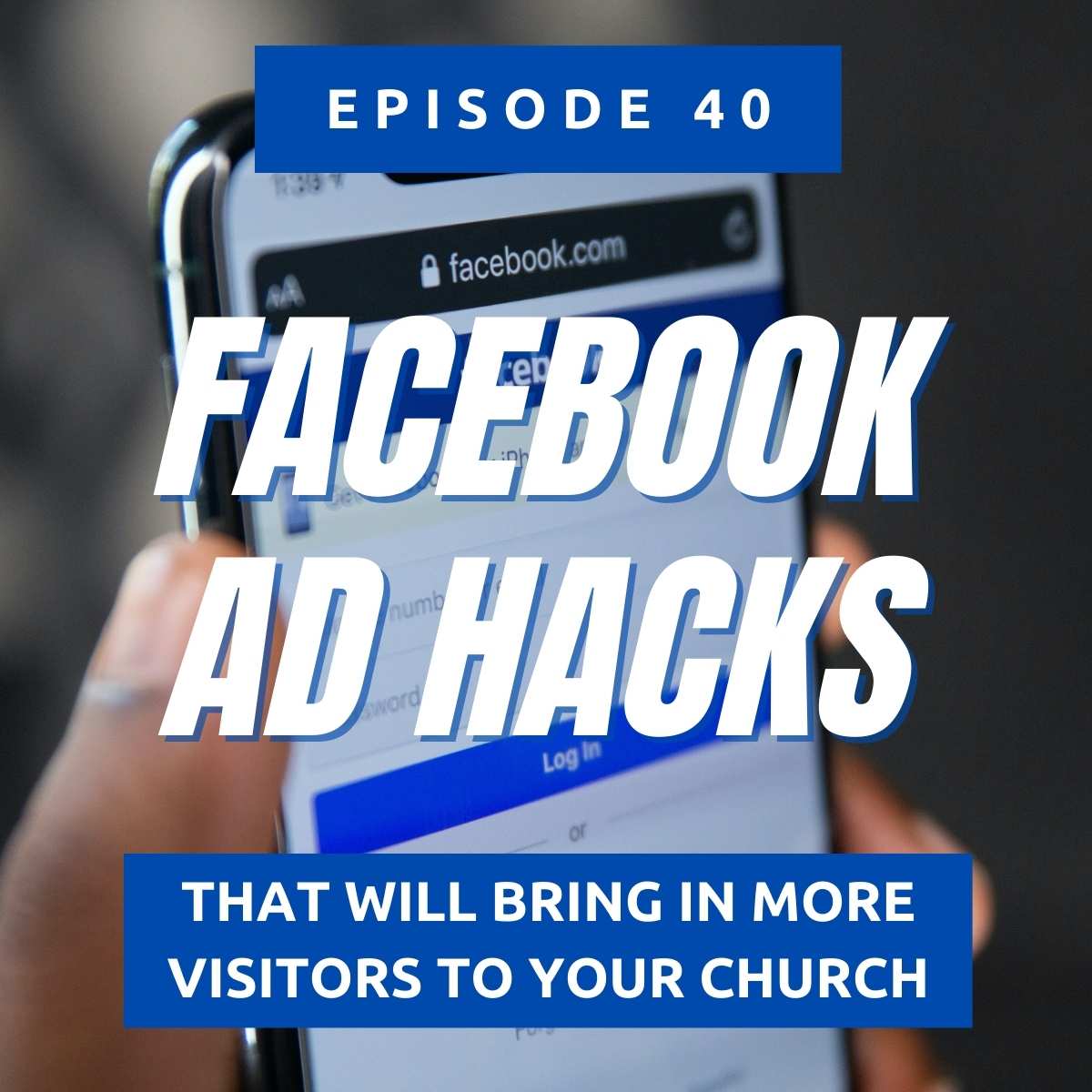
Speaker 0 00:00:00 In today's episode, we unpack five Facebook ad hacks that will bring in more visitors, Facebook and other social platforms have created one of the best outreach opportunities in history for churches. And if done right, churches can reach more people for less money than ever before. Join us as we shed some light on how your church can use this platform more effectively. We hope this conversation helps your church see more visitors and grow.
Speaker 1 00:00:38 You're listening to the retried podcast. The show dedicated to helping pastors and church leaders reach people the right way, hosted by me, Thomas Costello, and with me as always is my cohost Ian Hyatt. We're here to help you your church see more visitors and grow well. Hey guys, welcome to the retreat
Speaker 0 00:01:06 Podcast. Episode number 40. I am your host Thomas Costello. And with me as always is my co-host. Hey Thomas. Hey Ian, how's it going, man? It's going good. Going doing how's your day been going good and excited for our conversation here today. We're going to be talking about 40 ad hacks that will bring in more visitors on your Facebook ads. So this is something that I think is super important for churches. Nowadays. I hear from a lot of churches that this is one of their primary ways of doing, uh, advertising and marketing and outreach. Facebook is a really great tool. I, you talk to a lot of churches out there. Do you hear a lot of them using Facebook ads? Yeah. More and more, a lot of them using different kinds of ads. Do, we've talked a lot about Google ad words, but yeah, Facebook ads are very common.
Speaker 0 00:01:56 Now with church marketing. We've been in the church marketing space since before Facebook existed. You and I, uh, well, probably existed right around the time we started, but we weren't on it. When we started doing it. We were in the MySpace age and just didn't really use my space too much. But we, we lived through the days of, uh, mailer advertising, being King when, uh, churches would send direct, uh, um, direct to the door, uh, mailing advertisements, door to door type stuff. Uh, we lived in those times, uh, our company, uh, that we worked for at the time, started out doing TV commercials for churches, right? So we've, we've seen through, uh, we've been through many generations of church advertising. I think this, uh, social media advertising season is the one that has presented the best opportunity to reach people, uh, never before if we had the same kind of access, it really is kind of a golden age for, uh, for reaching people.
Speaker 0 00:02:51 So I think a lot of churches are wise to be looking at Facebook as an advertising channel. Uh, in my experience though, I find that a lot of churches are missing big opportunities when it comes to Facebook ads, because while it is very powerful, it can be kind of complex. And we don't want this to be a, a complex podcast episode, but I think it's important that we, we just want to glean, give you guys a few things we've gleaned over the years, uh, of doing Facebook ads for churches, as well as doing our own advertising at reach, right. And trying to reach our audiences here, uh, trying to get this podcast and other marketing stuff in front of the right people. Uh, Facebook has been a great tool. Now, the disclaimer I give, uh, our, our company, we give thousands of dollars to Facebook every single month.
Speaker 0 00:03:36 Uh, we do invest a lot in this channel, uh, but I think the nice thing about Facebook is you can use a very small budget. Um, I pastored a church where we were spending, you know, like $30 a month on Facebook advertising and actually saw results, uh, from that and were able to increase the amount that we spent. So you don't have to put in a lot. Uh, but I think these ideas are going to talk about here today. I think they'll help just about anybody get better results out of their Facebook ads. So, um, I know that in, in this situation you don't do as much with Facebook advertising as I do. And so, uh, I don't know, I'll kind of, uh, I'll let you introduce some stuff here today and I'll, I'll do my best to kind of answer some questions and, uh, see if we can help our audience with some of this. I'm looking for
Speaker 2 00:04:18 The learning from, from you on this topic, Thomas. Yeah. And I know maybe a little enough to be dangerous as the saying goes, you know, my extra area of expertise is more in web design and Google grant stuff, branding and all of that. But yeah. So I'm excited to interview you and glean from you here as well as our audience is hopefully
Speaker 0 00:04:38 So awesome. So let me ask you
Speaker 2 00:04:41 The first one here that we've come up with is with your Facebook marketing strategy, you should appeal to specific needs. So specific needs of who you're trying to reach.
Speaker 0 00:04:53 Yeah, no, that's exactly right. I think that the temptation that a lot of churches fall into is when it comes to advertising, we try to be generalists. And what we're able to do with social media ads is you can appeal to very specific needs that maybe don't apply to all kinds of people. So for instance, with our door to door mailers, back that we used to do, or, or television commercials we used to do, you couldn't make your audience specific on that. And so it was important that you were very general. Uh, so you would, uh, in your, um, door to door mailers, you would talk about just, uh, what, um, that, uh, your church was a place for everybody where everybody was welcome and, and that everybody can find family there. And that's what a lot of the TV commercials we used to help churches do.
Speaker 0 00:05:36 They were kind of in that tone, uh, they were just very general in their appeal. Whereas with Facebook ads, what we can do is we can be very specific in the things that we're targeting. So some examples are like you can target maybe, um, one that I did a lot of was financial peace university. I know a lot of our churches do Dave Ramsey courses. They teach that material, they run financial peace. That is a great thing to advertise because it's a specific need. It's something that people will actually feel a pain point around and you can target specific people with it. We'll talk a little bit more about that as we go there. So that's an example, uh, marriage classes, parenting classes, uh, divorce care ministries, celebrate recovery and addiction, ministries, all those kinds of things. They really make great channels, uh, to be used for Facebook.
Speaker 0 00:06:26 We can really advertise those and hit some of those specific needs. Uh, and you can hit people kind of right in the, at their time of need when they're looking for this, some of this kind of content. So I think it's really important that you get specific with these things as opposed to be, as opposed to being generic with that. I will say one thing too, when we're talking about Facebook ads, um, that's the title that we used here. Remember for our audience that Facebook also owns Instagram. So maybe some of our audience is also thinking right now. Well, you know, I want to be reaching all kinds of people. I know there's more younger people on Instagram. You actually advertise on the exact same platform. So when you go into buy an ad on Facebook, uh, the default setting is that those ads are going to be district displayed to people on Instagram as well. So you're really getting both of the two biggest social media channels in one swoop on this. But to the point being specific with those, uh, the needs that we're addressing, I think that's going to get you better results on your Facebook ads.
Speaker 2 00:07:24 Well, we also know that, you know, one of the things you made me think of is we've known for years now, the age old mindset is that, you know, we want to reach everyone. Everyone needs Jesus. You know, Jesus loves everyone, which is totally true. Uh, we don't recommend churches not welcome a certain type of person or demographic in, but what you're saying is you do have to kind of choose your battles a little bit. And so when, when you're talking about appealing to specific needs, I know a lot of churches, they know their programs. And like you said, financial piece, if they're doing that, they're going to know that they should target there. But how do you maybe recommend a pastor or ministry leader make the decision on what needs to focus on?
Speaker 0 00:08:05 I think usually it's, it's just about any need that you're reaching people that you're reaching in your church. And I think this is going to vary by community to community. Um, I know for our church, we were in an urban setting in Madison, Wisconsin. We offered a, a laundry love ministry. Uh, and we did a lot of Facebook advertising where we talked about our laundry love ministry. Now here's the thing, it's a very small subset of the population. That's going to be interested in having their clothes washed at no cost to them. Uh, you know, it's not everybody is in that kind of position. I thankfully most people aren't in that place in their life, at that place in their lives where they have to have someone help them with those kinds of things, just for financial reasons. But we still advertised on that. So I think it really is something that you can, um, you can, it's just, uh, just about anything that a church is doing any outreach program. If you're feeding people at your church or helping with homelessness issues or helping with, uh, human trafficking issues, or you're doing missionary work, you're helping people with building Wells. I don't care what it is. I think being specific is something that really is valuable in this season because you can be so specific and who you're trying to reach there, which actually probably brings us pretty well to our next question, our next, uh, our next hack, if you will.
Speaker 2 00:09:22 Yeah. It it's to think through your targeting. So yeah. So I think that putting thought to it is kind of what we just said. So if I jumped ahead a little bit there, but no, that's good. So thinking through your targeting, how would one go about that?
Speaker 0 00:09:35 Yeah. And this is one of those things that I think is hard for some church leaders to grasp, because like you were saying before, there's this idea that Jesus died for everybody. And, and we're, we agree with that, right? We're in full agreement that he, he died and I don't want to get into a Calvinist conversation, Armenian coverage of whether he died for the elect or not. That's not what I mean. I think generally speaking, the gospel is open and available to all who would come and receive Jesus. And we are firm believers in that. Um, at the same time, I think that churches are wise to be specific and think through who they're targeting with their Facebook ads. And this is what has really made Facebook, such a powerful tool for advertisers is that where we used to have to target everybody in a certain, a certain area.
Speaker 0 00:10:25 Like, so you'd have to, with TV ads, you would target a, um, a DMA. You target a specific area where people could see the ads, uh, with door to door mailers. You'd usually target a zip code where everybody in that zip code would get your ads with Facebook. We can target down to the smallest minutia. So for instance, what we do at retry, we've targeted all kinds of things. Uh, so when we try to get our ads in front of people that are, uh, that are involved in leadership at their churches and trying to, uh, trying to help, uh, we try to help churches with websites and marketing strategies, those kinds of things. So we have targeted people that say in their Facebook description that they're pastors and church leaders, uh, we've tried targeting, uh, people that, um, this was an interesting one. We've tried to narrow that down at times to people that say that they're pastors and also like, um, like certain kinds of worship music, uh, because we found that certain people that like certain kinds of worship music, we're more likely to buy our products for whatever reason.
Speaker 0 00:11:27 So you can get down to the smallest minute area of, um, you know, targeting down to a handful of people. If you wanted to. Now there's some best practices on how big your audience should be. But I think what scares churches away sometimes in church leaders is this idea that if I'm targeting some people, does that mean that I'm excluding other people? Does that make, uh, the, our message not available to those that I'm not targeting? And, you know, frankly it will remove some people, but I would say that in a marketing perspective, it's best that your ads and the money you're spending, it goes to the people that are most likely to respond, not to the gospel, but to that specific ad to that specific targeting thing. So for it, we use these examples of Dave Ramsey classes, right? So I have found as someone who's led financial peace university before that, um, it probably, well, it's valuable to people that are 16 and 17 years old.
Speaker 0 00:12:24 It's also valuable to people in their eighties. There's nothing wrong with them. I think it's probably most valuable and it would get the best response from, uh, people that are young families, people that are in that early phase in their career. Maybe trying to figure out these, uh, their finances for the first time and really putting some thought of this newly married couples. So if I was doing ads for financial peace university, I would really think through that, not, not who would, who could benefit by this, but who would be the most likely to respond and maybe be a part of our class that we're putting on there. So here's an obvious one for parenting classes. If you're doing that, you're doing a specific Mead targeting and you're trying to reach people that are parents. It doesn't, you can, uh, you can break it down by age.
Speaker 0 00:13:08 And the fact of the matter is there are a lot more parents that are 30 years old than there are, that are 70 years old that have kids in the home, right. That has kids in the home that they're raising. And, you know, still not at home if you're 70, right? Absolutely. But that's not to say mean 60 year olds adopt infants and that kind of stuff happens. And I'm not saying it's impossible, but I think you're more likely to get a better response from people that are in their thirties and twenties, because that's kind of where that demographic is. If you do services in English, uh, it probably makes sense that you exclude people that are Spanish, Spanish, only speakers, because while you may be able to reach them, they may not even be able to read your ad. It's not to say that we don't value Spanish speakers or think that they, they, uh, they don't matter in this case.
Speaker 0 00:13:57 They certainly do. But it's just that we want to send our ads to people that are going to be the most likely to respond to them. And so, uh, in every single thing that you do, um, I know one thing we use to promote our, our Halloween, our Halloween, or our harvest party, we used to do at our church. And we learned that while everybody was welcome at our harvest party, we, we saw grandparents come to our harvest party. We saw teenage kids coming to our harvest party. We saw that in the community, parents with kids that were under 10 years old, were the most likely to want to come to our harvest party and have a good time and dress up in costume because that's who that's for. That's who we're, that's, who's most likely to respond to something like that. So that is the beautiful thing about Facebook is it lets you get so granular in your targeting and really make sure that every cent you spend is going to people that are most likely to respond to the things you're putting out there. So think that targeting really spend some time on there because that's where these battles are won and lost. I've found
Speaker 2 00:14:55 That's good stuff, very informative, all hit. The next one here is building a landing page. So to shift gears a little bit, after we meet the appeal to the specific needs and go after our target, it's funneling them to a good landing page. Right?
Speaker 0 00:15:12 Absolutely. So don't make the mistake on your Facebook ads of just sending them to your homepage. Maybe if you're doing a very general ad, that would make sense. So if you were putting out a mailer to your community, you wouldn't want to put a, um, uh, a funny landing page or you wouldn't want to target a specific area. You would just say, come to our church.com. That's where you would send them to. It makes sense to when you're appealing the specific needs and you're appealing to a specific target that you really think through what, um, on our website would appeal most to that person and build landing pages around that. So if you do a harvest party, don't send people on your Facebook ads to your home page and then let them find in, fell about your harvest party there. Instead send them to a page that you spend some time designing.
Speaker 0 00:16:01 It has all of the content, the information, a signup form. It has all of those things on that landing page there. And you'll always get better results if you're sending them to something specific. That's tied to that item that they're looking for. Uh, so this is really, this is not, um, and you can speak to this I'm sure too. And this is not say specific to Facebook ads. This is kind of a marketing one. Oh one thing I know with our Google ads that we help churches with. Um, that's something that's big. Uh, maybe you could talk a little bit more about,
Speaker 2 00:16:30 Yeah. I mean, I think the bottom line with a landing page is that you get to be more focused and strategic on the person that you've reached because it's going to have content and information that they're already interested in on there. That makes sense. If we're already talking about getting granular with all of these options, through Facebook, through the targeting and everything else, you're going to want to make sure that person has good content that they're sent to. And then there, I think here's the bottom line when they get presented the information that they were already interested in, and then you ask them to do something with it. Like you just covered it a little bit, but every good landing page is going to have some sort of a good call to action. It's going to ask, it's going to ask the person on that page to do something, to fill out a form, to get in touch or plan a visitor or whatever, purchase this product, you know, if you're selling something.
Speaker 2 00:17:20 And so I think that that's what it is is we get to be a, like you said, less general and you're going to be, you're going to be overwhelmed with the results you get when I say that results vary. But I mean, you'll get a lot, much better results by sending them to a landing page rather than just a general homepage, because they're already interested and you've given them what they're looking for. And then they're going to make that next step. So yeah, this doesn't really change it just because of you're using Facebook. It's it's like you said, marketing one-on-one. Yeah. And I think even if you're doing
Speaker 0 00:17:50 More general church ads, I think having something other than your home page, uh, be the place that you send them to. So let's say your ad is more just about coming out on a, on a normal Sunday. I think you'd be better off sending them to a plan, your visit page, as opposed to your normal homepage, where they might go off and, you know, try to dig into some of your beliefs. Not that we don't want people to see your beliefs, that's fine. They can, they should have access to all those things. But if your desired responses for them to schedule a visit where they're going to come to your church, send them to the page that has the best opportunity of converting them in the advertising. Speak into someone that's doing that there. So yeah, I think you're right.
Speaker 2 00:18:29 Good. Well, I'll hit the next one here. And this one to me is kind of like, I'm like, what is this? When I first think of that at use look alike audiences.
Speaker 0 00:18:37 Yeah. This is something that will, uh, this is kind of a next level Facebook ad hack. I think. So once you've done these first three things that we've talked about, I think this is the one thing that really it's been kind of a secret sauce for us at reach, right? I've used it in church settings too, and it's really a powerful tool. Uh, and, um, this might even sound a little bit scary because I think a lot of people miss how much information Facebook and other social media platforms have about us. But, uh, the key here is to use a look alike audience. So let me take a second to explain what that is. What is a look alike audience? So Facebook, as we mostly know their business and their product is us, the users, right? The users are what they sell. Our information is what they sell to advertisers.
Speaker 0 00:19:25 Uh, and within that, they, they don't just know information by itself. They, they, you know, they know general information that, you know, your gender, your age, your birthday, some of those, but they, through your likes, through the things that you spend the most time on, on their site, through the things that you disliked through, the comments that you write, everything, they build this entire profile that you don't see, but they kind of, uh, they, they build a profile to describe and figure out who you are as a person, according to their algorithm. And what a look alike audience does is it allows an advertiser. So the church in this case to submit a list of people. Um, so maybe usually for church, it's going to be a list of people that currently are part of your church. You can submit a list of people, just their email addresses.
Speaker 0 00:20:14 They will find those people on Facebook. Uh, and then they will use their algorithm to find people that are most like them that are not yet on your list there. Right? So if you take your church, you have 200 people in your church, let's say you, you send 200 emails over to Facebook and they're going to look at them and they're going to find 150 different Facebook profiles associated with those 200 email addresses. Because some people maybe aren't on Facebook or they used a different email, whatever it would be. And then they would take those hundred and 50 people. And kind of what are these people all have in common? Like, what are these people like? Um, what, what economic background are they from? What are they more CA are they family oriented? What kind of things do they like? And then they're going to say these hundred and 50 people have their most like this.
Speaker 0 00:21:03 And then you can decide in Facebook to send your ads to people in on Facebook that are most like your 150. Um, so they'll, they'll find people that are like that. And then they'll show your ads to those people. So how we use it here at reach, right? We have a list of customers that we've used work with over the years. And we have lists of some customers that are good customers and some that are less good customers. We love all of them, but some that have not made great customers, no customer is always right, but we have these lessons. So we submit a list of our good customers and, you know, there's a few, several thousand of them that we send in and they, they try to see what are these good customers all have in common for reach, right? And then they send our ads to people that match, um, our good customers, uh, like they're the 1% closest match to our customers.
Speaker 0 00:21:56 They send our ads to those people in the United States and a few other criteria that we look for. So this is such a game changer because it really helps you broaden your audience. There are certain things that maybe you didn't think of to look for in someone that should see your ads, but these algorithms, I hate to admit it, but they're much smarter than I am when it comes to figuring out who's most likely to respond to our ads, who would be most interested in this content. And I have seen an enormous uptick when we decide to, to use a look alike audience, uh, for something that we think we could probably create our own audience using a lookalike, it's just a really powerful tool. So yeah, I know that's a kind of a more complex or a second level thing. Any questions that all makes sense?
Speaker 2 00:22:39 Oh, it makes sense. It's kind of crazy. Just how intelligent that whole system is. People are thinking, Oh my gosh, big brother, but it's really smart. And it actually helps you reach people that are more likely to come. Like you said. And I think the one last thing I had in mind there for that ministry leader, listening, and again, having that mindset of like, well, we don't want to just reach people like us. You know, we, we get, we get that we churches need, need to be diverse. And we celebrate that. We, we, we offer churches strategy with what we do on how to reach people that are not like them. However, I think most people know that it's easier to reach people like you because it's already just kind of natural and built in. So not so bad to leverage that and continue to have other marketing and outreach efforts to reach different people. But this I think is a smart way to do it.
Speaker 0 00:23:30 Yeah. That's really well said. And I think that that's exactly right. Cause that, that bothers me too, right. This idea that this is what, um, this is one of the fears of these lookalike audiences. And you've heard the term, an echo chamber before, right? Where what people wind up doing is the algorithm learns what you're willing to like and not like, and then it keeps showing you only that kind of content. And as that continues to go on, you'd never even see content that is anything different from the things that you already believe. So it feels like all of your friends, they only agree with you with reality. You probably have a broader section of friends than you. You think it's out there. So I, well, and I'm not here to cast any kind of a, uh, uh, a judgment on whether this is right or wrong.
Speaker 0 00:24:14 I have lots of concerns about those kinds of things. I think it's been, um, there's evidence that this stuff has been used politically by both sides of the aisle. It's not a, uh, not a partisan statement, but I think that there is evidence of that. I think there are many downsides to this. That being said that the technology exists, I think it can be used for God's purposes. And I hope that we do, and I, I want to be able to, to reach a very broad audience. Um, Facebook has pared back, um, just to be clear on this, there are no racial options when it comes to targeting. So you can't say I want to target only white people, or I want to target only black people with my ads that does not exist. You also, they have limited all of the, or most of the political types of targeting a few years ago before the 2016 election, you could target people based on their, um, they would do like strongly conservative, moderately conservative, um, more moderate and then liberal and extremely liberal. So there were those options and you could use those kinds of things that has been mostly done away with at this point. Uh, but it was still a work in progress. And you know, I'm not here to, again, uh, cast judgment on it one way or the other. I have lots of concerns. I'm sure our audience has concerns, but I do think those things are a valuable tool still. Yeah,
Speaker 2 00:25:32 Well said. I think that's really helpful. Well, let's, let's knock out the last one here. And this is to use short videos. One thing I'll say before you get into that in educating on that, we've known for a little while, again, marketing one Oh one that you don't want to put a movie on your website or anything like no one has patience for that. So short videos have already been a really good thing. People are hit with marketing messages, thousands daily. So their patience is very limited already in dealing with those. So we've already known short videos, whether or not it's on a church website of a pastor giving a welcome video, keeping that 60 to 90 seconds is usually what we've recommended on a website. What do you say about these though regarding Facebook ads?
Speaker 0 00:26:15 Yeah, I think that, uh, short is right. Um, there is some, there's some cases to be made for using some long form videos and I'm not recommending for most churches that you put your sermons online and make those into, into Facebook ads because, uh, it's just, uh, it's not necessarily designed to appeal to an audience in that moment, uh, sermons serve, uh, where I'm the biggest believer in preaching that there is, but I don't think that makes a good advertising in most cases. Uh, so, um, I think that the, I there's two things here. Number one is use videos and number two is make the video short. Um, I think that the videos that you use in Facebook ads, uh, you certainly can produce them at your own church, but I think that they're different, like from just the talking head videos. I don't think that those are as powerful.
Speaker 0 00:27:02 Uh, so, um, you certainly could, um, make a video saying, Hey, why don't you come on down to, uh, to our church? And, you know, we're promised to love you just the way you are. We're gonna introduce you and make sure you have a good time and you'll find Jesus and, you know, do the normal P appeal. I think those videos are valuable, but they probably belong on your website. Right. So you put those on the website, I think. Um, think about how someone actually scrolls through social media. Think about yourself on Facebook. Usually your sound is off, right? Usually, um, you, you don't hear everything unless you actually turn it on. And how many times have you been caught, like accidentally having your sound on or, Oh my goodness. I, I didn't know when I scrolled up past this video that my sound was on, leave it on and don't care, but that's, if you want to speak of them.
Speaker 0 00:27:48 Right. So, but I think that what your main goal is, is to get someone to, to get their attention with these videos. Uh, so it doesn't need to be 90 seconds or 60 seconds or anywhere near that long because you really only have a few seconds, if any, at all, to stop someone from continuing down the page, stop them from scrolling, uh, and actually, um, pay attention to what you're saying. So these videos are usually going to be, um, valuable, whether there's sound on or not. You probably should have sound with them in case someone turns it on, but they should still make an impact even if they are not listened to. So that's why just the talking head, uh, of just someone speaking, um, remember that 90% of people won't ever hear what you have to say in that video. So you want something that's a quick attention grabber and probably has text on there to tell a really quick story.
Speaker 0 00:28:41 So, um, one place that I would really recommend is a website, promo.com. Uh, they have really inexpensive ways to make videos that are specifically formatted for Facebook, Instagram, social media ads, right? So, um, these are usually between five and 15 seconds. Uh, we use a lot of these for our advertising at retried. I've used them for churches before, too. Um, they have really hundreds and hundreds of different pre-made template videos. Uh, and I'd say anybody can do it. I'm not a video. We have video people on our team at retreats. Uh, but I don't do anything with video editing or none of that, but I'm able to get in there and do some of these kinds of things on my own. I have people that help me with it now, too, but they are really something that, um, that I think just about any church can do you put in some text into the template, uh, and once the whole thing, there's music that comes with them because you don't have to deal with any copyright issues or any of that kind of stuff that they, they make an immediate impact and grab someone's attention.
Speaker 0 00:29:41 So you've seen some of our videos before, even like we have, I was just about to say that I get feedback regularly about a pastors that saw all our videos and they said, Oh man, it was so funny. I love the little creative video videos that you guys do. And it just stood out to me. And I think this allows you to get creative too and funny. And, and you know, just like you said, other than a talking head, it, it gives you some more, more creativity there. Yeah. We have one of a, a guy that's our best performing one ever is one of a guy taking a sledgehammer to a burning laptop. Right. He's beating it. And there's like a, that there's like rap music going on in the background to kind of invoke that idea of that movie office space, right. Where the guys beat the snot out of the printer in that movie there for their audience that knows that movie, but that's, uh, but, and it says, uh, build a website.
Speaker 0 00:30:32 They said it will be easy. They said, and it's just this guy smashing a computer. Cause it was so hard for him to do a website for his church. So it's, it's those kinds of things. It's super easy. That video took maybe 15 minutes for us to put the whole thing together and get it onto Facebook ads. And it's been our best performer for a while now, but there's all kinds of fun ones. We love ones of people dancing in funny ways, people you wouldn't expect to be dancing, dancing, that's usually performed well for us, but yeah, there's lots of things. So I would recommend promo.com. But if you want to do it on your own in house there, I just think that doing video is valuable. You will get better results in general using a video over using still images in your ads. And if you could do it effectively, cost-effectively it really makes sense.
Speaker 0 00:31:16 I would say good stuff. Good stuff, Thomas. No, nothing much to add. Thanks for educating me and our audience. Yeah. Awesome. That was spot. I, I hope this has been helpful for our retreat audience. I think that, uh, uh, most of you in our experience are doing some kind of Facebook advertising. And so these are just some of the gems that we've gleaned, uh, helping churches do some of that. That's not a service that we do regularly, but it is something we've coached on, uh, and also doing it for ourselves and helping other churches kind of, uh, on the side, do these things here. Uh, yeah, hopefully this has been helpful to you. Uh, if it has been, it would mean the world to us. If you would rate, review, subscribe, comment, let us know that you're watching. Uh, we really appreciate you and love our retried family. And, uh, we hope to catch you guys next week. See ya.
Speaker 1 00:32:02 Yeah. Thanks for listening to the reach right podcast. We hope this episode will help you reach people the right way, looking for more resources for your church. Check us out online at <inaudible> studios.com. If this episode has been helpful to you, it would mean the world to us. If you would rate, review and subscribe on iTunes or wherever you get your podcasts. Thanks again for listening. And we'll see you next week. <inaudible>.