Episode Transcript
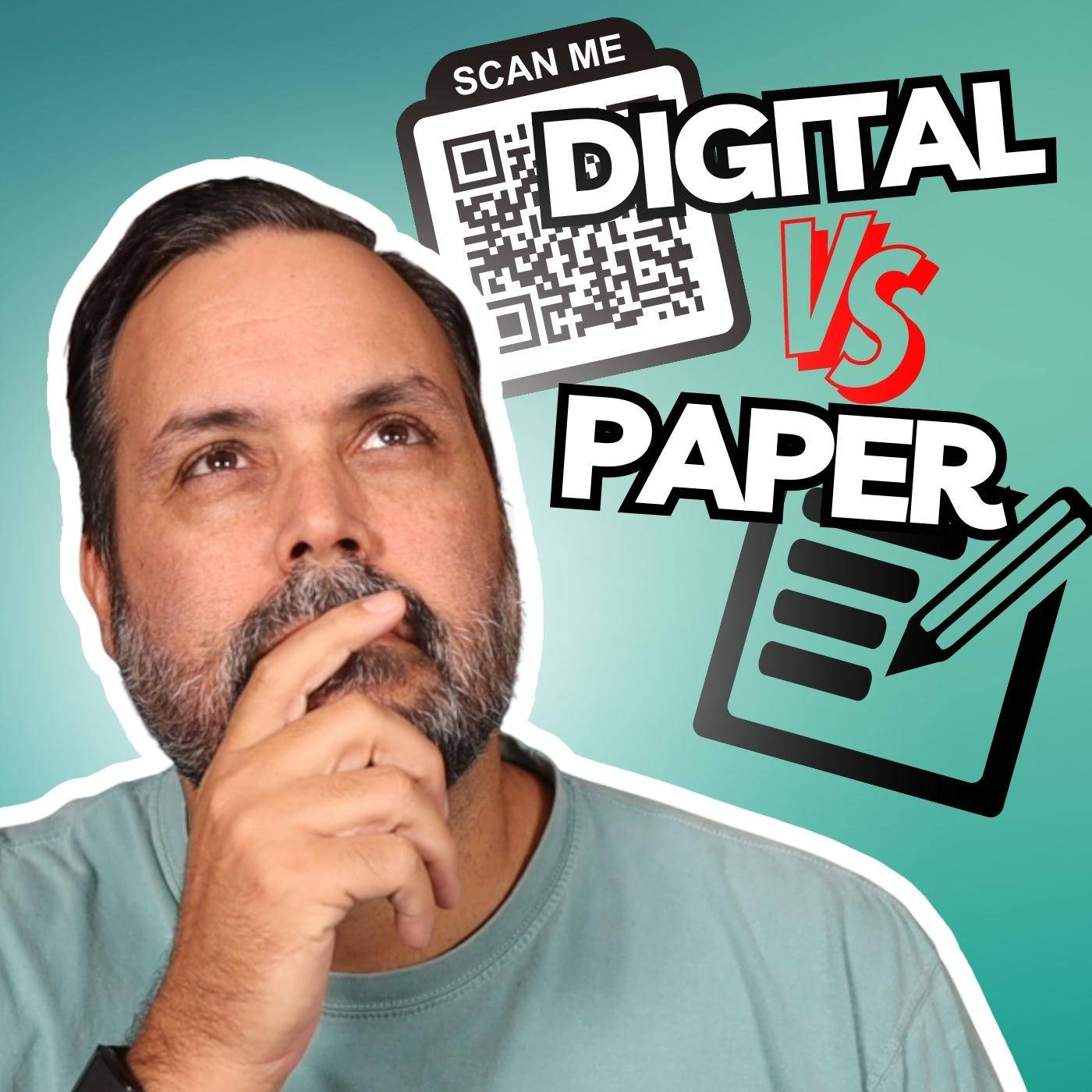
Speaker 0 00:00:00 If your church is serious about wanting to connect with new visitors, it's so important that you nail your church's Connect card. But the question is, should your church be using physical connect cards or digital connect cards? Well, in this conversation, we're gonna weigh the pros and cons of each and help your church decide. Let's do this.
Speaker 0 00:00:21 You are listening to the Reach right podcast, the show dedicated to helping your church reach more people and grow. Well, hey guys, I'm Thomas. And I'm Ian. And today we're talking about digital connect cards versus physical connect cards. Mm-hmm. And which one is right for your church? Um, we think, think who's gonna win in a fight? Yeah. Yeah. It's a ultimate showdown. <laugh>. Yeah. Digital versus paper connect cards. So, uh, I think it should be a, an important conversation because I think a lot of churches, uh, have always used physical connect cards. Like when we say connect cards, talking about the cards you give to your visitors Yeah. When they've come for the first time. Right. And that you ask them to fill out. And so a lot of churches have done things, and we know one thing about churches is that, uh, there is a lot of resistance in most cases towards change.
Speaker 0 00:01:12 And if we've always done something one way in a church, it's especially hard to stop doing it that one way. Right. But I think this is one of those things that it's probably time to evaluate it if your church is still doing, uh, physical connect cards. And we wanna break down a little bit of the reason why we think that maybe, maybe the time has come for digital to, to reign in this showdown here. So, yeah. Yeah. Um, so let's chat, I guess first about, um, the whole connection process. These, these are the cards that we will give the visitors, like we said. Uh, and the idea behind them is you would gather some information so that you could do a better job following up discipling, connecting with engaging and helping people become fully committed Christ followers and members of your church because you have their information.
Speaker 0 00:01:58 Right. We all know how hard it is just showing up on Sunday for, you know, an hour and 15 minutes every week to truly engage and connect with people. Uh, so getting this information, most churches understand this is really vital today. Uh, so, uh, we want to try and weigh out the pros and cons of why it probably like, like how to best do it now. Like, what is the answer to that? So, um, so for years, uh, and I have always been a relatively strong proponent of having physical connect cards, um, you giving someone an actual piece of paper that they can fill out, uh, at my church that I pastored, most recently we had only a physical connect card. Uh, we would give people a card and a pen if they were there for the first time. Yeah. Uh, and then they would turn in that card and exchange it for a gift.
Speaker 0 00:02:49 And we were pretty generous. Yeah. There was like a gift card and, uh, for a local coffee shop and chocolates and all kinds of stuff like that, just to give them some blessing. But it was kind of an exchange. You give us a card with your information and email. Yeah. Uh, we'll give you chocolates and a free gift card to a local coffee shop. And we got a lot of responses that way. And so it worked really, really well. Um, this was, uh, you know, I, I stepped away from that church in 2019 mm-hmm. <affirmative>, uh, and I would like to think that if I was still at that church, I probably would've had a shift in my thinking on this here. So, um, I, I think that that's kind of the, the case for physical connect cards is that we've always done 'em that way. And yeah, there is something like where you could actually see a transaction take place. Right. That sometimes it's easier to make that happen. So, uh, let me ask you, at your church, what do you guys do? Do you guys have like Yeah. One or the other, or both? Or what do you guys do at your church?
Speaker 2 00:03:44 I was just about to, that was on the tip of my tongue. So, uh, we have both, um, we still offer a physical card. We don't really push it though. We push, uh, a QR code, we push digital. Um, and, uh, and so there's a QR code on the seat back. We ask people to, that is our main call to action is for people to, to scan that, uh, and, uh, and their information that way much easier. But for those that prefer paper, uh, we, we have that option. So, uh,
Speaker 0 00:04:14 That's, and with this paper, they would take it to like a communications area or where would they go?
Speaker 2 00:04:18 Yeah, like, uh, what we call our connection center. Yeah. Okay. They would, they would take it there. And we still offer the gift. We offer the gift for digital too. So, yeah. So it's,
Speaker 0 00:04:26 Uh, and, and for digital, what, uh, like is there some kind of a verification or something to get the gift with the digital or do you know how that works? Or do you just say, Hey, I filled out the digital form, give me my gift now?
Speaker 2 00:04:38 You know, that's a good question. I don't, that part, I don't know. And maybe that's just because I'm a member and I kind of don't focus on that. Yeah. What would you, right. Yeah. Right. But, uh, but I do know we have a way and there's easy ways to do it. Um, so yeah,
Speaker 0 00:04:50 That's always been one of the hurdles that I struggled with, like, of going digital is how do I like do that exchange? And I don't wanna make it feel like it's a, a real exchange of goods or anything, obviously. Right, right, right. Someone wants our gift and we're gonna give it to them, whether we're not gonna ask them to prove it or say accuse them of lying about filling out their connect card. How dare you. Yeah. Yeah. You just want our swag, don't you? So, um,
Speaker 2 00:05:11 You want, if, do you want them to not come back? Do that. Yeah.
Speaker 0 00:05:14 Yeah. That's the right way to do that. But yeah. So, okay. So let's, let's take a second to talk about the digital, uh, like the opportunity here for digital. Yeah. Um, so when I say digital, what this means is typically something like a QR code. Um, I greatly prefer the QR code approach to a text approach. Um, so, um, I know some churches will do a text, like you text, uh, a keyword to a certain number, it'll send you back another text with a link in it that'll go to a page that will then let them fill out, uh, further information in a form and some of that kind of stuff. So that's one route. Yeah. Uh, I think that that's too many steps. I would prefer the QR code that you have available. Um, I would try to make that available 24 7 in your church building.
Speaker 0 00:05:58 So it's probably on your announcement screen, it's probably on the seat backs in front of people. Um, any place you can put this QR code lets people scan it with their phone and then they're immediately on that page. Right. One of the rules when it comes to this kind of a transaction, we'll call it, of getting people's information is you wanna make it absolutely as simple as possible because every step in the process is another opportunity for people to drop off and not complete it. Yeah. Uh, so you wanna do your best to make it as seamless as possible with that. So for instance, with the texting approach, it's, I have to pull up my phone, I have to go into my, my messaging app. I have to type in a, uh, a 10 digit number. I have to write in a keyword, I have to send it, I have to get a response, I have to get a link there and do it, versus Yeah.
Speaker 0 00:06:47 I have to pull up my phone, pull up my camera app and scan it. Yeah. Like, that's, that's such an easier process I think for most churches there. Yeah. So, and then the idea is once they've scanned that they're gonna land on a page that's gonna have probably some information about your church and why you're so happy that they're gonna be there. Yeah. And where, what you hope to, they'll receive from this day, you'll talk about that gift that you're gonna give them. Yep. But then the main call to action is a form that will mm-hmm. <affirmative> people will give you as much detail as they're comfortable giving you. Right. One of the pro tips I've learned about these digital connect forms is you want to ask the questions and stages. Uh, so you don't want to have a long form that has like, um, you know, their name and address and phone number and email and kids' birthdays and all those kinds of things in there.
Speaker 0 00:07:33 All on one sheet. Because when I see a form with 19 fields in it, I'm gonna say, ah, you know, I'm not gonna do this, or I'll do this some other time and I'll never get around to it again. Right. But if I ask, Hey, just what's your name? And then you click submit and then say, Hey, what's your email address? You hit like on each step. Yeah. You, you like basically ask people to give you as much as they they're willing to give you. Right. And that do it all at once. You'll get the best results that way. So Yeah. And
Speaker 2 00:07:56 Even if they stop after the email, it's a win. So
Speaker 0 00:07:59 Yeah. If you get their name and email, you can still contact with 'em. And even if you just get their name, you know, this is a new person that, you know, wanted me to know that they were here today. Uh, so, um, it's just one of those steps. So, uh, in my view, this has become greatly superior today to the physical connect card. Um, I think when executed Right. Uh, and we want to talk a little bit today about the reasons for this. Right. But I just think that there is a lot of advantages, uh, to doing it this route. I think your church is probably right because there is still a, uh, an ever shrinking subset of people Yeah. That are not going to do a digital connect card. Right. Um, I think generally they would skew older and, you know, not as into tech.
Speaker 0 00:08:40 Uh, but um, I think more and more you have a growing group of people that are going to prefer that method of communication and doing a digital connect card to getting a pen and writing out something on a physical one and going to turn it in. So I think that this is a, um, this is a really big opportunity I think for churches. And really what it all comes down to is getting, uh, the most information from people at getting the most people to fill out some of their information as possible. Yes. And getting them to do it in a timely manner. Uh, but we kind of broke down. We have a handful. Um, I think we came up with five reasons why. Yep. Your church probably needs to pivot to this digital form. So Yeah. I dunno, maybe you can kick us off on that, Ian, and talk us through some of those ideas we came up with.
Speaker 2 00:09:24 Well, yes, because all of these things we think are gonna really streamline things for churches, and the first is increased efficiency. Um, so, um, and that's, they streamline the process for data collection and management. So they don't have to have, you don't have to have hours of manual data entry. Instead it just, you get that information real time and quickly. Um, so it, uh, saves time. Yeah.
Speaker 0 00:09:48 It, it saves time and here's why I think it's even more important. Y yes. I mean, there's volunteer hours that go into data entry and those kinds of things. Yeah. And this is gonna be different for different churches. If you get two visitors a week, it's probably a, uh,
Speaker 2 00:10:00 Not a
Speaker 0 00:10:00 Huge, maybe a secretary or maybe it's a pastor that's filling that out and putting it into your CM system and doing the emails. But if you're getting 20 visitors a week, it starts to add up and it's mm-hmm. <affirmative>, there's emails that go with that and there's all that work that goes into it. So there's definitely the time savings, but I think with the efficiency comes, um, your speed in this. Yeah. And this is, this is like, I can't emphasize this enough, uh, how important it is to follow up quickly with people when their experience at your church is fresh for them. Yep. So you and I know this right, cuz you and I have been in a, we've been running a business for, uh, 2016 for reach. Right. And even before that we've been in business. Yep. Uh, and one of the golden rules, you know, you're obviously you do sales here at at Reach, right? Yeah. And so if, if someone were to send in a form requesting information and we took two weeks to return their call and say, Hey, how was, did you have any questions for me? Or something like that versus if you sent them an email or a text or a phone call within five minutes of them filling out that form. Yes. Where do we get a better response? <laugh>
Speaker 2 00:11:09 Ob obviously the, the faster follow up. Yes.
Speaker 0 00:11:11 It's obvious, right? Yeah. So it's like, but I think I, I don't think people, if you haven't, if you've been in sales, you really understand this, I think Right. That time is of the essence with these kinds of things. And that's not to say that this is necessarily sales with churches, but you'll just get a better likelihood of people taking next steps if we follow up in a timely manner. Yeah. So I think what's great about this is if they're filling out a digital connect card, you could have automated email processes that, that send them a message on Sunday afternoon right. When it is totally fresh for them still and just says, Hey, I was so excited. I wanna be praying for you this week. Um, how could I be praying for you? And your odds of getting a response on that email are much higher if it goes out on Sunday afternoon as opposed to Monday or Tuesday when people are back in the office and someone's around to do the data entry and then actually do that actual, the, the actual steps it'll take to get that communication out to them. So there's an efficiency on that side, not just your time savings, but how quickly you can do it. That's a huge part of it.
Speaker 2 00:12:13 Yeah. That's huge. Next one. Uh, better data utilization. So, um, and so it's kind of, it, it's a good segue from what we just talked about, but, uh, so you, you're gonna get just more information about that person mm-hmm. <affirmative>, um, you know, I think a lot more effectively. So, um, it helps you kind of tailor your, your, you know, the detailed information you get, you can tailor your outreach efforts Yeah. The interests of that person. So it just, uh, you know, helps foster stronger church community too that way.
Speaker 0 00:12:46 Yeah. I think that what this looks like is what we were talking about before where you would never have a physical connect card that would ask, you know, you wouldn't have a 14 question physical connect card. Right. You, if you were doing a physical connect card, I think four is the limit to the number of fields you could ask, like you can fill out here. Um, so usually it's gonna be name, um, email address, phone number. Right. And then I usually did like, how did you hear about us? Or something like that. Right? Yeah. But you, you might want to try address, although I would recommend against that cuz people are very unlikely if they don't know what you're gonna do with their address. I think people's biggest fear is that they're gonna get a house visit from a church they attended once. Yeah. That a pastor's gonna come knocking on their door like a Jehovah's Witness or something like that.
Speaker 0 00:13:29 Right. And want to come and sit and talk about the, the Bible with them or something. So Yep. That's, there's, you know, 1% of the population wants that 99% don't. And so they're gonna be reluctant to give you their address. And when they see that on the form, they're saying, you know, I'm not gonna fill out that connect form anyway because there's an address form on there, so I'm just gonna ignore the whole thing. Yeah. Correct. So the nice thing about having a digital one is that people can fill out, if you're asking questions one at a time, they'll fill out all the way up to the ones that are the most invasive, let's say. Right. And then you'll still have that information and you can utilize all that data like you're saying here. Yep. So That's right. That's
Speaker 2 00:14:04 A good thing. It's good, it's smart. It's really smart. So next one too, this one's good cost savings. Um, so you're reducing printing costs and Yep. Storing physical stuff somewhere and handling physical cards. So, um, yeah, always good to be able to cut, uh, costs on things. So yeah, I mean
Speaker 0 00:14:21 It's just negligible. I think it's not a huge cost for most churches. You know, if you're, um, if you're, you know, if you're getting 20 a week you have to print out something, you probably want a pretty, you know, robust kind of card, not just a piece of flimsy paper that you print out on a copy machine. And if you're giving out physical cards, you usually have to give out a pen as well because you don't want someone to have a card. But I didn't fill it out cause I didn't have a pen with me. Um, yeah. I don't usually have a pen wherever I go, so No. Um, you know, that would be something I would need. Yeah. So I think that this, well, not, not an enormous cost, you're not gonna be able to hire new staff because you got your Yeah. Your physical connect cards out. Yeah. But I think, you know, the savings are maybe a couple of hundred dollars a year, which is something that Sure. You would, you know, love to have as a church there. So I think that's a big one.
Speaker 2 00:15:05 Well, yeah, this one I think is a little, uh, more effective here to, to know is improved integration. Um, what do we mean by that? This one is where really it's, it's pretty cool. There's, most churches I find now are using church management software of some kind. Uh, and so most of these digital connect cards will talk to whatever church management software you're using. So why that's so smart is that it just, you get the data men data entry and everything just instantly. Yes. So, you know, someone's gonna fill out this, this information, it's gonna go right into your database, you have it there. Again, this saves time on and, and work on physical data entry. Um, so it's really smart and, and you know, you're kind of killing a couple birds with, with, uh, you know, one stone, so to speak.
Speaker 0 00:15:55 Yep. I think so most of the time, um, the actual form for most churches, if you have a good church management software, you can embed a form that they have that they give you to enter new people into your church management software. And then mm-hmm. <affirmative>, any good church management software is gonna have a nice follow up process. You can kind of work within that. Uh, so yeah, it really takes the, the amount of data entry and integration like it, it's integrated to make zero, uh, real work to get this information in there. So I, I gotta tell you, so I, I've pastored multiple churches and I know one, that's one of the, the hurdles is just getting that data and getting it entered. Sometimes it gets missed, sometimes it gets mistyped. There's lots of places for failure in this here. Yeah. And again, it's, it feels like it's just not a big deal. Sometimes it's easy to dismiss it. Well, I got their email address wrong. What's the big deal? Right. Well, I mean, these are, these are real opportunities to disciple real people and have eternal consequences tied to them in some cases. Yeah. And so I think it, it is like anything we could do to, to stop some of those errors and things to make from happening and uh, actually helping people along this discipleship process, it's gonna go a long way.
Speaker 2 00:17:08 Yeah. That's good. And last but not least, improved integration. And what we mean by this is just, oh,
Speaker 0 00:17:13 Sorry. It was, we just did improved integration, didn't we? Oh. The last one I think was adapt to digital trends, I think we said. Right.
Speaker 2 00:17:19 Adapted. That makes more sense. Sorry about that. So adapt to digital trends. Now this is means relevance, right? So basically you want to keep pace. It's, you know, everything's becoming more digital. This makes you more relevant to the next generation. Uh, they're, you know, who themselves are digital natives. Um Yep. So, you know, it's just gonna help you be relevant, keep your, keep everything more accessible and, uh, yeah, people prefer that.
Speaker 0 00:17:44 Yeah, I think it's pretty simple. Um, this is something that, uh, 15 years from now, if, if this video is still on YouTube, people will look at it and say, gosh, what can you believe people even had these discussions back then back in the dark ages. Yeah. Before like, yeah, we may all be wearing the Apple Vision Pro and going to church on our eyes. Who knows what's gonna be happening then. But yeah. Um, I think that this is definitely something that is, uh, it, it's clear that the trend is towards digital. Yeah. Um, I'm going to more and more restaurants with digital menus and those things and you know, you yeah. You just have more of this experience. People are more comfortable with QR codes than ever before. Uh, so yeah, I think, uh, we've hit that tipping point where if you took an average person in the United States, they'd probably prefer a digital form to a Yep.
Speaker 0 00:18:32 Physical one. Uh, that may not have been the case five years ago, but I think it's here now. So it's probably time for us to pivot. So. Agreed. I think, I think in the end, the question of what should a church do? I think your church probably has it exactly right, Ian. I think that there is probably still a place, there are, there's maybe a small subset of the population at this point that would, is not gonna be like ready to pull out a, a phone and get a QR code and type in their information on their phone. That's just not how they live their life. I think generally that's an, uh, the older end of the population and we wanna honor them as well. And so I think having them available, um, you know, giving them to people, um, if they request it or maybe having it in Seatbacks, but I think you should be emphasizing Yes.
Speaker 0 00:19:18 The digital route at this point. Um, I think that it's something that you want to put most of your effort into that side of it, prioritize it. Yep. So, yeah. So yeah, I think the smart church would do that. I think that you would, uh, part of that is getting your, um, your connect page really dialed in. You want people when they hit that QR code to get onto that page and have a very affirming experience of Yeah. You know, like that this is that, that really help them to build an affinity for your church. Yeah. And then once you've done that, you have a much higher likelihood of them filling out that form still. That's right. We've have, we've done episodes about giving people gifts and some ideas behind that and Right. You know, there, there's lots of thoughts on that. We'll put some link to show notes to that here. But, um, yeah, I think it's time to go digital. So if you, uh, disagree, let us know in the comments. Yeah. We'd love to hear about, about that and, uh, have a discussion. Um, if you agree or you have another question on it, let us know down on there too. Yeah, it would always mean a lot to us if you would rate, review, subscribe, do all those kinds of things. Uh, thanks so much guys for being a part of the Reach Right. Family. And we'll catch you next week. See you.