Episode Transcript
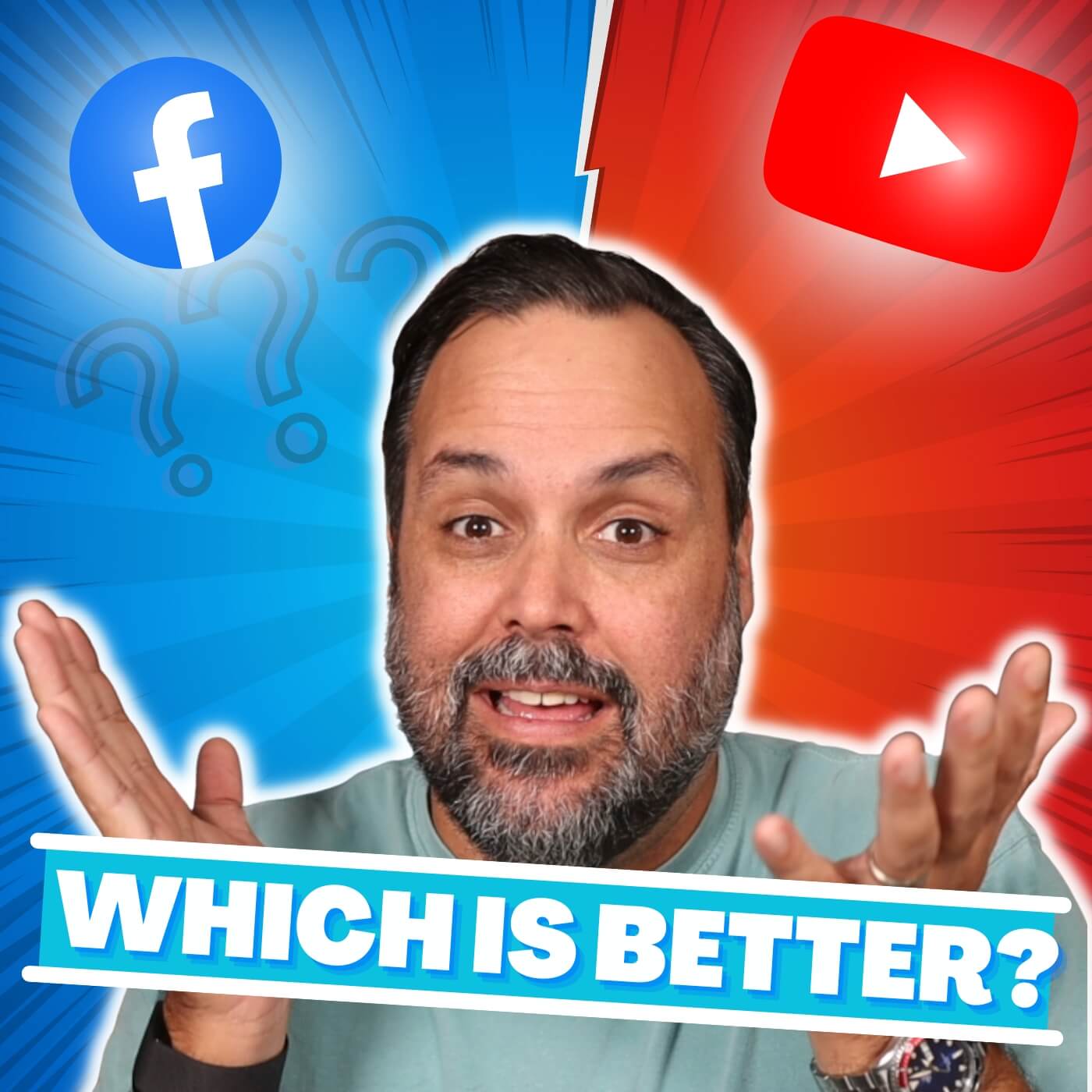
Speaker 0 00:00:00 If you're like most church leaders, you video every service that you do. And the question you probably have is, now that we have this video, what do we do with it? Do we put it onto YouTube or do we put it onto Facebook? We're gonna talk in this conversation about which one is better and which one is the right choice for your church. Let's do this. Your, you are listening to the Reach right podcast, the show dedicated to helping your church reach more people and grow. Well, hey guys, I'm Thomas.
Speaker 2 00:00:29 And I'm Ian.
Speaker 0 00:00:30 And today we're talking about Facebook video versus YouTube video. And which one is better for your church? I think an important conversation, um, as a caveat before we start, it doesn't have to be either or. Yeah. Um, churches can use both and probably should use both YouTube and Facebook, but there are some differences between the two. And I guess we want to unpack some of those a little bit today in this short conversation and talk a little bit about that.
Speaker 2 00:00:55 Yeah. Yeah. I think the majority of churches that I come across and talk to on a daily basis, Thomas, they're, they're using both YouTube and Facebook and I, as they should, I believe. And, and like you just said, it's not a either or type thing, but, uh, but yeah, there are differences and different strategies and so I think it's good we're digging into this. Hopefully churches can gleam from it.
Speaker 0 00:01:15 Yeah. One thing I've, I've realized running our reach right channel, and I've run church channels many times before too, for both Facebook and YouTube, is that there's a lot you do beyond just uploading the videos, right? Mm-hmm. If that's kind of what you're thinking and just, we're just gonna upload videos to YouTube, upload 'em to Facebook, and then do our thing, you know? Well, yeah. They're probably about the same. That way you can upload videos. It doesn't take much time. It's pretty easy technically. Yeah. But like, you get what you put into these things here and having the right strategy for each one. There are some differences. I think that's, uh, the question and we want to unpack which one should a church probably spend most of their time and focus on?
Speaker 2 00:01:51 Yeah. Yeah. Cuz you, we gotta choose our battles in ministry, right? I mean, churches are limited with time and volunteers. And so I think, uh, often you gotta, you gotta just figure out, yeah, I mean, you could do many things, but maybe figure out one thing to focus a little more on what's gonna be more beneficial. So, well as we often like, dig into Thomas, uh, before we kind of get into strategies and different things, statistics tell a lot, right? Yeah. So what are, uh, we came across some pretty crazy stats for all this. What are they?
Speaker 0 00:02:21 <laugh>? Yeah, it's crazy. So, um, uh, this is, this is what floored me is that, uh, every day, uh, there are 1 billion hours, 1 billion hours, billion of video consumed on YouTube every single day. That's crazy. A billion hours. Uh, and that is 5 billion videos that are watched on YouTube every day. Uh, so 1 billion hours. So it's five videos per day, I guess is what it comes down to, uh, that are, uh, per user. Uh, but it's like, or five videos per hour, but yeah, 5 billion videos, 1 billion hours consumed. It's just mind boggling. And the, the opportunity is there. The numbers for Facebook are huge too. They average 4 billion video views, so a little bit less on the video views. Sure. They're only at about a hundred million hours. So like one 10th, the number of hours. And that's because the typical, when we say Facebook, we're talking about both Instagram and Facebook and so, right. Most of their video is short form, shorter or little meme videos, whereas YouTube videos can be hours and length and it
Speaker 2 00:03:24 Could be a full length movie,
Speaker 0 00:03:25 <laugh>, it could be a full length movie. Uh, I know every Christmas we put on the fireplace, cuz we don't have a fireplace here in Hawaii, <laugh>, but we want to feel like it's, uh, we're at a fireplace. So there's like hundreds of videos that are like 24 hours long of a fake fireplace on tv,
Speaker 2 00:03:40 TV there. Basically we do the same thing. We do the same thing, but we've been using the Netflix one, I, I need to use, uh, next Christmas I'll use YouTube. There's sounds like one variety.
Speaker 0 00:03:47 So yeah, as long as you pay for YouTube premium, I think it's a better choice because, uh, if not, you'll be interrupted with ads in the middle of your present opening, which is probably not a good idea, but
Speaker 2 00:03:56 No. Yeah. Yeah.
Speaker 0 00:03:57 Anyway, I was just floored by those stats and I think it just Yeah. Confirms the value and really the opportunity that's in front of churches on these two channels here.
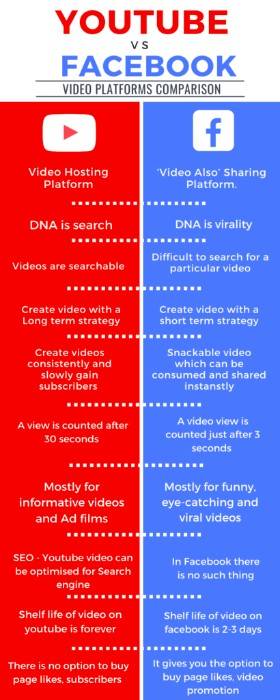
Speaker 2 00:04:04 Yeah, and I think what was interesting too is we had a nice, like, graph and everything and, and I don't know if we'll show that or put that in here, but we have kind of a comparison, if you will, between the two with, uh, you know, uh, video usage and strategy com, you know, from Facebook compared to, uh, to YouTube. So, uh, yeah, why don't we dig into that a little bit?
Speaker 0 00:04:26 Yeah, I think if we, we just wanna sum it up and um, we, we'll have a link in the description here to the, uh, to the infographic that talks about some of the differences between Facebook and YouTube. But I think that it can be best summed up this way, and this is not a hard and fast rule. There's exceptions to this, but if I were to break it down, I'd say that YouTube, its algorithm in the platform is, its DNA is search because it's owned by Google. Yeah. And that's their history is finding things in search. And that's kind of the way that a lot of video is found on YouTube, right, is through search. Whereas on Facebook, the DNA of that platform is, I guess you could call it virality. Like it's something that is, uh, it's videos that get contagious and shared and, uh, they look much more algorithm algorithmically at the videos there, and they give it to people that they think would like it.
Speaker 0 00:05:16 Now again, there are exceptions to this. I think YouTube is really pivoted, especially with YouTube shorts. Um, yeah, just so you know, like if you get onto YouTube, uh, it's not just videos from people you subscribe to that you're gonna see. They're gonna use the algorithm and virality in which videos are popular and what you've watched in the past to try and influence what you're gonna watch in the future. So they do that as well. But you cannot argue at the very core of YouTube is people type in, uh, how to tie a tie. That's the most, uh, how most searched how-to statement out there is how to tie a tie <laugh>, but that's a one example. Uh, but people type how-to, or they wanna learn more about a topic and they go to to YouTube for that. Whereas Facebook tends to be something that it can also be educational and learning. Yeah. But in a lot of senses it's more entertainment in a lot of ways. And that's just, again, YouTube has plenty of entertainment stuff too. These aren't hard and fast rules. Right. But if I had to peg the, the opportunity for churches, at least, I would say that for the most part, YouTube, the opportunity is in search. Yeah. And Facebook and Instagram, the opportunity is in virality.
Speaker 2 00:06:23 Hmm. Yeah. That's good. So yeah, so I mean, yeah, knowing that the two differences there kind of should give churches some direction on that, uh, on, on, you know, how to use it and what to kind of, uh, prioritize there. So, and what else? So we have, when videos are searchable, we have, um, you know, searching for particular videos on Facebook.
Speaker 0 00:06:45 Yeah. Yeah. I think that people do, I mean, you can use Facebook as a search engine, and I've actually seen, if we're gonna bring in a third one in TikTok, uh, that is the most widely used search engine now for Gen Z I've heard. So, uh, TikTok is very searched that way too. But yeah, I think that that's, uh, that, that's kind of how we would break it down those two there. But I guess we probably ought to give people some ideas. So what does this mean for churches? Like, so what should we do differently? Uh, yeah, we upload our videos to both, but how do we approach, like what's our strategy on YouTube and how is it different from what we do on Facebook? So I would say for YouTube that you need to realize that search is the dna. Okay. And so every time you upload a video to YouTube for your church, usually this is gonna be a, a sermon video, but it might be other, uh, other videos that you guys do or little talking head videos.
Speaker 0 00:07:34 Whatever you guys are creating, you need to keep in mind that as, as you make it more search engine friendly, you will get more views on these videos. And so one of the obvious things that, uh, I, a mistake I see churches make a lot is the names that you give your sermons, right? So, ah, yeah. If you give your sermon a, a clever name, uh, like this week I, I preached at my church, uh, and it was the, um, we're going through the B attitudes, uh, and it was blessed are those who mourn. Now that would be the, a great beginning at least to a YouTube video on a sermon about blessed are those who mourn is, you wanna start it with that title. Blessed are those who mourn because people are very likely to be searching for what is the meaning behind that when Jesus says that.
Speaker 0 00:08:20 And where does it come from? You probably don't want to just call it bless her to those who mourn. You want to probably add some more, uh, impact words to it. So, um, blessed are those who mourn a deep dive into what it really means. Yeah. That might be a good YouTube title for something like that. Uh, and oftentimes what churches do, they'll instead, uh, use kind of a, a name that plays well to an in-person audience, but Right. Uh, it doesn't really work online cuz it would be hard if you just, if you titled your message in church, a lot of people wouldn't want to just call it blessed or those who mourn because it doesn't have anything inter, maybe you want to bring your own take to it, so you're gonna have something to do with mourning, but I, I didn't think of anything ahead of time.
Speaker 0 00:09:00 It'd be, uh, mourning is for the birds maybe, or something like that. And then you're gonna spell birds, b y r d s and then use, uh, the, um, uh, a time to be born, a time to die. Those kinds of verses from Song of Solomon, a reference to the band, the birds, uh, our Gen Z audience, again, we apologize to you if you don't know who that is or what we're talking about there. But anyway, I think that's what we're 10 we have the tendency to do, um, is to, is to focus more on things that are funny or sound good in person. But I think for a searchable database like YouTube, you want to really nail those titles. That's just one example. There's lots of ways to do it, but I think that's something churches should take in, keep in mind when they're coming up with their YouTube uploading strategy.
Speaker 2 00:09:43 That's good. And I think what we also uncovered from some of this graph and what we, we looked into is just that there's a difference in length of video between the two platforms. So talk a little more about that.
Speaker 0 00:09:55 Yeah, so o obviously people are more likely and they're probably looking for longer form content on YouTube. And again, that's not to say that the longer the better. Um, I think actually in a lot of cases, sermons are, are longer than we would like to be really optimized for a YouTube platform. The average YouTube video is eight to nine minutes. It's kind of the, the sweet spot. And that's not to say that, uh, you could have a three minute video that goes gangbusters and there are hour long videos that get hundreds of thousands of views, but that's kind of the sweet spot. But you compare that with Facebook and in general, those videos are much shorter because usually they're in the form of reels, uh, which are on both Facebook and on Instagram. Right. Which are less than 60 seconds for the most part. Sometimes they're as short as six seconds and they can make a yeah, a really quick impact. So, um, yeah, it it's the, the length, I think you can put full length videos on both, but in general you're gonna see better results from those on YouTube.
Speaker 2 00:10:52 Yeah, that makes sense. I guess, and, and on YouTube, you know, you're always thinking of gaining subscribers and when I think Facebook, I think likes and people can share stuff, right? So mm-hmm. <affirmative>, um, that's partly probably the strategy as well, the different, the differences in how you do that.
Speaker 0 00:11:08 Yeah, I think, so If we were to focus on one strategy for YouTube, it's focusing on search, and then for Facebook, again, it's focusing on virality. And so the way that you do that, and that's not to say that search doesn't matter on Facebook and you want to use good titles still, but what drives that more are likes number of people. And, and really the biggest indicator is watch time. So here's the, the secret is that likes, while they carry a little bit of weight and comments are great too. And interaction and engagement, the biggest indicator for any video really on any platform, but especially Facebook and Instagram, uh, is the length of time someone spends watching one of your videos. So if someone watches, if everybody that gets on and watches, they, they watch your entire sermon, which isn't gonna happen. Let me put you at ease.
Speaker 0 00:11:54 People aren't gonna stay there a hundred percent of the time and watch your whole sermon as much as we would want them to. But if Facebook sees a pattern where in this video people will typically watch for about three seconds and say, not interested and keep scrolling, yeah, that's gonna be an indicator to Facebook to say, let's show this video less. And then each time it happens, it indicates further that this is not valuable content, at least for our platform to be showing to lots of people and only your most hardcore subscribers who are really likely to watch it are the ones that they're gonna show it to. Uh, so you wanna make sure that you focus on that retention, that audience retention side of things. So that's what makes sermons so hard is that you know, you really, well, you could be the best preacher in the world. You're still gonna have down times that aren't, aren't really made for kind of this quick scrolling video environment that we live in now, but do anything that you can to increase engagement with things like comments and likes and uh, those kinds of things on there. And you'll start to see a bump in that.
Speaker 2 00:12:54 Okay. Yeah, that's cool. That's really good. So, and then we saw there's differences between like the types of like video, right? So from informative to funny.
Speaker 0 00:13:05 Yep, we definitely did. Yeah. So in general, Facebook will play whether better with funny videos and memes and those kinds of things. Yeah. Whereas YouTube, um, certainly on YouTube shorts you can run with memes, those go well. But for full length YouTube videos, it's just hard to to pull that off. And, you know, there's comedians that have whole careers on YouTube, but in a lot of ways that is more viral content and less search based because it's hard to search for, you know, a specific kind of joke that people might be looking for. Right. So I think in general, funny plays better on, uh, viral channels like a Facebook and Instagram, whereas informative will play better on YouTube.
Speaker 2 00:13:41 That's exactly kind of what I search for. That's whenever I'm looking on, if I look at reels or shorts on Facebook, it's uh, it's funny stuff usually. And then YouTube I'm researching something. So that makes sense. And then seo, uh, in, let's talk a little bit I guess about that. You know, I would think because YouTube is search based, there'd be an advantage there for sure over Facebook, right?
Speaker 0 00:14:05 Yeah, absolutely. I think that, uh,
Speaker 2 00:14:08 You think Google and it goes hand in hand too, right?
Speaker 0 00:14:10 So yeah. Right. Yeah. Search is their dna. So I think for Facebook there's uh, there is some value to naming it properly and there are people that do search on there. But I mean, think about it, I don't even, I can't think from my own memory where the search box is on a Facebook page. Like where would I go to search for something on Facebook? It's not something that I do very often. I search on Google a lot of times they'll give me YouTube results on Google when I do a search, and then I do search YouTube all the time for kind of how to or educational type content. So yeah, exactly. I think that's a, a no-brainer. You can go through the steps to help your Facebook content, your videos there do well in search, but I wouldn't spend as much time on that as I would on YouTube.
Speaker 2 00:14:50 And what's the shelf shelf life, you know, as far as time, uh, for, for each video compared, you know, on on each one of them?
Speaker 0 00:14:57 Yeah. Again, so if we're talking just about full length videos on YouTube and not YouTube shorts, because YouTube shorts is really a clone of TikTok or Instagram reels. Yeah. But on YouTube, the shelf life, well it does certainly peak right at its release and things start to degrade over time. We're talking about years. I mean, one of our most popular videos is a video we shot three years ago that still sees dozens of people Yeah. Every single day searching for this, finding it, and actually getting that content. And that's again tied to the search D n a is that as long as people are looking for this answer, your video will still be relevant. Yeah. Compare that with Facebook and the shelf life is 48 hours at the most, but really it's about 12 hours of real impact and then just people that haven't been on the platform in a little bit, they'll start to see it at that point. So yeah, shelf life makes a big difference there.
Speaker 2 00:15:45 That is a big difference. Well, last but not least, what about, you know, as far as the options people have to spend money to, to get these videos out there and more seen, what are the differences between the two platforms there?
Speaker 0 00:15:58 You know, really not much. Um, I think again, it's, it's gonna be, it's gonna be tied more to the kinds of people that you can reach. And so YouTube, again, optimized for search, you will be able to target people that are searching for things related to your video. So if you did a sermon on blessed or those who mourn, you might want to target certain keywords around mourning that people who would be most impacted by this sermon, they might want to see and you can pay to do those kinds of things. Whereas Facebook, it is completely demographic tied, so you're not gonna be targeting people searching for certain kinds of things, but you'll be targeting more people based on their, their attributes. So how old they are, what gender they are, if they're Christian or not. These kinds of people are the ones that you can pay money to target on those channels.
Speaker 0 00:16:46 So yeah, it is a little bit different on how you reach them. And I think for the most part it's probably, unless you have a real specific strategy, it's not a place I would put a lot of money, uh, to promoting your weekly sermons on these platforms. I think that could be different for produced videos that have a very specific target and a specific call to action. Uh, maybe it's a, a video about getting involved if, uh, a donation campaign or a big building campaign you're doing there, that might be something worth promoting to your own audience. But in general, we don't really think that the weekly sermons are something that is something that a church should be promoting, at least not with money.
Speaker 2 00:17:22 Yeah, that makes sense. Good stuff.
Speaker 0 00:17:24 Yeah. Yeah. Awesome. Elvis has been helpful. If it has, it would mean a lot to us guys. If you would rate reviews, subscribe, let us know down in the comments. Um, I'd like to hear from you, which platform is your church seeing better results with? Are you guys seeing a lot of video views on Facebook or is it more on YouTube? If we had to choose one for churches, we'd probably say that YouTube is worth more of your time right now than Facebook is. But if you're gonna gonna be producing short form video, those vertical videos tos and those things, you definitely wanna make sure you get those onto Instagram reels as well as YouTube shorts and TikTok there. But yeah, yeah, we wanna know what's working best for your church. Let us know down in the comments and we'll catch you guys next time. See you.
 https://www.vidsaga.com/youtube-vs-facebook-video/